How to Improve Skin Texture: Why It's Rough and What Studies Measured
How to improve skin texture starts with sorting out why your skin looks rough: dry flaking, closed comedones, visible pores, or marks and uneven spots left after breakouts. Each is a different condition with a different next step.
In this article7 sections
- How to improve skin texture: where does rough-looking skin come from?
- 4 types of rough-looking skin texture: a comparison table
- What did studies use to measure “skin texture”?
- What did the study showing a cleanser can change skin roughness look at?
- Why does skin texture look rougher in dry seasons?
- What questions about skin texture has research not answered yet?
- When to see a dermatologist
| Topic | What we know | Source |
|---|---|---|
| Surface roughness measured by instrument | In a double-blind study comparing two soap bars and one syndet bar, the change in average roughness measured by 3D surface analysis was significantly larger after the syndet bar than after the classic soap bars | 2011 PMID 21332807 · A |
| Roughness scored by touch | A placebo-controlled trial in which people living with extremely high air pollution used a two-step skincare regimen for 8 weeks used tactile roughness, skin tone evenness and visible redness as assessment measures; the number of participants is not in the abstract | 2018 PMID 30235385 · A |
| Humidity and roughness | In human studies, low humidity was linked with changes in stratum corneum hydration, lower elasticity and more roughness, but the author judged the literature inconclusive | 2016 PMID 27306376 · C |
| Dryness and moisturizers | Across 33 studies of skin in people aged 50 and older, moisturizers containing humectants consistently showed significant differences in skin dryness, but most included studies had a low level of evidence | 2013 PMID 23773110 · A |
| The empty spot | This article’s sources include no large study of whether daily habits or cosmetics changed skin texture for more than a few weeks on healthy adult faces | Scope of this article’s sources |
How to improve skin texture: where does rough-looking skin come from?
Before you look for ways to improve skin texture, the first thing to sort out is where the rough look is coming from. Skin that is drying out with flakes lifting, small bumps of closed comedones clustered together, pore openings that stand out, and marks or uneven spots left where a breakout has passed are different conditions, and each calls for something different. They all get lumped together as “skin texture,” but they differ from the start in how they feel under your fingertips and where they show up.
Studies didn’t measure “skin texture” in just one way, either. Average roughness from 3D surface measurement, stratum corneum hydration, transepidermal water loss (TEWL), and touch scores given by assessors who felt the skin were all used separately. We found no large study of whether habits or cosmetics changed skin texture for more than a few weeks on healthy adult faces, so this article is not a list of methods to pick from but a map for reading what was measured.
4 types of rough-looking skin texture: a comparison table
The four types differ in how they look, how they feel and how they form, so setting them side by side in one table makes it easier to tell which one your skin is closest to.
| Type | What you see and feel | Where it comes from (source) | What this article’s evidence covers | Covered in detail |
|---|---|---|---|---|
| Dryness and flaking | White powder or thin flakes lift up and catch on your fingertips | The stratum corneum has lost water. Low humidity and more roughness have been reported in human studies (2016 literature review) | Results differ between studies, so we don’t name humidity as the cause | Why your face is flaking |
| Closed comedones | Small skin-colored or white bumps cluster on the forehead, cheeks or chin and feel bumpy | Hair follicles become blocked with excess oil and dead skin cells (NHS). When a clogged pore closes up, it becomes a tiny bump that looks white or flesh colored (AAD) | Whether cosmetics changed the number of closed comedones is not covered in this article | Caring for closed comedones |
| Visible pores | Pore openings show up like dots on the nose and inner cheeks, with little roughness to the touch | How pore openings stand out in oily areas | Studies measuring pore size are outside this article’s sources | What pore care research covers |
| Marks or uneven texture left behind | Pitted or raised spots, or marks with only color left, after a breakout has passed | Changes left behind after a breakout | Outside what cosmetics cover; a condition for a doctor to check | The section on seeing a dermatologist below |
Closed comedones and flaking both get called “bumpy,” so they are often mixed up. Closed comedones feel like small grains under your fingertips and tend to stay in the same spot, while flaking shows white lifted bits and stands out more on dry days. Marks and uneven texture left behind are not something to judge by changing the products you apply, so the last column of that row points to seeing a doctor.
What did studies use to measure “skin texture”?
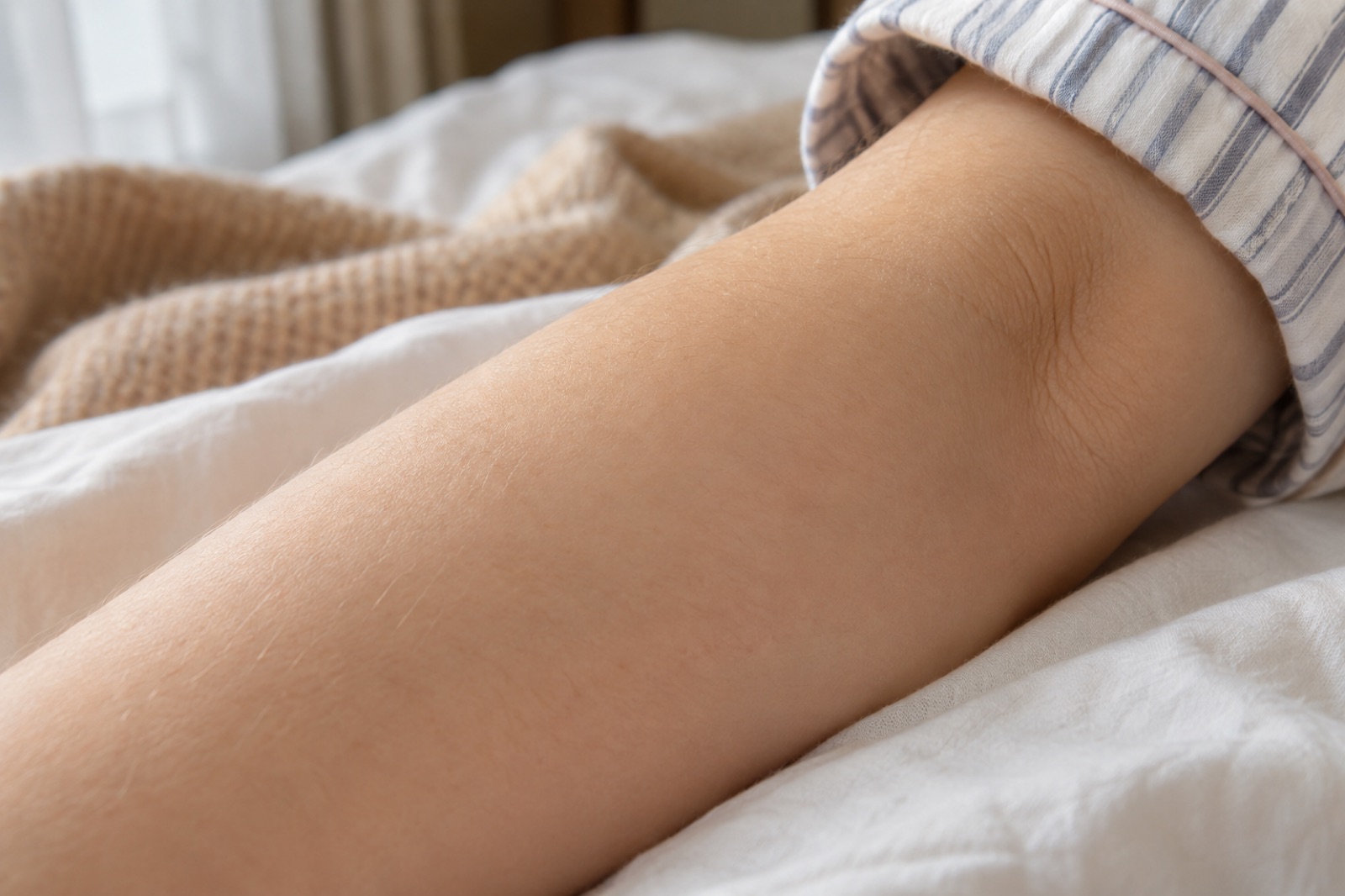
The studies in this article measured skin texture in three ways: surface roughness measured by instrument, barrier measures such as hydration and water loss, and scores given by people who felt the skin. The table below shows who each study looked at, what it measured, and how far its results can be carried over.
| Study | Who was studied | What was measured | What it can support / what it can’t be applied to |
|---|---|---|---|
| 2011 cleansing bar comparison (PMID 21332807 · A) | Participants in a modified soap chamber test. Number and characteristics are not in the abstract | Average roughness from 3D surface analysis, TEWL, skin capacitance (hydration), visual irritation score | Even under mild conditions, a cleanser changed surface roughness enough to measure / Not read as “syndet bars are gentle” |
| 2018 air pollution trial (PMID 30235385 · A) | People in an environment with extremely high air pollution, 8 weeks, placebo-controlled. Number not in the abstract | Assessor scores such as tactile roughness, skin tone evenness and visible redness | Roughness is also measured by people scoring it by touch / A result for one specific two-step regimen, so not carried over to ingredients or other products |
| 2016 humidity literature review (PMID 27306376 · C) | Non-systematic review of human and animal studies (number of studies not stated) | Stratum corneum hydration, TEWL, elasticity, roughness | Humidity has been reported alongside roughness measures / The author states the evidence is inconclusive |
| 2013 review of older skin (PMID 23773110 · A) | 33 studies of skin in people aged 50 and older | Degree of skin dryness | In older skin, humectant moisturizers changed dryness measures / Most evidence was low level, and it isn’t applied as-is to younger faces |
| 1992 comparison of two urea strengths (PMID 1466184 · A) | 47 people with dry skin out of 72 healthy volunteers, one forearm, 3 weeks | Electrically measured hydration, scaling lifted with D-Squame tape, TEWL, skin color | There are several ways to put a number on dry skin / Not used as evidence for what urea does |
Of the five studies, only the cleansing bar comparison measured surface roughness by instrument, and only the air pollution trial scored tactile roughness by hand; the other three measured humidity, dryness and hydration. So when you see a claim that “skin texture got better,” first check whether it means an instrument reading, an assessor score or a hydration value.
What did the study showing a cleanser can change skin roughness look at?
What this study showed is less a verdict on which cleanser is better and more a measuring method: even small changes in roughness under mild conditions could be picked up by 3D surface analysis. A 2011 double-blind comparison (grade A) applied two soap bars and one syndet bar (a cleansing bar made with synthetic surfactants) to the skin repeatedly in a modified soap chamber test, then measured visual irritation scores, TEWL, skin capacitance and average surface roughness together.
The results went against common expectations. After the syndet bar, the rise in TEWL and the change in average roughness were significantly larger than with the classic soap bars, and hydration values dropped significantly only with the syndet bar. This was a methods study comparing just three products, and the number of participants isn’t given in the abstract, so we don’t stretch it into a conclusion about syndet bars as a whole or about cleanser types in general.
Why does skin texture look rougher in dry seasons?
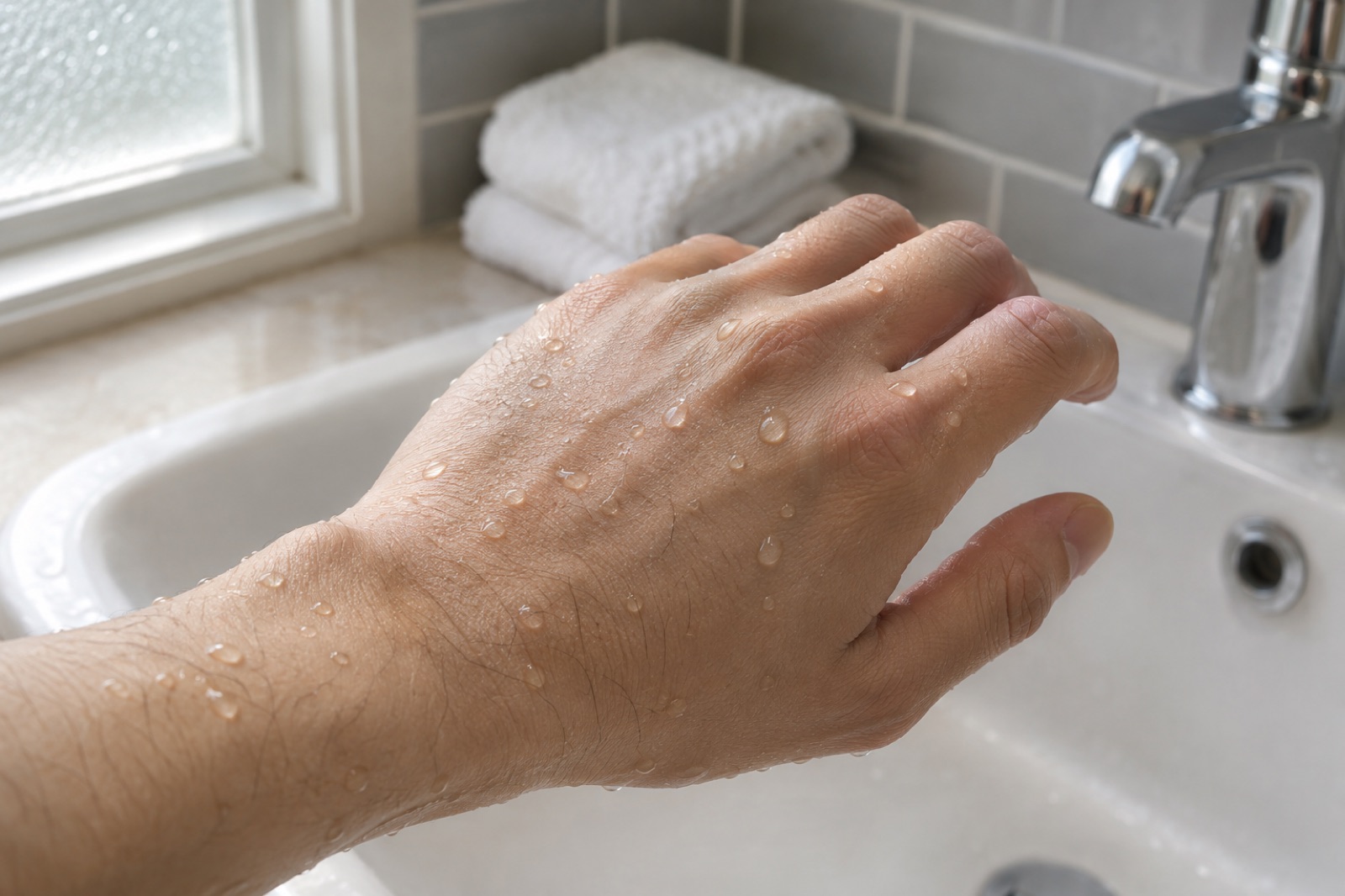
Some studies have linked low humidity with skin roughness, but the relationship isn’t settled yet. A 2016 literature review (grade C) summarized human studies in which low humidity was associated with changes in stratum corneum hydration, lower elasticity and more roughness, and in which a humidifying mist raised stratum corneum hydration. But there was also evidence that low humidity was actually better for barrier function, and the author said the studies differed too much for a formal systematic review.
Results from applying moisturizer to skin roughened by dryness come from limited groups of people. In a 2013 systematic review (grade A) of 33 studies on skin in people aged 50 and older, moisturizers containing humectants consistently showed statistically significant differences in skin dryness, but the authors rated the current evidence base as weak. A 1992 double-blind trial (grade A) had 47 people with dry skin apply a 3% or 10% urea cream to one forearm for 3 weeks; with both creams, hydration and scaling measures got better, the 10% cream lowered TEWL, and the 3% cream shifted skin color toward yellow.
Both results were measured on older skin or on the arm, so we don’t carry them straight over to facial skin texture in winter. Urea is in the table not as a suggestion, but to show that there are several ways to put a number on dryness.

What questions about skin texture has research not answered yet?
The questions readers most want answered are often the ones left blank in this article’s sources.
- A large study of whether habits or cosmetics changed skin texture for more than a few weeks on healthy adult faces
- A study comparing whether the direction your hand moves when applying skincare, the so-called “direction of skin texture,” affects texture
- A care study on goosebump-like texture on the arms. This article’s sources don’t even include the concept of this condition, so we leave it for a doctor to check
- How water temperature, washing time, and cleansing brushes or scrubs affect facial skin
- How drinking water and sleep relate to skin texture. This article doesn’t cover them
Having many blanks doesn’t mean there is nothing to do. What current evidence can settle is which of the four types your rough-looking skin is closest to, and cutting back on steps that may irritate. The AAD’s acne care guidance also says to avoid products that can irritate your skin, such as astringents, toners and exfoliants.
When to see a dermatologist
- If painful, deep bumps keep coming back or turn red and swollen, see a dermatologist.
- If pitted or raised marks or uneven texture start to stay where breakouts have been, have a dermatologist check them.
- If rough areas spread quickly over a few weeks, or itching or redness keeps going along with them, see a dermatologist.
- If goosebump-like texture on your arms or body has stayed the same for months or bothers you, ask a dermatologist what it is.
Frequently asked questions
Why is my skin texture so bumpy?
It doesn't come from just one cause. Skin that is drying out with flakes lifting, a cluster of small bumps (closed comedones) that form when hair follicles get blocked with oil and dead skin cells, pore openings that stand out, and marks or uneven spots left after a breakout all feel different under your fingertips and show up in different places. Use the comparison table in this article to see which one is closest first, and the next step becomes clearer.
How should I care for my skin texture if I have closed comedones?
The American Academy of Dermatology (AAD) explains that when a pore clogged with excess oil, bacteria and dead skin cells closes up, it becomes a tiny bump that looks white or flesh colored, called a whitehead. The same guidance notes that the black dots of blackheads aren't dirt and that scrubbing will only make acne worse, so start by not rubbing areas with clustered closed comedones with scrubs or brushes and not squeezing them with your fingers. A step-by-step approach that skips squeezing is covered in this site's separate guide to closed comedones.
Why does goosebump-like rough skin show up most on the arms?
This article's sources include no study on why goosebump-like texture shows up more on the arms. The urea cream comparison in this article's measurement table was done on the forearm, but it looked at dryness measures, not at why bumpy texture forms on the arms. If it has stayed the same for months, or it itches and spreads with redness, see a dermatologist to find out what it is.
Does it matter which direction you apply skincare on your face?
This article's sources include no study comparing whether the direction your hand moves changes skin texture. The studies here had people use a product for a few weeks or kept it on the skin, then measured roughness and hydration; none of them tested the direction of hand movement as a variable. Rather than worrying about direction, simply spread it on gently instead of rubbing hard.
Is there a way to get porcelain-smooth skin?
There is no set measurement standard for 'porcelain skin,' and this article's sources include no study that aimed for that state. When studies talk about skin texture, they use numbers such as average roughness measured by 3D surface analysis or tactile roughness scores given by assessors who feel the skin. Those measures also come from small trials lasting a few weeks, so they can't back up any habit that promises smooth skin.
What does 'dead skin' on your face actually mean?
What people usually call dead skin means the dead skin cells that make up the outermost layer of skin and then shed. The UK's National Health Service (NHS) explains that acne can develop when these dead skin cells block hair follicles together with excess oil. White flakes that lift up are the outer layer drying out, which is a different condition from closed comedones.
How does acne affect the skin barrier?
This article's sources include no study that separately measured water loss or stratum corneum hydration in skin with acne, so we can't say how big the effect is. The AAD does advise avoiding products that can irritate, such as astringents, toners and exfoliants, because they can dry your skin and make acne appear worse. If you're worried about your barrier, cutting irritating steps rather than adding more care steps fits this advice.
How do I decide whether to see a doctor or manage it on my own?
If painful, deep bumps appear, rough areas spread quickly, or marks and uneven texture start to stay after breakouts, see a dermatologist rather than managing it alone. It's also better to have a doctor check when roughness you can feel with your fingertips stays the same for several weeks, or when itching or redness keeps going along with it. Conditions that look similar on the surface can have different causes, and that is hard to sort out at home.
Sources
- Two soap bars vs one syndet bar in a modified soap chamber test, double-blind comparison using non-invasive 3D measurement of skin surface roughness (2011, PMID 21332807)A
- Subjects exposed to extremely high air pollution, 8-week randomized placebo-controlled trial of a two-step skincare regimen (tactile roughness and other assessments) (2018, PMID 30235385)A
- Systematic review of 33 studies on basic skin care in people aged 50 and older (2013, PMID 23773110)A
- 47 people with dry skin, double-blind 3-week comparison of 3% and 10% urea creams on one forearm (1992, PMID 1466184)A
- Ambient humidity and the skin, literature review of healthy and diseased states (2016, PMID 27306376)C
- NHS — Acne: causesInstitutional
- AAD — What's that blemish?Institutional
- AAD — Acne: Tips for managingInstitutional
We never use YouTube videos or community posts as evidence for facts. Editorial policy
Product information related to this article
Product information from the site operator (KW Cosmetic, maker of the SKIN9HARI brand).
Revive Therapy N.F Cream
₩28,000 (KRW)
This article separated four kinds of rough-looking texture and showed that studies measured roughness, hydration and touch scores. This cream appears in none of the cleansing-bar, humidity or moisturizer studies in the measurement table, and no test of it used skin texture or surface roughness as a measure. It is a 50 ml cream with no added fragrance per its full ingredient list, it completed a 24-hour occlusive low-irritation patch test in 30 people, and its product page places it last in the routine, after the ampoule. As an example of checking the ingredient list and step label for your last step when dryness leaves your texture flaky, the product we suggest is Revive Therapy N.F Cream.
- Cream with 4 ceramides (NP, NS, EOP, AP), 5 types of hyaluronic acid and D-panthenol, 50 ml
- No added fragrance
- Low-irritation formula
Product details
- Type and size
- Soft, cushiony cream, 50 mL (1.69 fl oz)
- Step in routine
- Step 4 of 4 · Moisturize, the last step
- How to use
- As the last step of your routine, squeeze out a small amount. Warm it slightly between your palms. Press gently over your face, working outward from the center. Use morning and night after your ampoule or serum step.
- Before you use
- Contains dimethicone (silicone) — this is not a silicone-free formula. If redness, swelling or itching occurs, stop using and consult a dermatologist.
Based on the official product page, checked 2026-10-02
Cosmetics do not diagnose, treat, cure or prevent any disease. Test results apply only to the stated conditions.