Flaky Skin on Face: 5 Causes to Check Before You Try a Scrub
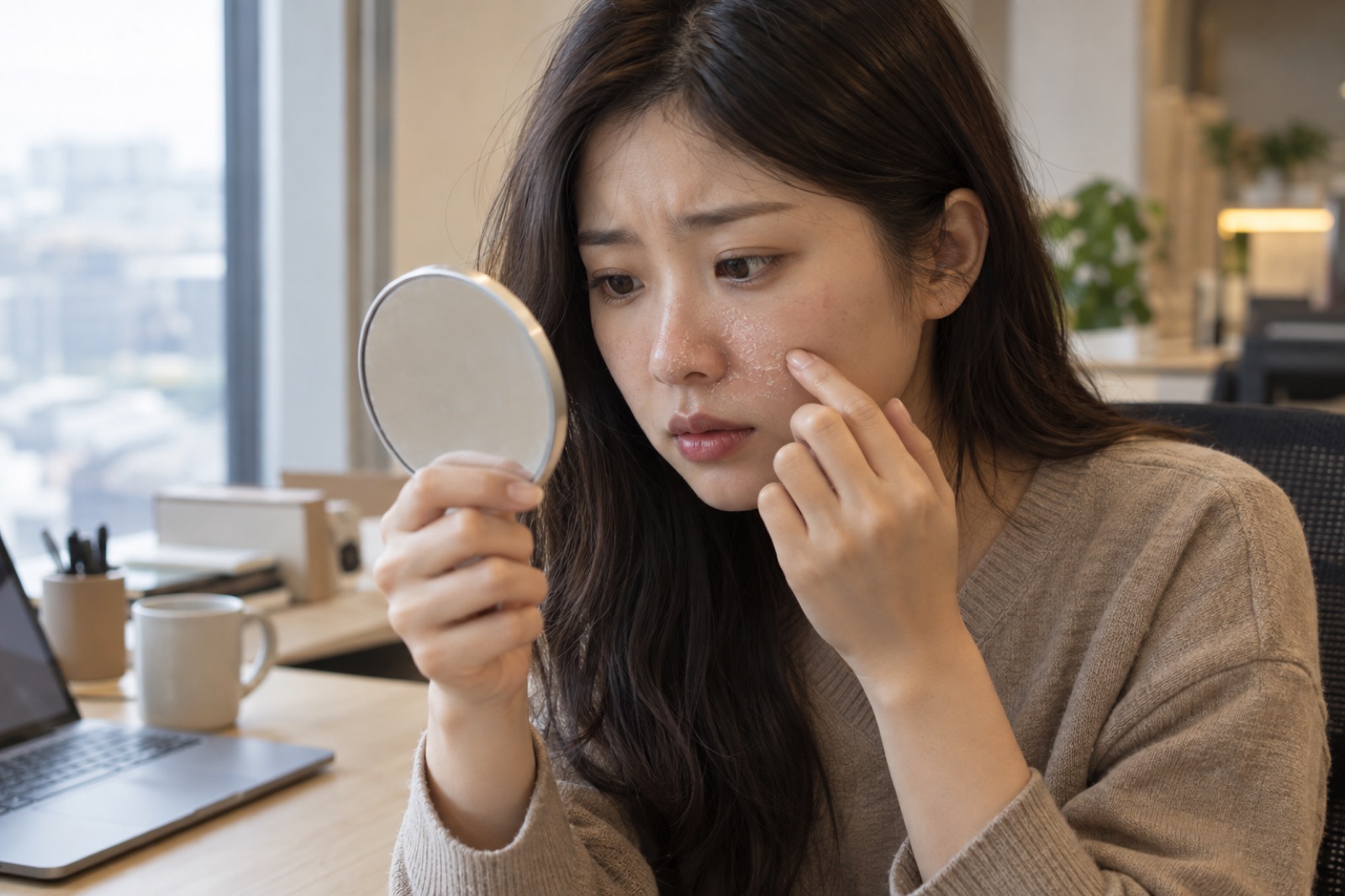
Flaky skin on your face often shows up when frequent washing, hot water, exfoliating or acne ingredients, or contact irritation from new products unsettle your skin barrier.
In this article7 sections
- Why does the skin on your face flake white?
- When washing is the cause: hot water and washing too often
- If you are using exfoliating or acne ingredients
- After a new product, check for contact irritation too
- Should you pick or scrub off flaking skin?
- 5-point checklist for flaky facial skin
- When to see a dermatologist
| Point | What the evidence shows | Source |
|---|---|---|
| Water temperature | A 40°C detergent solution increased water loss from the skin more than a 20°C one, while plain water made no difference at either temperature | 1996 RCT · A |
| Acne and exfoliating ingredients | Benzoyl peroxide, retinoic acid, and salicylic acid increased water loss in proportion to how deeply they peeled the outer skin | Skin barrier studies |
| Contact irritation | Frequent contact with soap, detergent, and water is the most common cause of contact reactions, which are common on the hands and face | NHS guidance on contact reactions · Health organization |
| Repeated irritation | Areas whose barrier was damaged first reacted more strongly to the next irritant | Irritant contact reaction studies · A |
| Moisturizer | On deliberately irritated skin, barrier function recovered faster with moisturizer than with none, and faster still with higher-lipid formulas | Skin barrier studies · A |
Why does the skin on your face flake white?
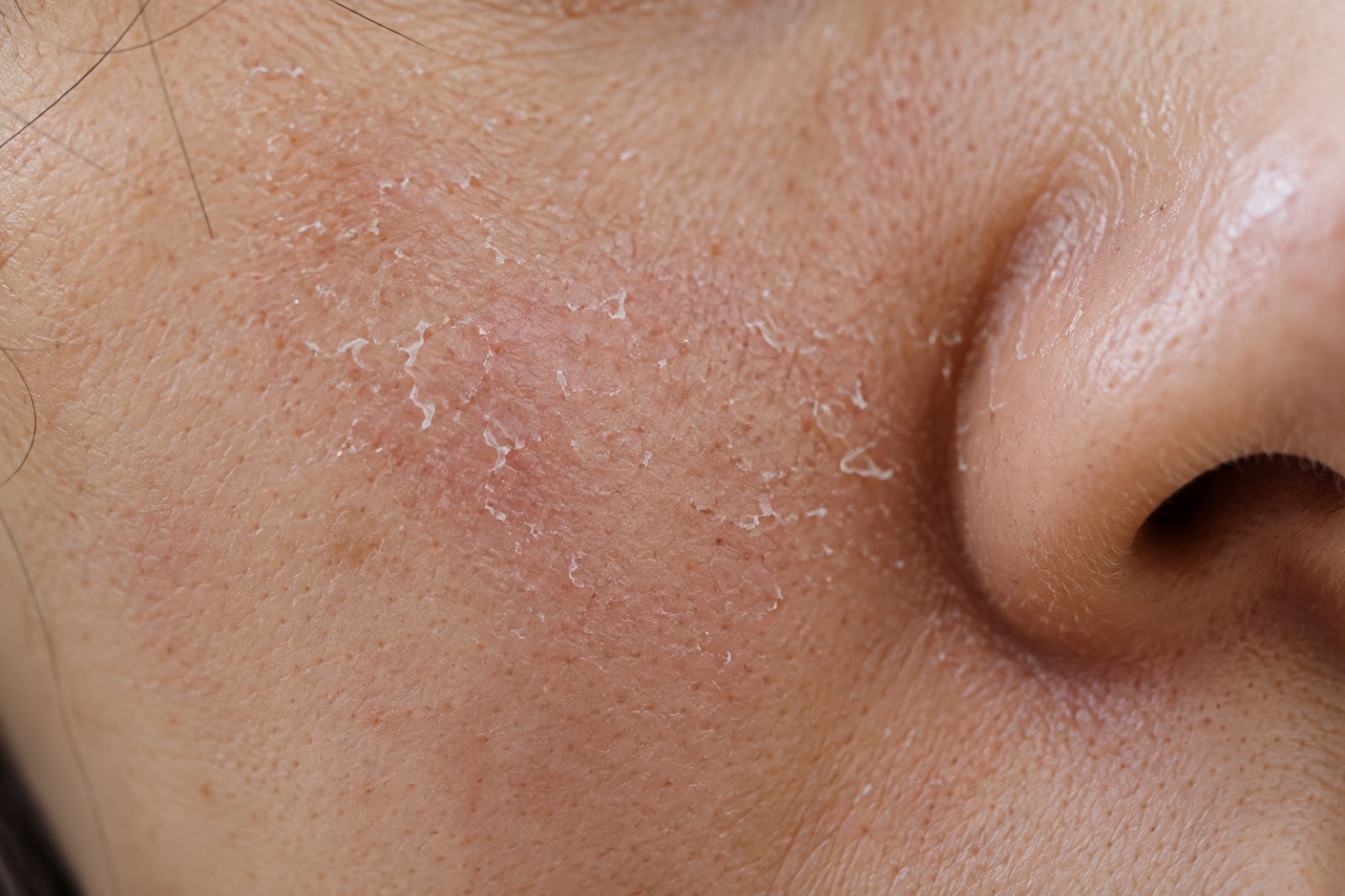
When facial skin flakes white, the likeliest explanation is that the outer skin layer has lost water and lipids and become irritated, so dead skin cells lift away. Skin barrier research mostly measures the water leaving the skin (TEWL), and cleansers, water temperature, peeling ingredients, and repeated irritation all raised that number. It is often not one cause but several conditions piling up at once that make flaking noticeable.
So when you see peeling skin on your face, it makes sense to look at what changed recently before reaching for a scrub. Your washing habits, exfoliating or acne products you started, and new cosmetics are the main suspects. Other signs of an unsettled barrier are covered in our guide to damaged skin barrier signs.
When washing is the cause: hot water and washing too often
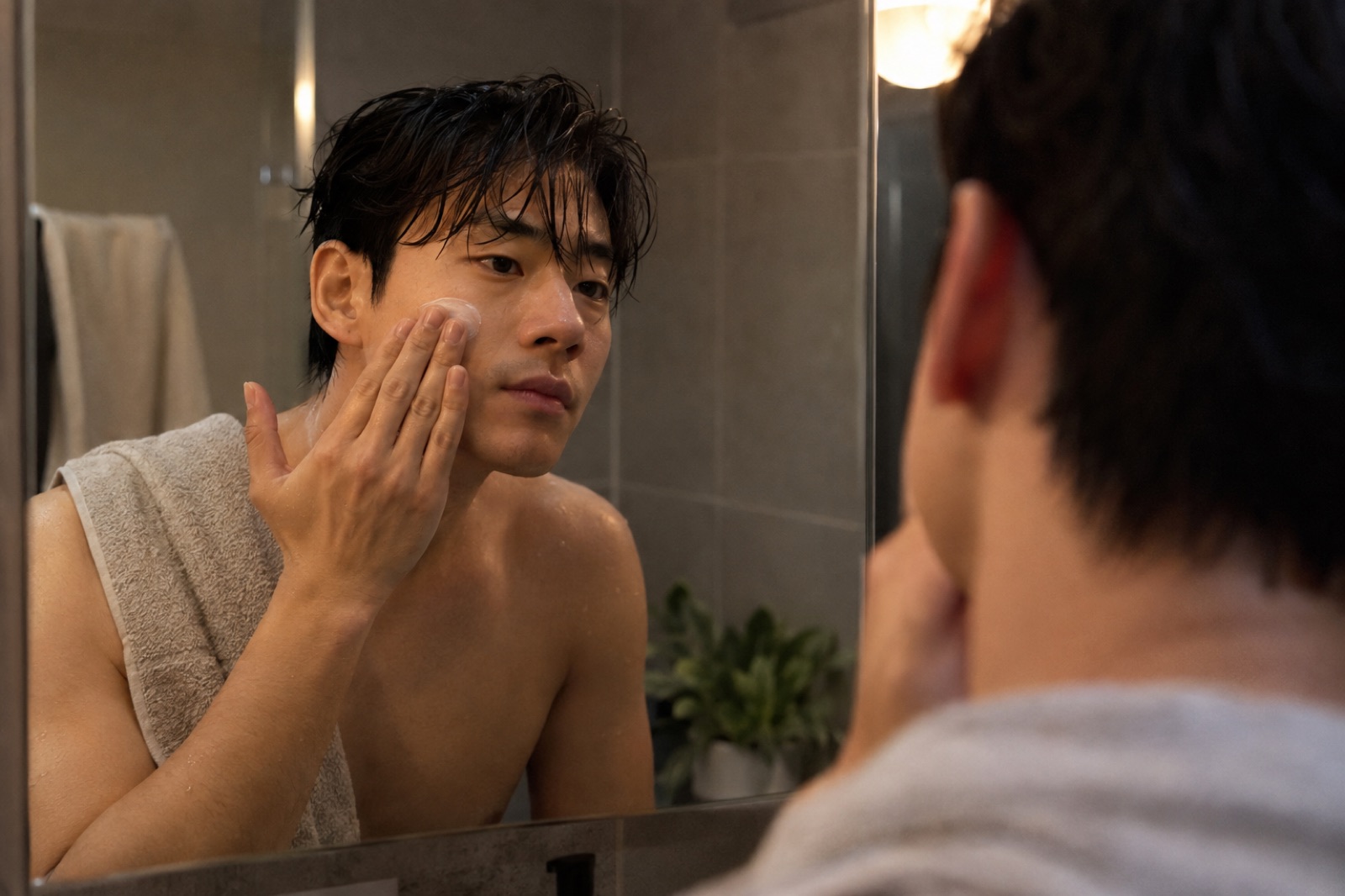
How you wash is the first cause you can change, especially water temperature and how often you wash. In an arm skin experiment, a 40°C detergent solution increased water loss more than a 20°C one, while water without detergent made no difference at either temperature (grade A). Other studies found alkaline soap raised skin pH more, or was more irritating, than low-pH or syndet cleansers.
The AAD advises limiting washing to morning, night, and after sweating, and says washing many times a day irritates skin. Rubbing hard with a towel adds irritation too. Washing gently with your fingertips and lukewarm water fits both the guidance and the research.
If you are using exfoliating or acne ingredients
If you recently started an exfoliating product or acne ingredient, it is the most likely suspect for flaking. Benzoyl peroxide, retinoic acid, and salicylic acid increased water loss in proportion to how deeply they peeled the outer skin. The AAD also explains that acne ingredients such as benzoyl peroxide, salicylic acid, and retinoids can dry out and irritate skin.
The AAD says using a moisturizer every day while you use these ingredients helps your skin tolerate them better. If you are layering several peeling gels, scrubs, and acids, start by cutting down to one, and if your skin is already stinging or raw, pause them until it settles. How often to exfoliate and signs to stop are covered in our face exfoliation guide.
After a new product, check for contact irritation too
If flaking comes with itching or redness after you start a new cosmetic, a contact reaction is worth considering. The NHS explains that irritants such as soap, detergent, and water are the most common cause, and that cosmetic ingredients can also cause allergic reactions. It notes that skin becomes itchy, dry, and cracked, that symptoms appear within hours to days of exposure, and that the hands and face are most often affected.
If a product clearly stings or turns your skin red, stop it right away. Otherwise, take out suspected products one at a time and watch for changes. If you stop several at once, you won’t know which one was the cause. The NHS advises checking the ingredients in cosmetics and soaps to avoid irritants, and seeing a doctor if symptoms continue or keep coming back.
Should you pick or scrub off flaking skin?
Picking or scrubbing off flakes adds one more irritant to a barrier that is already unsettled. Areas whose barrier was damaged first reacted more strongly to the next irritant, and water loss climbed step by step as irritation was repeated (grade A). The AAD advises against rubbing or scrubbing your skin.
Instead, apply moisturizer while your skin is still slightly damp after washing. In a study of deliberately irritated skin, all 6 moisturizers helped barrier function recover faster than no moisturizer, and higher-lipid formulas worked faster (grade A). But in studies where normal skin was moisturized for several weeks, some formulas actually increased sensitivity to irritants, so introduce new moisturizers one at a time too.

5-point checklist for flaky facial skin
Writing down what changed in the 2 to 4 weeks before the flaking started makes it easier to narrow down the cause.
| Check | What to look at | Example entry |
|---|---|---|
| 1. Washing | How many times a day you wash, water temperature, whether you rub with a towel | 3 times a day, hot water |
| 2. Exfoliating and acne ingredients | Peeling gels, scrubs, acids, or acne medicine: since when, and how many | Week 2 of starting retinol |
| 3. New products | Cleanser, cream, sunscreen, or makeup you recently switched, and start date | Day 5 of a new cream |
| 4. Moisturizing | How many minutes after washing you apply, and how many times a day | 10 minutes after washing, once |
| 5. Other symptoms | Whether itching, redness, stinging, or cracking come with it | Stinging around the mouth |
When to see a dermatologist
- If itching or redness comes with the flaking and lasts or keeps coming back, see a dermatologist. The NHS advises seeing a doctor if symptoms continue or come back.
- If you keep reacting and can’t tell which product is the cause, you can ask about patch testing to find the trigger.
- If you are peeling or stinging badly while using prescribed acne medicine, talk to the clinic that prescribed it instead of stopping on your own.
- If red, flaky patches appear on your face along with scalp flaking or itching, there may be another cause, so get checked by a dermatologist.
Frequently asked questions
Why is my skin flaking on my face?
When the outer skin layer loses water and lipids and gets irritated, dead skin lifts and looks white. In studies, hot water with cleansers, acne ingredients that peel the skin, and repeated irritation all increased water loss from the skin.
Can I peel off flaky skin on my face?
It is better not to pick it off or scrub it away. In studies, skin that was already damaged reacted more strongly to the next irritant, and the American Academy of Dermatology (AAD) advises against rubbing or scrubbing your skin.
What should I do about peeling skin on my face?
Cut washing back to twice a day and after sweating, wash with lukewarm water, and apply moisturizer while your skin is still slightly damp. Take a break from exfoliating cosmetics for a while, or use them less often, and watch for changes. If you use a prescribed acne medicine, ask your prescriber before changing how you use it.
What is good for flaky skin on the face?
There is no comparison showing one ingredient is best for flaky facial skin. In studies of deliberately irritated skin, barrier function recovered faster with moisturizer than with none, and faster still with higher-lipid formulas. If you break out easily, also look for a non-comedogenic label.
Sources
- Temperature dependency of skin susceptibility to water and detergents (1996, PMID 8869682)A
- A comparative study of the effects on the skin of a classical bar soap and a syndet cleansing bar in normal use conditions and in the soap chamber test (2001, PMID 11393212)A
- 'Keratolytic' properties of benzoyl peroxide and retinoic acid resemble salicylic acid in man (2006, PMID 16778460)
- The effect of damaged skin barrier induced by subclinical irritation on the sequential irritant contact dermatitis (2011, PMID 21774626)A
- Effect of different moisturizers on SLS-irritated human skin (2001, PMID 11260239)A
- Changes in skin barrier function following long-term treatment with moisturizers, a randomized controlled trial (2007, PMID 17300239)A
- NHS, Contact dermatitis: OverviewInstitutional
- AAD, Moisturizer: Why you may need itInstitutional
- AAD, 10 skin care habits that can worsen acneInstitutional
We never use YouTube videos or community posts as evidence for facts. Editorial policy
Product information related to this article
Product information from the site operator (KW Cosmetic, maker of the SKIN9HARI brand).
Revive Therapy N.F Cream
₩28,000 (KRW)
- Cream with 4 ceramides (NP, NS, EOP, AP), 5 types of hyaluronic acid and D-panthenol, 50 ml
- No added fragrance
- Low-irritation formula
Product details
- Type and size
- Soft, cushiony cream, 50 mL (1.69 fl oz)
- Step in routine
- Step 4 of 4 · Moisturize, the last step
- How to use
- As the last step of your routine, squeeze out a small amount. Warm it slightly between your palms. Press gently over your face, working outward from the center. Use morning and night after your ampoule or serum step.
- Before you use
- Contains dimethicone (silicone) — this is not a silicone-free formula. If redness, swelling or itching occurs, stop using and consult a dermatologist.
Based on the official product page, checked 2026-10-02
Cosmetics do not diagnose, treat, cure or prevent any disease. Test results apply only to the stated conditions.