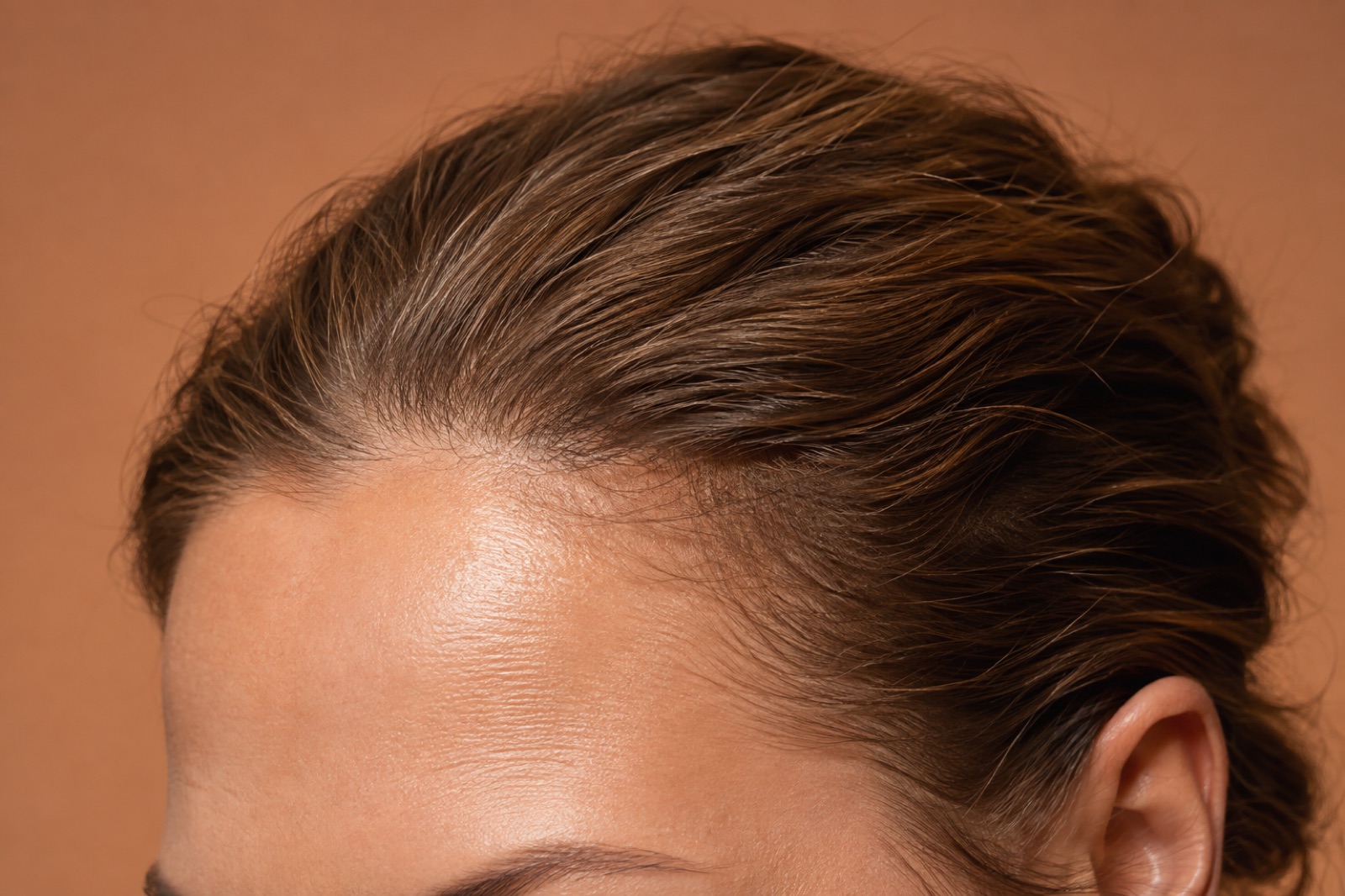
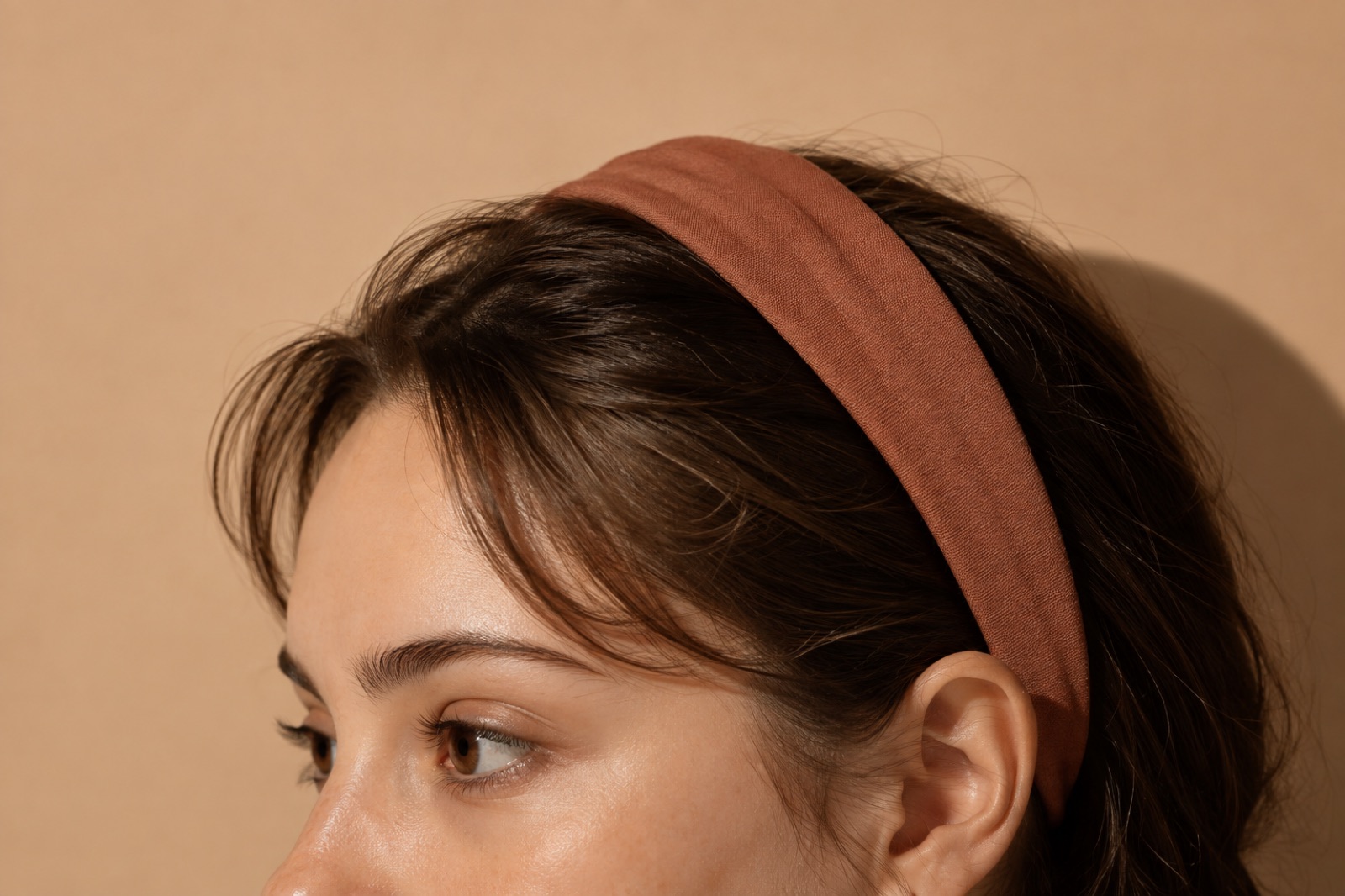
Temple Acne: 4 Things to Check, From Hair Oil to Headphones
With temple acne, start with what touches that spot: hair oil, shampoo residue, the hair at your temples, and hats or headphones. Location alone can't pin down one single cause.
In this article6 sections
| Item | What we know | Evidence |
|---|---|---|
| Hair oil | Acne that keeps coming back only on the forehead and temples may be due to hair oil; the AAD suggests switching to water- or glycerin-based products | AAD acne in skin of color · institution |
| Hair products in general | When oil from hair products clogs pores, whiteheads and small skin-colored bumps can form, and they usually settle over 4 to 6 weeks after you stop the product | AAD hair products · institution |
| Non-comedogenic hair care | In a single-group study where 27 people used it for 8 weeks, 52% saw facial acne get better and 70% saw truncal acne get better (no comparison group) | 2021 PMID 34076395 · B |
| Several areas at once | Of 374 adult women with acne, 89.8% had acne in several areas, including the cheeks, forehead, jawline, and temples, and 93.7% had facial comedones | 2015 PMID 25296739 · B |
| Repeated friction | Gear that touches the skin again and again, like helmets and chin straps, can trap heat and sweat and cause friction acne | AAD friction acne · institution |
Temple acne: could hair oil be the cause?
Hair and hair products rest against your temples all day, so check hair oil and styling products first. The AAD notes that acne that keeps coming back only on the forehead and temples may be caused by hair oil, and suggests switching to water- or glycerin-based products instead. Breakouts from hair product oil clogging pores can appear even in people who don’t usually get acne.
However, our sources include no study that directly tested whether hair products increase temple acne. In a study of 27 people using a non-comedogenic hair care routine for 8 weeks, 52% saw their facial acne get better, but with no comparison group, we can’t tell how much of that came from switching products. That’s why changing one product at a time and watching for 4 to 6 weeks is the practical approach.
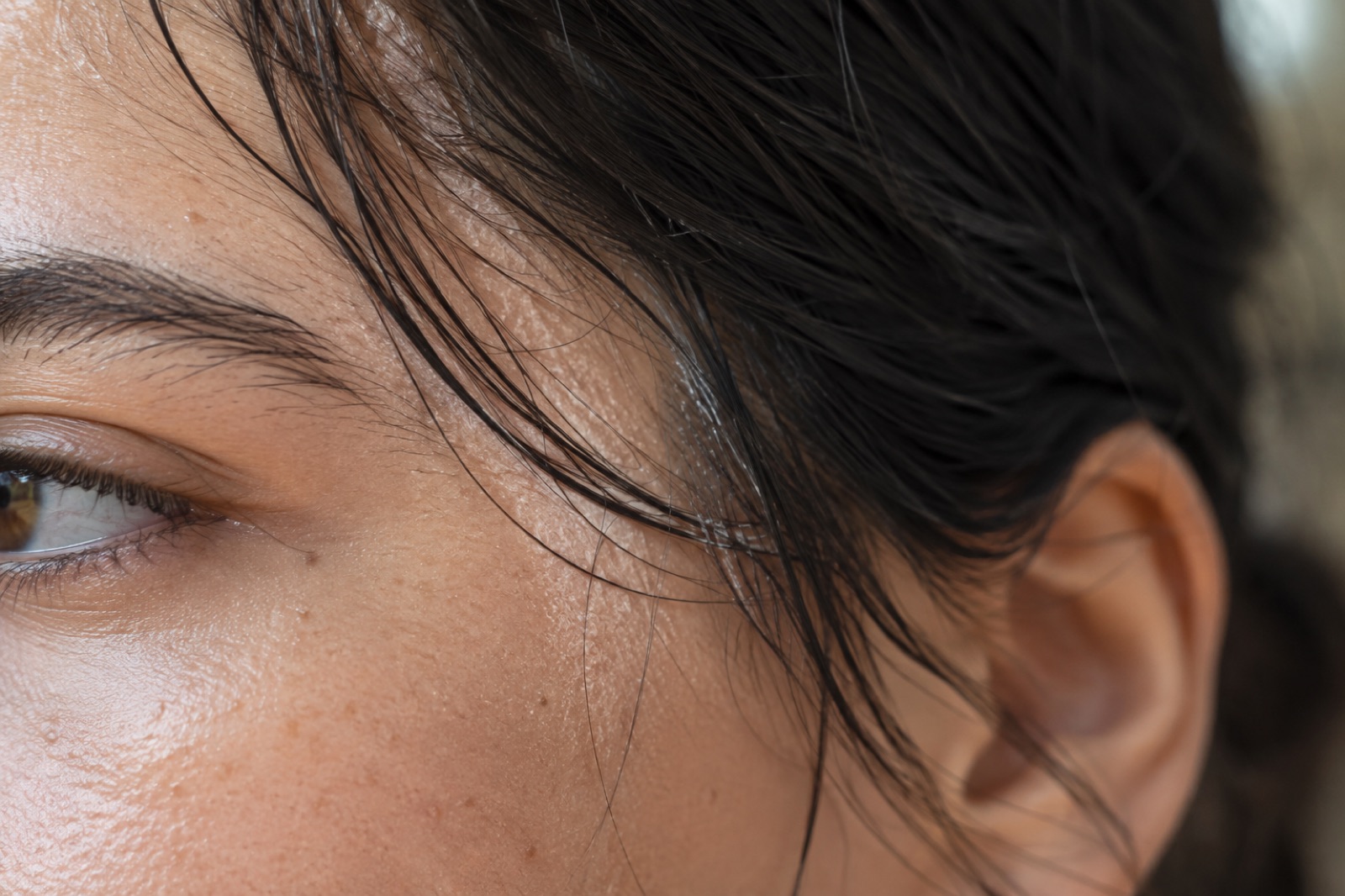
Should you check shampoo and conditioner residue and the hair at your temples too?
Shampoo and conditioner can also stay on your temples and hairline after rinsing, so check them along with other hair products. The AAD explains that shampoo, conditioner, and styling products can cause small breakouts along the hairline and upper forehead, and suggests shampooing more often if your hair gets oily easily. The NHS advises washing your hair regularly and keeping it off your face.
The AAD also suggests washing things your hair touches, like pillowcases, hats, and headbands, because residue can build up on them. If breakouts keep appearing only on the temple you sleep on, it’s worth checking how often you wash your pillowcase. If breakouts spread along your whole hairline, see our hairline acne article, and if they extend onto your forehead, see forehead acne causes.
What about hats, headphones, and glasses?
Things that press on or cover your temples also create friction and trap sweat, so check them too. The AAD explains that gear that touches the skin again and again, like helmets and chin straps, can trap heat and sweat and cause friction acne, which starts as tiny rough bumps you can feel more than see. NIAMS also notes that pressure from things like helmets doesn’t directly cause acne but can make it worse.
If you wear a hat or headphones for long periods, take them off right after exercise, wash off the sweat, and clean the parts that touch your skin often. The AAD suggests placing a clean, soft pad between gear and skin. There is also a case report of an itchy rash where the arms of a pair of glasses touched the skin, caused by an allergy to the dye in the frames, so if itching stands out, keep in mind that it may not be acne.

Tiny bumps on your temples: are they acne?
Tiny skin-colored bumps on your temples are often pores clogged with sebum and dead skin. The AAD explains that a closed pore becomes a whitehead and an open one becomes a blackhead, and that pores clogged by hair product oil also show up as whiteheads and small skin-colored bumps. In the survey of 374 adult women with acne, 93.7% had comedones on their face.
If each bump has a red ring around it, it may be a follicle infection rather than acne. The AAD explains that shaving and frequent friction are common causes of follicle damage. Rubbing or squeezing tiny bumps can make them worse, so the AAD suggests washing gently with your fingertips. Why pores get clogged in the first place is covered in our article on what causes closed comedones.

Checklist: 4 things to check for temple acne
| Check | What to look for | What to try |
|---|---|---|
| 1. Hair oil and styling | Are the oils or waxes you use on the hair near your temples labeled oil-free or non-comedogenic? | Switch to water- or glycerin-based products, or pause them for 4 to 6 weeks |
| 2. Shampoo and conditioner | Does a slippery feel stay on your temples after rinsing? Does your hair get oily easily? | Rinse thoroughly all the way to your temples; review how often you shampoo |
| 3. Things that touch the area | How long you wear hats, headphones, or glasses, and how often you wash them and your pillowcase | Take them off and wash up right after exercise; wash them often |
| 4. Shape of the bumps | Skin-colored tiny bumps, or a red ring or itching? | Don’t squeeze; keep notes; see a doctor if there are red rings or itching |
When to see a dermatologist
- If nothing has changed 6 weeks after stopping the hair product you suspect, consider seeing a dermatologist.
- If tiny bumps turn red and swollen or become deep, painful lumps, see a dermatologist, since these tend to scar.
- If each bump has a red ring, or an itchy rash spreads where your glasses or hair products touch, it may not be acne, so have a dermatologist check.
Frequently asked questions
Why do I get acne on my temples?
Hair and hair products rest against your temples all day, so start there. The AAD notes that acne that keeps coming back only on the forehead and temples may be due to hair oil. However, in a survey of 374 adult women with acne, 89.8% had acne in several areas at once, including the cheeks, forehead, jawline, and temples, so it's hard to name a cause unique to the temples.
Are tiny bumps on my temples acne?
Tiny bumps are often pores clogged with sebum and dead skin (whiteheads). The AAD explains that when oil from hair products clogs pores, whiteheads and small skin-colored bumps can form. If each bump has a red ring or they spread with itching, it may be something else, so have a dermatologist check.
How should I handle temple acne?
The AAD suggests pausing hair products that aren't labeled oil-free or non-comedogenic and washing pillowcases, hats, and headbands that touch your hair. Once you stop the product behind it, breakouts usually settle over 4 to 6 weeks, and if nothing changes after 6 weeks, the AAD suggests seeing a dermatologist.
Will switching shampoo help temple acne?
Our sources have no comparison study showing that a specific shampoo reduces temple breakouts. In a single-group study where 27 people used a non-comedogenic hair care routine for 8 weeks, 52% saw their facial acne get better, but there was no comparison group. The AAD suggests shampooing more often if your hair gets oily easily.
Sources
- AAD — Hair care products that cause acneInstitutional
- AAD — How to clear acne in skin of colorInstitutional
- AAD — 6 skin care habits that can clear acneInstitutional
- AAD — Sports equipment can cause acneInstitutional
- AAD — What's that blemish?Institutional
- AAD — FolliculitisInstitutional
- NHS 111 Wales — Health A-Z: Acne (updated 2024-11-07)Institutional
- NIAMS — Overview of AcneInstitutional
- Efficacy of a Non-Comedogenic Hair Care Regimen for the Reduction of Mild-to-Moderate Truncal and Facial Acne: A Single-Arm 8-Week Study (2021, PMID 34076395)B
- Large-scale international study enhances understanding of an emerging acne population: adult females (2015, PMID 25296739)B
- Allergic contact dermatitis from dyes used in the temple of spectacles (2022, PMID 34655078)C
We never use YouTube videos or community posts as evidence for facts. Editorial policy
Product information related to this article
Product information from the site operator (KW Cosmetic, maker of the SKIN9HARI brand).
Revive Therapy N.F Toner
₩29,000 (KRW)
- Mildly acidic toner (pH 5.5–6.5), 150 ml
- Contains niacinamide 2.0% and beta-glucan 1.0%
- Low-irritation formula
- Contains ethanol and fragrance ingredients (orange peel oil, lavender oil); check the full ingredient list
Product details
- Type and size
- Clear, water-light toner, pH 5.5–6.5, 150 mL (5.07 fl oz)
- Step in routine
- Step 2 of 4 · Tone, right after cleansing
- How to use
- After cleansing, pour a small amount onto a cotton pad or your palms. Sweep or press gently over your face and neck. Pat lightly until fully absorbed. Follow with Revive Therapy N.F Ampoule, then N.F Cream.
- Before you use
- Contains ethanol (3.0%) and fragrance, including the allergens linalool and limonene — this is not an alcohol-free formula. If redness, swelling or itching occurs, stop using and consult a dermatologist.
Based on the official product page, checked 2026-10-02
Cosmetics do not diagnose, treat, cure or prevent any disease. Test results apply only to the stated conditions.