Forehead Acne Causes: 5 Things to Check When Tiny Bumps Spread
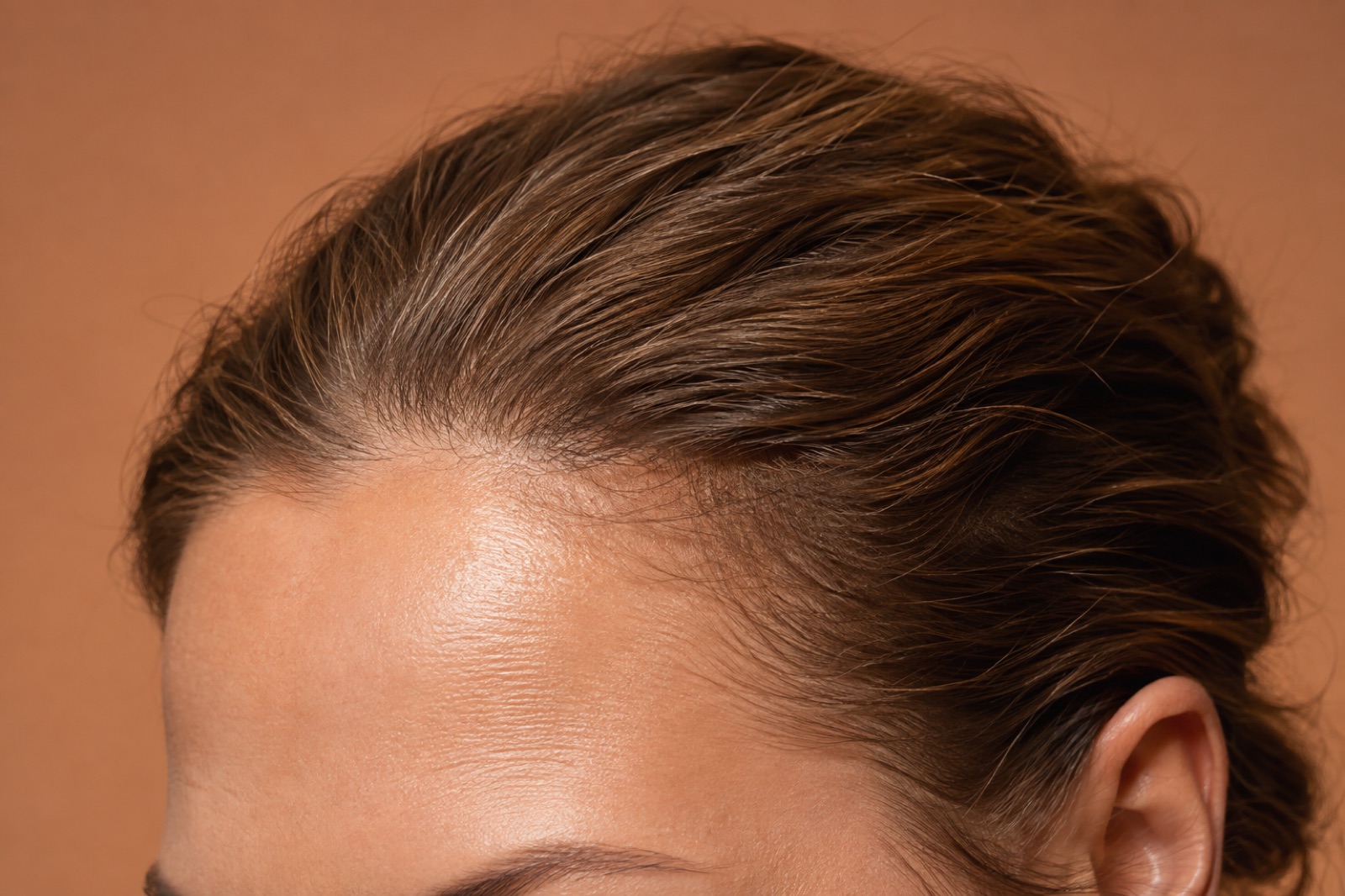
Forehead acne often keeps coming back when several things overlap: oil from hair products, bangs or hats touching your skin, and rubbing when you wash your face.
In this article9 sections
- Are hair products causing your forehead bumps?
- Can scalp oil and hair oil cause forehead acne?
- Why do bangs and hats cause forehead acne?
- Is an oily forehead the reason you break out?
- Why do forehead bumps keep spreading even when you exfoliate?
- How can you tell if a product is causing it?
- Is adult forehead acne different from teen acne?
- 5 forehead acne checks
- When to see a dermatologist
| Topic | What the sources say | Source |
|---|---|---|
| What forehead bumps are | The tiny bumps people often notice are usually pores clogged with oil and skin cells: whiteheads if closed, blackheads if open | AAD types of breakouts · Institution |
| Hair products | When oil from hair products touches the skin and clogs pores, whiteheads and skin-colored bumps can form along the hairline, upper forehead, and back of the neck | AAD hair products · Institution |
| After stopping the product | After you stop the product causing it, bumps usually settle gradually over 4 to 6 weeks; if nothing changes after 6 weeks, the AAD suggests seeing a dermatologist | AAD hair products · Institution |
| The non-comedogenic label | There is no official definition or required test behind this label, and its clinical usefulness varies | Comedogenicity research summary · A |
| Rubbing and scrubbing | Rubbing or scrubbing can irritate skin and make acne worse | AAD 10 habits · Institution |
Are hair products causing your forehead bumps?
Hair products are the first thing to check with forehead acne, but that is a checklist item recommended by health organizations rather than a cause proven in studies. The AAD says oils in shampoo, conditioner, and styling products can cause small bumps along the hairline and upper forehead, and calls this acne cosmetica. It can happen even to people who do not usually get acne.
The AAD suggests taking a break from hair products that are not labeled oil-free or non-comedogenic. Still, the grade A evidence we reviewed includes no study that directly tested whether hair products increase forehead acne. That is why changing one product at a time and recording what happens is the practical approach.
Can scalp oil and hair oil cause forehead acne?
Scalp oil and hair oil are oils that reach your forehead, so check them alongside hair products. The AAD says scalp oil can lead to forehead acne and suggests shampooing more often if your hair is oily. It also notes that acne that keeps coming back only on the forehead and temples may come from hair oil, and suggests switching to a water- or glycerin-based product instead.
Why do bangs and hats cause forehead acne?
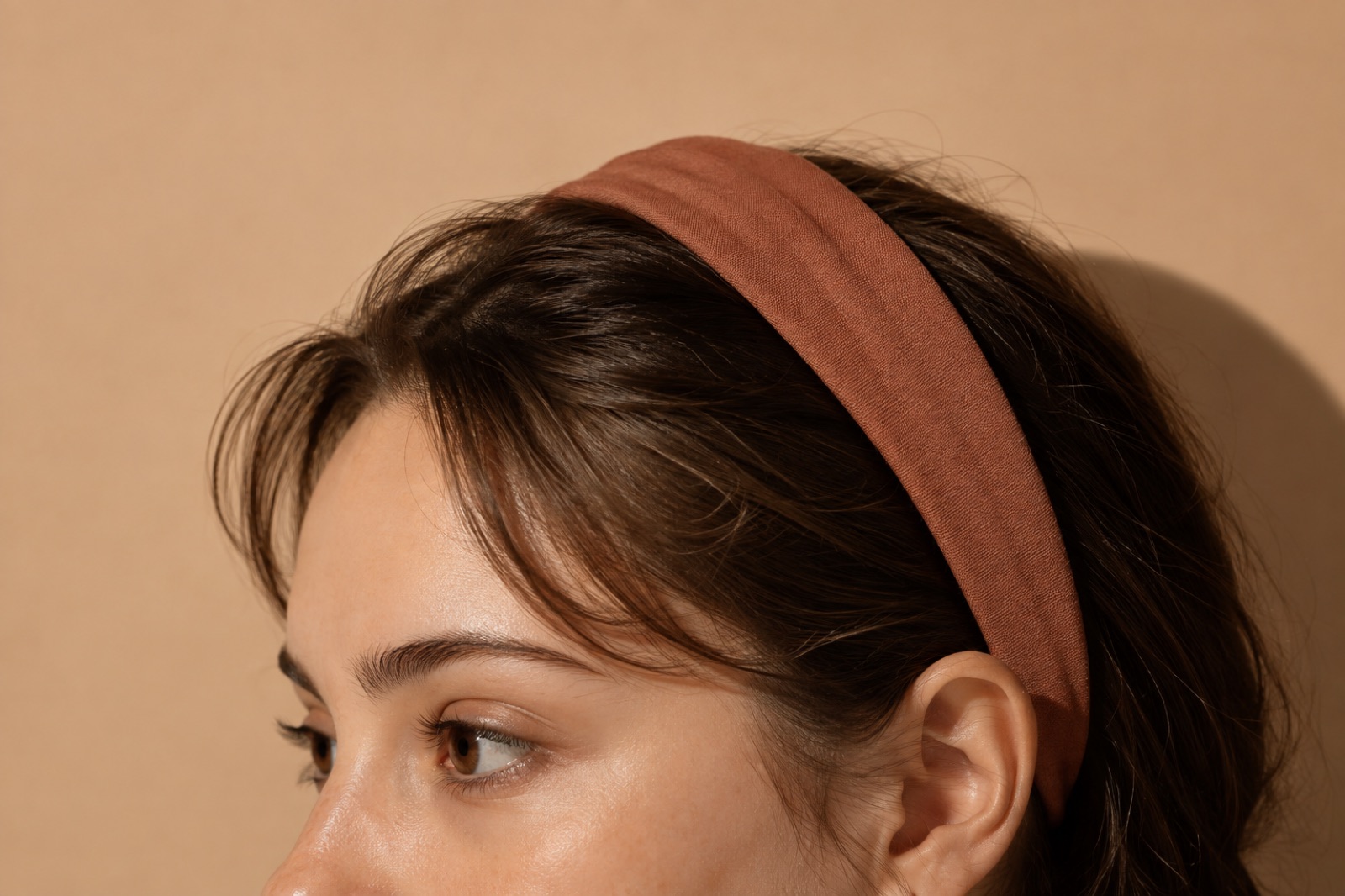
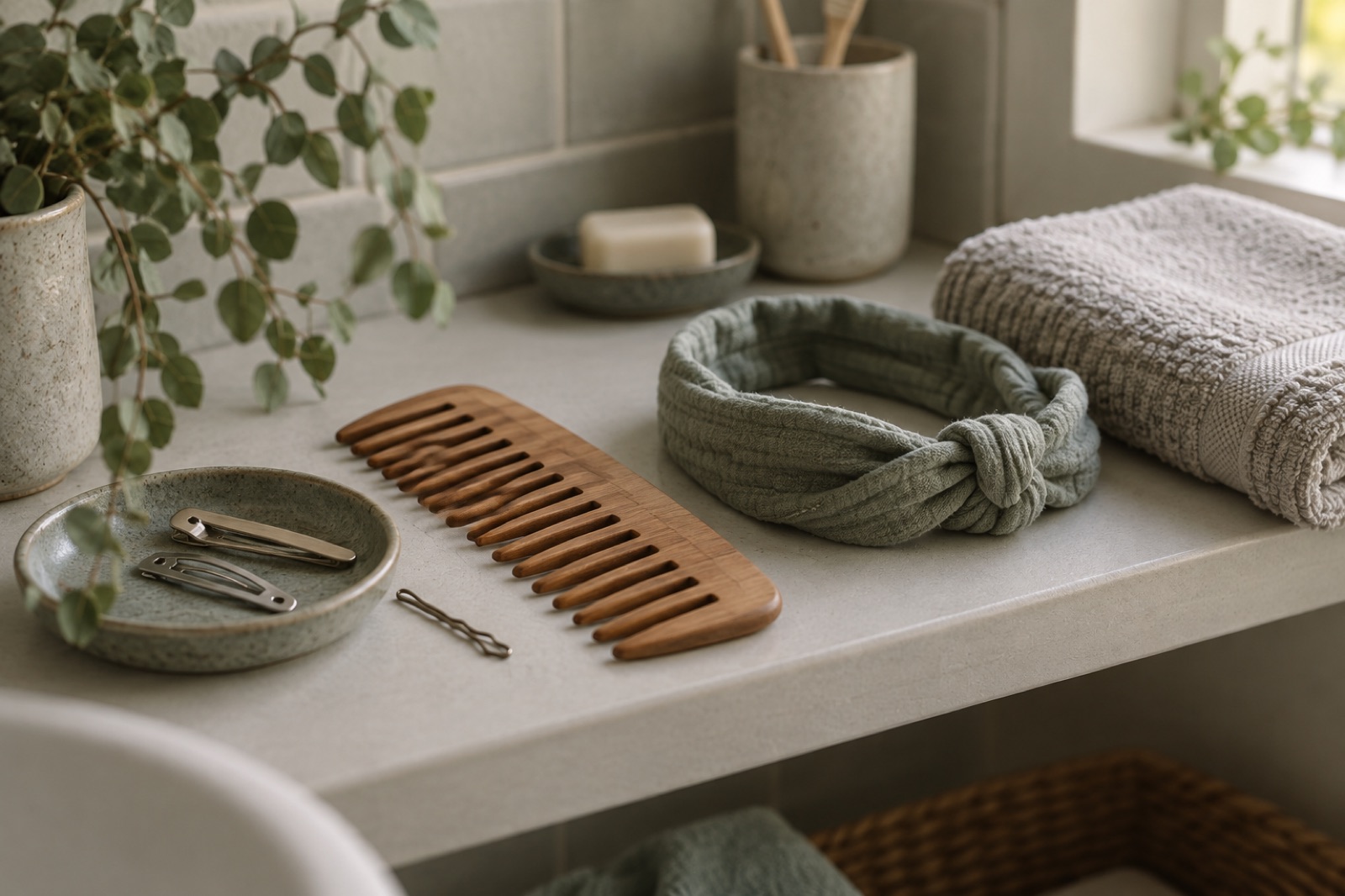
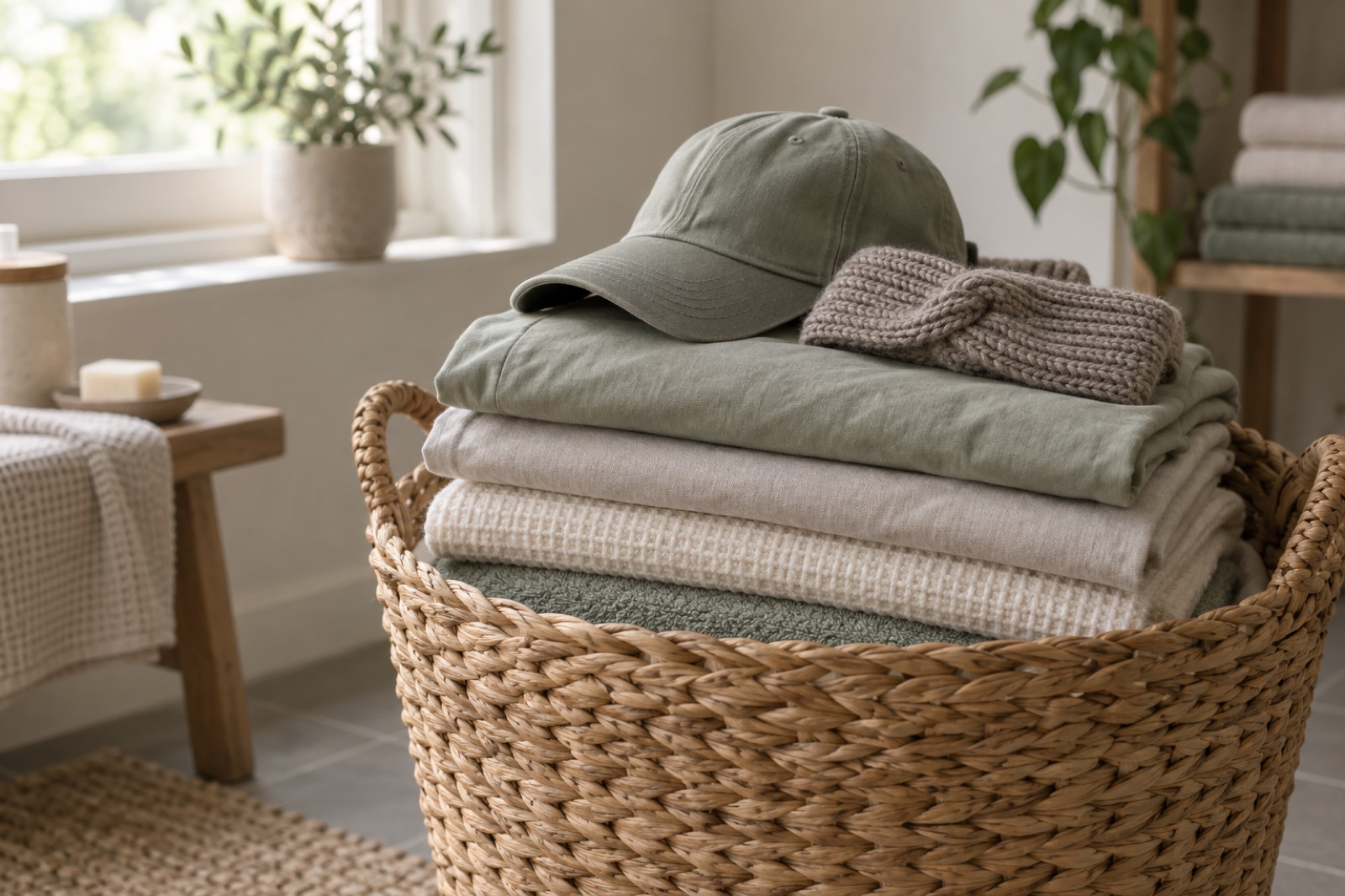
Bangs and hats can keep hair product residue in contact with your forehead, so check them together. The AAD advises washing things your hair touches, like pillowcases, hats, and headbands, to remove product residue. If you still break out on your forehead after washing your hat, it is worth checking which hair product is touching the inside of the hat.
Pressure and sweat from hats also play a role. NIAMS explains that pressure from things like helmets and high humidity do not cause acne directly but can make it worse. Rather than cutting your bangs right away, an approach in line with AAD guidance is to change the products that touch your bangs, wash what touches your forehead, and then watch for 4 to 6 weeks.
Is an oily forehead the reason you break out?
A shiny forehead does not mean oil amount alone explains forehead acne. In an observational study comparing 67 people with acne and 50 controls, people whose acne was mainly in the T-zone, including the forehead and nose, did not differ from controls in oil amount; a difference appeared only in people whose acne was mainly on the cheeks and chin (grade B). Another study comparing 36 Korean people with acne and 47 without found higher oil on the nose in the acne group, but people with acne also tended to rate their skin as oilier than the measurements showed (grade B). If forehead bumps are turning red, swollen, and filled with pus, see inflamed, pus-filled acne first for what to check before squeezing.
Why do forehead bumps keep spreading even when you exfoliate?
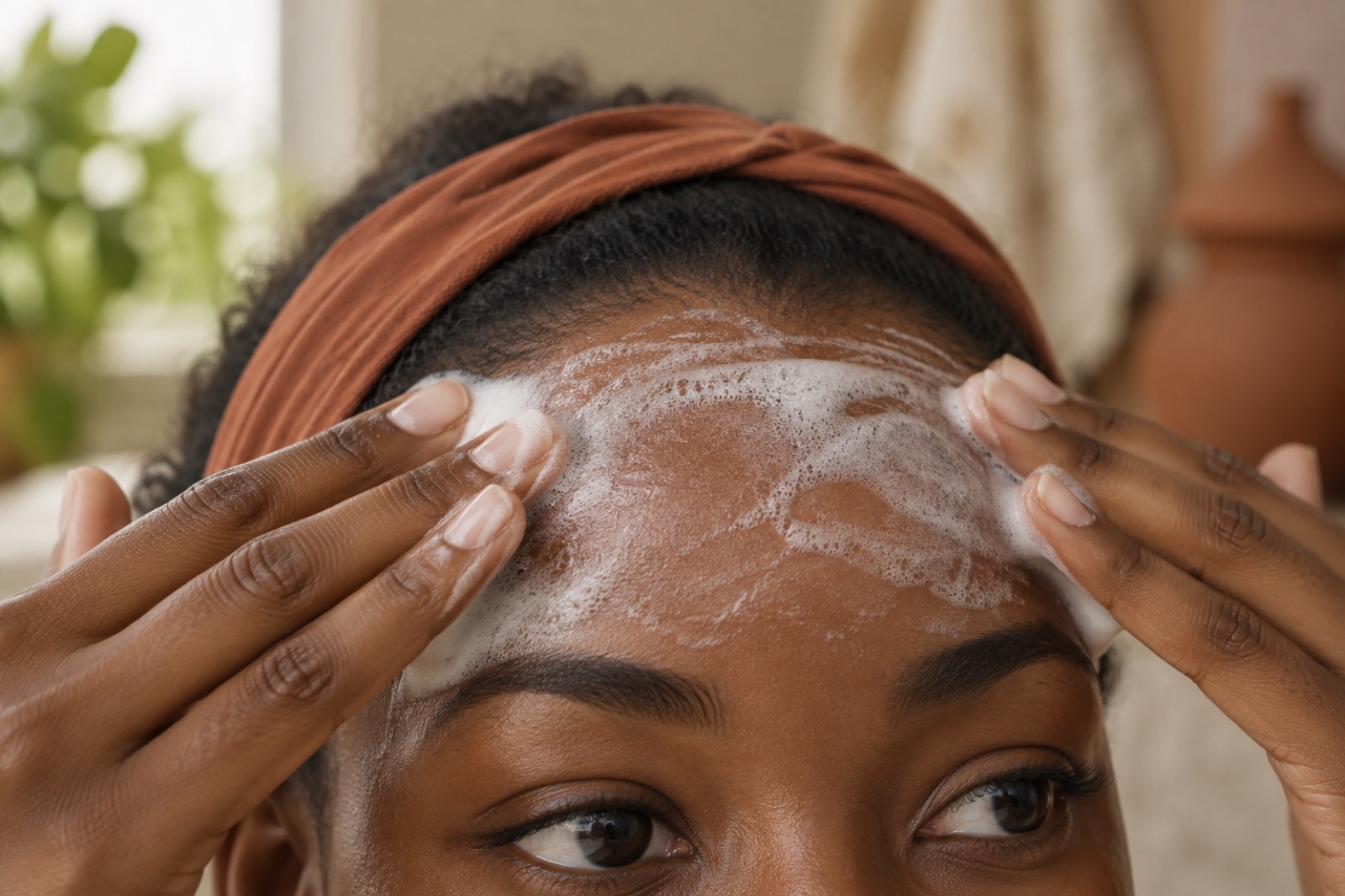
Rubbing to exfoliate adds irritation and can make things worse, and evidence that cosmetic-strength exfoliating ingredients reduce tiny bumps is still weak. The AAD says rubbing or scrubbing can irritate skin and make acne worse, and advises washing gently with your fingertips. It also considers drying the skin out too much an irritant that can raise acne risk.
Taken together, the research shows the most evidence for reducing comedone counts is for retinoids prescribed by doctors. On the other hand, our grade A sources include no evidence that products with low-strength (2% or less) salicylic acid or AHA alone reduce comedones more than placebo. Before exfoliating more often, sort out the products that touch your forehead.
How can you tell if a product is causing it?
The most practical way is to change the products that touch your forehead one at a time and wait long enough. Acne caused by products can appear from a few days to 6 months later (AAD), so if you only suspect recently changed products, you may miss the cause.
The non-comedogenic label is a reference, not a guarantee. A cosmetic’s potential to cause comedones can be checked with occlusive patch testing on human skin, and in one trial the positive control ingredient increased microcomedones by an average of 365.4% (grade A evidence). But you can’t tell from the label whether each product went through such a test, and the AAD also notes that some labeled products can still cause acne.
Is adult forehead acne different from teen acne?
Our sources include no study comparing forehead acne causes by age, so whether you are an adult or a teen, the order is the same: check what touches your forehead first. The NHS says acne is most common during puberty, and the AAD names hormone changes around periods, pregnancy, and menopause, and when starting or stopping birth control pills, as major causes of adult acne. These explanations are about acne on the face as a whole, though, and do not mean forehead acne specifically is hormonal.
If the tiny bumps on your forehead itch, or many same-sized bumps appear quickly, they may be a different hair follicle problem rather than acne. These can be hard to tell apart by appearance alone, so in that case, getting checked by a dermatologist first is more accurate than waiting while you switch hair products. For itchy bumps, also see Malassezia folliculitis.
5 forehead acne checks
| Check | What to look for | What to try |
|---|---|---|
| 1. Hair products and scalp oil | Do your hair mask, hair oil, wax, or spray say oil-free or non-comedogenic? Does your hair get oily easily? | Take a 4–6 week break from products without an oil-free or non-comedogenic label, switch hair oil to a water- or glycerin-based product, review how often you shampoo if your hair is oily |
| 2. Bangs and hairline | Did you rinse shampoo and conditioner off your forehead? Do your bangs touch your forehead all day? | Rinse shampoo and conditioner off your hairline and forehead, use less product on your bangs |
| 3. Hats, headbands, pillowcases | When did you last wash them? | Wash everything your hair touches |
| 4. Washing and exfoliating | How often do you scrub or rub? How many times a day do you wash? | Wash gently with fingertips, twice a day and after sweating |
| 5. Skincare and makeup | Products you changed in the past 6 months | Change only one at a time |
When to see a dermatologist
Consider seeing a dermatologist if:
- Nothing has changed 6 weeks after you stopped the hair product you suspected.
- The tiny bumps turn red and swollen, fill with pus, or become deep, painful nodules. The AAD says nodules and cysts tend to scar and need a dermatologist.
- Bumps remain after 6 to 8 weeks on one approach. The AAD suggests considering comedone extraction or a prescription from a dermatologist at that point. Even before then, if irritation starts or gets worse, stop using the product and don’t wait.
Frequently asked questions
Why do I keep getting tiny bumps on my forehead?
Often several things overlap: hair products and scalp oil, bangs or hats touching your skin, and rubbing when you wash. The American Academy of Dermatology (AAD) says oils from hair products can cause small bumps along the hairline and upper forehead, and that after you stop the product causing it, they usually settle gradually over 4 to 6 weeks.
What causes forehead acne in adults? Is it different from teens?
Our sources include no study comparing forehead acne causes by age. The AAD names hormone changes around periods, pregnancy, and menopause, and changes in birth control, as major causes of adult acne. But for the forehead, checking hair products and contact from bangs and hats first makes sense at any age.
Is forehead acne related to your period or hormones?
Hormone changes are a factor to consider in adult acne, but our sources include no study directly linking forehead acne to the menstrual cycle. Write down your period dates and the days your forehead bumps increased to see if they overlap.
Should I cut my bangs because of forehead acne?
Before cutting your bangs, check the hair products on them and anything else that touches your forehead. The AAD advises taking a break from hair products not labeled oil-free or non-comedogenic, and washing hats, headbands, and pillowcases.
Why do forehead bumps keep spreading even when I exfoliate?
The AAD says rubbing or scrubbing can irritate skin and make acne worse. Evidence that applying cosmetic-strength exfoliating ingredients alone reduces tiny bumps is still limited, so rather than exfoliating more often, sort out the products that touch your forehead first.
Can oily hair cause forehead acne?
The AAD says oil from your scalp can lead to forehead acne and suggests shampooing more often if your hair gets oily easily. If you use hair oil, it also mentions switching to a water- or glycerin-based product.
Sources
- AAD — Hair care products that cause acneInstitutional
- AAD — What's that blemish?Institutional
- AAD — 10 skin care habits that can worsen acneInstitutional
- AAD — Why won't my acne clear?Institutional
- AAD — Is it okay to wear makeup?Institutional
- AAD — 6 skin care habits that can clear acneInstitutional
- AAD — How to clear acne in skin of colorInstitutional
- The Difference in Sebum Secretion Affecting Development of Acne (2019, PMID 33911621)B
- Comparison of sebum secretion, skin type, pH in humans with and without acne (2006, PMID 16786345)B
- NIAMS — Overview of AcneInstitutional
- NHS 111 Wales — Health A-Z: Acne (updated 2024-11-07)Institutional
- Clinical utility of marketing terms used for over-the-counter dermatologic products (2018, PMID 29671667)A
- Safety assessment on comedogenicity of dermatological products containing d-alpha tocopheryl acetate in Asian subjects: A double-blind randomized controlled trial (2021, PMID 34471722)A
We never use YouTube videos or community posts as evidence for facts. Editorial policy
Product information related to this article
Product information from the site operator (KW Cosmetic, maker of the SKIN9HARI brand).
Revive Therapy N.F Toner
₩29,000 (KRW)
- Mildly acidic toner (pH 5.5–6.5), 150 ml
- Contains niacinamide 2.0% and beta-glucan 1.0%
- Low-irritation formula
- Contains ethanol and fragrance ingredients (orange peel oil, lavender oil); check the full ingredient list
Product details
- Type and size
- Clear, water-light toner, pH 5.5–6.5, 150 mL (5.07 fl oz)
- Step in routine
- Step 2 of 4 · Tone, right after cleansing
- How to use
- After cleansing, pour a small amount onto a cotton pad or your palms. Sweep or press gently over your face and neck. Pat lightly until fully absorbed. Follow with Revive Therapy N.F Ampoule, then N.F Cream.
- Before you use
- Contains ethanol (3.0%) and fragrance, including the allergens linalool and limonene — this is not an alcohol-free formula. If redness, swelling or itching occurs, stop using and consult a dermatologist.
Based on the official product page, checked 2026-10-02
Cosmetics do not diagnose, treat, cure or prevent any disease. Test results apply only to the stated conditions.