Neck Acne Causes: Hair Products, Collars, Shaving, or Hormones?
Neck acne often keeps coming back because several causes overlap there: hair products, friction and sweat from collars and bag straps, shaving, and hormone changes.
In this article7 sections
| Item | What to know | Evidence |
|---|---|---|
| Hair products | Small bumps along the hairline, upper forehead, and back of the neck can come from shampoo, conditioner, or styling products, and usually settle over 4 to 6 weeks after you stop using them | AAD, hair products |
| Friction and sweat | Gear, clothing, and bag straps that trap heat and sweat and rub the skin again and again can cause friction acne | AAD, sports equipment |
| Shaving and tight clothes | Shaving and frequent friction can damage hair follicles and are common triggers of follicle infection | AAD, folliculitis |
| Hormone changes | For acne in women that keeps returning on the lower face, jawline, and neck, the AAD says hormonal therapy from a doctor may help | AAD, hormonal therapy |
| Squeezing | Squeezing pushes the contents deeper into the skin, making inflammation worse and raising the risk of scars and infection | AAD, pimple popping |
What causes neck acne, and why the neck?
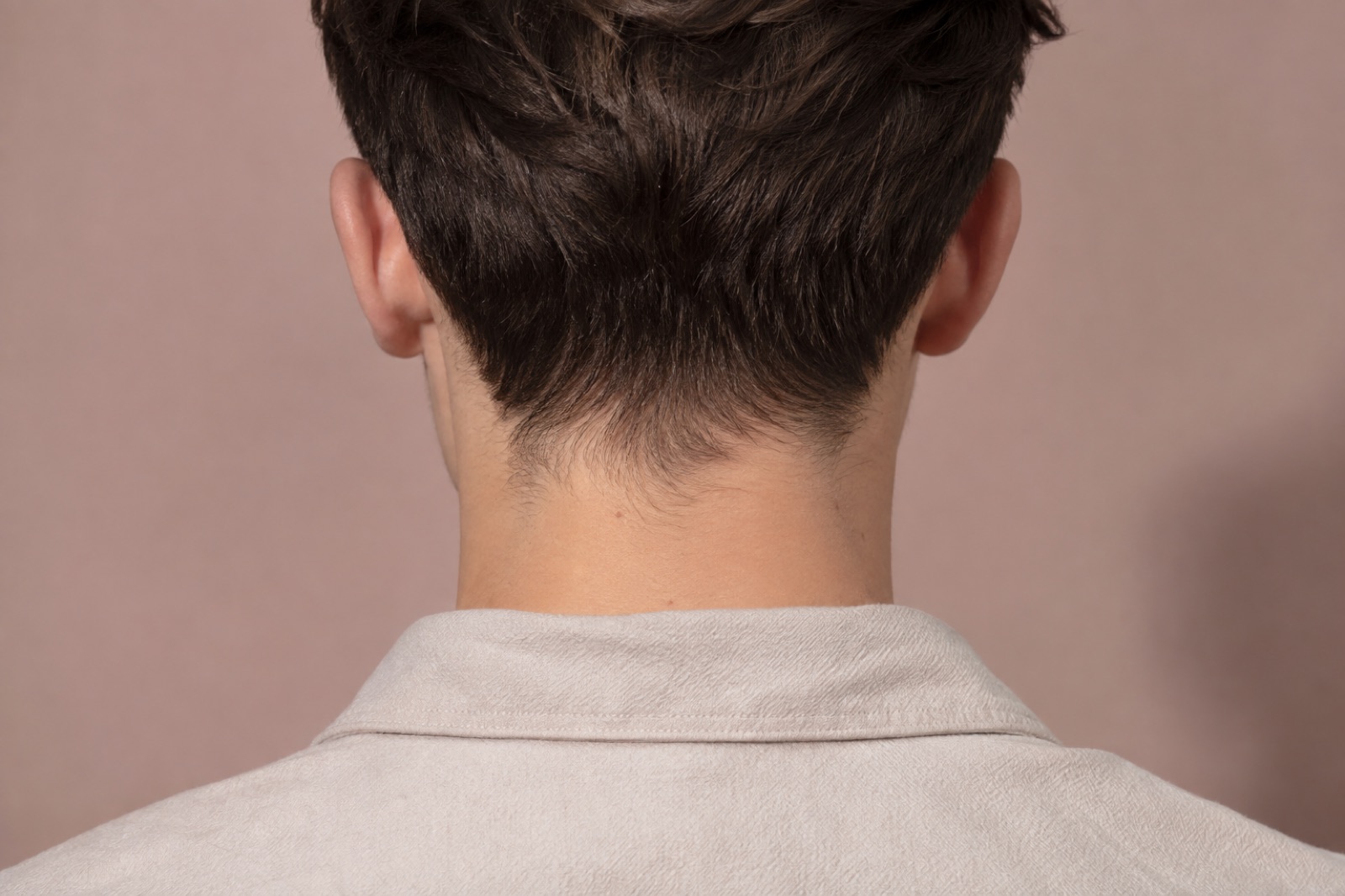
Your neck is in regular contact with hair, hair products, collars, bag straps, and sweat, so several causes can overlap and keep acne coming back. The American Academy of Dermatology (AAD) explains that small bumps along the hairline and the back of the neck can come from oils in shampoo, conditioner, and styling products. They can appear even in people who do not usually get acne, and they usually settle over 4 to 6 weeks after you stop using the product behind them.
So when looking for the reason behind neck acne, start by writing down “what touches my neck every day.” The AAD advises stopping hair products that are not labeled oil-free or non-comedogenic and also washing things your hair touches, such as pillowcases, hats, and headbands.
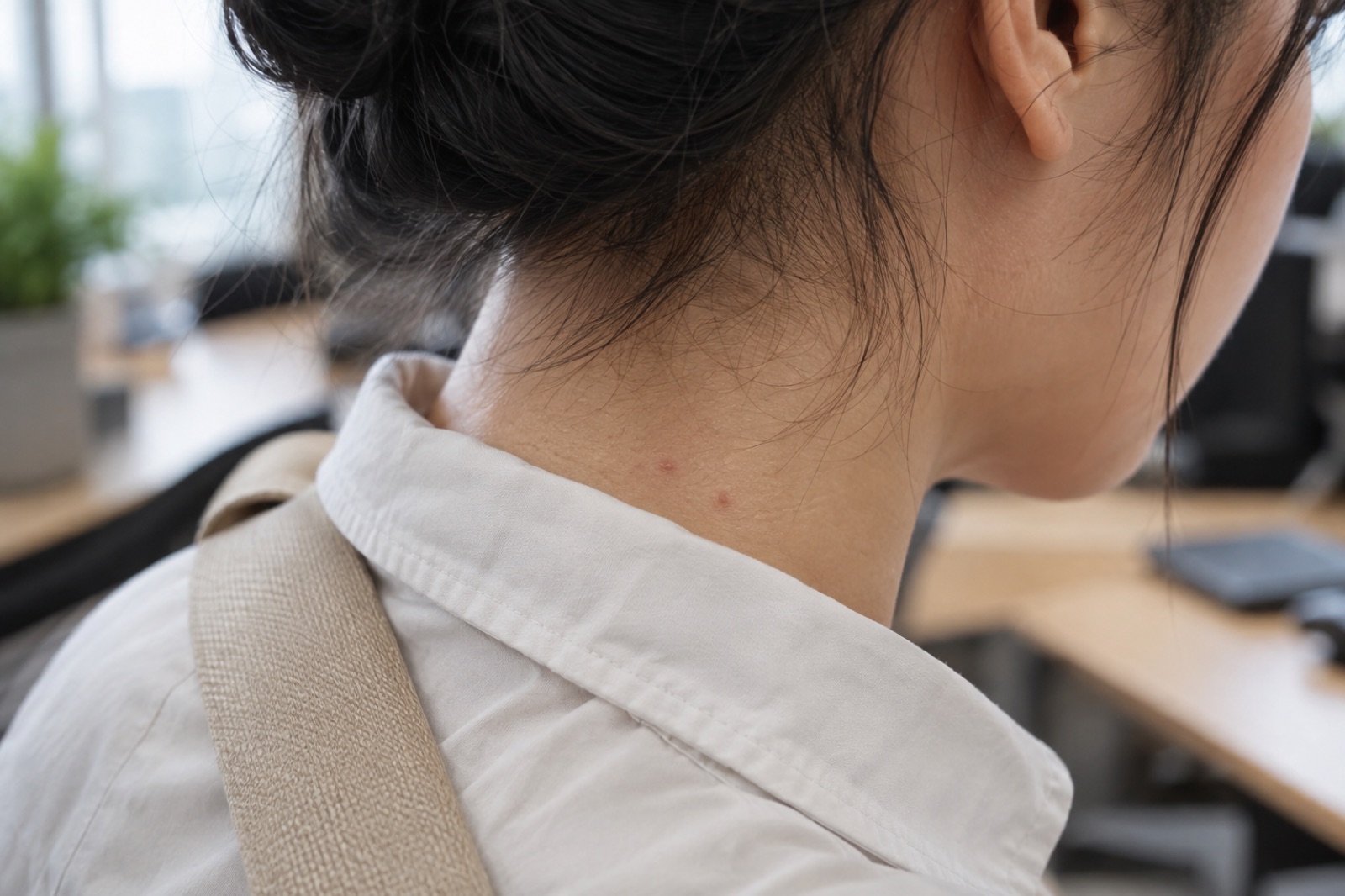
Acne on the neck and jawline: is it hormonal?
If breakouts keep coming back along the jaw and down the neck, hormone changes are worth checking first, but location alone cannot tell you the cause. The AAD notes that hormonal therapy from a doctor may help women whose acne keeps returning on the lower face, jawline, and neck. It lists hormone changes around periods, pregnancy, and menopause, and starting or stopping birth control pills, as major causes of adult acne.
If a woman’s neck acne comes with hair loss, more facial hair, or darkening skin on the neck or armpits, it should be checked by a doctor. The AAD describes this combination as a possible sign of polycystic ovary syndrome (PCOS) and recommends seeing a dermatologist or primary care doctor right away if you suspect it. We cover jaw-related factors in more detail in our article on jawline acne causes.
Collars, bag straps, and helmet straps: friction and sweat
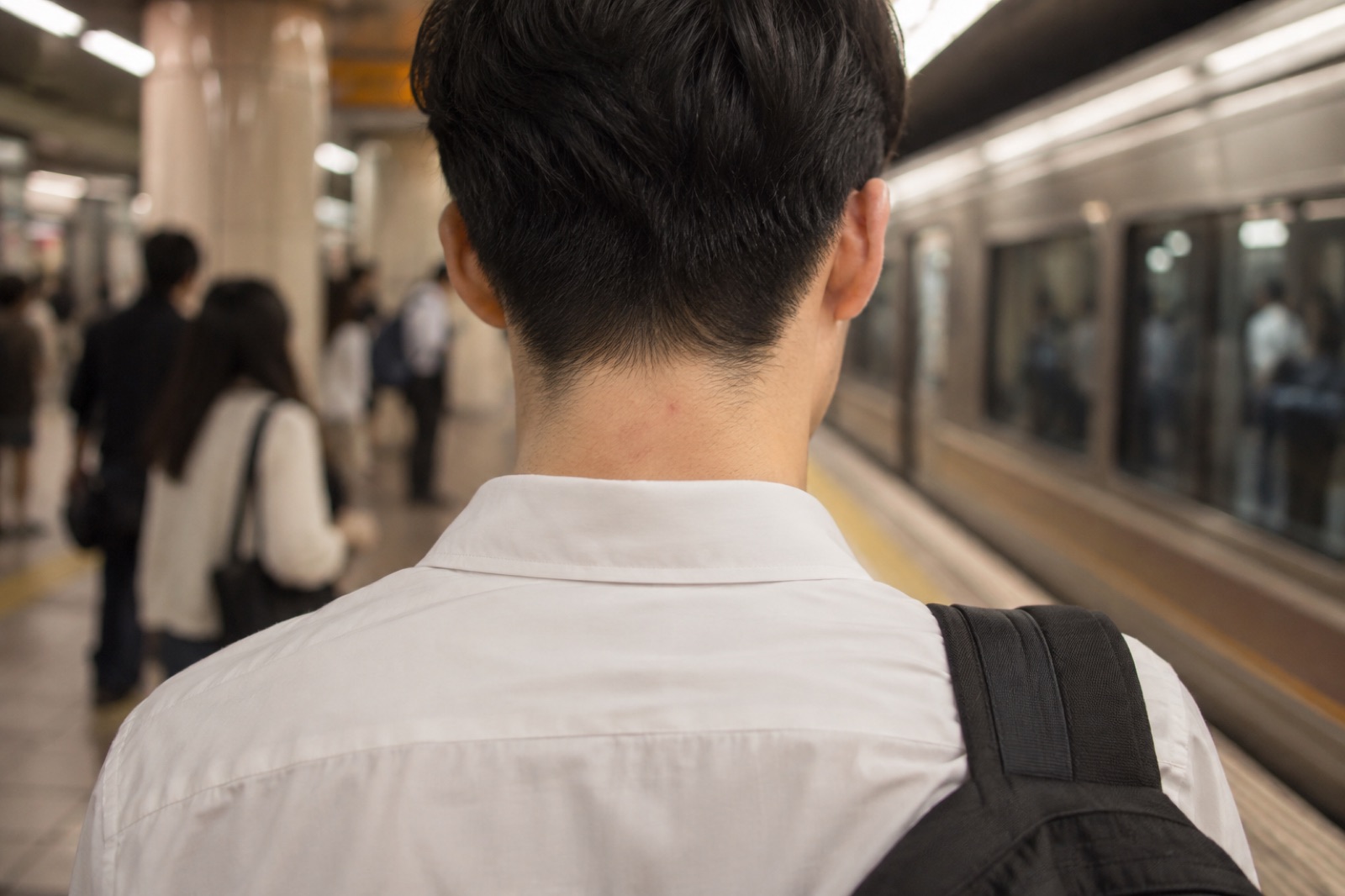
Anything that touches the same spot again and again and traps heat and sweat can cause friction acne. The AAD gives helmets, chin straps, shoulder pads, and backpack straps as examples, and explains that it often starts as small, rough bumps you can feel before you can see them, which can develop into pimples or deep cysts. Stiff collars and snug turtlenecks can be seen the same way.
The AAD recommends wearing freshly washed workout clothes, patting sweat away with a clean towel, and showering right after exercise. It also says a soft pad between gear and skin, or clothing made from fabric that wicks away sweat, can reduce friction.

Neck acne in men: it could be from shaving
If you shave your neck, add follicle infection (folliculitis), which is different from acne, to the list. The AAD explains that shaving and frequent friction are common causes of infection because they damage hair follicles, and it sees a red ring around each bump as a sign of infection. If shaving seems to be the cause, it suggests taking a 30-day break from shaving. If the bumps spread or you develop a fever during that break, don’t wait; see a doctor right away. To compare the two, see our folliculitis vs acne comparison.
If firm bumps keep appearing along the back hairline, it may be a condition other than ordinary acne, such as acne keloidalis nuchae. It is studied apart from common acne, with one study classifying lesions in 108 male patients (grade B), and most related research deals with in-office procedures and surgery.
Should you pop acne on your neck?
It is safer not to squeeze neck acne yourself. The AAD explains that squeezing pushes the contents deeper into the skin, making inflammation worse, and bacteria from your hands raise the risk of infection. For deep, painful acne, it advises easing pain and swelling with ice (wrapped in a clean cloth) instead of squeezing.
If a bump feels hard inside and hurts, it may be a nodule, which is deep inflammation, and it is not something to handle at home. We describe the features of this type of acne in our article on nodular acne. The AAD advises seeing a dermatologist if there is no change after 4 to 6 weeks of care.
Neck acne checklist: 5 things to track
Writing down these five items with dates helps you narrow down the conditions that bring breakouts back and makes it easier to explain at a doctor’s visit.
| Item | What to check | Example note |
|---|---|---|
| 1. Hair products | Whether oil, wax, or conditioner reaches the back of your neck, and whether they are labeled non-comedogenic or oil-free | Hair oil daily, 3 bumps on back of neck |
| 2. Clothes and straps | Whether breakouts line up with collars, turtlenecks, bag straps, or helmet straps | Right backpack strap area |
| 3. Sweat | How long until you shower after exercise; how you wipe off sweat | Showered 2 hours after workout |
| 4. Shaving | Whether breakouts line up with shaved areas; whether each bump has a red ring | Day after shaving, red rings |
| 5. Hormones and health | Menstrual cycle; starting or stopping birth control pills; hair loss or facial hair changes | 5 days before expected period |
When to see a dermatologist
- If deep, painful, or hard acne keeps coming back on your neck, consider seeing a dermatologist.
- If there is no change 6 weeks after stopping a hair product you suspect, the AAD recommends seeing a dermatologist.
- If acne comes with hair loss, more facial hair, or darkening skin on the neck or armpits, the AAD recommends seeing a dermatologist or primary care doctor right away.
- If red-ringed bumps in shaved areas keep spreading or become more painful, or continue even after a 30-day break from shaving, or firm bumps keep increasing along the back hairline, have a doctor check.
Frequently asked questions
What causes neck acne?
Your neck is in regular contact with hair, hair products, collars, bag straps, and sweat, so causes tend to overlap. The American Academy of Dermatology (AAD) describes hair products, repeated friction, shaving, and hormone changes as separate triggers for breakouts around the neck.
Why do I get acne on my neck and jaw?
The area under the chin and the neck is linked to both hormone changes and friction. The AAD covers acne in women that keeps returning on the lower face, jawline, and neck in its hormonal therapy guidance, and it also names friction from things like chin straps as a cause.
Why do adults keep getting acne on the neck?
The AAD lists hormone changes around periods, pregnancy, menopause, and starting or stopping birth control pills, along with stress, family history, and skincare or hair products not labeled non-comedogenic, as causes of adult acne. If it keeps coming back in the same spot, start by writing down what touches that spot.
Should you pop acne on your neck?
It is better not to squeeze it yourself. The AAD explains that squeezing pushes the contents deeper into the skin, making inflammation worse and raising the risk of scars and infection. If it is painful and swollen, cool it with ice wrapped in a clean cloth, and if it stays the same after 4 to 6 weeks of care, the AAD recommends seeing a dermatologist.
What is a hard, painful pimple on my neck?
If it feels hard inside and hurts, it may be a nodule, which is inflammation deep in the skin. The AAD advises not squeezing deep, painful acne at home and having a dermatologist handle it. If firm bumps keep appearing along the back hairline, it could be a different condition, so have a doctor check.
Sources
- AAD — Hair care products that cause acneInstitutional
- AAD — Sports equipment can cause acneInstitutional
- AAD — Is your workout causing your acne?Institutional
- AAD — FolliculitisInstitutional
- AAD — Stubborn acne: Hormonal therapy may helpInstitutional
- AAD — Adult acne: Why it happens and what you can do for itInstitutional
- AAD — Is that stubborn acne really acne?Institutional
- AAD — Pimple popping: Why only a dermatologist should do itInstitutional
- A Retrospective Cohort Study and Clinical Classification System of Acne Keloidalis Nuchae (2021, PMID 34055191)B
We never use YouTube videos or community posts as evidence for facts. Editorial policy
Product information related to this article
Product information from the site operator (KW Cosmetic, maker of the SKIN9HARI brand).
Revive Therapy N.F Toner
₩29,000 (KRW)
- Mildly acidic toner (pH 5.5–6.5), 150 ml
- Contains niacinamide 2.0% and beta-glucan 1.0%
- Low-irritation formula
- Contains ethanol and fragrance ingredients (orange peel oil, lavender oil); check the full ingredient list
Product details
- Type and size
- Clear, water-light toner, pH 5.5–6.5, 150 mL (5.07 fl oz)
- Step in routine
- Step 2 of 4 · Tone, right after cleansing
- How to use
- After cleansing, pour a small amount onto a cotton pad or your palms. Sweep or press gently over your face and neck. Pat lightly until fully absorbed. Follow with Revive Therapy N.F Ampoule, then N.F Cream.
- Before you use
- Contains ethanol (3.0%) and fragrance, including the allergens linalool and limonene — this is not an alcohol-free formula. If redness, swelling or itching occurs, stop using and consult a dermatologist.
Based on the official product page, checked 2026-10-02
Cosmetics do not diagnose, treat, cure or prevent any disease. Test results apply only to the stated conditions.