Folliculitis vs Acne on Your Face: 5 Ways to Tell Them Apart
Folliculitis is inflammation of a hair follicle, most often an infection that starts when germs get into a damaged follicle. Acne starts when a pore gets clogged with oil and dead skin cells.
In this article5 sections
| Topic | What the evidence says | Source |
|---|---|---|
| What folliculitis is | Usually a common infection that happens when skin bacteria such as Staphylococcus aureus get into a damaged hair follicle | AAD Folliculitis · Institution |
| What it looks like | An acne-like rash that appears suddenly; a red ring around the bumps is a sign of infection | AAD Folliculitis · Institution |
| Common triggers | Frequent friction, tight clothing, and shaving. After hot tub exposure, a rash usually appears within 12–48 hours | AAD Folliculitis · Institution |
| Range of causes | A group of conditions with different causes: bacteria, Malassezia yeast, Demodex mites, medicines, and more | Folliculitis research summary · A |
| Telling them apart at home | The sources we reviewed had no study on how accurate at-home ways of telling folliculitis from acne are | Folliculitis research summary |
Folliculitis vs acne: what’s the difference?
Folliculitis and acne start in different ways. The American Academy of Dermatology (AAD) explains that acne whiteheads and blackheads form when pores get clogged with excess oil, dead skin cells, and bacteria. Folliculitis, on the other hand, is described as an infection that happens when skin bacteria get into a follicle damaged by friction, shaving, or similar causes. Research on folliculitis also groups separate conditions with different names and causes, such as Malassezia folliculitis, razor bumps after shaving (pseudofolliculitis), and acne keloidalis nuchae on the back of the neck, in addition to bacterial folliculitis.
5 ways to tell folliculitis from acne
The table below gathers clues to look for. It is not a diagnostic tool. The sources we reviewed had no evidence confirming how accurate at-home ways of telling folliculitis from acne are.
| Point | Clues for acne | Clues for folliculitis | Source |
|---|---|---|---|
| 1. How it starts | Pores clogged with oil and dead skin | After follicles are damaged by friction, shaving, or tight clothing | AAD |
| 2. What it looks like | A mix of whiteheads, blackheads, papules, and pustules | An acne-like rash; bumps may have a red ring around them | AAD · NHS |
| 3. Where it shows up | Face (almost everyone with acne), back (more than half), chest (about 15%) | Anywhere hair grows, except the palms and soles | NHS · AAD |
| 4. Trigger and timing | Most often linked to hormone changes in puberty; family history | After shaving or hair removal; 12–48 hours after hot tub exposure | NHS · AAD |
| 5. How it changes | Judge after sticking with one care routine for 6–8 weeks | Often goes away on its own once you stop what caused it (if your immune system is healthy) | AAD |
The NHS explains that a GP diagnoses acne by looking at the types of spots, such as blackheads or painful red nodules. That’s why seeing blackheads and whiteheads together is the first clue that points toward acne.
Folliculitis or acne on the chin, neck, or hairline?
Location alone can’t tell you which one it is; you also need to look at what touches that spot. On areas you shave or where collars rub all day, like the chin and neck, first check whether it overlaps with the follicle-damage triggers the AAD lists (shaving, friction, tight clothing). The hairline is also a place to consider hair products and hair contact, so we cover it separately in hairline acne. If itchy bumps spread across the trunk, such as the back or chest, add Malassezia folliculitis to the list of possibilities.
Can you pop folliculitis?
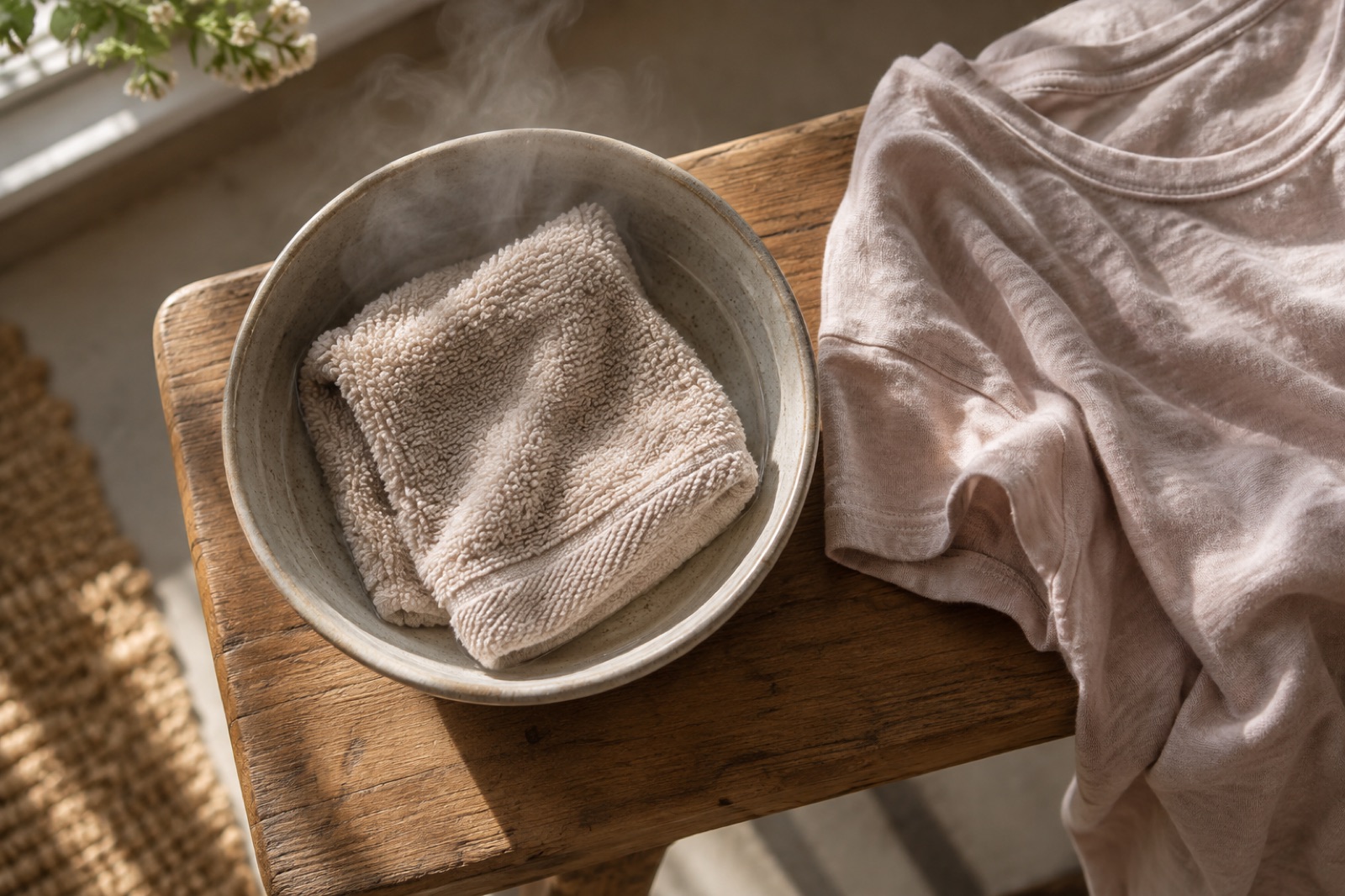
It’s safer to leave folliculitis alone too. The health organization sources behind this article don’t give separate advice on squeezing folliculitis, but the AAD explains that squeezing pimples yourself raises the risk of infection from bacteria on your hands. The AAD’s folliculitis guidance suggests a warm compress for 15 to 20 minutes, 3 to 4 times a day, instead of squeezing. If shaving, tweezing, or waxing is the cause, it advises a 30-day break from it. It also advises wearing loose clothing in hot, humid weather and changing clothes and showering right after exercise.
When to see a dermatologist
- When a rash doesn’t go away or you’re not sure what it is. The AAD recommends seeing a dermatologist in this case.
- When it doesn’t change after 6 to 8 weeks of care for what you thought was acne. The AAD notes that acne that won’t go away may be a different condition.
- When you have a condition or take medicine that affects your immune system. The AAD’s description of it going away on its own assumes a healthy immune system.
- When you wonder whether you need an antibiotic or antifungal. That is decided at a medical visit after the cause is confirmed.
Frequently asked questions
What does folliculitis look like on the face?
The American Academy of Dermatology (AAD) describes it as an acne-like rash that appears suddenly, and sees a red ring around the bumps as a sign of infection. A mix of blackheads and whiteheads points more toward acne, but the sources we reviewed had no study checking how accurate at-home ways of telling them apart are.
What causes folliculitis on the face?
The AAD describes it as a common infection that happens when skin bacteria such as Staphylococcus aureus get into hair follicles damaged by friction, shaving, or tight clothing. Research also groups together conditions with other causes, such as Malassezia yeast, Demodex mites, and medicines, and the right medical approach depends on the cause.
Is folliculitis on the chin caused by shaving?
Shaving is one of the common triggers of follicle damage that the AAD lists. But the location alone can't tell you the cause, so write down by date whether anything changes while you take a break from shaving.
What causes folliculitis on the neck?
Our sources include no studies that looked at the neck alone. The neck is where collars rub all day and where many people shave, so first check whether it overlaps with the follicle-damage triggers the AAD lists: friction, tight clothing, and shaving.
What is the difference between folliculitis and pustular acne?
It's hard to tell the two apart just because you can see pus. Acne starts with pores clogged by oil and dead skin and often comes with blackheads and whiteheads, while the clue the AAD gives for folliculitis is that each bump may have a red ring around it. If you're not sure, see a dermatologist.
Does folliculitis go away on its own?
The AAD explains that in people with a healthy immune system, it often goes away on its own once the habit that caused it stops. If shaving, tweezing, or waxing is the cause, the AAD suggests taking a 30-day break.
How is it different from a sebaceous cyst?
Our sources include no criteria for telling a sebaceous cyst, folliculitis, and acne apart at home. The AAD's advice is to see a dermatologist if you're not sure what it is.
Sources
- AAD — FolliculitisInstitutional
- AAD — Is that stubborn acne really acne?Institutional
- AAD — What's that blemish?Institutional
- AAD — Pimple popping: Why only a dermatologist should do itInstitutional
- NHS — Acne (reviewed 2026-09-22)Institutional
- NHS 111 Wales — Health A-Z: Acne (updated 2024-11-07)Institutional
- Critical synthesis of available data in Malassezia folliculitis and a systematic review of treatments (2020, PMID 32012377)A
We never use YouTube videos or community posts as evidence for facts. Editorial policy
Product information related to this article
Product information from the site operator (KW Cosmetic, maker of the SKIN9HARI brand).
Revive Therapy N.F Ampoule
₩31,000 (KRW)
Separate from the condition and ointments discussed here, this is one cosmetic for the everyday hydrating step, listed as facts only. Revive Therapy N.F Ampoule is a 30 ml ampoule with betaine and panthenol, free of fragrance and ethanol per its ingredient list, but it has not been tested on any of the skin states in this article's table. Its product page places it after toner and before cream, and it should not go on broken skin. It is a cosmetic, not a medicine; if redness or pain keeps going, see a doctor first.
- Ampoule with vegan rice PDRN (listed as Sodium DNA), betaine and panthenol, 30 ml
- No added fragrance, essential oils, ethanol, colorants or silicones (based on the full ingredient list)
- Low-irritation formula
Product details
- Type and size
- Clear, lightweight ampoule, 30 mL (1.01 fl oz)
- Step in routine
- Step 3 of 4 · Ampoule, after toner and before cream
- How to use
- After toner, use the dropper to dispense 2–3 drops into your palm or directly onto your face. Press gently into skin until absorbed. Follow with Revive Therapy N.F Cream to seal in moisture.
- Before you use
- Patch test on your inner arm before first use if you have very reactive skin. If redness, swelling or itching occurs, stop using and consult a dermatologist.
Based on the official product page, checked 2026-10-02
Cosmetics do not diagnose, treat, cure or prevent any disease. Test results apply only to the stated conditions.