Non-Comedogenic: What It Means and 4 Steps to Check Products
Non-comedogenic is a label meaning a product is unlikely to cause comedones, or clogged pores. It is not an official standard, so it is worth checking how the product was tested.

In this article6 sections
| Item | What we know | Evidence |
|---|---|---|
| Comedo (comedone) | A clogged pore that becomes a whitehead or blackhead; the non-inflamed type of acne lesion | Comedones research summary · A |
| Non-comedogenic label | Not an official standard managed by regulators (literature review, 1985–2017) | Comedogenicity · A |
| Comedogenicity testing | Can be assessed with an occlusive patch test on human back skin. The positive control, octyl palmitate, raised microcomedones by an average of 365.4% | Comedogenicity · A/B |
| Ingredient ratings | No grade A evidence that ingredient-by-ingredient comedogenic scores predict facial acne | Comedogenicity · A |
| Health organization advice | NICE, the AAD, the NHS, and NIAMS advise avoiding oil-based and comedogenic products and using non-comedogenic, oil-free ones | Institutional sources |
What does non-comedogenic mean? What is a comedo?
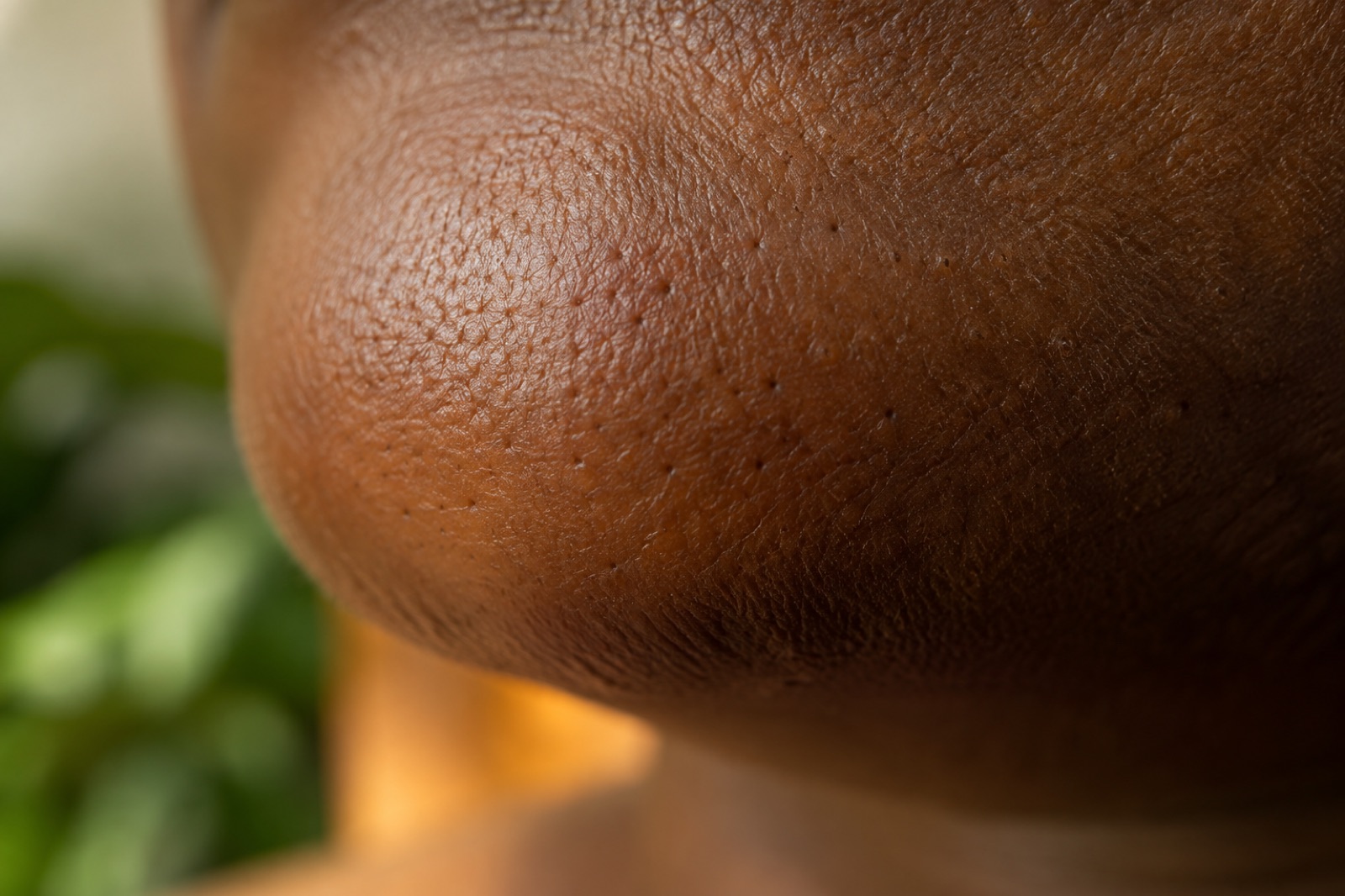
A comedo (plural: comedones) is a clogged pore that becomes a whitehead or blackhead, and non-comedogenic is a label meaning a product is unlikely to cause them. In acne, comedones are classed as the non-inflamed type of lesion.
However, this label is not an official standard managed by regulators. A study that reviewed the literature from 1985 to 2017 concluded that labels such as “low-irritation,” “fragrance-free,” “non-comedogenic,” and “oil-free” are not managed by regulators and vary in clinical usefulness. That means the testing behind the same “non-comedogenic” label can differ from product to product.
Which ingredients clog pores?
There is no evidence from human faces for a list of ingredients that clog pores. The grade A evidence we reviewed does not show that ingredient-by-ingredient comedogenic ratings predict real facial acne, and it doesn’t tell us how results change with an ingredient’s concentration or how diluted it is in a finished product.
What has been confirmed is that comedogenicity can be tested on human skin. Substances that caused comedones in the rabbit ear model also produced comedones when applied under an occlusive patch on human backs for one month (grade B), and in another test, the positive control octyl palmitate raised microcomedones by an average of 365.4%. That is why how a finished product was tested tells you more than an ingredient list.

Why do you break out from non-comedogenic products?
The non-comedogenic label doesn’t guarantee you won’t break out. Tests of finished products are usually small and limited to one body site. In a comedogenicity test of creams containing vitamin E, 12 people completed the study, the results were measured on the back, and one product increased microcomedones in 4 of the 12.
Timing also makes the cause hard to pin down. The American Academy of Dermatology (AAD) notes that acne caused by cosmetics can appear anywhere from a few days to 6 months later, and that oil from hair products can be linked to breakouts along the hairline and forehead. In a review of self-reported surveys, acne was also the most frequently reported cosmetic-related side effect (36%), though that result doesn’t show cause and effect.

How do you check non-comedogenic sunscreen and cushion foundation?
Use the same standard for sunscreen, cushion foundation, and liquid foundation, but since they stay on your face all day, also look at how you take them off in the evening. The UK’s NICE advises avoiding oil-based and comedogenic moisturizers, sunscreens, and makeup, and removing makeup at the end of the day. The AAD also advises removing all makeup, including eye makeup, before going to bed.
The label means the same thing on moisturizers, lotions, concealers, and powders. Our sources include no official document that sets non-comedogenic test standards by product type, so if a product carries the label, look for its test method (occlusive patch duration, number of people, test site). If you can’t find it, judge with your own skin log from the 4 steps below.
4 steps to check for pore-clogging ingredients
Whether a product clogs pores is better judged by looking at the label, the test method, the ingredient list, and your own skin log, in that order, rather than one ingredient.
| Step | What to check | How to read it |
|---|---|---|
| 1. Label | Whether it says oil-free or non-comedogenic | The first filter NICE and the AAD recommend. The label alone is not a guarantee |
| 2. Test method | Whether it was an occlusive patch test on human skin; duration and number of applications; number who completed it; test site; test lab and report number | If there’s a label but no way to see the method, hold off on judging |
| 3. Ingredient list | Oils, esters, and similar ingredients near the top | Don’t judge a product by one ingredient; use it as a record to compare if you react |
| 4. Your skin log | One new product at a time, start date, where breakouts appear | Reactions can show up as late as 6 months, so dates matter most |
When to see a dermatologist
- If tiny bumps or blackheads keep increasing for months even after switching products, consider seeing a dermatologist.
- For deep, painful acne or acne that leaves scars, see a dermatologist.
- If itching or a red rash appears where you applied a product, stop using it and see a doctor.
- If you use a prescription acne medicine, ask the clinic that prescribed it about moisturizer and makeup choices too.
Frequently asked questions
What does non-comedogenic mean?
It is a label meaning a product is unlikely to cause comedones, the clogged pores that become whiteheads and blackheads. However, it is not an official standard managed by regulators, so the testing behind the same label can differ from product to product.
If a product doesn't say non-comedogenic, does that mean it clogs pores?
No. Because the label is not an official standard, a missing label alone doesn't tell you the product tends to cause comedones. Checking whether it was tested, and how, is more accurate.
What ingredients are comedogenic?
There is no evidence from human faces for a list of ingredients that do or don't clog pores. Results can change with an ingredient's concentration and how diluted it is in the finished product, so how the finished product was tested on human skin is more direct information than an ingredient list.
How does the comedogenic rating scale work?
Charts that rate ingredients from 0 to 5 are widely shared, but the literature we reviewed has no evidence that these ratings predict acne on human faces. It is also unknown whether they hold for the concentration and texture of a finished product, so don't judge a product by a rating chart alone.
How is non-comedogenic testing done?
A common method is an occlusive patch test: the test material is applied repeatedly under a covered patch on the skin of the back. After a set period, changes in comedones are compared with an untreated site or a site with a known comedone-causing substance. Check the number of people, the duration, and the test site.
Should I choose non-comedogenic sunscreen and makeup?
The UK's NICE advises avoiding oil-based and comedogenic moisturizers, sunscreens, and makeup, and removing makeup at the end of the day. The American Academy of Dermatology (AAD) also recommends products labeled oil-free and non-comedogenic.
Sources
- Clinical utility of marketing terms used for over-the-counter dermatologic products (2018, PMID 29671667)A
- A human model for assessing comedogenic substances (1982, PMID 7138047)B
- Safety assessment on comedogenicity of dermatological products containing d-alpha tocopheryl acetate in Asian subjects: A double-blind randomized controlled trial (2021, PMID 34471722)A
- Assessing the Adverse Effects and Safety Concerns Related to Cosmetic and Skincare Products: A Systematic Review (2025, PMID 40330400)A
- AAD — Is it okay to wear makeup?Institutional
- AAD — Hair products and acneInstitutional
- NICE NG198 — Acne vulgaris: managementInstitutional
We never use YouTube videos or community posts as evidence for facts. Editorial policy
Product information related to this article
Product information from the site operator (KW Cosmetic, maker of the SKIN9HARI brand).
Revive Therapy N.F Toner
₩29,000 (KRW)
- Mildly acidic toner (pH 5.5–6.5), 150 ml
- Contains niacinamide 2.0% and beta-glucan 1.0%
- Low-irritation formula
- Contains ethanol and fragrance ingredients (orange peel oil, lavender oil); check the full ingredient list
Product details
- Type and size
- Clear, water-light toner, pH 5.5–6.5, 150 mL (5.07 fl oz)
- Step in routine
- Step 2 of 4 · Tone, right after cleansing
- How to use
- After cleansing, pour a small amount onto a cotton pad or your palms. Sweep or press gently over your face and neck. Pat lightly until fully absorbed. Follow with Revive Therapy N.F Ampoule, then N.F Cream.
- Before you use
- Contains ethanol (3.0%) and fragrance, including the allergens linalool and limonene — this is not an alcohol-free formula. If redness, swelling or itching occurs, stop using and consult a dermatologist.
Based on the official product page, checked 2026-10-02
Cosmetics do not diagnose, treat, cure or prevent any disease. Test results apply only to the stated conditions.