Fungal Acne (Malassezia Folliculitis): 4 Clues vs Regular Acne
Fungal acne, or malassezia folliculitis, is inflammation of the hair follicles caused by a yeast that normally lives on the skin, and it shows up as itchy bumps on the upper body.

In this article6 sections
| Point | What the evidence shows | Source |
|---|---|---|
| What it is | Malassezia is a yeast that normally lives on the skin, and when internal and external factors overlap it can become an opportunistic cause of folliculitis | 2020 systematic review · A |
| Look and location | Itchy follicular papules and pustules on the upper body | 2020 systematic review · A |
| Who commonly gets it | Young to middle-aged adults, and people with weakened immunity | 2020 systematic review · A |
| How it’s confirmed | A collected sample is viewed under a microscope for yeast cells, and a biopsy confirms it | 2020 systematic review · A |
| Medical care | The clinical guideline centers on antifungal medicines, and the specific medicine is decided in the clinic | 2015 Danish guideline · A |
What is fungal acne (malassezia folliculitis)?
Malassezia folliculitis, often called fungal acne, is inflammation of the hair follicles caused by Malassezia, a yeast that normally lives on the skin, and it is considered a different condition from acne. A 2020 systematic review describes how this normal skin yeast can become an opportunistic cause when internal factors such as weakened immunity overlap with external factors such as hot, humid conditions and clothing. A 1990 electron microscope study found blockage even in non-inflamed follicles of patients with active disease, and the authors suggested that follicle blockage may come first, with yeast overgrowth following (grade B). Skin microbiome studies have repeatedly linked a higher share of Malassezia with dandruff and seborrheic dermatitis, but that is not proof that it is the cause.
4 clues that set it apart from acne
The four points below are only clues that suggest it. Even if several apply, a test is needed to confirm it.
| Clue | Malassezia folliculitis | Acne | Source |
|---|---|---|---|
| 1. Location | Concentrated on the upper body (back and chest) | Face (almost everyone with acne), back (more than half), chest (about 15%) | 2020 review · NHS |
| 2. Itching | Comes with itching | May feel warm or painful | 2020 review · NHS |
| 3. Environment | Hot, humid conditions and external factors such as clothing | Hormone changes during puberty, family history | 2020 review · NHS |
| 4. Response to care | No change with acne care | Stick with one acne routine for 6–8 weeks, then judge | AAD |
Is my back acne really acne, or malassezia folliculitis?
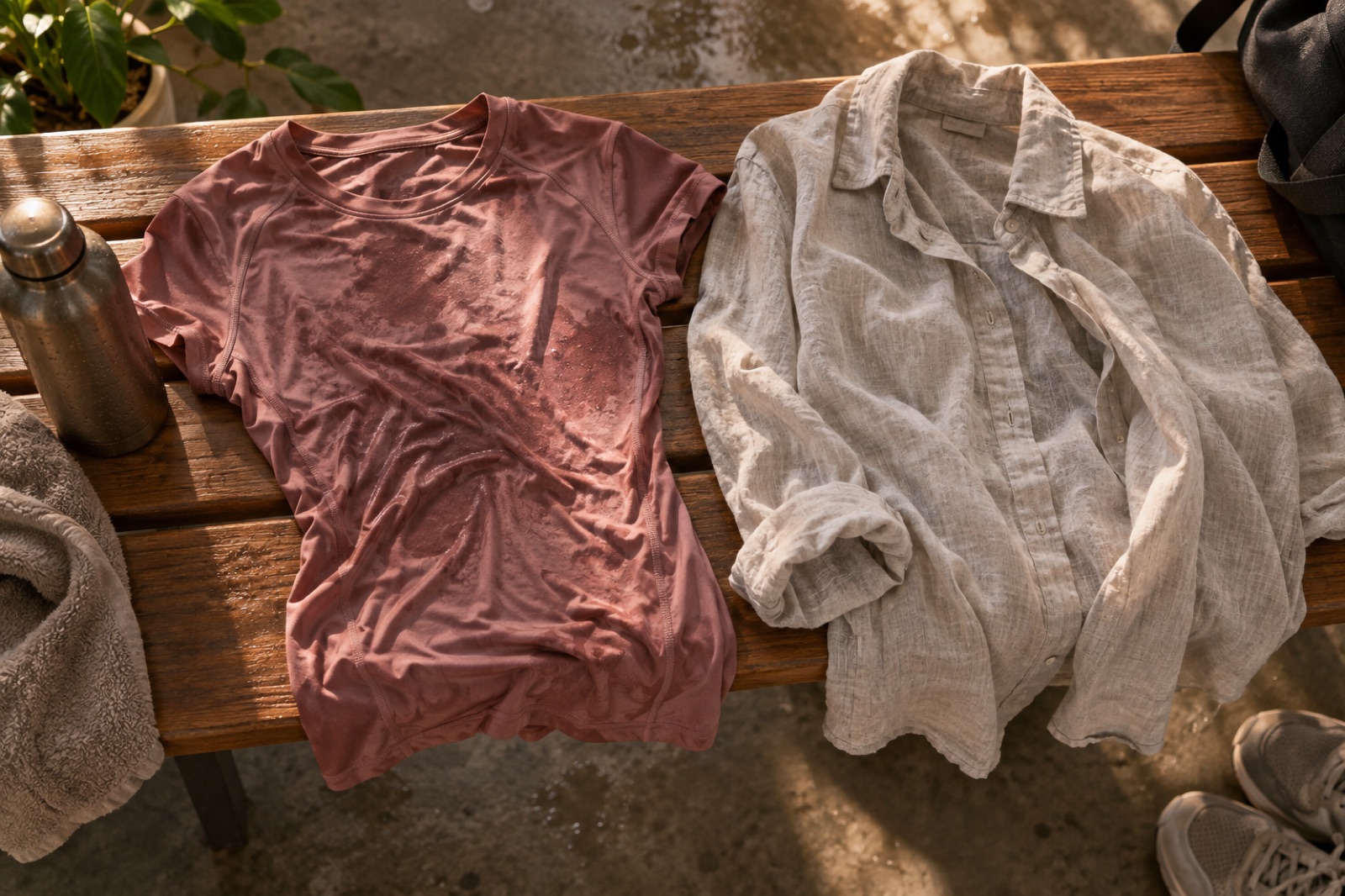
Bumps on the back can be acne, bacterial folliculitis, or malassezia folliculitis, so it’s hard to decide by appearance alone. According to the UK NHS, more than half of people with acne also get it on their back. The American Academy of Dermatology (AAD) lists friction, tight clothing, and hot, humid conditions as triggers for bacterial folliculitis, which overlap with the external factors for malassezia folliculitis. That is why the 2020 review concluded that malassezia folliculitis should be considered when looking at follicular lesions on the torso.
Can you tell at home?
You can’t confirm it at home; it is confirmed in the clinic with a microscope test. According to the 2020 review, diagnosis usually involves collecting a sample with tape or a comedone extractor and looking under a microscope for budding yeast cells without hyphae, and a biopsy is used to confirm it. Our sources had no study checking how accurate at-home rules for telling folliculitis from acne are. Current evidence also can’t answer whether cosmetics such as cleansers help with malassezia folliculitis.

How is it handled in the clinic?
Any cream or medicine for malassezia folliculitis is decided in the clinic after a test confirms it, and clinical guidelines center on antifungal medicines. The 2020 review concluded that management should aim to control inflammation and keep it from coming back. Your doctor uses the test results to decide which medicine to use and for how long.
When to see a dermatologist
- When itchy bumps on your back or chest spread or keep coming back in the same place.
- When nothing changes after 6 to 8 weeks of caring for it as acne. The AAD says acne that won’t clear may be another condition and recommends a diagnosis from a dermatologist.
- When you have a condition or take medicine that weakens your immune system. The 2020 review notes that it is common in people with weakened immunity.
- Before your visit, keep a dated log of where the bumps appear, whether they itch, and your exercise, sweating, and clothing. It will make things easier to explain.
Frequently asked questions
What are the symptoms of malassezia folliculitis?
A 2020 systematic review describes itchy follicular bumps and pus-filled spots on the upper body (back and chest) as its hallmark. Noticeable itching is a first clue for telling it apart from acne, but only a test can confirm it.
What causes malassezia folliculitis?
It happens when Malassezia, a yeast that normally lives on the skin, causes inflammation in hair follicles. It can develop when internal factors such as weakened immunity overlap with external factors such as hot, humid conditions and clothing, and it is described as common in young to middle-aged adults and in people with weakened immunity.
Can fungal acne appear on the face?
The review we used describes the upper body as the main area, and our sources had no evidence on how often it appears on the face. If small, itchy bumps keep coming back on your face, don't assume it's acne; getting checked by a dermatologist is more accurate.
How is malassezia folliculitis diagnosed?
The usual method is to collect a sample with tape or a comedone extractor and look under a microscope for budding yeast cells without hyphae, and a biopsy is used to confirm it. Your doctor uses these results to decide which medicine fits.
Is fungal acne the same as malassezia folliculitis?
People often search for it as fungal acne, but in medical literature it is called Malassezia (Pityrosporum) folliculitis and is considered a different condition from acne.
If acne care isn't working, could it be fungal acne?
It could be, but that alone doesn't settle it. The American Academy of Dermatology (AAD) says acne that won't clear may be another condition and recommends a diagnosis from a dermatologist, and malassezia folliculitis is confirmed with a microscope test.
Sources
- Critical synthesis of available data in Malassezia folliculitis and a systematic review of treatments (2020, PMID 32012377)A
- Evidence-based Danish guidelines for the treatment of Malassezia-related skin diseases (2015, PMID 24556907)A
- Skin surface electron microscopy in Pityrosporum folliculitis. The role of follicular occlusion in disease and the response to oral ketoconazole (1990, PMID 2137322)B
- Skin microbiome alterations in seborrheic dermatitis and dandruff: A systematic review (2021, PMID 34415635)A
- AAD, FolliculitisInstitutional
- AAD, Is that stubborn acne really acne?Institutional
- NHS, Acne (reviewed 2026-09-22)Institutional
- NHS 111 Wales, Health A-Z: Acne (updated 2024-11-07)Institutional
We never use YouTube videos or community posts as evidence for facts. Editorial policy
Product information related to this article
Product information from the site operator (KW Cosmetic, maker of the SKIN9HARI brand).
Revive Therapy N.F Ampoule
₩31,000 (KRW)
Separate from the yeast and itch clues and the clinic care covered here, this lists one cosmetic for the facial hydrating step after cleansing, as facts only. Revive Therapy N.F Ampoule is a 30 ml ampoule with betaine and panthenol, free of fragrance, essential oils, ethanol, colorants and silicones per its full ingredient list, and patch-tested as low-irritation (results vary). It has no test on the condition in this article and no data on use on the chest, back or other parts of the torso. Its product page places it after toner and before cream; avoid broken skin. It is a cosmetic, not a medicine, so if the itching keeps going, see a dermatologist first.
- Ampoule with vegan rice PDRN (listed as Sodium DNA), betaine and panthenol, 30 ml
- No added fragrance, essential oils, ethanol, colorants or silicones (based on the full ingredient list)
- Low-irritation formula
Product details
- Type and size
- Clear, lightweight ampoule, 30 mL (1.01 fl oz)
- Step in routine
- Step 3 of 4 · Ampoule, after toner and before cream
- How to use
- After toner, use the dropper to dispense 2–3 drops into your palm or directly onto your face. Press gently into skin until absorbed. Follow with Revive Therapy N.F Cream to seal in moisture.
- Before you use
- Patch test on your inner arm before first use if you have very reactive skin. If redness, swelling or itching occurs, stop using and consult a dermatologist.
Based on the official product page, checked 2026-10-02
Cosmetics do not diagnose, treat, cure or prevent any disease. Test results apply only to the stated conditions.