Types of Acne: How to Tell Whiteheads, Pustules, and Cysts Apart
Acne starts as clogged pores called comedones and is sorted into red papules and pustules, or deeper nodules and cysts, based on how it looks and how deep it goes.
In this article9 sections
- How does acne form, and how many types are there?
- Whiteheads vs blackheads: what’s the difference?
- Pus-filled acne: how to tell papules from pustules
- Why are nodules and cysts put in a separate group?
- Acne-prone skin: how are mild, moderate, and severe acne defined?
- Do acne-causing bacteria mean you’ll get acne?
- Other bumps that look like acne
- Checklist: telling acne types apart in the mirror
- When to see a dermatologist
| Type | What it looks like | Source |
|---|---|---|
| Whitehead (closed comedone) | A small white bump with a closed pore opening | AAD · Health organization |
| Blackhead | An open pore with a dark-looking plug (it isn’t dirt) | AAD · Health organization |
| Papule | A red, firm bump | AAD · Health organization |
| Pustule (pus-filled) | Like a papule, but with visible yellowish pus | AAD, NIAMS · Health organization |
| Nodule / cyst | A firm or painful lump deep in the skin, with the highest risk of scarring | NHS, AAD · Health organization |
How does acne form, and how many types are there?
Acne starts when a pore (hair follicle) gets clogged, and health organizations usually sort it into 6 forms. The US NIAMS explains that oil and dead skin cells clump together inside the pore and block it, and that bacteria that normally live on the skin multiply inside the blocked follicle, causing inflammation such as redness, swelling, warmth, and pain.
The UK NHS divides acne into 6 types: blackheads, whiteheads, papules, pustules, nodules, and cysts, and notes that cysts are the most severe and carry the highest risk of permanent scarring. If that feels confusing, start by sorting them into three groups: clogged pores (comedones), red inflamed bumps (papules and pustules), and deep lumps (nodules and cysts).
Whiteheads vs blackheads: what’s the difference?
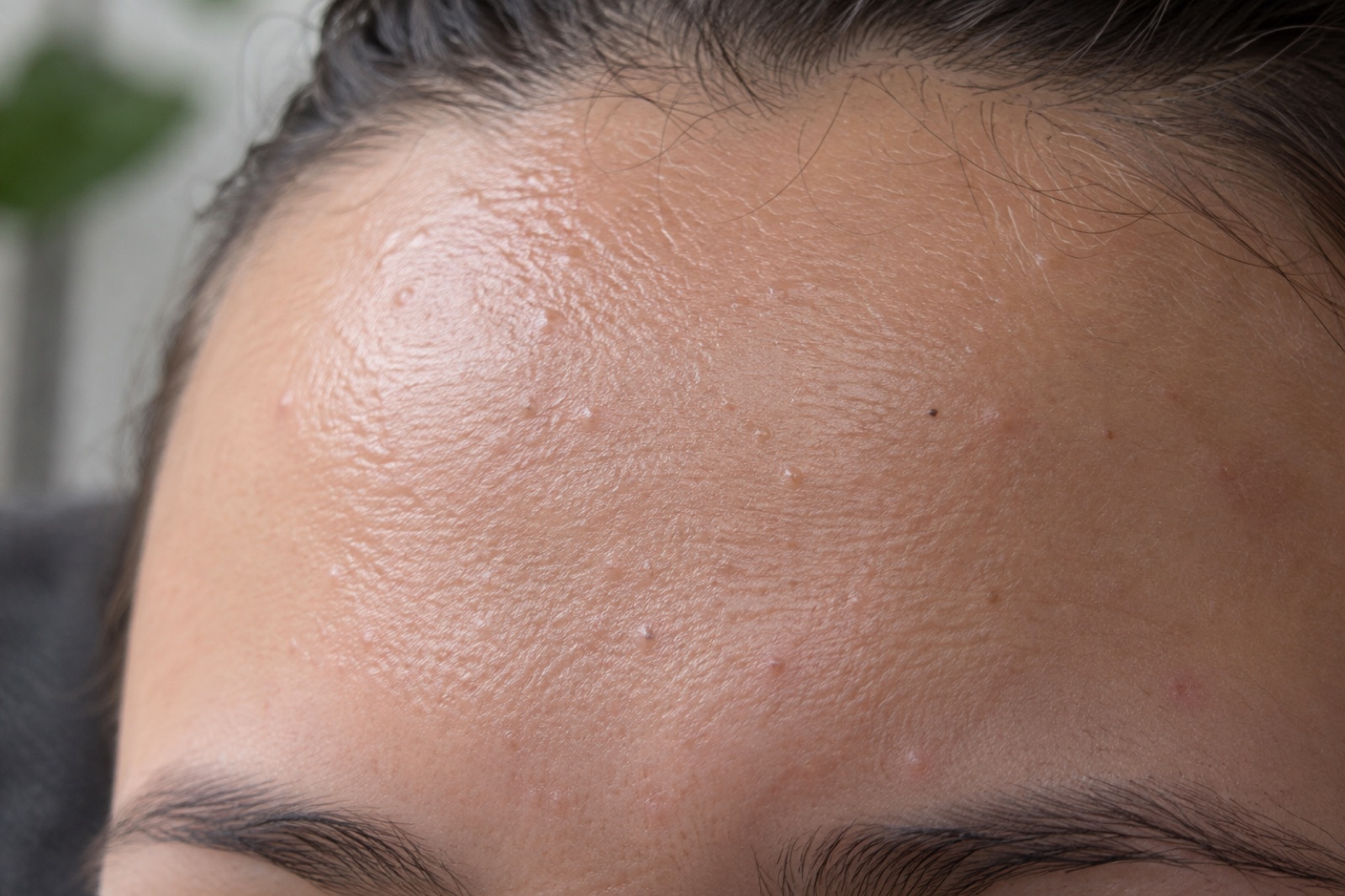
Both are comedones, clogged pores without inflammation, and the difference is whether the pore opening is closed or open. The American Academy of Dermatology (AAD) explains that a closed opening makes a whitehead and an open one makes a blackhead. The dark color of a blackhead isn’t dirt; it’s a color change from the material inside the pore reacting with oxygen.
The AAD warns that scrubbing blackheads can make acne worse and that squeezing them risks infection and permanent scars. Why tiny bumps keep coming back in the same spot is covered separately in our guide to closed comedone causes.
Pus-filled acne: how to tell papules from pustules
If it’s only red and firm, it’s a papule; if you see yellowish pus in the center, it’s a pustule. The AAD describes a papule as a red, firm bump formed when oil, bacteria, and dead skin go deep into the pore and cause inflammation, and a pustule as similar to a papule but holding yellowish contents.
The AAD advises against squeezing pustules. It explains that squeezing pushes the contents deeper into the skin, worsens inflammation, and raises the risk of infection from bacteria on your hands. For painful, swollen pimples, the AAD also suggests leaving them alone and trying ice, wrapped in a clean cloth, to ease pain and swelling.
Why are nodules and cysts put in a separate group?
In nodules and cysts, inflammation has gone deep into the skin, so they are more likely to leave scars. See a doctor rather than handling them at home. The AAD describes a nodule as a firm lump you can feel and a cyst as a deep, painful lesion, and says they need a dermatologist. More detail is in our guide to nodular acne.
Acne-prone skin: how are mild, moderate, and severe acne defined?
The NHS grades acne severity by the type and number of lesions. Mild acne is mostly whiteheads and blackheads with a few papules and pustules, and moderate acne has more widespread comedones and many papules and pustules. Severe acne has many large, painful papules, pustules, nodules, or cysts and may come with scarring.
The NHS suggests talking to a pharmacist about mild acne and to a GP (family doctor) about moderate or severe acne. By location, acne appears on the face in almost everyone who has it, on the back in more than half, and on the chest in about 15%.
Do acne-causing bacteria mean you’ll get acne?
Acne bacteria (Cutibacterium acnes) are common on skin without acne, so having them doesn’t by itself mean you’ll get acne. In a randomized controlled trial of 50 men about to have shoulder surgery, every skin surface sample tested positive for these bacteria (grade A).
NIAMS explains acne as the result of excess oil, buildup of dead skin cells inside the pore, and bacterial growth combining. Hormone changes such as puberty and pregnancy, family history, and some medicines raise the risk, while diet, stress, friction, squeezing, and washing too much are not direct causes but can make it worse.
Other bumps that look like acne
If breakouts don’t clear or look different from typical acne, it may be another skin condition. The AAD gives rosacea, where breakout areas are red, sting or burn, and eyes feel gritty, and keratosis pilaris, with rough, small red bumps on the upper arms and front of the thighs, as examples that are easy to confuse with acne.
Folliculitis is also often confused with acne. The AAD describes folliculitis as a rash that forms when hair follicles are damaged and bacteria get in, and says a red ring around the bumps, itching, and shaving, friction, or tight clothing are clues. How to tell the two apart is covered in detail in our guide to folliculitis vs acne.
Checklist: telling acne types apart in the mirror
| What to check | If it looks like this | Closest type | What to do first |
|---|---|---|---|
| Color of the pore opening | Closed white dot | Whitehead (closed comedone) | Don’t squeeze; watch for a few weeks |
| Color of the pore opening | Open dark dot | Blackhead | Don’t scrub it |
| Redness and firmness | Red and firm, no pus | Papule | Leave it alone |
| Pus | Yellowish center | Pustule | Don’t squeeze; use a cloth-wrapped ice pack if it hurts |
| Depth and pain | Deep, firm, or painful | Nodule / cyst | See a dermatologist |
| Surrounding skin | Red ring or itching; shaving or friction areas | May not be acne | Stop the likely cause and watch |
| Other symptoms | Redness, burning, gritty eyes | May not be acne | Get checked by a dermatologist |
When to see a dermatologist
- If you have deep, painful acne such as nodules or cysts, see a dermatologist before scars form.
- If nothing changes after 6 to 8 weeks of one approach, talk to a board-certified dermatologist.
- If you have a red ring or itching, or the bumps look different from acne, have a dermatologist check whether it’s another skin condition.
- If acne starts suddenly in an adult woman along with more body hair or irregular periods, see a doctor.
Frequently asked questions
What are the 3 most common types of acne?
Health organizations group acne differently, and the UK NHS lists 6 types: blackheads, whiteheads, papules, pustules, nodules, and cysts. Broadly, it's easier to sort them into three groups: clogged pores (comedones), red inflamed bumps (papules and pustules), and deep lumps (nodules and cysts).
How can I tell what type of acne I have?
Look in order at the color of the pore opening, redness, yellowish pus, and how deep and painful it feels. A white dot is a whitehead, a dark dot is a blackhead, a red firm bump is a papule, visible pus means a pustule, and deep, firm, or painful lumps point to nodules or cysts.
What kind of acne is pus-filled acne?
What people call pus-filled acne is closest to a pustule. The American Academy of Dermatology (AAD) advises not squeezing pustules, explaining that squeezing can push the contents deeper, worsen inflammation, and raise the risk of infection and scars.
Is folliculitis the same as acne?
The AAD describes folliculitis separately, as an acne-like rash that forms when hair follicles are damaged and bacteria get in. Clues are a red ring around the bumps, itching, and whether it appeared after shaving or friction. If it doesn't clear after you avoid the likely trigger, such as shaving or friction, see a dermatologist.
Do different types of acne have different causes?
Health organizations don't give each type its own cause; they describe the same process. Oil and dead skin cells clog the pore, bacteria grow inside the blocked follicle and cause inflammation, and when inflammation goes deep into the skin, it is seen as nodules and cysts (NIAMS, AAD).
Sources
- AAD, What's that blemish? How to treat different types of acneInstitutional
- AAD, Acne: SymptomsInstitutional
- AAD, Pimple popping: Why only a dermatologist should do itInstitutional
- AAD, Is that stubborn acne really acne?Institutional
- AAD, FolliculitisInstitutional
- NHS, Acne (reviewed 2026-09-22)Institutional
- NHS 111 Wales, Health A-Z: Acne (updated 2024-11-07)Institutional
- NIAMS, Overview of AcneInstitutional
- Randomized controlled trial of chlorhexidine wash versus benzoyl peroxide soap for home surgical preparation: neither is effective in removing Cutibacterium from the skin of shoulder arthroplasty patients (2020, PMID 32385554)A
We never use YouTube videos or community posts as evidence for facts. Editorial policy
Product information related to this article
Product information from the site operator (KW Cosmetic, maker of the SKIN9HARI brand).
Revive Therapy N.F Toner
₩29,000 (KRW)
- Mildly acidic toner (pH 5.5–6.5), 150 ml
- Contains niacinamide 2.0% and beta-glucan 1.0%
- Low-irritation formula
- Contains ethanol and fragrance ingredients (orange peel oil, lavender oil); check the full ingredient list
Product details
- Type and size
- Clear, water-light toner, pH 5.5–6.5, 150 mL (5.07 fl oz)
- Step in routine
- Step 2 of 4 · Tone, right after cleansing
- How to use
- After cleansing, pour a small amount onto a cotton pad or your palms. Sweep or press gently over your face and neck. Pat lightly until fully absorbed. Follow with Revive Therapy N.F Ampoule, then N.F Cream.
- Before you use
- Contains ethanol (3.0%) and fragrance, including the allergens linalool and limonene — this is not an alcohol-free formula. If redness, swelling or itching occurs, stop using and consult a dermatologist.
Based on the official product page, checked 2026-10-02
Cosmetics do not diagnose, treat, cure or prevent any disease. Test results apply only to the stated conditions.