Whiteheads on Chin: Toothpaste, Masks, Friction and What Studies Show
There is no evidence that toothpaste, masks, or friction alone explain whiteheads on your chin. What has been shown is only a link in observational studies, plus health organizations' warnings about putting toothpaste on skin and rubbing it.
In this article7 sections
- Does toothpaste cause whiteheads on your chin?
- Can wearing a mask cause whiteheads on your chin?
- Can resting your chin on your hand or a helmet strap cause whiteheads?
- Does squeezing chin whiteheads leave marks or turn them into pus-filled pimples?
- Will washing more often or switching products make a difference?
- How strong is the evidence for each chin whitehead explanation?
- When to see a dermatologist about chin whiteheads
| Claim | What the evidence shows | Evidence grade |
|---|---|---|
| Toothpaste | The NHS and the AAD say not to put toothpaste on your skin (irritating ingredients). We found no study showing toothpaste causes chin whiteheads | Health organization · no cause study |
| Masks | In a meta-analysis of 37 observational studies (29,557 people), how long masks were worn was the most significant risk factor for facial skin problems (95% CI 1.31-1.54). No study counted whiteheads on their own | A (pooled observational studies) |
| Chin resting and chin straps | The AAD describes friction acne where chin straps and helmets rub. No study has directly measured the habit of resting your chin on your hand | Health organization · C (1975 case report) |
| Squeezing and marks | One of four factors in a scar risk self-assessment tool; the tool’s sensitivity is 82% and its specificity is 43% | A |
| Turning into pus-filled pimples | The NHS explains that when skin bacteria get into plugged follicles, it can lead to papules and pustules. There is no evidence on how often this happens | Health organization |
Does toothpaste cause whiteheads on your chin?
The sources this article checked include no evidence that toothpaste causes chin whiteheads, and none that toothpaste dries them up either. What health organizations say clearly is that you shouldn’t put toothpaste on your skin. The UK’s NHS, on its 111 Wales site, notes that websites often say toothpaste can dry up spots, but that toothpaste also contains ingredients that can irritate and damage your skin, so it advises against using it that way.
The American Academy of Dermatology (AAD), in its adult acne guidance, explains that toothpaste contains abrasives such as calcium and baking soda, peroxides that make teeth whiter, and color and flavor. It adds that nothing on that list acts on acne, and that these ingredients can irritate or harm your skin. So neither “it’s the toothpaste” nor “toothpaste dries it up” is backed by evidence. Rinsing off the foam left around your mouth and chin with water after brushing is a reasonable middle ground.
Can wearing a mask cause whiteheads on your chin?
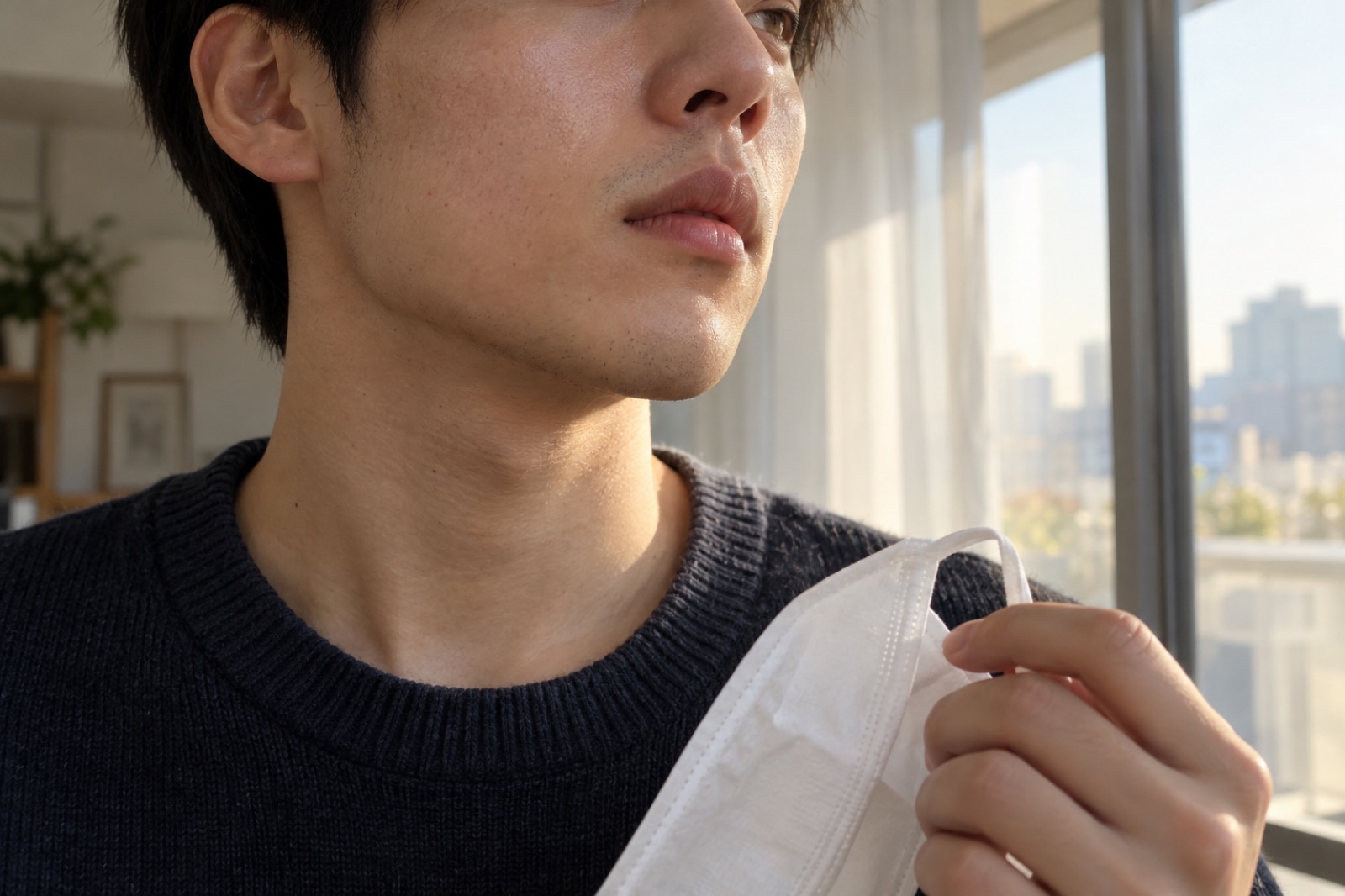
Facial skin problems were common in people who wore masks for long periods, but that is not evidence that masks cause chin whiteheads. A 2022 meta-analysis pooled 37 observational studies with 29,557 participants and named how long masks were worn as the most significant risk factor for facial skin problems (95% CI 1.31-1.54, p<0.001). A 2021 systematic review of 954 mask-related skin reactions found itching (38.8%), along with redness at 7.5% and dryness at 6.5%, and 44 reports of acne getting worse.
Both studies counted acne as one group, and the sources this article checked include no mask study that counted whiteheads (comedones) separately. Both also pooled observational studies and case reports, so they can’t tell cause from effect. Mask-side conditions such as moisture, material, and how often you change masks are covered in our mask breakout causes article.
Can resting your chin on your hand or a helmet strap cause whiteheads?
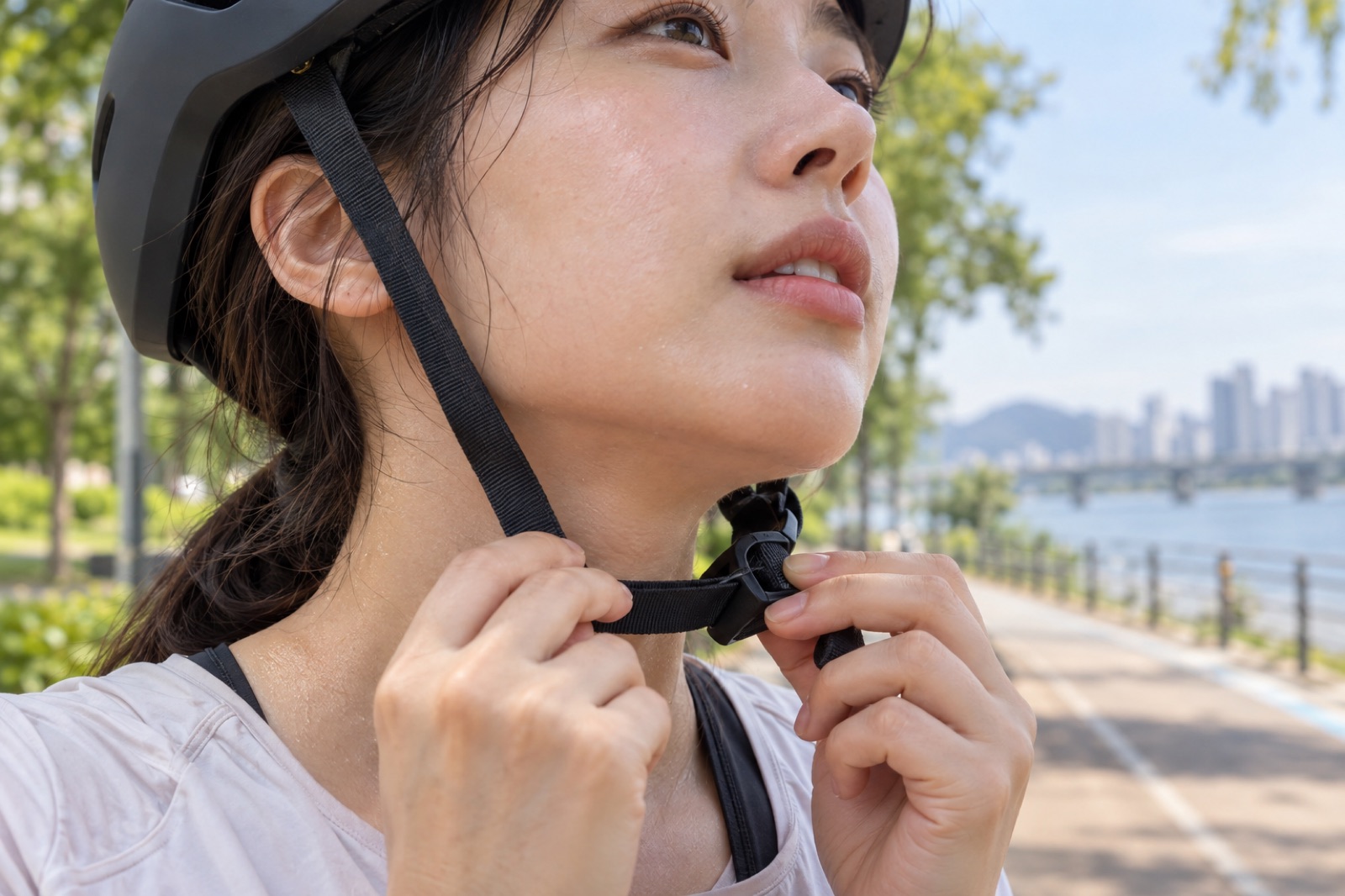
The idea that breakouts can appear where something presses and rubs again and again rests on health-organization guidance and an old case report, and no study has measured the habit of resting your chin on your hand itself. The AAD explains that when sports gear or clothing traps heat and sweat against your skin and rubs it, it can cause friction acne (acne mechanica), and that where a chin strap or helmet rubs, it can show up as rough bumps you feel more easily than see.
A 1975 report described cases in which physical irritation such as pressure, friction, and rubbing made lesions worse in those spots in people who had acne. It is a case description with little quantitative data (grade C), so it doesn’t tell you how long or how often contact has to happen. That is why chin resting can only be called “one factor to look at if something touches that spot for long periods.” Hormone changes and shaving, two other factors that repeat on the chin, are covered in our chin acne causes article.
Does squeezing chin whiteheads leave marks or turn them into pus-filled pimples?
Squeezing is listed as a risk factor for scarring, but no evidence lets you count marks by how many times you squeeze. In 2017, researchers built a self-assessment tool for atrophic acne scar risk based on a literature review and expert opinion. Its four factors were how severe acne was at its worst, how long it lasted, whether family members have scars, and squeezing or picking at lesions. Its sensitivity was 82%, but its specificity was 43%, which means many people it flags as at risk are not, so it has limits for predicting one person’s future.
An online survey (a cross-sectional study) of 225 acne patients in Thailand also found that acne severity, squeezing and picking, and having had red marks after acne were each linked to scarring. However, there is no grade A paper that directly measured how much squeezing at home adds to scarring, and we found no evidence that marks last longer on the chin than on the cheeks. The AAD’s acne scar guidance explains that picking, popping, scratching, or squeezing increases inflammation in the skin, that more inflammation makes an acne scar more likely, and that it also raises the risk of infection and discoloration.
Whether whiteheads turn into pus-filled pimples also stops at “they can.” The NHS explains that when bacteria that normally live on your skin contaminate plugged follicles, it can lead to papules, pustules, nodules, and cysts. But there is no evidence on what percentage of whiteheads go that way.

Will washing more often or switching products make a difference?
The idea that chin whiteheads come from not washing enough is closer to what health organizations call a myth. The NHS explains that most of the reactions behind acne happen beneath the skin, not on the surface, so how clean your skin is has no effect on acne, and that washing more than twice a day can irritate your skin. The AAD also lists washing your face several times a day or scrubbing it as habits that can make breakouts worse.
The evidence on cosmetics is narrow too. Most studies on comedones look at prescription medicines and procedures in people with acne, and only about two studies have checked whether cosmetics cause comedones on human skin, both using closed patches on the back. So it is hard to say that any one item caused or reduced chin whiteheads, and when you switch, change one thing at a time so you can tell which change made the difference.
How strong is the evidence for each chin whitehead explanation?
The table below sorts six common explanations for chin whiteheads by type of evidence. It is not a tool for deciding your personal cause, and several rows can apply to one person at the same time.
| Common explanation | Type of evidence | What can be said | What can’t be said | What to change at home |
|---|---|---|---|---|
| Toothpaste left on the chin | Health-organization guidance (don’t apply it) · no cause study | Toothpaste contains ingredients that can irritate skin | Toothpaste causes whiteheads · Toothpaste dries them up | Rinse around your mouth and chin with water after brushing |
| Wearing a mask for long periods | Pooled observational studies (A) · no study of comedones alone | Facial skin problems were common in people who wore masks for long periods | Masks cause whiteheads | Write down how many hours you wear a mask each day |
| Resting your chin or chin-strap rubbing | Health-organization guidance · case report (C) · no study of chin resting | It is one factor to look at where something presses and rubs for long periods | Resting your chin causes whiteheads | Put a clean pad between the gear and your skin |
| Not washing enough | Health-organization guidance (listed as a myth) | How clean your skin is doesn’t decide acne | Washing more often makes them go down | Wash up to twice a day without scrubbing |
| Squeezing leaves marks | Risk assessment tool (A) · cross-sectional survey (B) · no direct measurement | Squeezing is one scar risk factor | Squeezing even once always leaves a mark | Don’t squeeze or pick |
| They end up as pus-filled pimples | Health-organization guidance (explains how it happens) · no evidence on how often | Plugged follicles can lead to inflamed lesions | Whiteheads always end up filling with pus | Watch whether the spot turns red or painful |
When to see a dermatologist about chin whiteheads
- If spots where whiteheads were keep turning red, swollen, painful, or filled with pus, see a dermatologist.
- If sunken or raised marks start to stay where you squeezed or picked, talk to a dermatologist.
- If someone in your family has acne scars and large, painful breakouts keep coming back on your chin or cheeks, those overlap with the factors the scar risk tool names, so consider seeing a dermatologist.
- If the area where a mask or chin strap touches gets itchy and red and spreads more than it forms whiteheads, it may be a different reaction, not acne, so have a doctor tell them apart.
Frequently asked questions
Can toothpaste or a face mask cause whiteheads on your chin?
There isn't evidence to say so either way. Toothpaste is something the NHS and the American Academy of Dermatology (AAD) say not to put on your skin because it can irritate it, not a proven cause of whiteheads. For masks, a meta-analysis of 37 observational studies linked longer wear to more facial skin problems, but no study counted whiteheads on their own. Rinsing your chin after brushing and writing down how long you wear a mask is as far as the evidence goes.
Can resting your chin on your hand or a helmet strap cause chin whiteheads?
The evidence reaches as far as "it may be related." The AAD explains that gear like chin straps and helmets, which trap heat and sweat while rubbing the skin, can lead to friction acne, and a 1975 case report described lesions getting worse with pressure and friction. No study has directly measured the habit of resting your chin on your hand, so count it only as one factor to look at if something touches that spot for long periods. The AAD advises placing a clean, soft pad between the gear and your skin.
Can squeezing whiteheads on your chin leave deep marks?
Squeezing is listed as a scar risk factor, but there is no way to know in advance how deep a mark will be. A 2017 scar risk self-assessment tool used four factors: acne severity, how long it lasted, family history, and squeezing or picking at lesions. With a sensitivity of 82% and a specificity of 43%, it has limits for predicting one person's outcome. No study has directly measured how much squeezing at home adds to scarring, and there is no evidence that marks last longer because they are on the chin. If you already have sunken or raised marks, talk to a dermatologist.
Can chin whiteheads turn into pus-filled pimples?
Health organizations explain that it can happen, but how often is not known. The NHS explains that when bacteria that normally live on your skin contaminate plugged follicles, it can lead to red, pus-filled lesions such as papules and pustules. We found no study on what percentage of whiteheads go that way. If spots keep turning red, swollen, painful, or filled with pus, see a dermatologist.
Why do I keep getting whiteheads on my chin even though I wash my face?
Whiteheads are hard to blame on not washing enough. The NHS says most of the reactions behind acne happen beneath the skin, not on its surface, so how clean your skin is has no effect on acne, and washing more than twice a day can irritate your skin. The AAD also lists washing your face several times a day or scrubbing it as habits that can make breakouts worse. Rather than washing more, the evidence fits washing gently up to twice a day and writing down the hands, masks, and straps that touch your chin.
My chin whiteheads calmed down after I switched toothpaste. Was it the toothpaste?
One switch can't settle that. The sources this article checked include no study showing that a specific toothpaste ingredient causes chin whiteheads, and other things, like the season, mask wearing, or your skincare, may have changed at the same time. What is clear is that the NHS and the AAD say not to put toothpaste on your skin, so whatever toothpaste you use, keep the habit of rinsing so none is left around your mouth. If the same spot keeps turning red and filling with pus even after the switch, see a doctor.
Should you brush your teeth before or after washing your face?
No study has compared the order of brushing and face washing. But since the NHS and the AAD say toothpaste contains ingredients that can irritate skin, washing off the foam left around your mouth and chin after brushing is in line with the evidence. Even if you feel a change after switching the order, it may have overlapped with other changes, so change one thing at a time and write down the dates to make it easier to judge.
Is a jawline massage that rubs your chin bad for whiteheads?
The evidence behind this article includes no study that directly looked at whether facial massage, such as the "V-line" jawline massage popular in Korea, adds to chin whiteheads. Still, the AAD says rubbing or scrubbing your skin can irritate it and make breakouts worse, and the 1975 case report described rubbing and friction making lesions worse where people had acne. If whiteheads have come up, the evidence fits keeping firm hand massage away from that spot.
Sources
- NHS 111 Wales — Health A-Z: Acne (updated 2024-11-07)Institutional
- AAD — Adult acne: How to treat it yourself (updated 2023-01-10)Institutional
- AAD — Sports equipment can cause acneInstitutional
- AAD — 10 skin care habits that can worsen acneInstitutional
- AAD — Acne scars: Treatment (updated 2023-12-08)Institutional
- Facial dermatoses induced by face masks: A systematic review and meta-analysis of observational studies (2022, PMID 35980367)A
- Adverse Effects of COVID-19 and Face Masks: A Systematic Review (2021, PMID 34980966)A
- Development of an atrophic acne scar risk assessment tool (2017, PMID 28499079)A
- Risk Factors Associated With Facial Acne Scarring in Thai Patients With Acne: A Cross-Sectional Study (2025, PMID 39601200)B
- Acne mechanica (1975, PMID 123732)C
We never use YouTube videos or community posts as evidence for facts. Editorial policy
Product information related to this article
Product information from the site operator (KW Cosmetic, maker of the SKIN9HARI brand).
Revive Therapy N.F Toner
₩29,000 (KRW)
None of the toothpaste, mask, friction, or scar-risk studies in this article tested this toner, and there is no test data for the chin area, mask wearers, or picking habits. Revive Therapy N.F Toner is a mildly acidic (pH 5.5–6.5) 150 ml toner that contains ethanol and fragrance, and it is used in the step right after cleansing. If you want to settle on one step you apply after washing instead of rubbing your chin with your hands, the product we suggest is Revive Therapy N.F Toner.
- Mildly acidic toner (pH 5.5–6.5), 150 ml
- Contains niacinamide 2.0% and beta-glucan 1.0%
- Low-irritation formula
- Contains ethanol and fragrance ingredients (orange peel oil, lavender oil); check the full ingredient list
Product details
- Type and size
- Clear, water-light toner, pH 5.5–6.5, 150 mL (5.07 fl oz)
- Step in routine
- Step 2 of 4 · Tone, right after cleansing
- How to use
- After cleansing, pour a small amount onto a cotton pad or your palms. Sweep or press gently over your face and neck. Pat lightly until fully absorbed. Follow with Revive Therapy N.F Ampoule, then N.F Cream.
- Before you use
- Contains ethanol (3.0%) and fragrance, including the allergens linalool and limonene — this is not an alcohol-free formula. If redness, swelling or itching occurs, stop using and consult a dermatologist.
Based on the official product page, checked 2026-10-02
Cosmetics do not diagnose, treat, cure or prevent any disease. Test results apply only to the stated conditions.