Whiteheads vs Blackheads: Causes, Differences, and Gentle Care
A whitehead is a clogged pore whose opening is closed. Instead of squeezing it, washing gently and avoiding rubbing may help as part of your daily care.
In this article7 sections
- What causes blackheads, and why are they dark?
- What causes whiteheads, and how are they different from blackheads?
- Are sebaceous filaments the same as blackheads?
- Why shouldn’t you squeeze or pick them?
- What can you do at home?
- Checklist: 6 things to track for blackheads and whiteheads
- When to see a dermatologist
| Topic | What the sources say | Source |
|---|---|---|
| How they form | A comedone is a pore clogged with oil and dead skin cells. If the opening is open, it is a blackhead; if closed, a whitehead. | NHS and AAD guidance |
| Why blackheads are dark | Not dirt, but material in the pore that changed color after reacting with oxygen. | AAD guidance |
| What squeezing does | Risk of infection and permanent scarring; contents can be pushed deeper and inflammation can grow. | AAD guidance |
| How long to watch | If they remain after 6 to 8 weeks of gentle care, consider seeing a dermatologist. | AAD guidance |
| Sebaceous filaments | Our sources include no study on how to tell them apart from blackheads. | Comparison of comedone and sebum research |
What causes blackheads, and why are they dark?
A blackhead is a pore clogged with oil and skin cells whose opening is still open at the skin surface. The NHS explains that oil mixes with dead skin cells to form a plug in the hair follicle, and if the opening stays open, it becomes a blackhead. The American Academy of Dermatology (AAD) says the dark color is not dirt but material in the pore reacting with oxygen. That is why scrubbing hard does not wipe it away, and the AAD notes that rubbing may make things worse.
Our sources include no study that directly explains why blackheads are especially common on the nose. In an observational study of 60 healthy adults, pore size and oil output tended to rise together (men r=0.47, women r=0.38), but that is only a correlation and does not confirm a cause (grade B).
What causes whiteheads, and how are they different from blackheads?
Whiteheads and blackheads are both comedones, and the difference is whether the pore opening is closed or open. The NHS says a plugged follicle that bulges close to the skin surface is a whitehead, and because its opening is closed, the material inside does not turn dark. Acne studies count both separately as “non-inflammatory lesions,” apart from red, swollen papules and pustules with visible pus.
Are sebaceous filaments the same as blackheads?
The papers and health organization materials behind this article do not give a way to tell sebaceous filaments from blackheads. What the evidence confirms is only that blackheads are comedones, meaning clogged pores. Rather than sorting them by look into “it’s a filament, so it’s fine” or “it’s a blackhead, so it has to come out,” it is more cautious to follow the same rule for both: don’t squeeze or pick.
So handle sebaceous filaments the same way as blackheads: don’t squeeze or rub, and focus on everyday habits that make new clogs less likely, as in the “What can you do at home?” section below. Our sources also include no study on how the hairs visible in nose pores relate to blackheads.
Why shouldn’t you squeeze or pick them?
The AAD and NHS both say that squeezing them yourself raises the risk of scarring and infection. The AAD explains that the contents can be pushed deeper into the skin and inflammation can get worse, and that picking at whiteheads can lead to more whiteheads and to scarring. Extraction at a dermatologist’s office is a medical procedure done with special tools, used when other care has not worked. The sources we reviewed had no study measuring how long it takes a pore to refill after squeezing, but there is also no evidence that squeezing once stops oil and skin cells from building up.
What can you do at home?
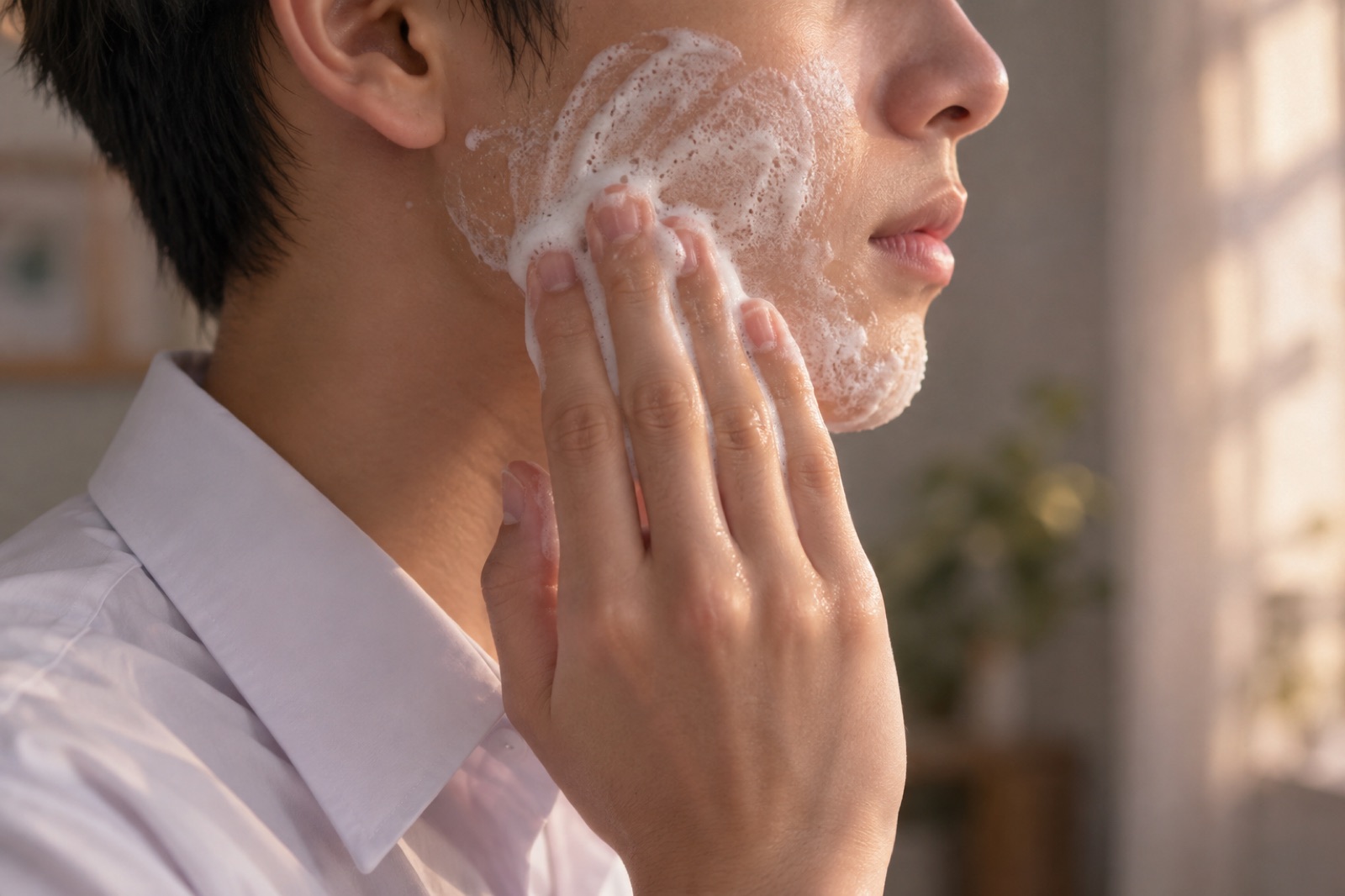
At home, focus on gentle daily care that makes new clogs less likely; guidance from the AAD, NHS, and NIAMS points the same way. Limit face washing to twice a day and after sweating, and wash gently with a mild cleanser and your fingertips. Avoid harsh scrubs and strong soaps, check that sunscreen, makeup, and hair products are labeled oil-free or non-comedogenic, and remove makeup before bed. As for which ingredients increase blackheads on the face, there are only about two patch studies on back skin, so there is no basis for ranking them.
Checklist: 6 things to track for blackheads and whiteheads
| What to check | What it tells you |
|---|---|
| Is the spot an open pore with a dark center, or a closed, raised bump? | Tells blackheads from whiteheads (NHS, AAD) |
| Is it red and swollen, or painful when pressed? | If so, it may be inflamed |
| How many times have you squeezed or picked in the past 2 weeks? | Don’t squeeze (AAD, NHS) |
| Do you wash more than twice a day or use a scrub? | Twice a day, no rubbing |
| Are your sunscreen, makeup, and hair products labeled non-comedogenic or oil-free? | Common health organization advice |
| How long have you kept the same routine? | Watch for 6 to 8 weeks (AAD) |
When to see a dermatologist
- If blackheads or whiteheads stay the same after 6 to 8 weeks of gentle care, consider seeing a dermatologist.
- If they turn into red, painful pimples or you can feel a deep, hard lump, a dermatologist should take a look. The AAD says deep nodules and cysts tend to leave scars.
- If marks or pitted spots are starting to form where you squeezed or picked, talk to a dermatologist.
- If you can’t tell whether a white bump is a whitehead, have a dermatologist check it.
Frequently asked questions
Sebaceous filaments vs blackheads: what's the difference?
We did not find a study that defines sebaceous filaments and separates them from blackheads in the papers and health organization materials behind this article. Rather than deciding by look alone, it is safer to follow the same rule for both: don't squeeze or pick.
What causes whiteheads?
The NHS explains that oil mixes with dead skin cells to form a plug in the hair follicle, and when the plugged follicle bulges close to the skin surface, it becomes a whitehead. Because the opening is closed, the material inside doesn't touch the air and doesn't turn dark.
What's the difference between whiteheads and blackheads?
Both are comedones, pores clogged with oil and skin cells, and the difference is whether the opening is open or closed. If it is open and the material inside reacts with oxygen, it looks dark and is a blackhead; if it is closed, it is a whitehead that rises as a white bump.
Why shouldn't you squeeze blackheads?
The American Academy of Dermatology (AAD) says squeezing blackheads or whiteheads yourself can push the contents deeper into the skin, worsen inflammation, and raise the risk of infection and scarring. The sources we reviewed had no study measuring how many days it takes a pore to refill after squeezing, but there is also no evidence that squeezing once stops oil and skin cells from building up.
What causes blackheads on the nose?
The sources behind this article include no study that directly explains why blackheads are especially common on the nose. In an observational study of 60 healthy adults, pore size and oil output tended to rise together (men r=0.47, women r=0.38), but that is only a correlation and does not confirm a cause.
Are blackheads dirt?
The AAD says the dark color of a blackhead is not dirt; it is material in the pore that changed color after reacting with oxygen. That is why scrubbing hard does not wipe it away, and the AAD notes that rubbing may make things worse.
Can you pop whiteheads?
The AAD says picking at whiteheads can lead to more whiteheads and to scarring. Don't squeeze them yourself, and if they are still there after 6 to 8 weeks of gentle care, consider seeing a dermatologist.
How do you get rid of whiteheads?
Squeezing them out with your fingers or tools is not recommended; the AAD and NHS say squeezing or picking raises the risk of infection and scarring. Instead, washing up to twice a day with a gentle cleanser and your fingertips, avoiding scrubbing, and choosing products labeled non-comedogenic may help reduce new clogs. Handle sebaceous filaments the same way, and if nothing changes after 6 to 8 weeks, consider seeing a dermatologist.
Sources
- AAD — What's that blemish?Institutional
- AAD — Acne: SymptomsInstitutional
- AAD — Pimple popping: Why only a dermatologist should do itInstitutional
- NHS — Acne (reviewed 2026-09-22)Institutional
- NHS 111 Wales — Health A-Z: Acne (updated 2024-11-07)Institutional
- NIAMS — Acne: Diagnosis, Treatment, & Steps to TakeInstitutional
- Sebum output as a factor contributing to the size of facial pores (2006, PMID 17034515)B
- A human model for assessing comedogenic substances (1982, PMID 7138047)B
We never use YouTube videos or community posts as evidence for facts. Editorial policy
Product information related to this article
Product information from the site operator (KW Cosmetic, maker of the SKIN9HARI brand).
Revive Therapy A.C Cleanser
₩19,000 (KRW)
- Mildly alkaline foam cleanser, 150 ml
- Contains salicylic acid, AHA and PHA, with an amino acid–based cleansing agent, 4 ceramides and cholesterol; contains fragrance
- Low-irritation formula
Product details
- Type and size
- Creamy foaming cleanser, 150 mL (5.07 fl oz)
- Step in routine
- Step 1 of 4 · Cleanse, first thing in the routine
- How to use
- Wet your face with lukewarm water. Squeeze a cherry-sized amount into your palms and work it into a foam, or use a foaming net for a richer lather. Massage over your face for 30–60 seconds, focusing on the T-zone and other oily areas. Rinse thoroughly with lukewarm water and follow with Revive Therapy N.F Toner.
- Before you use
- Avoid the eye area. Contains fragrance, including the allergens linalool and limonene — check the full ingredient list if you have known fragrance sensitivities. If redness, swelling or itching occurs, stop using and consult a dermatologist.
Based on the official product page, checked 2026-10-02
Cosmetics do not diagnose, treat, cure or prevent any disease. Test results apply only to the stated conditions.