Acne Between Eyebrows: 5 Causes to Check, From Waxing to Bangs
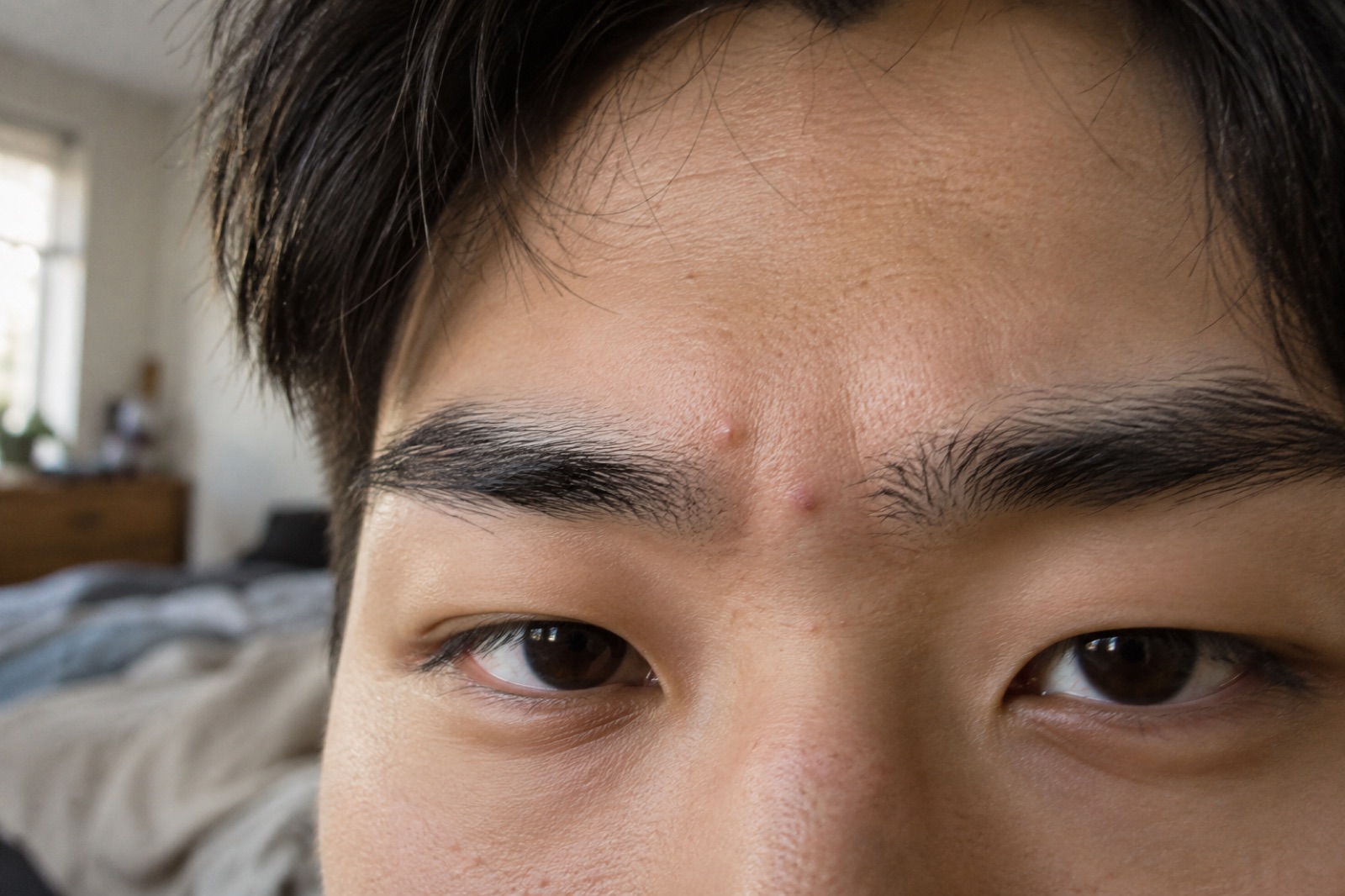
For acne between the eyebrows, start by checking what touches that spot every day: brow waxing, tweezing, or shaving, brow makeup, and bangs or hair products.
In this article6 sections
- Does acne between the eyebrows mean something?
- Can eyebrow waxing or tweezing cause breakouts?
- Can brow makeup and bangs cause acne between the eyebrows?
- What happens if you touch or pop a pimple between your eyebrows?
- Checklist: 5 things to check for acne between the eyebrows
- When to see a dermatologist
| Topic | What the evidence says | Source |
|---|---|---|
| Skin bacteria between the brows | Comparing 6 facial areas in 30 healthy people and 55 people with acne, the proportion of Cutibacterium between the brows was 53% higher in the acne group (cross-sectional study) | 2026 PMID 42529208 · B |
| Brow hair removal | Shaving, tweezing, and waxing are common causes of follicle damage; if one is the cause, the advice is to stop for 30 days | AAD Folliculitis · Institution |
| Makeup | Acne caused by a product can show up anywhere from a few days to 6 months later | AAD Makeup · Institution |
| Hair products | Oil from hair products can clog pores along the hairline and upper forehead; after stopping, bumps usually settle in 4–6 weeks | AAD Hair products · Institution |
| Touching and squeezing | Picking or touching does not directly cause acne, but it can make it worse | NIAMS Acne overview · Institution |
Does acne between the eyebrows mean something?
The spot between your brows can’t tell you the cause on its own; a more practical clue is what touches that spot often. NIAMS describes acne the same way for every area of the face: oil and dead skin cells clog a pore, skin bacteria multiply inside the blocked follicle, and it turns red. We found no evidence for “face map” explanations that pair the area between the brows with a certain organ.
About the only area-by-area difference reported so far is in skin bacteria. In one study comparing 30 healthy people with 55 people with acne, the median proportion of Cutibacterium was 127% higher on the forehead and 53% higher between the brows in the acne group. Because this was a cross-sectional study looking at a single point in time, it can’t tell us whether more bacteria led to acne. For what to check in each area, see acne by face area.
Can eyebrow waxing or tweezing cause breakouts?
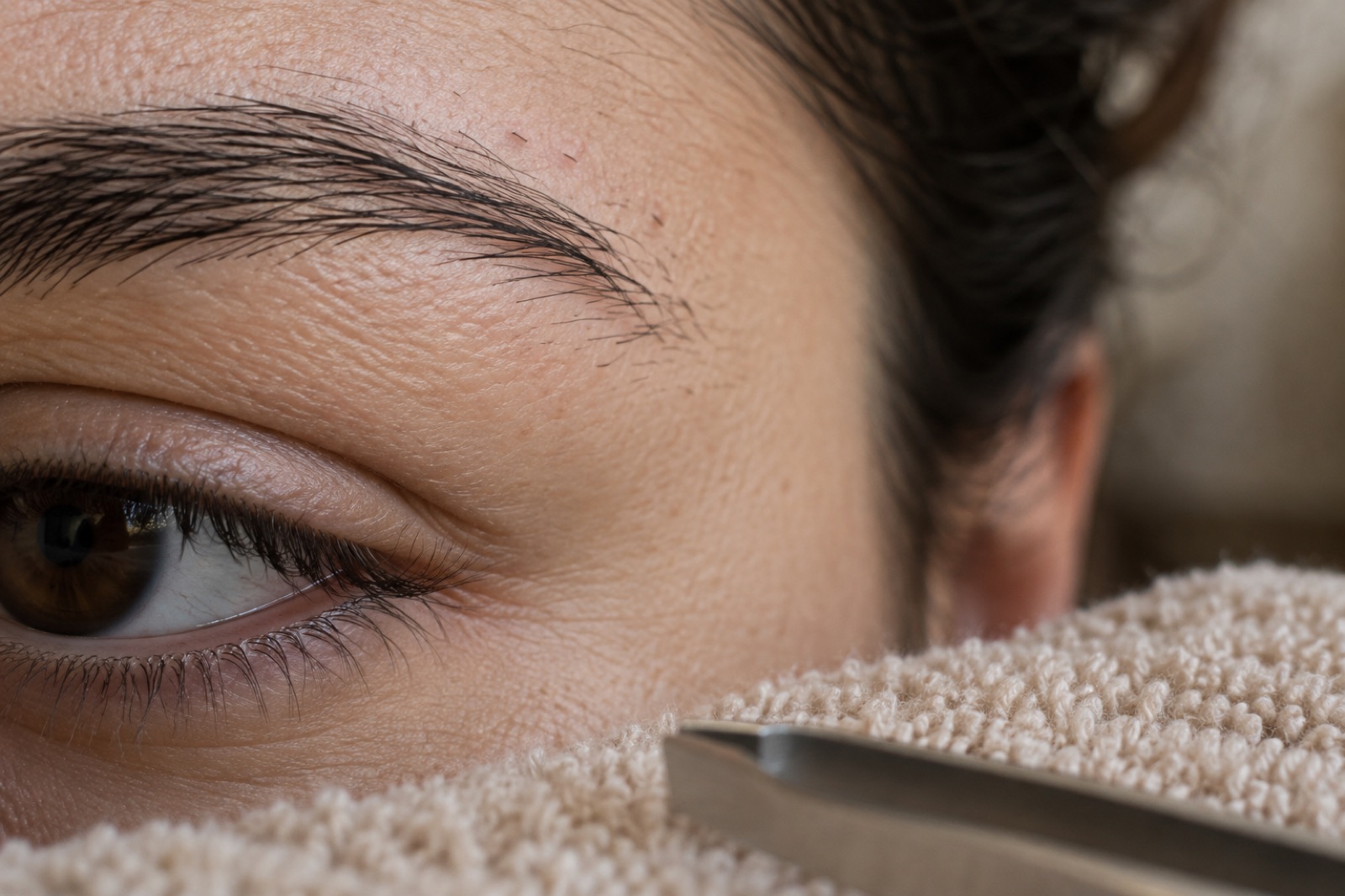
If bumps keep coming back between or inside your eyebrows, check hair removal such as tweezing, waxing, or shaving first. The AAD explains that frequent friction, shaving, tweezing, and waxing can damage hair follicles, and skin bacteria can then get into the damaged follicle and cause an infection. These bumps look like acne, but each one may have a red ring around it.
If hair removal seems to be the cause, the AAD suggests stopping for 30 days and using a warm compress for 15 to 20 minutes, 3 to 4 times a day. If the bumps spread or you develop a fever during that break, don’t wait; see a doctor right away. In healthy people, these bumps often settle on their own once the habit that caused them stops. We explain how to tell acne from a follicle infection in folliculitis vs. acne.
Can brow makeup and bangs cause acne between the eyebrows?
Brow products and hair products on your bangs touch the area between and above your brows every day, so check them together. The AAD explains that makeup can lead to small bumps on areas like the forehead, even in people who don’t usually get acne. It advises taking off all makeup, including eye makeup, with an oil-free makeup remover before bed, washing makeup brushes every week, and not sharing them.
If you have bangs, put hair products on the same list. The AAD says oil from hair products can clog pores along the hairline and upper forehead, and suggests shampooing more often if your hair gets oily easily. Bumps caused by a product can appear anywhere from a few days to 6 months later, so if you only suspect products you changed recently, you may miss the cause. We go into bangs and hair products in more detail in forehead acne causes.
What happens if you touch or pop a pimple between your eyebrows?
The spot between the brows is easy to press or rub while you’re thinking, so add touching to your checklist. NIAMS explains that picking or touching doesn’t directly cause acne, but it can make it worse. The AAD says squeezing pushes the contents deeper into the skin, making inflammation worse, and bacteria from your hands raise the risk of infection.
For a painful, swollen pimple, the AAD suggests cooling it with ice (wrapped in a clean cloth) instead of squeezing, to ease pain and redness. Wash your face twice a day and after sweating, gently with your fingertips. Don’t rub around the brows either; just move the lather gently over the skin.

Checklist: 5 things to check for acne between the eyebrows
| Check | What to look at | What to try changing |
|---|---|---|
| 1. Brow hair removal | Dates of tweezing, waxing, or shaving; whether each bump has a red ring | Take a 30-day break from hair removal |
| 2. Brow makeup | When you changed pencils, powders, or brushes; how often you wash brushes | Take off eye makeup before bed; wash brushes weekly |
| 3. Bangs and hair products | Whether hair products used on your bangs are labeled oil-free and non-comedogenic | Pause unlabeled products for 4–6 weeks |
| 4. Hand habits | How often you press or rub between your brows; whether you’ve squeezed | Cool with a wrapped ice pack instead of touching; don’t squeeze |
| 5. Face washing | How many times a day you wash; whether you scrub | Twice a day and after sweating, gently with your fingertips |
When to see a dermatologist
- If bumps with red rings keep spreading, or don’t settle after a 30-day break from hair removal and warm compresses, see a dermatologist.
- If a brow pimple becomes very swollen and painful or turns into a deep lump, don’t squeeze it; have a dermatologist check it.
- If nothing changes 6 weeks after stopping a suspected product, or after 6 to 8 weeks of one care approach, talk to a dermatologist.
- If red, flaky, itchy patches keep coming back on the brows and beside the nose, it may be a different skin condition, not acne, so see a doctor.
Frequently asked questions
Why do I get pimples between my eyebrows?
Eyebrow hair grows close together, so tweezing, waxing, and shaving can easily damage the hair follicles. The AAD names hair removal as a common cause of follicle infections and suggests stopping for 30 days if it seems to be the cause. Check your brow makeup and any hair products on your bangs too.
What does acne between the eyebrows mean?
We found no evidence that the location of acne tells you about the health of an internal organ. The only difference found between the eyebrows is from one cross-sectional study, where the proportion of Cutibacterium was 53% higher in the acne group than in the healthy group, and that result cannot show cause and effect.
Can makeup or face washing cause acne between the eyebrows?
It can play a role. The AAD says makeup can lead to small bumps on areas like the forehead, and acne caused by a product can appear anywhere from a few days to 6 months later. Washing twice a day and after sweating, gently with your fingertips, matches what health bodies recommend.
Is a bump in my eyebrow acne or something else?
If each bump among the brow hairs has a red ring around it, it may be a follicle infection (folliculitis) rather than acne. The AAD describes that red ring as a sign of infection. Small skin-colored bumps on the forehead above the brows or between them are often clogged pores (whiteheads).
Can I pop a pimple on my eyebrow?
The AAD and NHS both advise against it. Squeezing can push the contents deeper into the skin, making inflammation worse and raising the risk of scarring and infection. Try cooling a painful, swollen pimple with ice wrapped in a clean cloth, and talk to a dermatologist if it's still there after 4 to 6 weeks.
Sources
- The forehead and glabella show pronounced Cutibacterium relative abundance differences between acne and healthy groups: a regional facial 16S rRNA gene sequencing study (2026, PMID 42529208)B
- AAD — FolliculitisInstitutional
- AAD — Is it okay to wear makeup?Institutional
- AAD — Hair care products that cause acneInstitutional
- AAD — 6 skin care habits that can clear acneInstitutional
- AAD — Pimple popping: Why only a dermatologist should do itInstitutional
- AAD — What's that blemish?Institutional
- NIAMS — Overview of AcneInstitutional
- NHS — Acne (reviewed 2026-09-22)Institutional
We never use YouTube videos or community posts as evidence for facts. Editorial policy
Product information related to this article
Product information from the site operator (KW Cosmetic, maker of the SKIN9HARI brand).
Revive Therapy N.F Toner
₩29,000 (KRW)
- Mildly acidic toner (pH 5.5–6.5), 150 ml
- Contains niacinamide 2.0% and beta-glucan 1.0%
- Low-irritation formula
- Contains ethanol and fragrance ingredients (orange peel oil, lavender oil); check the full ingredient list
Product details
- Type and size
- Clear, water-light toner, pH 5.5–6.5, 150 mL (5.07 fl oz)
- Step in routine
- Step 2 of 4 · Tone, right after cleansing
- How to use
- After cleansing, pour a small amount onto a cotton pad or your palms. Sweep or press gently over your face and neck. Pat lightly until fully absorbed. Follow with Revive Therapy N.F Ampoule, then N.F Cream.
- Before you use
- Contains ethanol (3.0%) and fragrance, including the allergens linalool and limonene — this is not an alcohol-free formula. If redness, swelling or itching occurs, stop using and consult a dermatologist.
Based on the official product page, checked 2026-10-02
Cosmetics do not diagnose, treat, cure or prevent any disease. Test results apply only to the stated conditions.