Nose Acne: Can You Pop It? 4 Reasons Pimples Keep Coming Back
It's best not to pop pimples on your nose yourself. Squeezing can push inflammation deeper and raise the risk of scarring and infection, according to NICE, the AAD, and the NHS.

In this article6 sections
| Topic | What the evidence says | Source |
|---|---|---|
| What health bodies agree on | NICE, the AAD, and the NHS all advise against squeezing or picking pimples yourself | Extraction and picking research summary · Institution |
| Risks of popping at home | Permanent scars, more noticeable acne, more pain, and a risk of infection | AAD Pimple popping · Institution |
| Scar risk factor | A picking habit is one of four factors (severity, duration, family history, picking) in an atrophic scar risk tool (sensitivity 82%, specificity 43%) | Extraction and picking research summary · A |
| Why blackheads are black | Not dirt; the color comes from material in the pore reacting with oxygen | AAD What’s that blemish? · Institution |
| If there is flushing too | In early rosacea, the nose, cheeks, forehead, and chin flush for a few minutes, and skincare products may sting or burn | NHS Rosacea · Institution |
Can you pop a pimple on your nose?
NICE, the AAD, and the NHS all say it is best not to pop pimples yourself. The AAD explains that when the contents get pushed deeper into the skin, inflammation can get worse and the pimple can become more noticeable, and bacteria from your hands raise the risk of infection. A picking habit is also one of the four factors in a tool used to screen for the risk of atrophic (sunken) acne scars (grade A evidence).
Extraction by a clinician is different. The AAD describes comedone extraction at a dermatologist’s office as a procedure that takes out blackheads and whiteheads with sterile tools, used when other methods haven’t worked. The fact that a clinic can do extractions is not evidence that it is OK to squeeze at home.

Nose acne causes: why do pimples keep coming back on your nose?
The reasons pimples keep coming back around the nose fall into four broad groups.
- Pores clogged with oil and dead skin. The NHS explains that oil from the sebaceous glands mixes with dead skin cells and blocks the hair follicle; a clogged pore that stays closed becomes a whitehead, and one that opens becomes a blackhead. But oil level alone doesn’t decide whether you break out. In a study of 82 women, medicine cut cheek oil by 60% compared with placebo, yet lesion counts did not differ significantly (grade A evidence).
- Squeezing and picking. Squeezing the same spot again and again can push the contents deeper and make inflammation worse (AAD). In a study of 32 adults who picked their skin compulsively, the group that added cognitive behavioral therapy to standard care did better on both skin condition and picking scores (grade A evidence).
- Rubbing. The AAD says scrubbing blackheads can make acne worse. It’s a good idea to cut back on hard rubbing or scrubs on your nose.
- Other conditions that look like acne. If your nose and cheeks flush often and you also have bumps, it could be rosacea. In a general population survey in Germany and Russia, rosacea prevalence was 12.3% and 5.0%, and more than 80% had never been diagnosed before (grade A evidence).

What to do when a pimple on the side of your nose won’t pop
If it won’t come out, don’t press harder or poke it with a needle or your nails. It’s safer to leave it alone and wait for it to go down. The AAD explains that forcing out something that won’t pop can push the contents deeper into the skin and make inflammation worse.
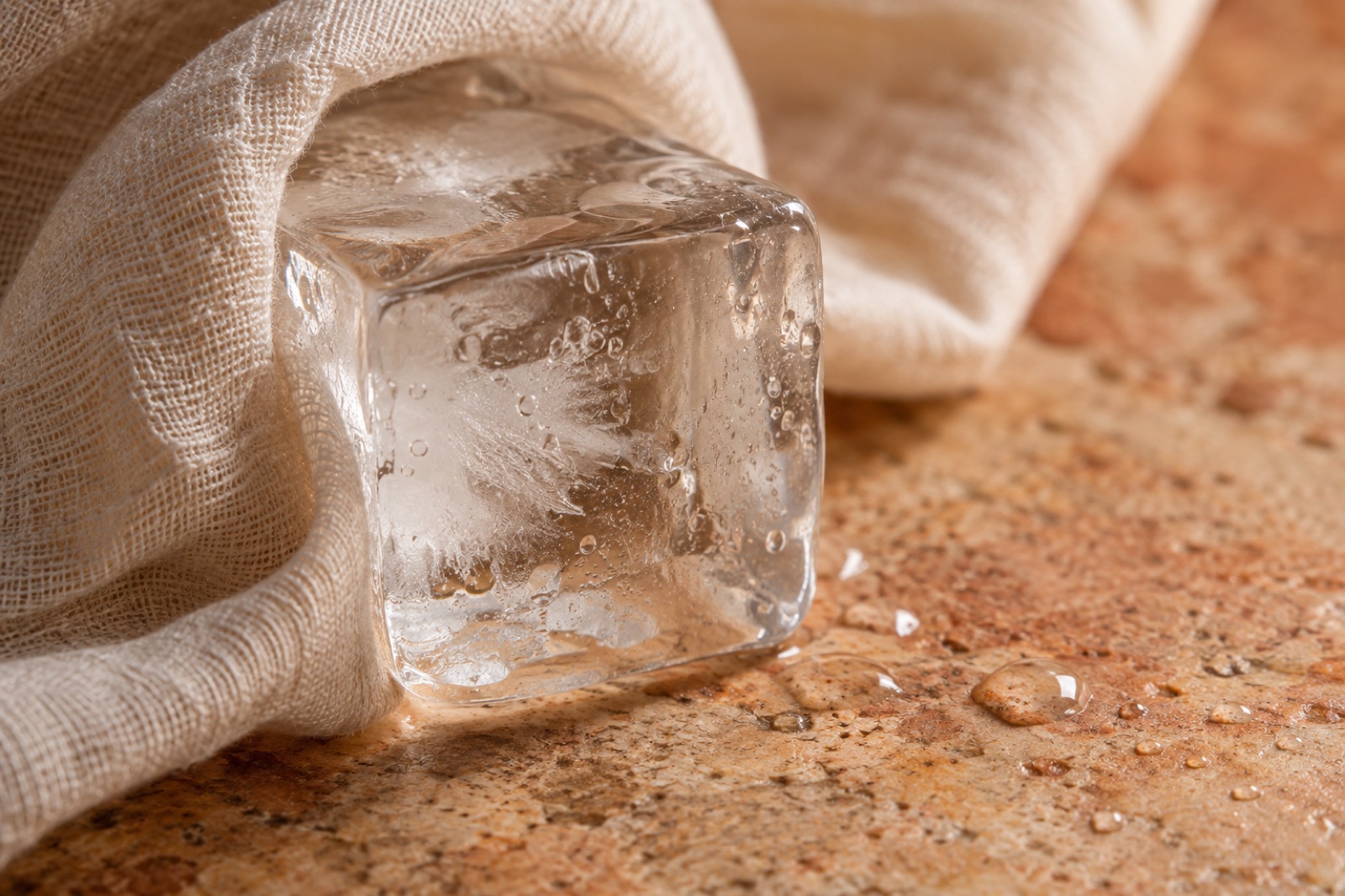
For deep, painful acne, the AAD advises not squeezing it at home and using ice wrapped in a clean cloth to ease pain, swelling, and redness. Keep your hands off your face and stick with your usual care, and if nothing works within 4 to 6 weeks, the AAD suggests seeing a dermatologist.
Could a bump beside your nose be pus-filled acne?
If you can see yellow pus, it’s a pustule; if it’s red and firm, it’s a papule. Both are types of inflamed acne, though other skin conditions can look similar. The AAD describes a papule as a firm bump that turns red and swollen when excess oil, bacteria, and dead skin get deep into the pore, and a pustule as a similar bump that holds yellowish fluid. It specifically says not to squeeze pustules.
The AAD says nodules and cysts, which feel hard and deep under the skin and hurt, tend to leave scars and need a dermatologist. It’s hard to be sure which type a bump beside your nose is just by looking, so use the table below to sort out what to do first.
What to do and not do, by type of bump
| What you see | What to do at home | What not to do |
|---|---|---|
| Black dots (blackheads) | Keep washing gently, no more than twice a day | Scrubbing; squeezing with your nails |
| White bumps (whiteheads) | Leave them alone and watch | Poking with a needle or your nails |
| Red, firm bumps (papules) | Don’t squeeze; see a dermatologist if no better in 4–6 weeks | Squeezing; rubbing hard |
| Yellow pus (pustules) | Keep your hands off | Popping |
| Deep, painful swelling (nodules, cysts) | Cool with a cloth-wrapped ice pack and see a dermatologist | Squeezing at home |
When to see a dermatologist
Consider seeing a dermatologist if any of these apply.
- A deep, painful, swollen nodule or cyst forms around your nose.
- Things don’t get better within 4 to 6 weeks, even with hands-off care.
- A spot you squeezed keeps getting redder, more swollen, and more painful. This may be worsening inflammation or an infection, which the AAD lists as risks of popping pimples yourself.
- Your nose and cheeks flush often and skincare stings, or the skin around your nose gets thicker over the years. The NHS says these changes can happen with rosacea.
- You find it hard to stop picking on your own. Talk to a doctor about the habit along with your skin.
Frequently asked questions
Can I pop a pimple on my nose?
NICE, the American Academy of Dermatology (AAD), and the NHS all advise against popping pimples yourself. Squeezing pushes the contents deeper, which can make inflammation worse and raise the risk of scarring and infection. Comedone extraction at a dermatologist's office is done with sterile tools, so it is not the same as squeezing at home.
Why do I get pimples on my nose?
It helps to look at four things separately: pores clogged with oil and dead skin, a habit of squeezing or picking the same spot, rubbing the area hard, and conditions like rosacea that look similar to acne. Its location on the nose alone can't point to a single cause.
Is it dangerous to pop a pimple on your nose?
Our sources include no studies on the popular belief that the area around the nose is a 'danger zone.' That said, the AAD explains that squeezing pimples raises the risk of infection from bacteria on your hands. If a squeezed spot keeps getting redder, more swollen, and more painful, see a doctor without waiting.
What should I do about a painful pimple on my nose?
The AAD advises not squeezing deep, painful acne at home and using ice wrapped in a clean cloth to ease pain, swelling, and redness. If it doesn't improve within 4 to 6 weeks without squeezing, or it feels deep and hard, consider seeing a dermatologist.
Can I pop a pimple inside my nose?
The sources behind this article cover facial acne, not bumps inside the nostril, so we don't assume such a bump is acne. Don't squeeze it or pick at it with your nails, and if it gets swollen, painful, or bigger, it is safer to have a medical professional look at it.
Will popping a pimple on my nose leave a scar?
It won't always leave a scar, but a picking habit is one of four factors in a tool used to screen for the risk of atrophic (sunken) acne scars. The AAD also says popping pimples yourself raises the risk of permanent scars.
Sources
- AAD — Pimple popping: Why only a dermatologist should do itInstitutional
- AAD — What's that blemish?Institutional
- NHS — Acne (reviewed 2026-09-22)Institutional
- NHS 111 Wales — Health A-Z: Acne (updated 2024-11-07)Institutional
- NICE — Acne vulgaris: management (NG198)Institutional
- NHS — RosaceaInstitutional
- AAD — Acne or rosacea?Institutional
- Development of an atrophic acne scar risk assessment tool (2017, PMID 28499079)A
- Cognitive behavioral therapy as an adjuvant therapy in acne excoriée: a randomized controlled clinical trial (2022, PMID 32502358)A
- Prevalence of rosacea in the general population of Germany and Russia - The RISE study (2016, PMID 26915718)A
- Effect of a desogestrel-containing oral contraceptive on the skin (2000, PMID 11245552)A
We never use YouTube videos or community posts as evidence for facts. Editorial policy
Product information related to this article
Product information from the site operator (KW Cosmetic, maker of the SKIN9HARI brand).
Revive Therapy A.C Cleanser
₩19,000 (KRW)
None of the popping, scarring or facial-redness sources cited here tested this cleanser, and there is no test data on breakouts around the nose for it. Revive Therapy A.C Cleanser is a mildly alkaline 150 ml foam cleanser with salicylic acid, AHA and PHA, and it contains fragrance. Its product page makes it the first step of skincare and says to avoid the eye area and broken skin, which includes spots you have squeezed. For the first step of washing with lather no more than twice a day without scrubbing your nose, the product we suggest is Revive Therapy A.C Cleanser.
- Mildly alkaline foam cleanser, 150 ml
- Contains salicylic acid, AHA and PHA, with an amino acid–based cleansing agent, 4 ceramides and cholesterol; contains fragrance
- Low-irritation formula
Product details
- Type and size
- Creamy foaming cleanser, 150 mL (5.07 fl oz)
- Step in routine
- Step 1 of 4 · Cleanse, first thing in the routine
- How to use
- Wet your face with lukewarm water. Squeeze a cherry-sized amount into your palms and work it into a foam, or use a foaming net for a richer lather. Massage over your face for 30–60 seconds, focusing on the T-zone and other oily areas. Rinse thoroughly with lukewarm water and follow with Revive Therapy N.F Toner.
- Before you use
- Avoid the eye area. Contains fragrance, including the allergens linalool and limonene — check the full ingredient list if you have known fragrance sensitivities. If redness, swelling or itching occurs, stop using and consult a dermatologist.
Based on the official product page, checked 2026-10-02
Cosmetics do not diagnose, treat, cure or prevent any disease. Test results apply only to the stated conditions.