Pregnancy Acne: What to Avoid and What to Ask Your Doctor About
Hormone changes in early pregnancy can bring on breakouts. Health organizations say to avoid retinoids, and to talk to your doctor before using ingredients such as salicylic acid.
In this article4 sections
| Topic | What the evidence says | Source |
|---|---|---|
| Pregnancy and breakouts | Women can develop adult acne from hormone changes in early pregnancy (usually the first 3 months) | NHS · Institution |
| Medicines to avoid | Isotretinoin, tazarotene, spironolactone, and topical retinoids | AAD, NHS · Institution |
| Use only after advice | Talk to your obstetrician or dermatologist before using salicylic acid or benzoyl peroxide | AAD · Institution |
Does pregnancy cause acne?
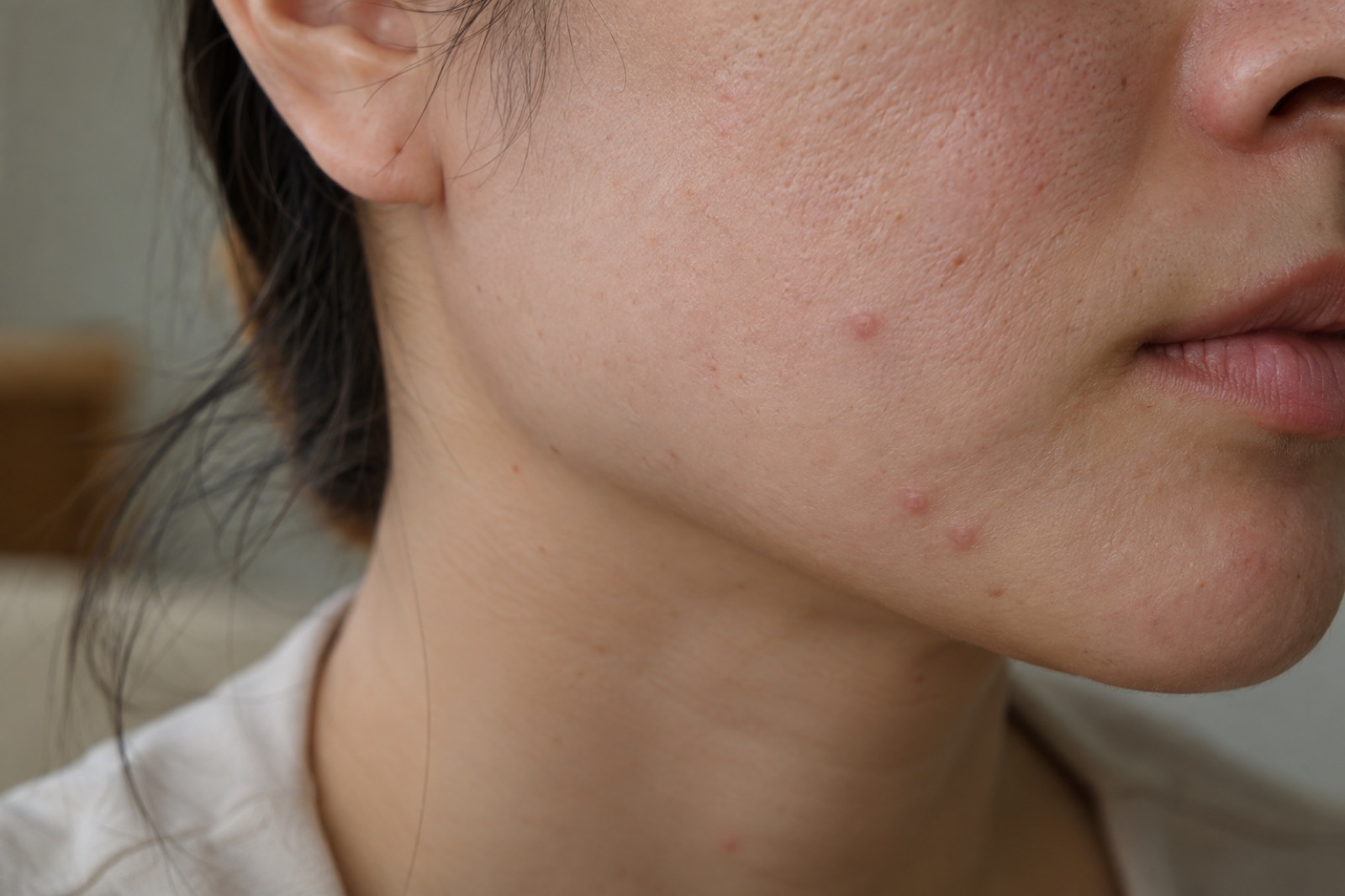
Hormone changes in early pregnancy can bring on more breakouts, but it doesn’t happen to everyone. The UK’s NHS names hormone changes before a period and in early pregnancy as common reasons women get adult acne. Still, breakouts on your chin or chest are not evidence on their own that pregnancy is the cause, and we cover other factors to check when your chin keeps breaking out in our chin acne causes guide.
Which acne ingredients should you avoid during pregnancy?
The American Academy of Dermatology (AAD) lists isotretinoin, tazarotene, and spironolactone, and the NHS lists topical retinoids, as medicines not to use during pregnancy. We could not find any study that tested retinal or retinol skincare in pregnant women, so if you’ve been using one, check with your obstetrician first.

Is salicylic acid face wash or azelaic acid cream OK during pregnancy?
Health organization guidance for both comes down to using them in a limited way after getting advice. The AAD says salicylic acid is generally thought to be safe for short periods but advises talking to a doctor before using it, and explains that no birth defects were seen with azelaic acid in animal studies. Under the EU’s CLP regulation, salicylic acid is classified as a category 2 reproductive toxicant (suspected of damaging the unborn child), and an SCCS opinion also cites this.

When to see a dermatologist
- If you are pregnant or planning to be, talk to a dermatologist before using a new acne product (AAD).
- If you find out you’re pregnant while taking an acne medicine by mouth, tell the clinic that prescribed it right away and get advice.
Frequently asked questions
Does pregnancy cause acne?
None of the evidence behind this article puts a number on how likely it is. But the UK's NHS and the American Academy of Dermatology (AAD) both list pregnancy as one of the hormone shifts that can bring on adult acne. Instead of changing all your products at once, note when the breakouts increased. That helps when you talk to your doctor.
Is salicylic acid safe during pregnancy?
The AAD says salicylic acid is generally thought to be safe for short periods, but advises talking to your obstetrician or dermatologist before using it. Under the EU's CLP regulation, salicylic acid is classified as a category 2 reproductive toxicant (suspected of damaging the unborn child), as cited in an opinion from the EU's Scientific Committee on Consumer Safety (SCCS), and a German review advises avoiding high-strength peels during pregnancy. Even for rinse-off products, it's safer to show the ingredient list to your doctor and check.
Which acne creams and skincare can you use while pregnant?
There is no separate list of products proven safe in pregnancy. Very few trials include pregnant women, so the AAD explains that safety is estimated from animal studies and experience of use. Isotretinoin, tazarotene, and spironolactone should be avoided, and many experts advise stopping adapalene and tretinoin during pregnancy. Even medicines considered relatively safe should be used only after talking with your obstetrician or dermatologist.
Does pregnancy cause acne on the chin?
There is no evidence that breakouts on your chin mean they are caused by pregnancy. The NHS describes hormone changes in early pregnancy as one cause of adult acne, but none of the evidence behind this article links a specific area to a specific cause. For other factors to check when your chin keeps breaking out, see our chin acne causes guide.
Sources
- AAD — Treating acne while you're pregnantInstitutional
- AAD — Adult acne: How to treat it yourselfInstitutional
- NHS — Acne (reviewed 2026-09-22)Institutional
- NHS 111 Wales — Health A-Z: Acne (updated 2024-11-07)Institutional
- SCCS — Opinion on salicylic acid (CAS 69-72-7) - Submission I (SCCS/1601/18)Institutional
- Acne therapy in pregnancy (German review, 2013, PMID 23430167)C
We never use YouTube videos or community posts as evidence for facts. Editorial policy
Product information related to this article
Product information from the site operator (KW Cosmetic, maker of the SKIN9HARI brand).
Revive Therapy N.F Ampoule
₩31,000 (KRW)
Separate from the pregnancy guidance on ingredients and medicines in this article, these are facts only about one cosmetic for the daily step after toner. Revive Therapy N.F Ampoule is a 30 ml ampoule with betaine and panthenol, with no added fragrance, essential oils or ethanol per its full ingredient list, and it has been patch-tested for irritation, but it has not been tested in pregnant people. Its product page places it after toner and before cream; keep it off broken skin. It is a cosmetic, not a medicine, so talk to your doctor or midwife before using it during pregnancy, and follow your prescriber's advice for anything prescribed to you.
- Ampoule with vegan rice PDRN (listed as Sodium DNA), betaine and panthenol, 30 ml
- No added fragrance, essential oils, ethanol, colorants or silicones (based on the full ingredient list)
- Low-irritation formula
Product details
- Type and size
- Clear, lightweight ampoule, 30 mL (1.01 fl oz)
- Step in routine
- Step 3 of 4 · Ampoule, after toner and before cream
- How to use
- After toner, use the dropper to dispense 2–3 drops into your palm or directly onto your face. Press gently into skin until absorbed. Follow with Revive Therapy N.F Cream to seal in moisture.
- Before you use
- Patch test on your inner arm before first use if you have very reactive skin. If redness, swelling or itching occurs, stop using and consult a dermatologist.
Based on the official product page, checked 2026-10-02
Cosmetics do not diagnose, treat, cure or prevent any disease. Test results apply only to the stated conditions.