Folliculitis Cream: What to Know Before Buying One at a Pharmacy
Folliculitis has several possible causes, including bacteria and yeast, so finding out what caused yours, with a doctor if needed, comes before choosing any cream from the pharmacy.
In this article5 sections
| Topic | What we know | Source |
|---|---|---|
| What folliculitis is | A common infection that happens when bacteria that live on the skin, such as Staphylococcus aureus, get into damaged hair follicles | AAD, folliculitis · Institution |
| Range of causes | Besides bacteria, conditions with different causes, such as Malassezia (a yeast), Demodex mites, and medicines, are grouped under the same name | Folliculitis research summary · A |
| Natural course | If your immune system is healthy, it often clears on its own once you stop what caused it | AAD, folliculitis · Institution |
| What to do at home | Warm compresses 3 to 4 times a day for 15 to 20 minutes. If shaving, plucking, or waxing is the cause, take a 30-day break | AAD, folliculitis · Institution |
| When medicine is needed | Medicines such as antibiotics or antifungals are chosen at a doctor’s visit after the cause is confirmed | Folliculitis research summary · A |
What should you check before buying a folliculitis cream over the counter?
Before choosing a cream, find out what caused the folliculitis. The American Academy of Dermatology (AAD) describes common folliculitis as an infection that happens when bacteria living on the skin get into damaged hair follicles. But when you look across folliculitis research, conditions with different causes, such as Malassezia folliculitis, Demodex-related rashes, and acne-like rashes caused by medicines, are grouped under the same name.
When the cause differs, the type of medicine used by doctors differs too. Danish clinical guidelines manage Malassezia folliculitis mainly with antifungal medicines. In a study of 320 people diagnosed with acne, 28.8% were also found to have Malassezia folliculitis (grade B). That is why a cream chosen by appearance alone may not match the cause. For clues that tell it apart from acne, see our folliculitis vs. acne guide, and for cases caused by yeast, see Malassezia folliculitis.
Can you put a steroid cream on face or chin folliculitis?
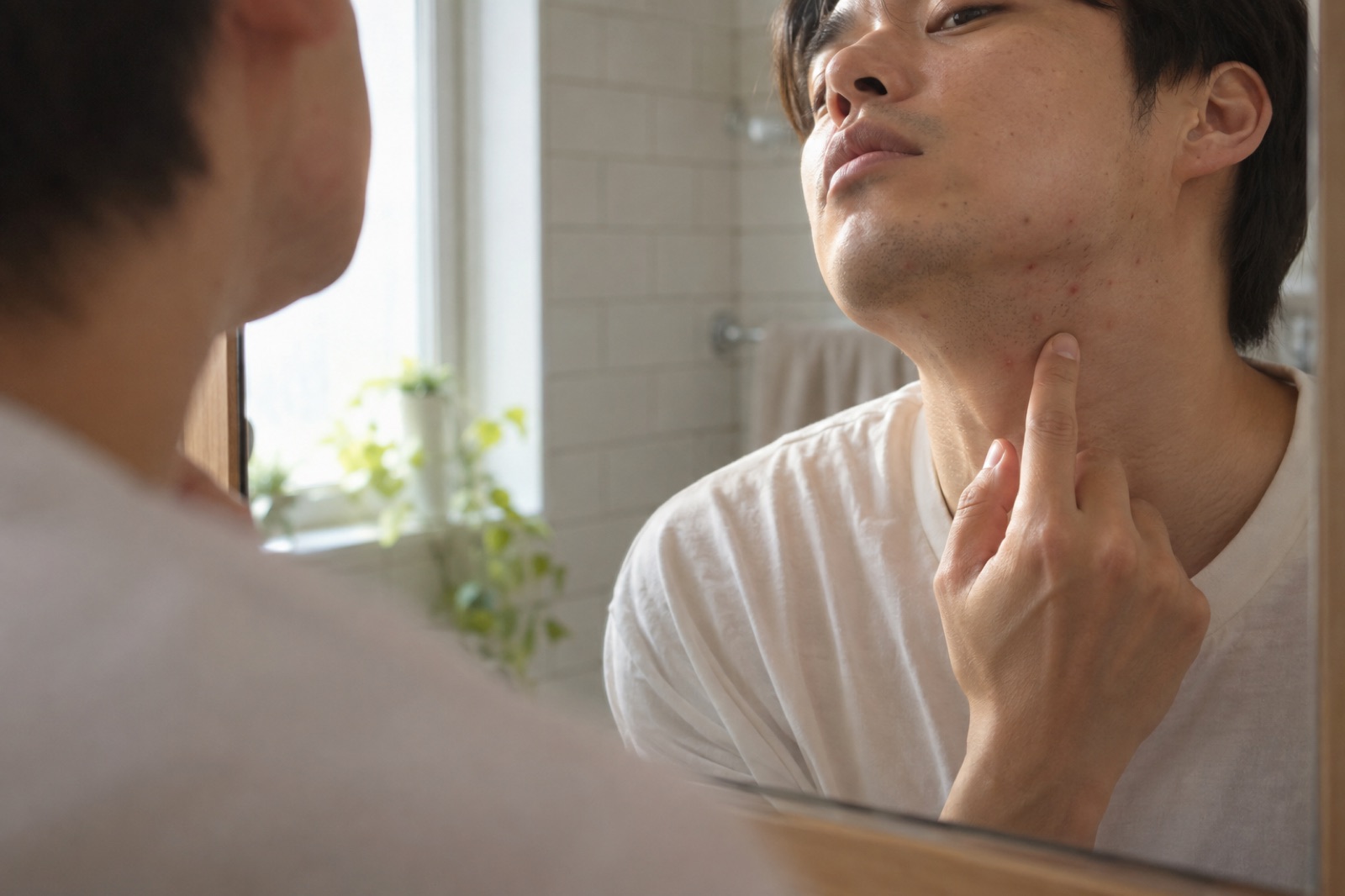
It is safer not to put a steroid cream on your face on your own, without advice. Guidelines on superpotent topical steroids list skin thinning, steroid acne, and perioral dermatitis (a rash around the mouth) among the side effects. A systematic review of the perioral dermatitis literature also named misuse of topical steroids as the most likely cause. Those guidelines cover the strongest prescription steroids, but the same caution applies to putting any steroid cream on your face without advice.
If you have already used one, remember what you applied and for how long, and tell your doctor at the visit. If it was prescribed, follow the instructions from whoever prescribed it.
How is folliculitis on the scalp, buttocks, or waxed skin different?
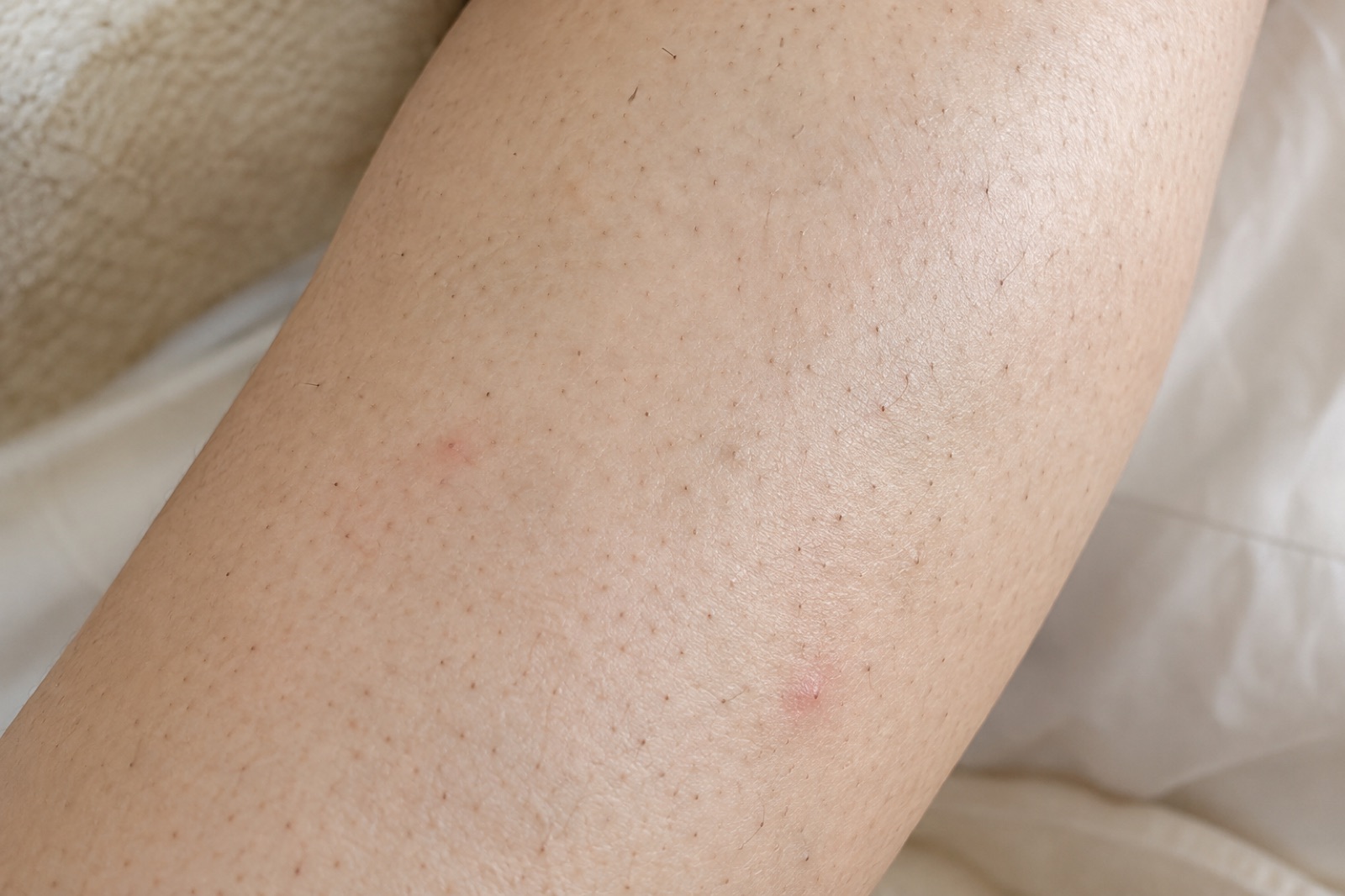
Whatever the location, the first step is the same: find what damaged the hair follicles. The AAD lists frequent friction, tight clothing, areas where skin rubs against skin, and shaving as common triggers, and says that after using a poorly maintained hot tub, a rash usually appears within 12 to 48 hours.
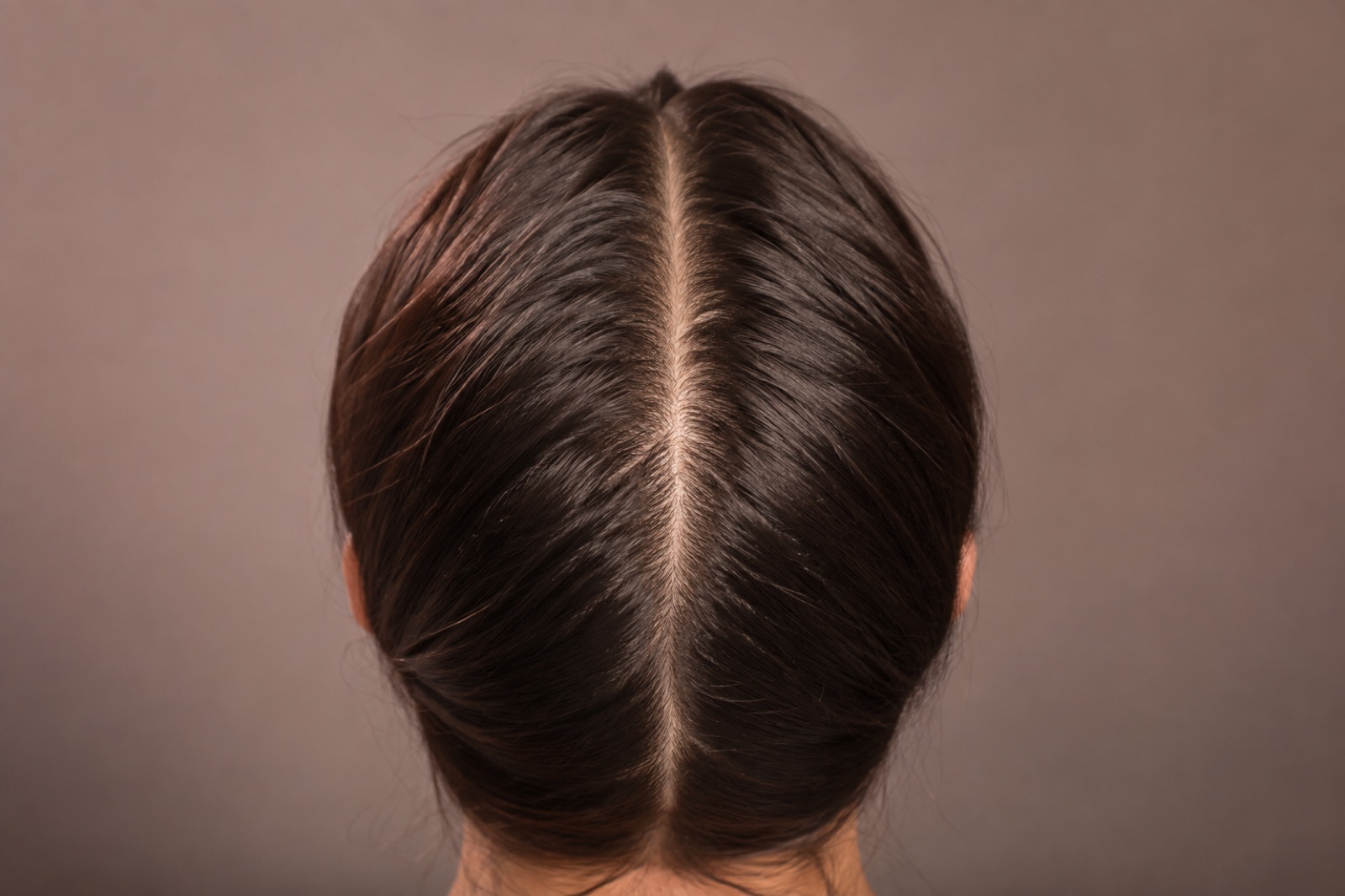
For areas that are constantly pressed by clothing, such as the buttocks, the AAD advises wearing loose clothes in hot, humid weather and changing clothes and showering right after exercise. For waxed or shaved areas, take a 30-day break. If the bumps spread or you develop a fever during that break, don’t wait; see a doctor right away. On the scalp, if the bumps also itch, yeast is another possible cause, so also see our scalp pimples checklist.

What to write down before seeing a pharmacist or doctor
A pharmacist or doctor needs the following details to narrow down the cause. Jotting them down in a note on your phone makes it quicker to explain.
| What to note | Examples |
|---|---|
| Location | Jawline, scalp, buttocks, shaved legs |
| When it started | The day it first appeared, and how many times it has come back |
| Trigger | Shaving or waxing, exercise, hot tub or pool, new clothes |
| Symptoms | Itching, pain, whether each bump has a red ring around it |
| What you’ve already applied | Exact names of creams or skincare products, and for how long |
| Health status | Conditions that affect your immune system or medicines you take |

When to see a dermatologist
- If it doesn’t clear up after you stop the trigger and use warm compresses, or you are not sure what it is. The AAD recommends seeing a dermatologist in these cases.
- If the bumps spread widely or keep coming back in the same spot.
- If it spread after you applied a steroid cream.
- If you have a condition that affects your immune system or take medicines that affect it. The AAD’s description of the natural course assumes a healthy immune system.
Frequently asked questions
Does folliculitis go away on its own, or should I go to the doctor?
The American Academy of Dermatology (AAD) explains that if your immune system is healthy, folliculitis often clears on its own once you stop what damaged the hair follicles. In the meantime, it suggests warm compresses 3 to 4 times a day for 15 to 20 minutes at a time. If it doesn't clear up or you are not sure what it is, see a dermatologist.
Should I see a dermatologist for scalp folliculitis?
Folliculitis can appear anywhere on the skin except the palms and soles, and the scalp is no exception. In a study of 320 people diagnosed with acne, those who also had Malassezia folliculitis more often had itching and bumps on the scalp and hairline. If it keeps coming back or spreads, a doctor's visit to find the cause gives a more accurate answer.
How should I use a folliculitis cream?
Directions differ by the active ingredient in each topical medicine, so this article does not give usage instructions. Follow the package leaflet, your pharmacist, or the instructions from whoever prescribed it. It is safer not to put a steroid cream on your face on your own, without advice.
Does the right folliculitis cream depend on the cause?
Folliculitis is a name used for several different conditions caused by bacteria, Malassezia (a yeast), Demodex mites, medicines, and more. Clinical guidelines manage Malassezia folliculitis mainly with antifungal medicines. Which medicine fits is decided at a doctor's visit after the cause is confirmed.
Do I need a cream for folliculitis after waxing or shaving?
The AAD recommends taking a 30-day break if shaving, plucking, or waxing is the cause. During the break, wear loose clothing, use warm compresses, and watch it. If it still doesn't clear up, have a dermatologist check whether you need medicine.
Sources
- AAD, Folliculitis: Overview and self-careInstitutional
- AAD, Is that stubborn acne really acne?Institutional
- Vlachos C, et al. Critical synthesis of available data in Malassezia folliculitis and a systematic review of treatments (JEADV, 2020, PMID 32012377)A
- Hald M, et al. Evidence-based Danish guidelines for the treatment of Malassezia-related skin diseases (Acta Derm Venereol, 2015, PMID 24556907)A
- Paichitrojjana A, et al. The prevalence, associated factors, and clinical characterization of Malassezia folliculitis in patients clinically diagnosed with acne vulgaris (Clin Cosmet Investig Dermatol, 2022, PMID 36531566)B
- Searle T, et al. Perioral dermatitis: Diagnosis, proposed etiologies, and management (J Cosmet Dermatol, 2021, PMID 33751778)A
- Prawer SE, et al. Guidelines for using superpotent topical steroids (Am Fam Physician, 1990, PMID 2333829)A
We never use YouTube videos or community posts as evidence for facts. Editorial policy
Product information related to this article
Product information from the site operator (KW Cosmetic, maker of the SKIN9HARI brand).
Revive Therapy N.F Ampoule
₩31,000 (KRW)
This article is about choosing a pharmacy product, and what follows is unrelated to that: one cosmetic that sits in the hydrating step after toner, stated as facts. Revive Therapy N.F Ampoule is a 30 ml ampoule containing betaine, panthenol and sodium hyaluronate, made without added fragrance, essential oils, ethanol, colorants or silicones according to its ingredient list, and patch-tested for low irritation. No test has looked at it on the condition this article describes. The product page lists it between toner and cream, and broken skin should be avoided. Because it is a cosmetic, not a medicine, see a doctor if bumps spread or keep coming back, and follow the prescriber's directions for anything you were given.
- Ampoule with vegan rice PDRN (listed as Sodium DNA), betaine and panthenol, 30 ml
- No added fragrance, essential oils, ethanol, colorants or silicones (based on the full ingredient list)
- Low-irritation formula
Product details
- Type and size
- Clear, lightweight ampoule, 30 mL (1.01 fl oz)
- Step in routine
- Step 3 of 4 · Ampoule, after toner and before cream
- How to use
- After toner, use the dropper to dispense 2–3 drops into your palm or directly onto your face. Press gently into skin until absorbed. Follow with Revive Therapy N.F Cream to seal in moisture.
- Before you use
- Patch test on your inner arm before first use if you have very reactive skin. If redness, swelling or itching occurs, stop using and consult a dermatologist.
Based on the official product page, checked 2026-10-02
Cosmetics do not diagnose, treat, cure or prevent any disease. Test results apply only to the stated conditions.