Skin Barrier Cream: Does Hydrated Skin Mean a Better Barrier?
Feeling hydrated and barrier readings can move separately. In one trial, moisturizers raised skin hydration readings, while transepidermal water loss (TEWL), the usual barrier measure, stayed the same as on bare skin.
In this article7 sections
- Do moisturizers add water to skin or keep it in?
- What does “barrier cream” mean in skin research?
- Does simply covering skin change barrier readings?
- Where and for how long did the moisturizer studies look?
- A safety review is not evidence that an ingredient works
- Five questions to ask about any “skin barrier” claim
- When to see a dermatologist
| Topic | What the evidence says | Source |
|---|---|---|
| Hydration vs water loss | One application of 4 moisturizers on the arms and legs raised hydration readings for most of them, but none differed from bare skin in transepidermal water loss (TEWL) for up to 6 hours | 2010 PMID 20394488 · A |
| How long skin was covered | Covering normal skin with a silicone membrane 23 hours a day for 3 weeks made TEWL and irritation-sensitivity readings come out better; 8 hours a day changed nothing | 2007 PMID 17553058 · A |
| “Barrier cream” in English research | These are protective creams for workplace irritants: in one trial all 6 failed to block n-octane irritation, and in another the results depended on how much was applied | 2013 PMID 23844768 · 2014 PMID 23844826 · A |
| Safety reviews | The CIR concluded that ceramides, hyaluronates, and panthenol ingredients are safe at current use levels; these documents do not rule on how well they work | CIR 2015 · 2023 · 2017 · institution |
| Long-term studies on the face | We found no study in which people used a barrier cream on the face for months | Our evidence review · none |
Do moisturizers add water to skin or keep it in?
Studies measure these two things separately, and after a moisturizer they did not move together. One is a hydration reading that shows how much water sits in the outer skin layer (measured with electrical capacitance or Raman spectroscopy). The other is transepidermal water loss (TEWL), the amount of water passing out through the skin into the air. People often call the first “hydrating” and the second “protecting the barrier,” but there is no guarantee that one cream changes both numbers.
A 2010 randomized trial shows the gap. Volunteers had 4 moisturizers, including a cream, an oil, and an emulsion, applied once to the forearms and legs, and each site was compared with an area left bare for up to 6 hours. Hydration readings rose from 45.9 to 75.3 with the highest-scoring product, compared with 44.8 to 48.5 on bare skin, while a cold cream emulsion (44.8 to 49.9) was not a statistically significant difference. TEWL, on the other hand, did not differ from bare skin for any product at any time point. The abstract does not give the number of participants.
Many studies measured hydration alone. A 2006 trial applied a glycerin cream once to six randomly assigned spots on the forearms of 26 healthy people and used Raman spectroscopy to measure the share of water in the skin, which came out significantly higher than at the control spots. This trial did not measure TEWL, so its result stops at “hydration went up.” How moisturizer types differ is covered separately in our types of moisturizers article.
TEWL itself is not an easy number to measure. A 1990 guideline from the Standardization Group of the ESCD, a European patch testing society, sorted the factors that shift readings into the person, the environment, and the device. The 2001 EEMCO guidance stressed that because TEWL backs cosmetic claims such as mildness, less irritation, and hydration, it has to be measured under standardized conditions to be repeatable. Both documents are about measurement methods, not evidence that any product works.
What does “barrier cream” mean in skin research?
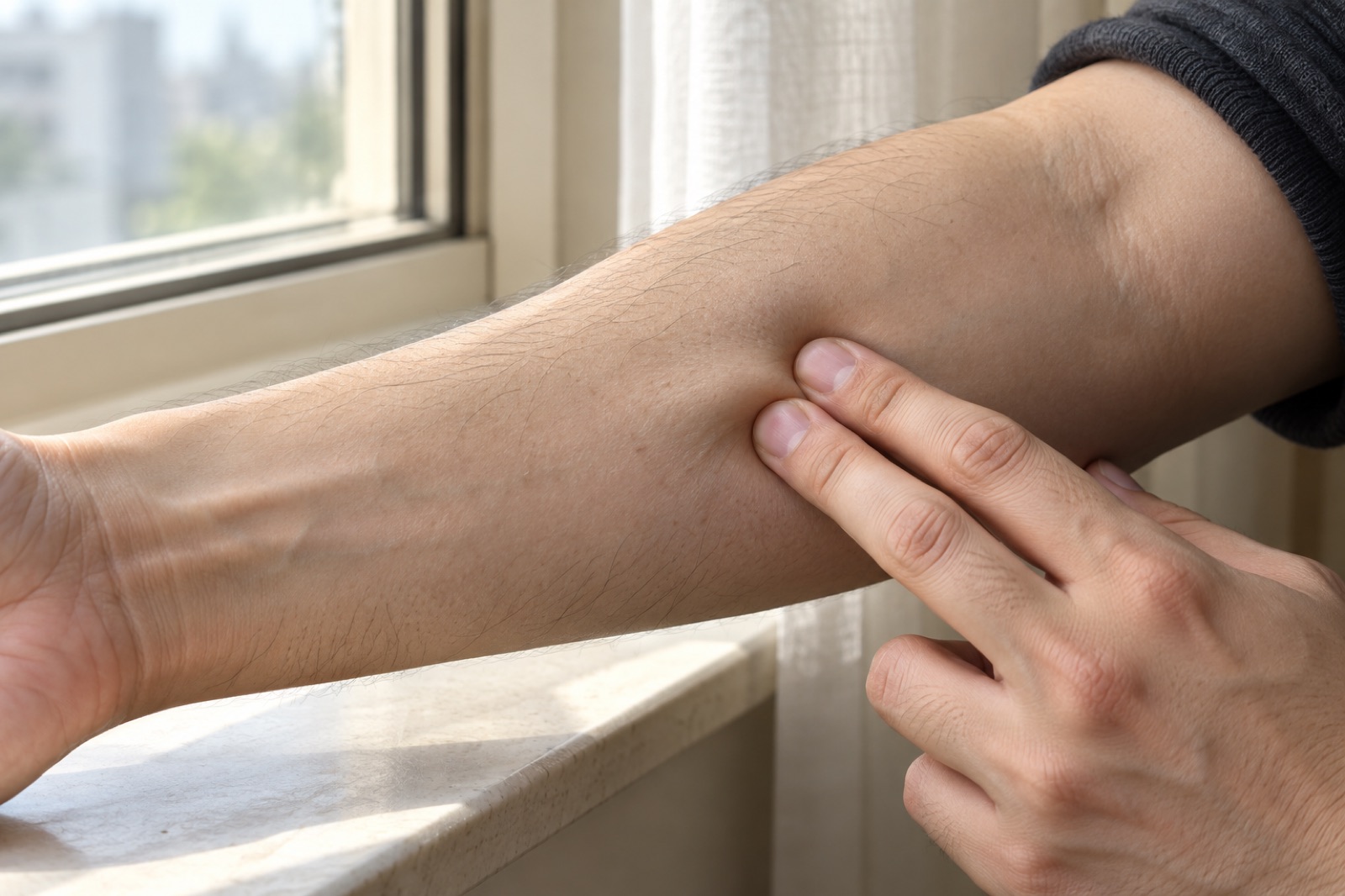
In English, “barrier cream” first of all means a protective cream workers put on their hands before contact with irritants on the job, and in every study behind this article that is what the term refers to. On skin care shelves, the same two words are also used for everyday facial moisturizers, and in Korea “jangbyeok cream” (literally “barrier cream”) is the common name for ceramide moisturizers. These are different products that happen to share a name, so results from protective cream trials can’t be carried over as evidence for a facial moisturizer. The three studies below did not point in one direction either.
A 2013 double-blind randomized trial tested 6 protective creams on 35 healthy people while repeatedly irritating their skin with n-octane and cumene, two model solvents from the workplace. None of the creams blocked the irritation or the drying of the outer skin layer caused by n-octane, one made irritation worse with both solvents, and another increased the drying caused by n-octane. Results were judged with irritation scores together with hydration (capacitance) and TEWL.
A 2014 randomized trial changed the amount applied. The backs of 20 healthy people were irritated over 4 days with sodium hydroxide or SLS (sodium lauryl sulfate, a detergent), and 3 protective creams were applied either in a small amount or in 10 times that amount. With the larger amount, all 3 reduced irritation, but with the smaller amount, one failed to block SLS irritation. The authors concluded that creams should be tested at the small amounts actually used at work so the effect isn’t overstated. These amounts are trial conditions, not a guide to how much to use on your face.
The largest study is a 2010 intervention study that split 1,020 male metal workers (800 followed for 1 year) into a skin care group, a protective cream group, a group using both, and a control group. After 1 year, TEWL was slightly lower in the group that used only the protective cream, but changes in hand redness and in each person’s TEWL did not differ among the four groups. All three studies either irritated skin on purpose or looked at workers’ hands.
Does simply covering skin change barrier readings?
There is an experiment where covering skin alone changed barrier measures, but the result came with a long condition of 23 hours a day for 3 weeks, and the differences between creams could not be explained by the covering effect alone. A 2007 randomized, assessor-blinded trial covered the skin of adults with normal skin with a semi-permeable silicone membrane to lower TEWL artificially. As barrier measures, it looked at TEWL and at how strongly the skin reacted to the detergent SLS.
Skin covered 23 hours a day for 3 weeks had better barrier readings, while skin covered only 8 hours a day showed no meaningful change. The researchers also compared how occlusive two creams were and concluded that occlusion alone could not explain why the creams affected the barrier differently. The abstract does not give the number of participants or the body site.
That makes it hard to read the result as “the thicker a cream covers, the better for your barrier.” What the experiment used was a membrane laid over the skin, not a cream rubbed in, and the authors concluded that the differences between creams lay outside the covering effect. This experiment does not answer what happens to barrier measures when you put a cream that leaves a lot on the surface, such as one heavy in petrolatum, on your face.
Where and for how long did the moisturizer studies look?
Every human study behind this article that reported a body site looked at the arms, legs, hands, or back (two abstracts do not give the site), over periods from a few hours to 1 year, and we found no study in which people used a barrier cream on the face for months. Most hydration studies measured results within hours of one application, and the protective cream studies looked at skin irritated on purpose or at workers’ hands. So each result is read only within that body site and that time frame.
How long one application lasted differed by product. A 2020 randomized trial applied 3 lamellar (layered-structure) moisturizers and a comparison product once to the legs of 30 adults aged 18 to 65 with dry skin who described their skin as sensitive. Hydration stayed higher than on bare skin for 24 hours with two products and for 12 hours with one, while one comparison product was significantly higher only at 30 minutes and 2 hours. A follow-up trial meant to look at the face for 4 weeks was stopped early by the sponsor, so no statistical tests were done.
| Study | Site and participants | Duration | What was measured |
|---|---|---|---|
| 2010, 4 moisturizers | Forearms and legs, volunteers (number not given) | 1 application, up to 6 hours | Hydration · TEWL |
| 2006, glycerin cream | Forearms, 26 healthy people | 1 application | Raman hydration |
| 2020, lamellar moisturizers | Legs, 30 people with dry, sensitive skin | 1 application, up to 24 hours | Hydration · dryness scores |
| 2007, silicone membrane | Normal skin (site and number not given) | 3 weeks | TEWL · SLS sensitivity |
| 2014, protective cream amount | Backs, 20 healthy people | 4 days | Irritation scores · TEWL |
| 2010, metal workers | Hands, 1,020 male workers | 1 year | TEWL · redness |
How the barrier gets thrown off and which signs to watch at home are collected in our damaged skin barrier signs article. What to check when you break out after a ceramide cream is covered in our ceramide cream article.
A safety review is not evidence that an ingredient works
Ingredient reviews by the US Cosmetic Ingredient Review (CIR) answer the question “is it safe at the levels used today?” and do not rule on whether the ingredient makes barrier measures better. Among ingredients often seen in barrier cream ads, 23 ceramides were concluded safe in cosmetics under current practices of use and concentration in a 2015 final report, and 7 hyaluronates in a 2023 final report. Seven panthenol and pantothenic acid ingredients got the same conclusion in a 2017 draft final report, with a caveat: they should not be used in formulas where N-nitroso compounds could form, because residual amines may remain as impurities.
What these reports reviewed was safety data such as toxicity, irritation, sensitization, and genotoxicity. Reading the CIR ceramide report’s conclusion as “official confirmation that ceramides work on the barrier” changes the question the document answered. A conclusion that something is safe and a conclusion that it works come from different kinds of tests.
Five questions to ask about any “skin barrier” claim
When you see a line saying something is “good for your skin barrier” in an ad, a review, or an article, try filling in the five boxes below. If even one box stays empty, read the claim more narrowly by that much.
| Question | What to check | Example from the evidence in this article |
|---|---|---|
| 1. What was measured? | Skin hydration (capacitance or Raman), water loss (TEWL), or redness and irritation scores | With 4 moisturizers, hydration went up but TEWL matched bare skin |
| 2. Where on the body? | The face, or the arms, legs, hands, or back | Every human study here that reported a site used the arms, legs, hands, or back, not the face |
| 3. For how long? | Hours after one application, or weeks to months | 2 to 24 hours after one application, 3 weeks for the silicone membrane, 1 year for the workers |
| 4. On whom? | Healthy skin, skin irritated on purpose, or workers’ hands | The protective cream trials used skin irritated with solvents or detergents |
| 5. Compared with what? | Bare skin, another cream, a different amount, or a different covering time | Silicone membrane 23 hours vs 8 hours, a small amount vs 10 times as much |
The “Example from the evidence in this article” column shows how the five questions played out in real studies; it is not a score that rates any product. If question 1 shows only hydration was measured, read the claim as far as “skin felt or measured more hydrated,” and if question 4 shows an irritation model, keep the condition “under irritation in a lab” attached.
When to see a dermatologist
- If blisters, oozing, or swelling appear, see a dermatologist rather than switching creams.
- If itching is bad enough to keep you up at night, consider seeing a doctor.
- If stinging, redness, or tightness lasts more than 2 weeks or keeps coming back in the same spot, see a dermatologist. The British Association of Dermatologists (BAD) says that when the cause is unclear or the skin doesn’t settle with medicines applied to it, a patch test is used to find the substance behind it.
Frequently asked questions
Do moisturizers add water to your skin or keep water from escaping?
Studies measure those two things separately, and they don't always move together. In a 2010 randomized trial, one application of 4 moisturizers on the arms and legs raised skin hydration readings for most of them (the largest went from 45.9 to 75.3), but none differed from bare skin in transepidermal water loss (TEWL), the water passing out through the skin. So 'adding water' and 'keeping it in' are claims that each need their own measurement.
Does hyaluronic acid help a damaged skin barrier?
The evidence behind this article can't say yes or no. Human studies of hyaluronic acid on the skin mostly measured skin hydration in groups of a few dozen people, and in moisturizer studies, hydration and TEWL moved separately. The 2023 review by the US Cosmetic Ingredient Review (CIR) concluded that 7 hyaluronate ingredients are safe at current use levels; it is a safety document, not a ruling on barrier measures.
Why does my skin feel dry again two or three hours after a barrier cream?
How long hydration lasted after one application differed by product. In a 2020 randomized trial on the legs of 30 adults with dry, sensitive skin, the rise in hydration stayed significant for 24 hours with two products and 12 hours with one, while a comparison product was significant only at 30 minutes and 2 hours. Those readings are from the outer skin layer, so feeling dry again doesn't tell you the state of your barrier, and a follow-up trial on the face was stopped early, so it gave no statistical answer.
Does petrolatum stop your skin from breathing?
No study in the evidence behind this article measured whether skin 'breathes.' The closest experiment is a 2007 trial: covering normal skin with a semi-permeable silicone membrane 23 hours a day for 3 weeks made TEWL and sensitivity-to-irritation readings come out better, while 8 hours a day changed nothing. It did not use petrolatum, so it supports neither 'covering skin is harmful' nor 'covering skin is good,' and if a product stings or turns your skin red, stop it based on that reaction.
Should I see a dermatologist for a damaged skin barrier or handle it at home?
If you have blisters, oozing, or swelling, if itching keeps you up at night, or if stinging and redness last more than 2 weeks, see a dermatologist instead of switching creams on your own. The British Association of Dermatologists (BAD) says that when the cause is unclear or the skin doesn't settle with medicines applied to it, a patch test is used to find the substance behind it. If none of these apply, the signs to watch at home are collected in our damaged skin barrier signs article.
Can hyaluronic acid pull water out of your skin and make it drier?
No study in the evidence behind this article measured on human skin whether hyaluronic acid draws water out. In the moisturizer trials we looked at, no product lowered hydration readings below their starting level after one application (2010, 4 moisturizers), and the lamellar moisturizers in the 2020 trial read higher than bare skin, but neither trial isolated hyaluronic acid. A hydration reading from the outer layer and a deep tight feeling may not be the same thing, so if tightness or stinging continues, stop that product and watch how your skin responds.
My skin feels hydrated after a few days of moisturizer. Is my skin barrier back to normal?
Feeling hydrated isn't enough to tell. In a 2006 trial, one application of a glycerin cream on the inner forearms of 26 people raised hydration measured by Raman spectroscopy, but in another trial TEWL stayed the same as bare skin even when hydration went up, and the experiment where covering skin changed TEWL readings needed 23 hours a day for 3 weeks. No study in the evidence behind this article set how far a barrier comes back in a few days.
Can a damaged skin barrier ever go back to 100%?
No study in the evidence behind this article scored the barrier as a percentage like '100%.' TEWL, the usual barrier measure, shifts with the person, the room, and the device, and guidelines from 1990 and 2001 say it has to be measured under standardized conditions, so there is no way to compare 'what percent of before' at home. If stinging and redness last a long time or keep coming back, have the cause checked at a medical visit rather than judging it yourself.
Sources
- Comparative effects of pimecrolimus cream vehicle and three commercially available moisturizers on skin hydration and transepidermal water loss (2010, PMID 20394488)A
- An in vivo randomized study of human skin moisturization by a new confocal Raman fiber-optic microprobe: assessment of a glycerol-based hydration cream (2006, PMID 16679823)A
- Single application of lamellar moisturizers provides significantly increased hydration of the stratum corneum for up to 24 hours in a randomized trial (2020, PMID 32167240)A
- Artificial reduction in transepidermal water loss improves skin barrier function (2007, PMID 17553058)A
- Protective creams fail to prevent solvent-induced cumulative skin irritation - results of a randomized double-blind study (2013, PMID 23844768)A
- Preventing irritant contact dermatitis with protective creams: influence of the application dose (2014, PMID 23844826)A
- Non-invasive bioengineering methods in an intervention study in 1020 male metal workers: results and implications for occupational dermatology (2010, PMID 20536474)A
- Guidelines for transepidermal water loss (TEWL) measurement. A report from the Standardization Group of the European Society of Contact Dermatitis (1990, PMID 2335090)A
- EEMCO guidance for the assessment of transepidermal water loss in cosmetic sciences (2001, PMID 11316970)A
- CIR — Safety Assessment of Ceramides as Used in Cosmetics (Final Report, 2015)Institutional
- CIR — Safety Assessment of Hyaluronates as Used in Cosmetics (Final Report, 2023)Institutional
- CIR — Safety Assessment of Panthenol, Pantothenic Acid, and Derivatives as Used in Cosmetics (Draft Final Report, 2017)Institutional
- British Association of Dermatologists — Contact dermatitis (patient information leaflet)Institutional
We never use YouTube videos or community posts as evidence for facts. Editorial policy
Product information related to this article
Product information from the site operator (KW Cosmetic, maker of the SKIN9HARI brand).
Revive Therapy N.F Cream
₩28,000 (KRW)
Revive Therapy N.F Cream is a 50 ml cream with 4 ceramides and 5 types of hyaluronic acid, and it is a moisturizing cream without functional-cosmetic labeling. No TEWL data exists for this cream, and its low-irritation patch test checked for irritation, not for hydration or water loss. When you are looking for a moisturizing cream with ceramides and hyaluronic acid on the label for the last step of your routine, the product we suggest is Revive Therapy N.F Cream.
- Cream with 4 ceramides (NP, NS, EOP, AP), 5 types of hyaluronic acid and D-panthenol, 50 ml
- No added fragrance
- Low-irritation formula
Product details
- Type and size
- Soft, cushiony cream, 50 mL (1.69 fl oz)
- Step in routine
- Step 4 of 4 · Moisturize, the last step
- How to use
- As the last step of your routine, squeeze out a small amount. Warm it slightly between your palms. Press gently over your face, working outward from the center. Use morning and night after your ampoule or serum step.
- Before you use
- Contains dimethicone (silicone) — this is not a silicone-free formula. If redness, swelling or itching occurs, stop using and consult a dermatologist.
Based on the official product page, checked 2026-10-02
Cosmetics do not diagnose, treat, cure or prevent any disease. Test results apply only to the stated conditions.