PDRN Skincare: Does Topical PDRN Work? What the Research Shows
Research on PDRN comes from injections and in-office procedures. We found no human study that tests whether PDRN applied to the skin is absorbed or has an effect.

In this article7 sections
- Does topical PDRN get absorbed into the skin?
- PDRN benefits: why injection results don’t carry over to serums
- PDRN serum, cream, mask, or sunscreen: what to look at by texture
- What is PDRN called on an ingredient list?
- Is PDRN good for acne-prone or sensitive skin?
- PDRN product label checklist
- When to see a dermatologist
| Item | What to know | Evidence |
|---|---|---|
| PDRN | Polydeoxyribonucleotide, an ingredient made of DNA fragments | PDRN research summary |
| Type of human studies | Of the 7 PDRN sources we reviewed, every human study used injections or was combined with laser procedures | PDRN · A |
| PDRN applied to skin | No grade A study tests it alone as a cosmetic | PDRN · A |
| Ampoule vs cream | No study compares PDRN textures with each other | PDRN research summary |
| Ingredient-list example | Rice-derived PDRN is listed as Sodium DNA | Product raw-material data |
Does topical PDRN get absorbed into the skin?
The evidence this article draws on includes no human study showing that PDRN applied to the skin is absorbed and has an effect. We reviewed 7 PDRN sources (4 grade A), and every human study used injections or combined PDRN with laser procedures. So neither “it isn’t absorbed” nor “it is absorbed” is an established fact; it is more accurate to say it has not been properly tested in a form you apply.
Many articles explain absorption by molecule size or a “low molecular weight” label, but our sources include no study that confirms this on human skin. Even if a product says “low molecular weight,” do not read it as a promise of absorption or effect.
PDRN benefits: why injection results don’t carry over to serums
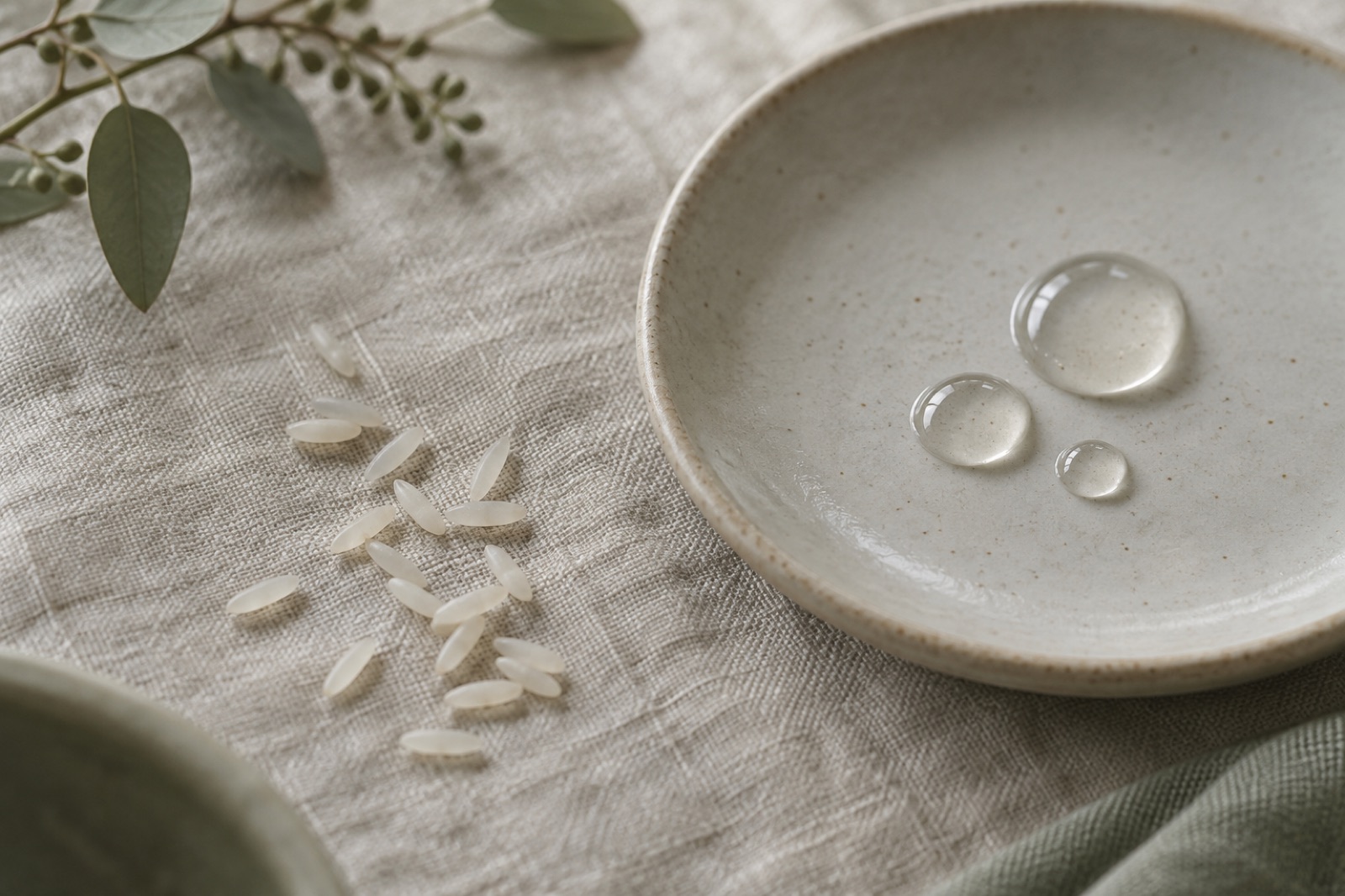
Most known PDRN results come from injections or procedures, and because injections and cosmetics deliver ingredients differently, those results cannot be carried over to products you apply. The most consistent result in human studies comes from small studies in which injected PDRN improved wound-site measures, such as skin graft donor sites (26 people) or diabetic foot ulcers (20 people). All of these took place in medical settings.
A review of 7 randomized trials (183 people) also found the most consistent results were in how fast and how long wounds took to close; it summarized wrinkle measures (4 trials) and scars (1 trial) without specific numbers. Because most were injection or procedure studies, the results could not be pooled. The study on acne scars added a commercial serum mixing several ingredients to a laser procedure (100 people), so PDRN’s share cannot be separated out. Evidence explaining how PDRN works comes from mouse and rat experiments, so we do not carry it over to effects in people.
PDRN serum, cream, mask, or sunscreen: what to look at by texture
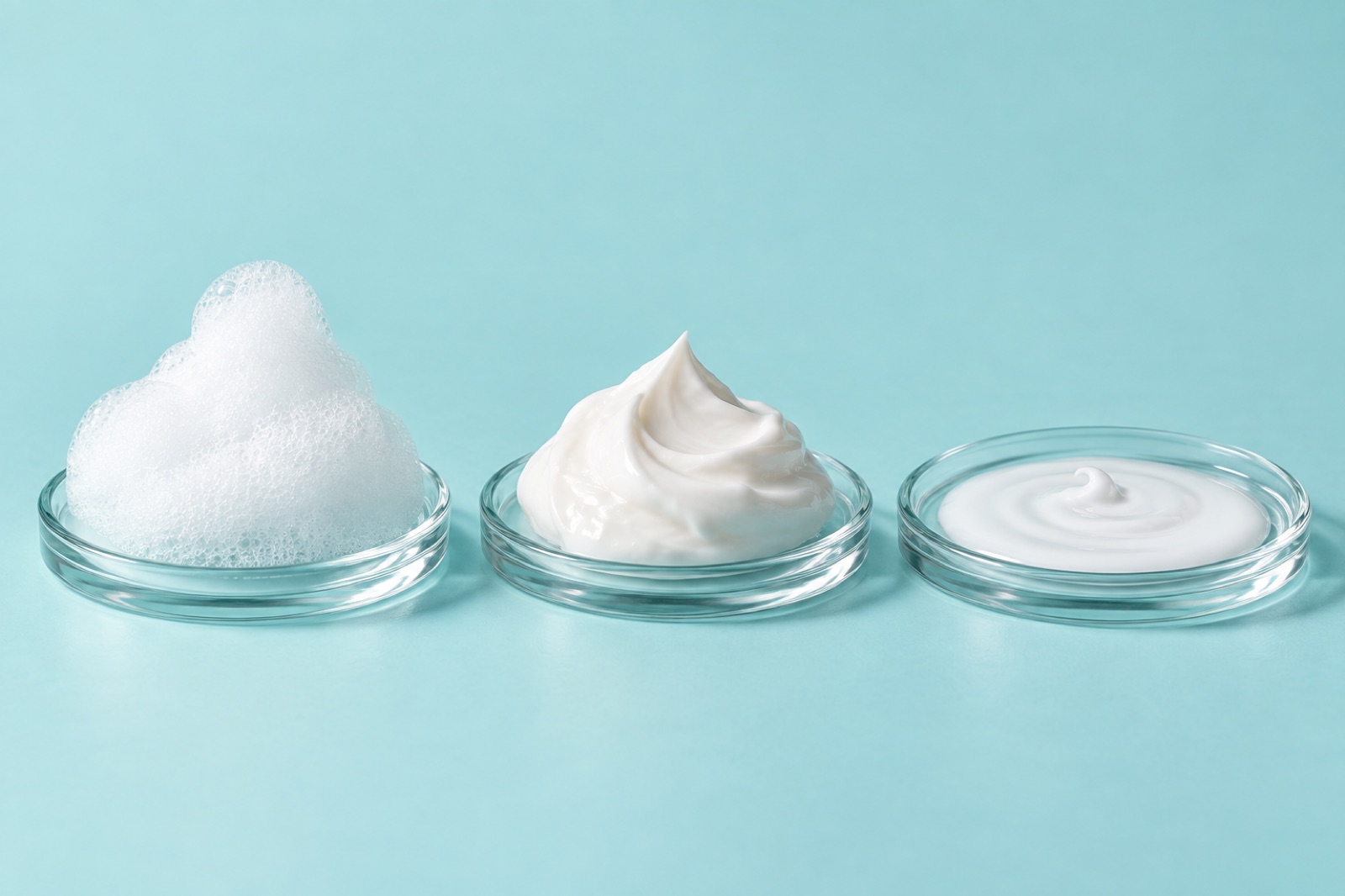
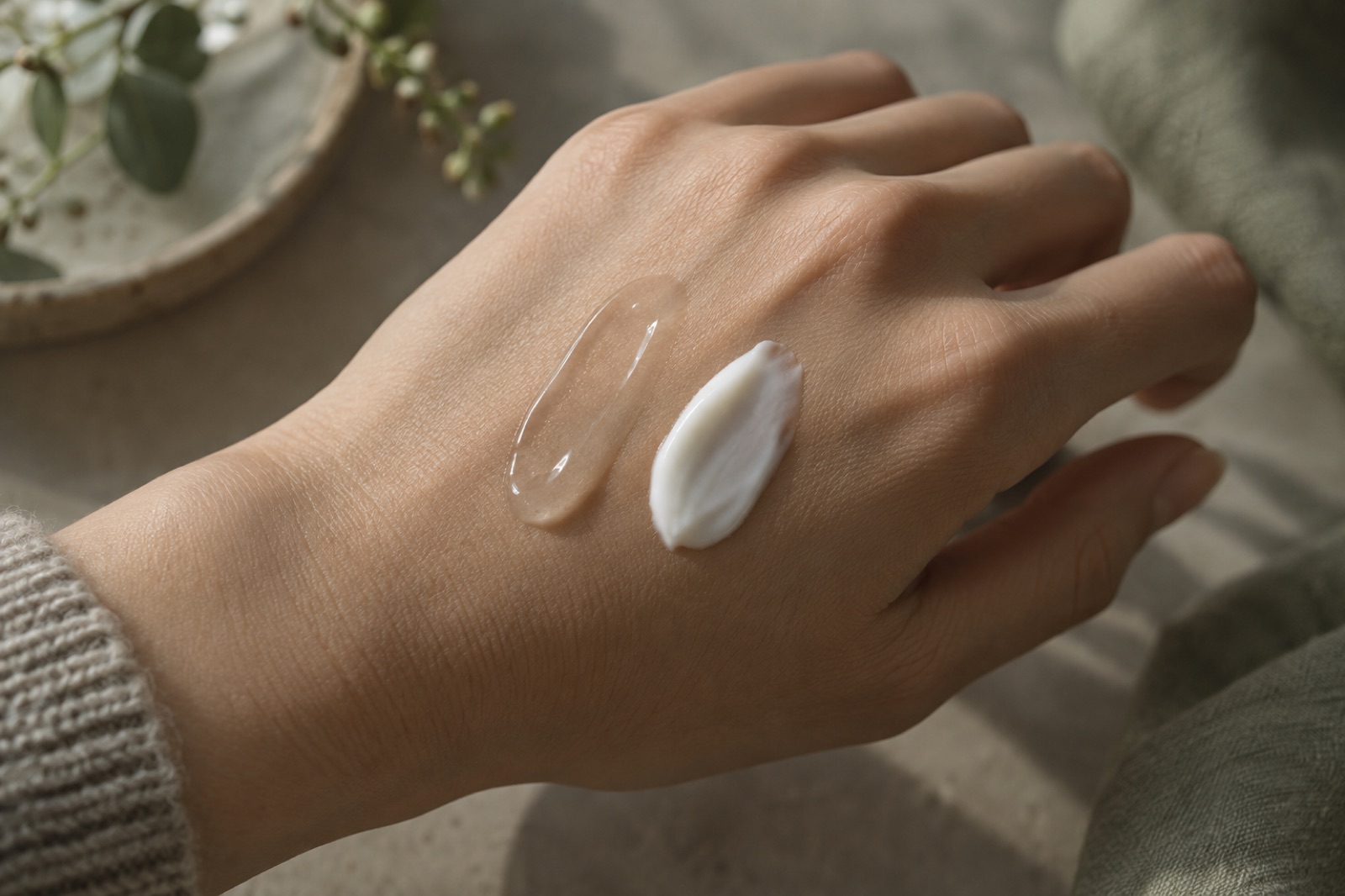
No study compares PDRN ampoules and creams side by side, so choosing a texture based on your skin’s condition and the other ingredients fits the evidence better than choosing based on PDRN. Even with the same “contains PDRN” label, an ampoule and a cream differ in their oils and moisturizing ingredients, and that is usually what matters for breakout-prone skin. The UK’s NICE recommends avoiding oil-based and comedogenic moisturizers for skin with acne.
So if your skin gets very shiny and breaks out often, look first at lighter, less oily textures; if it feels very tight, look first at textures with moisturizing ingredients. There are also no studies on whether using an ampoule and cream together, or the order you apply them, changes results, so follow the product directions and introduce new products one at a time.
Apply the same rule to PDRN serums, sheet masks, and sunscreens. Because the effect of PDRN applied to the skin has not been confirmed in people, first consider what each product type is meant to do. For sheet masks, wear time is a variable: in a sheet mask study, sebum rose clearly after 40 minutes of wear, and dryness stood out when a purified-water mask was left on for more than 25 minutes. For sunscreen, check the sunscreen basics first (SPF 30 or higher and a non-comedogenic label, as the American Academy of Dermatology advises) before whether it contains PDRN.
What is PDRN called on an ingredient list?
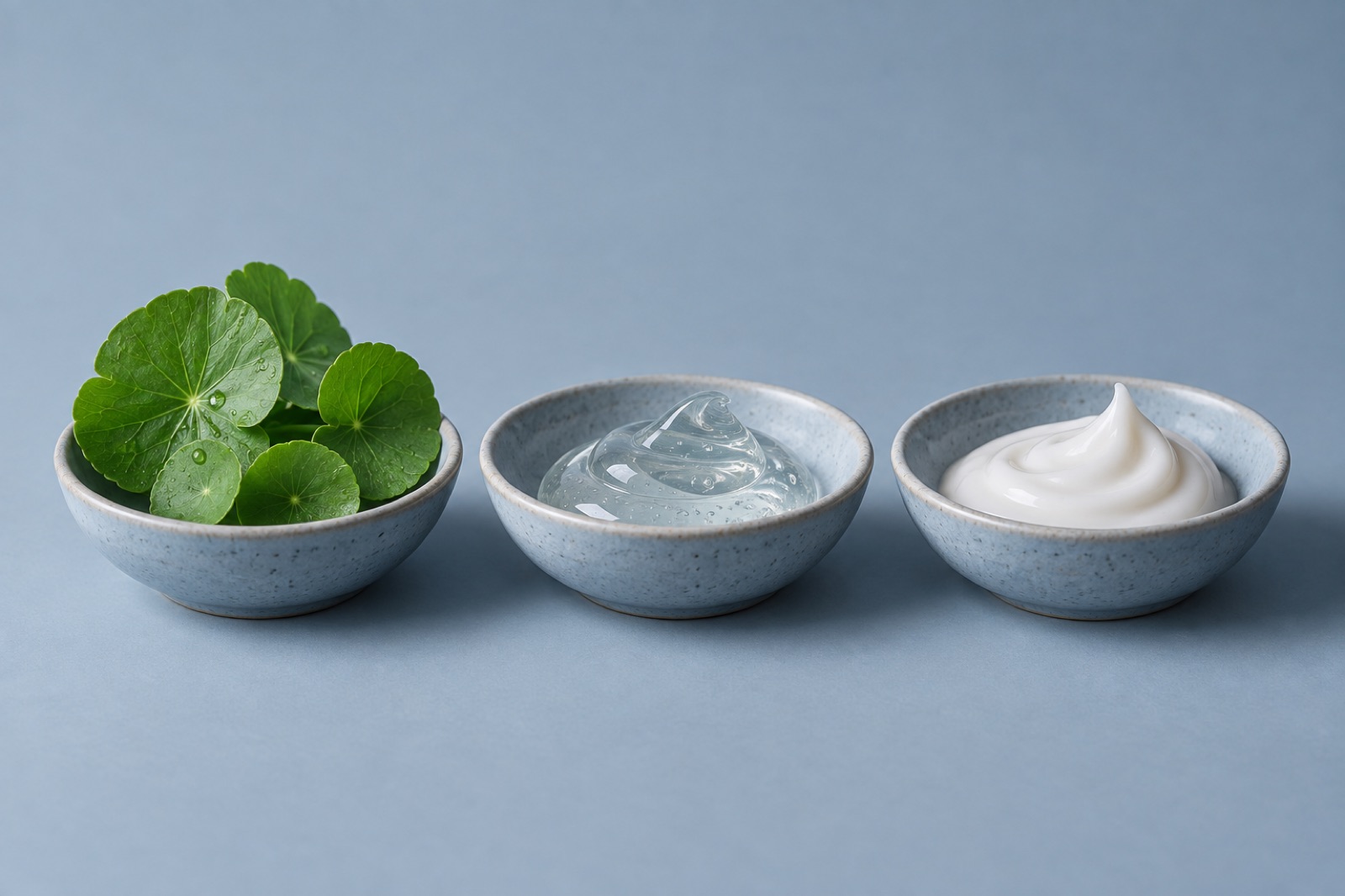
PDRN is the name of the raw material, and it can appear under a different name on the ingredient list. For example, rice-derived PDRN is listed as Sodium DNA, and centella-derived PDRN uses the same name, so the ingredient list alone cannot tell you the source. Check the product description or manufacturer to learn whether it is plant-based or salmon-derived.
Read “%” or “ppm” figures in ads carefully, too. The amount of raw material added and the amount of active substance in it can be very different, and listing the raw-material amount as if it were the ingredient content amounts to false labeling. First check what a listed number is based on, and do not pick a product based on which one advertises the higher number.

Is PDRN good for acne-prone or sensitive skin?
The evidence this article draws on includes no studies on irritation or allergy from PDRN cosmetics applied to the skin, so whether a product suits breakout-prone skin should be judged by the whole product rather than by PDRN. In a meta-analysis of survey studies, cosmetics were the factor most strongly linked to sensitive skin (OR 7.12), but the result does not show cause and effect.
If you break out after using a PDRN product, also look at the oils, fragrance, and preservatives in it. Among preservatives, isothiazolinones are a known cause of contact allergy, with a reported patch-test positive rate of 5.48% for methylisothiazolinone (MI). There is also no study verifying that products labeled “low-irritation” actually reduce reactions in sensitive skin, so introduce new products one at a time and keep notes on any reactions. For soothing ingredients in general, see our cica vs panthenol comparison.
PDRN product label checklist
| Step | What to check | Where to look | How to read it |
|---|---|---|---|
| 1 | PDRN name | Ingredient list | Tell apart the raw-material name (PDRN) and the ingredient-list name (Sodium DNA, etc.) |
| 2 | Basis of listed content | Ad copy, product description | Check whether % or ppm is the raw material added or the ingredient content; if unclear, hold off judging |
| 3 | Type of research cited | Evidence on the product page | If it is injection or laser procedure research, do not read it as the effect of a product you apply |
| 4 | Texture and other ingredients | Ingredient list, feel | Note the oiliness of the ampoule or cream and any fragrance or preservatives |
| 5 | Reaction after use | Your usage notes | If redness or peeling appears, stop and write down the date and area |
When to see a dermatologist
- If redness, peeling, or itching lasts more than a few days after applying a product, or swelling appears, consider seeing a dermatologist.
- If you are wondering what to use right after an in-office procedure, check first with the clinic that performed it.
- If acne scars or pitted marks concern you, ask a dermatologist about your options rather than relying on cosmetics.
- If breakouts are deep, painful, or leave scars, see a dermatologist.
Frequently asked questions
Does PDRN work topically?
It has not been shown either way. The grade A evidence we reviewed includes no human study that tests PDRN applied to the skin on its own. The studies that report results used injections or combined PDRN with laser procedures, so they are not enough to judge products you apply.
How do you use a PDRN serum or ampoule?
No study has checked whether the way or order you apply it changes results, so follow the product directions. If you layer an ampoule and a cream, introduce one at a time and watch how your skin responds. There are also no studies on using them with microneedle products or home devices, so we do not recommend methods that add irritation to your skin at home.
Is PDRN safe? What are the side effects of PDRN skincare?
The evidence this article draws on includes no studies on irritation or allergy from PDRN applied to the skin. If your skin reacts after using a product, also look at the oils, fragrance, and preservatives in it and when you started it. Stop the product, and write down the date and area. If redness continues, consider seeing a dermatologist.
What is the difference between PDRN and PN?
Both are ingredients made of DNA fragments, and a review of 7 randomized trials looked at PN and PDRN procedures together. Our sources include no human study comparing the two side by side as skincare you apply, so we cannot say one is better.
Is PDRN made from salmon DNA?
PDRN can come from salmon or from plants. The evidence on salmon-derived PDRN comes from injection experiments in rats, so we do not carry those results over to effects on human skin. There are also no studies directly comparing plant and salmon PDRN in people, so you cannot rank them by source.
What is PDRN called on a cosmetic ingredient list?
PDRN is the name of the raw material, and it can appear under a different name on the ingredient list. For example, rice-derived PDRN is listed as Sodium DNA, and centella-derived PDRN uses the same name, so check the product description or manufacturer for the source.
Sources
- Polynucleotides and Polydeoxyribonucleotides for Skin Rejuvenation, Postoperative Scar Prevention, and Wound Healing: A Systematic Review of Randomized Clinical Trials (2026, PMID 42572627)A
- Clinical evaluation of the trophic effect of polydeoxyribonucleotide (PDRN) in patients undergoing skin explants. A Pilot Study (2001, PMID 11759182)A
- Polydeoxyribonucleotide Improves Peripheral Tissue Oxygenation and Accelerates Angiogenesis in Diabetic Foot Ulcers (2017, PMID 29076318)A
- Triggering factors in sensitive skin from the worldwide patients' point of view: a systematic literature review and meta-analysis (2020, PMID 31571336)A
- Prevalence of Contact Allergy to Isothiazolinones in Dermatitis Patients From 2000 to 2025: A Systematic Review and Meta-Analysis (2026, PMID 41804652)A
- NICE NG198 — Acne vulgaris: management, RecommendationsInstitutional
We never use YouTube videos or community posts as evidence for facts. Editorial policy
Product information related to this article
Product information from the site operator (KW Cosmetic, maker of the SKIN9HARI brand).
Revive Therapy N.F Ampoule
₩31,000 (KRW)
- Ampoule with vegan rice PDRN (listed as Sodium DNA), betaine and panthenol, 30 ml
- No added fragrance, essential oils, ethanol, colorants or silicones (based on the full ingredient list)
- Low-irritation formula
Product details
- Type and size
- Clear, lightweight ampoule, 30 mL (1.01 fl oz)
- Step in routine
- Step 3 of 4 · Ampoule, after toner and before cream
- How to use
- After toner, use the dropper to dispense 2–3 drops into your palm or directly onto your face. Press gently into skin until absorbed. Follow with Revive Therapy N.F Cream to seal in moisture.
- Before you use
- Patch test on your inner arm before first use if you have very reactive skin. If redness, swelling or itching occurs, stop using and consult a dermatologist.
Based on the official product page, checked 2026-10-02
Cosmetics do not diagnose, treat, cure or prevent any disease. Test results apply only to the stated conditions.