Skincare Routine for Acne-Prone Skin: AM and PM Steps in Order
Cleanse first, add optional steps like toner or serum, then moisturize, and finish with sunscreen in the morning. The three core steps are cleansing, moisturizing, and sunscreen; everything else is optional.
In this article7 sections
- What are the core steps of a routine for acne-prone skin?
- Skincare routine order: morning vs night
- In what order do toner, serum, ampoule, and cream go?
- Does the order change for oily, dry, or sensitive skin?
- Should you moisturize acne-prone skin?
- Routine table: 3 core steps plus optional steps, AM and PM
- When to see a dermatologist
| Item | What to know | Evidence |
|---|---|---|
| Core steps | Cleansing, moisturizing, and sunscreen recommended as one package | 2023 and 2024 expert consensus (A) |
| Cleansing | A non-alkaline synthetic detergent cleanser, twice a day | NICE guideline |
| Moisturizing | Oil-free, non-comedogenic moisturizer, daily if skin is dry | AAD |
| Sunscreen | SPF 30 or higher, non-comedogenic | AAD |
| Number of products | Try only 1 to 2 new products at a time; too many can irritate skin | AAD |
What are the core steps of a routine for acne-prone skin?
A routine for acne-prone skin rests on three steps: cleansing, moisturizing, and sunscreen. Everything else is optional. An Asia-Pacific consensus of dermatologists grouped cleansing, moisturizing, and sunscreen as key parts of care that go alongside medical treatment for skin conditions, including acne (grade A). A consensus of 133 dermatologists on managing irritation from retinoid acne medicines also gave the strongest agreement to using cleansing, moisturizing, and sun-protection products (grade A). None of the health-organization guidance in our sources lists toner, serum, or ampoule as a required step.
Skincare routine order: morning vs night
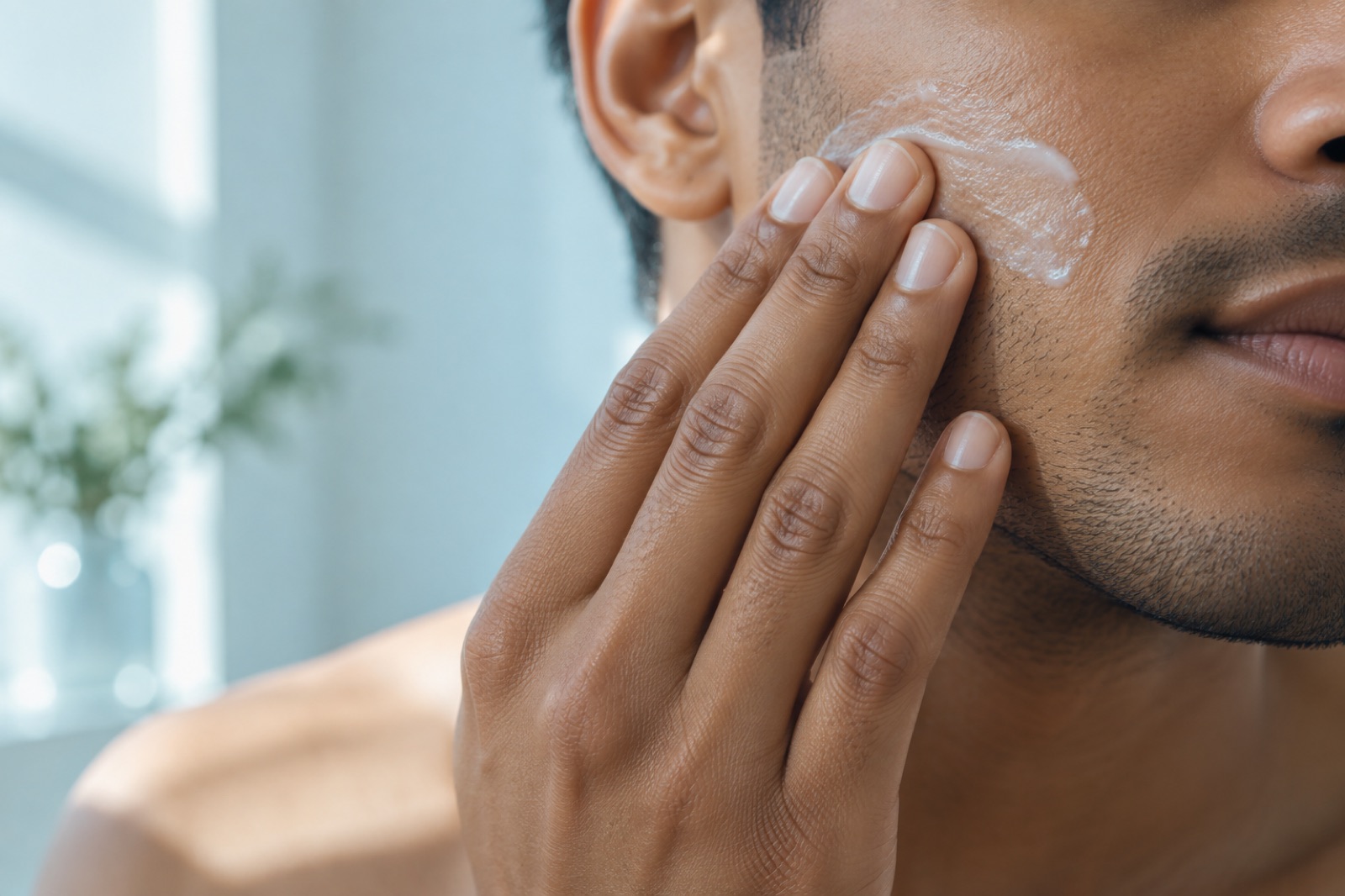
The biggest difference between morning and night is that sunscreen goes last in the morning, and at night you remove makeup first. The American Academy of Dermatology (AAD) recommends a non-comedogenic sunscreen with SPF 30 or higher and notes that some acne medicines can make your skin more sensitive to sunlight. At night, the UK’s NHS advises removing all makeup before bed.
There are few comparison studies that answer “What can I skip in the morning?” Our sources include no study testing whether a water-only morning rinse is enough for adults with acne-prone skin, and health organizations use twice-daily washing, morning and night, as the standard. If you want a shorter routine, keeping the three core steps and dropping optional steps first does not conflict with the evidence.
In what order do toner, serum, ampoule, and cream go?
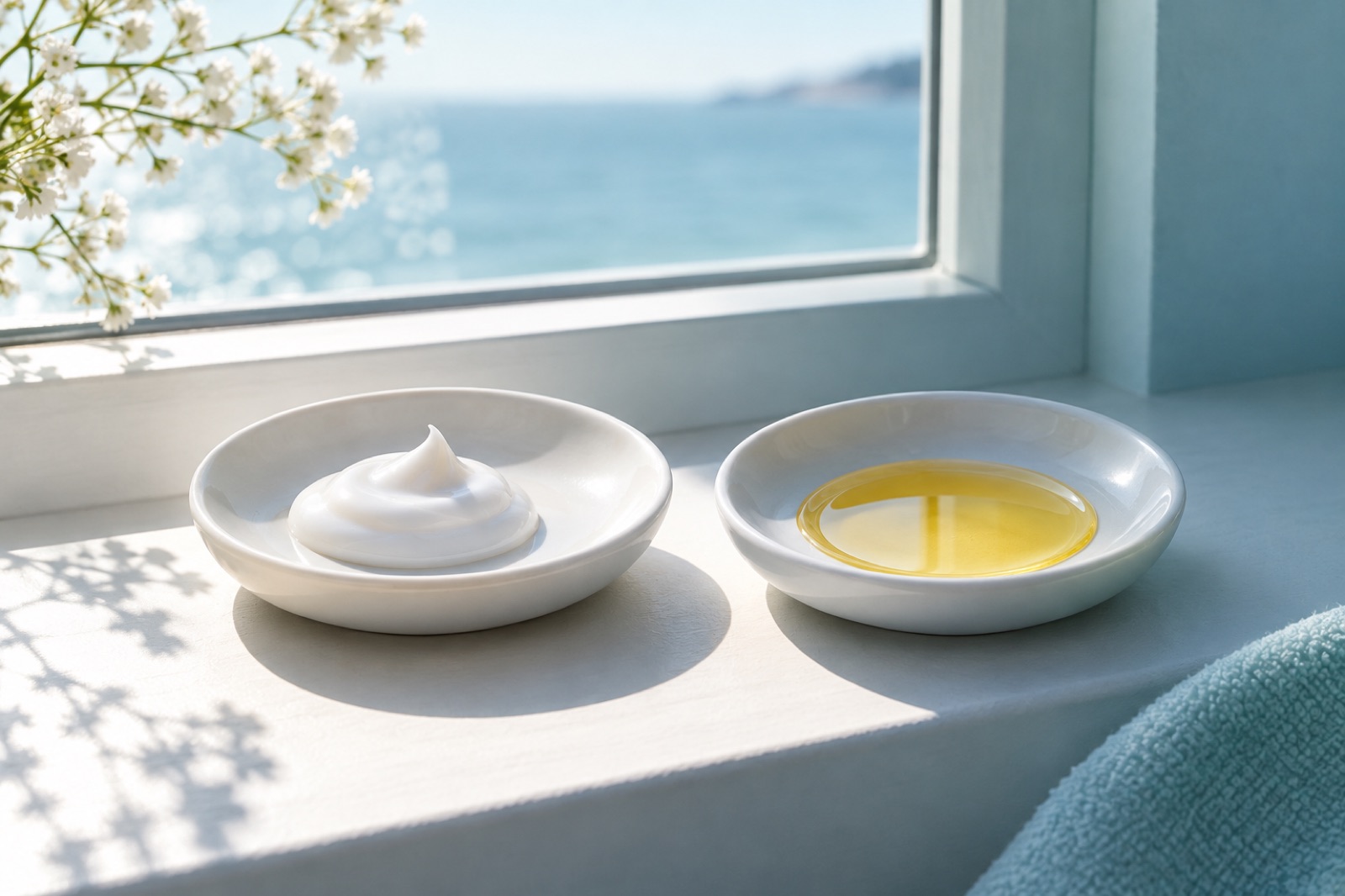
Our sources include no study comparing application order by texture, so the order of the optional steps in the table below follows common practice. Some parts do have support. The AAD advises using alcohol-free products and avoiding harsh products like astringents and toners, so if you use a toner, first check that it does not sting. The AAD also suggests applying moisturizer while skin is still slightly damp, although in a trial of 60 healthy adults, moisturizing right after washing and 30 minutes later made no difference (grade B).
If you were prescribed an acne medicine, its directions come before any routine order. We cover this in a separate article on acne medicine and skincare order.
Does the order change for oily, dry, or sensitive skin?
The order stays the same across skin types; what changes is the number of steps and the texture. Our sources include no study comparing routine order by skin type. For oily or acne-prone skin, you can choose an oil-free, non-comedogenic moisturizer as the AAD suggests, but there is no grade A evidence on whether moisturizers clog pores and increase acne. For dry skin, the key is not skipping moisturizer; studies repeatedly show that moisturizers raise measured hydration in the outer skin layer (mostly short-term tests on arms and legs, grade A).
For sensitive skin, fewer steps fit the evidence better. In a meta-analysis of 13 survey studies, cosmetics were the strongest reported trigger of sensitive skin (OR 7.12, a survey-based association, grade A), and an Asia-Pacific consensus of dermatologists listed cleansing, moisturizing, and sunscreen as basic care for sensitive skin (grade A). A moisturizing cream counts as the moisturizer step in the routine table, and our sources give no reason to use both a lotion and a cream.
Should you moisturize acne-prone skin?
Yes. If acne-prone skin feels dry, health organizations recommend moisturizing, especially while you use acne medicine. The AAD explains that acne medicines can dry and irritate the skin and advises a daily oil-free, non-comedogenic moisturizer. In studies that combined acne medicine with moisturizer, dryness and water loss were lower. In one trial, 100% of the group using a moisturizer were still following their care plan at week 4, compared with 70% of the group using medicine alone (100 people, used with a prescription medicine, grade A).
There is still little evidence on whether moisturizer alone reduces breakouts. In a trial of 132 women with oily, blemish-prone skin, the moisturizing-cream group had a larger drop in blemish count after 8 weeks than the group using no moisturizer (least-squares mean difference -1.80), but the authors themselves described it as an early proof-of-concept study (grade A). For more, see our article on moisturizing acne-prone skin.
Routine table: 3 core steps plus optional steps, AM and PM
| Order | Morning | Evening | Note |
|---|---|---|---|
| 1 | Cleanse (gentle cleanser) | Remove makeup → cleanse | Twice a day (NICE, AAD) |
| 2 | (Optional) Toner | (Optional) Toner | Choose alcohol-free; avoid harsh astringents (AAD) |
| 3 | (Optional) One serum or ampoule | (Optional) One serum or ampoule | Only 1 to 2 new products at a time (AAD) |
| 4 | Moisturizer | Moisturizer | Oil-free, non-comedogenic (AAD) |
| 5 | Sunscreen SPF 30 or higher | — | Non-comedogenic (AAD) |
After adding a new product, the AAD suggests giving it 6 to 8 weeks before changing, unless it stings or irritates your skin. It explains that switching products every week can irritate your skin and may even lead to more breakouts.
When to see a dermatologist
- If new breakouts keep appearing after 6 to 8 weeks on just the core steps, consider seeing a dermatologist.
- If you are using a prescription acne medicine, talk with your prescriber before adding new products.
- If stinging, redness, or itching keeps coming back after applying a product, stop using it and see a dermatologist.
- Deep, painful acne should be checked by a doctor.
Frequently asked questions
What is the right skincare routine order for acne-prone skin?
The backbone is cleansing, moisturizing, and sunscreen as the last morning step. Toner and serum are optional steps in between. The sources behind this article include no study that compares application order by texture, so that part follows common practice. If you use a prescription acne medicine, follow the directions you were given first.
What is a good skincare routine for acne-prone oily skin?
The backbone is the same for oily skin. The American Academy of Dermatology (AAD) recommends an oil-free, non-comedogenic moisturizer and a non-comedogenic sunscreen with SPF 30 or higher for acne-prone skin, and washing twice a day. The sources here give no support for skipping moisturizer just because your skin looks shiny.
Is the skincare routine order different for sensitive skin?
The order stays the same, and using fewer steps fits the evidence better. In a meta-analysis of 13 survey studies, cosmetics were the strongest reported trigger of sensitive skin, and an Asia-Pacific expert consensus lists gentle cleansing, moisturizing, and sunscreen as basic care.
Do I need toner in my skincare routine?
None of the health-organization guidance in our sources lists toner as a required step. The AAD advises using alcohol-free products and avoiding harsh products such as astringents and toners. If you keep your moisturizer, dropping toner does not remove any step that these organizations recommend.
How many skincare products is too many?
No study in our sources sets a specific number. The AAD suggests trying only one or two new products at a time and notes that using too many can irritate your skin. After adding something new, the AAD also suggests giving it 6 to 8 weeks before switching, but stop sooner if it stings or irritates your skin.
When do you apply acne medicine in a skincare routine?
If a medicine was prescribed to you, follow the directions from the person who prescribed it. We cover acne medicine and skincare order in a separate article.
Sources
- Expert consensus on holistic skin care routine: Focus on acne, rosacea, atopic dermatitis, and sensitive skin syndrome (2023, PMID 36409588)A
- Challenges and real-world solutions for adoption of holistic skincare routine (cleansing, treatment, moisturization, and photoprotection) in acne, rosacea, atopic dermatitis, and sensitive skin: An expert consensus (2024, PMID 38853652)A
- Iberia Consensus on Strategies to Prevent and Manage Irritation by Topical Retinoids in Facial and Trunk Acne (2024, PMID 38972576)A
- NICE NG198, Acne vulgaris: management — RecommendationsInstitutional
- AAD, Acne: Tips for managingInstitutional
- AAD, Can the right moisturizer help clear acne?Institutional
- AAD, How to get rid of acne that won't clearInstitutional
- NHS 111 Wales, Health A-Z: Acne (updated 2024-11-07)Institutional
- Study of the usefulness of moisturizers on adherence of acne patients treated with adapalene (2014, PMID 24930436)A
- Cosmetic benefits of a novel biomimetic lamellar formulation in healthy females with oily, blemish-prone skin in a randomized proof-of-concept study (2020, PMID 31461548)A
- Moisturizing effectiveness of immediate compared with delayed moisturization (2022, PMID 35435321)B
- Triggering factors in sensitive skin from the worldwide patients' point of view: a systematic literature review and meta-analysis (2020, PMID 31571336)A
We never use YouTube videos or community posts as evidence for facts. Editorial policy
Product information related to this article
Product information from the site operator (KW Cosmetic, maker of the SKIN9HARI brand).
Revive Therapy N.F Cream
₩28,000 (KRW)
None of the expert consensus statements or moisturizer trials in this article tested this cream, so their results are not evidence for it. Revive Therapy N.F Cream is a 50 ml cream with 4 ceramides and 5 types of hyaluronic acid, no added fragrance per its ingredient list and a low-irritation formula, but it has not been tested within an acne-prone routine or for comedogenic potential. Its product page places it last, after the ampoule, and in the morning sunscreen goes on top of it. For the moisturizing slot among the three core steps, the product we suggest is Revive Therapy N.F Cream.
- Cream with 4 ceramides (NP, NS, EOP, AP), 5 types of hyaluronic acid and D-panthenol, 50 ml
- No added fragrance
- Low-irritation formula
Product details
- Type and size
- Soft, cushiony cream, 50 mL (1.69 fl oz)
- Step in routine
- Step 4 of 4 · Moisturize, the last step
- How to use
- As the last step of your routine, squeeze out a small amount. Warm it slightly between your palms. Press gently over your face, working outward from the center. Use morning and night after your ampoule or serum step.
- Before you use
- Contains dimethicone (silicone) — this is not a silicone-free formula. If redness, swelling or itching occurs, stop using and consult a dermatologist.
Based on the official product page, checked 2026-10-02
Cosmetics do not diagnose, treat, cure or prevent any disease. Test results apply only to the stated conditions.