Panthenol for Skin: Benefits, Creams, and Dexpanthenol Explained
Many studies found better hydration and barrier readings on irritated skin after people used panthenol-containing products, but most of those products also contained several other ingredients.
In this article6 sections
- Dexpanthenol, D-panthenol, B5, and panthenol: how are the names different?
- How is a pharmacy ointment different from a panthenol cream?
- What does the evidence say about panthenol creams and serums?
- On what kind of skin have panthenol’s effects been seen?
- Checklist: choosing a panthenol cream
- When to see a dermatologist
| Topic | What the evidence says | Source |
|---|---|---|
| Names | Dexpanthenol is another name for D-panthenol. The CIR listed panthenol, D-panthenol, and DL-panthenol separately in its assessment | CIR 2017 · Institution |
| What happens in the skin | D-panthenol is converted into pantothenic acid, the active form of vitamin B5, after it is absorbed into the skin | CIR 2017 · Institution |
| What was studied | Mostly skin irritated with SLS, skin after laser procedures, and skin on prescription topicals. Only a few studies tested panthenol alone | Panthenol research summary · A |
| Key result | After 3 weeks, the drop in TEWL with a panthenol-containing emollient was larger than with the control (AUC -168.36 vs -123.38, p=0.023) | 2017 PMID 27425824 · A |
| Safety | The CIR concluded it is safe in cosmetics at current use levels (up to 5.3% in body and hand products), and rare contact allergy cases exist | CIR · PMID 36210883 |
Dexpanthenol, D-panthenol, B5, and panthenol: how are the names different?
Dexpanthenol is another name for D-panthenol, and “panthenol” is the broader name for this family of ingredients. The Cosmetic Ingredient Review (CIR) safety assessment listed panthenol, D-panthenol, and DL-panthenol separately and assessed them together. So even if an ingredient list just says “panthenol,” you may need to ask the brand which form it is. When shopping, check the ingredient list for panthenol or dexpanthenol.
The nickname “B5” comes from its link to pantothenic acid. According to the CIR, D-panthenol is converted into pantothenic acid, the active form of vitamin B5, after it is absorbed into the skin. But results from studies of pantothenic acid taken by mouth should be kept separate from panthenol applied to the skin. In a study of surgery patients who took pantothenic acid and vitamin C, wound outcomes did not clearly differ.
How is a pharmacy ointment different from a panthenol cream?
Even with the same dexpanthenol inside, an ointment sold as a medicine and a panthenol cream sold as a cosmetic have different purposes and directions. Studies of dexpanthenol ointment were done in medical settings, such as wounds after laser procedures. Use an ointment as directed on its label and by your pharmacist, and ask a pharmacist or doctor before switching to it as an everyday moisturizer for your whole face.
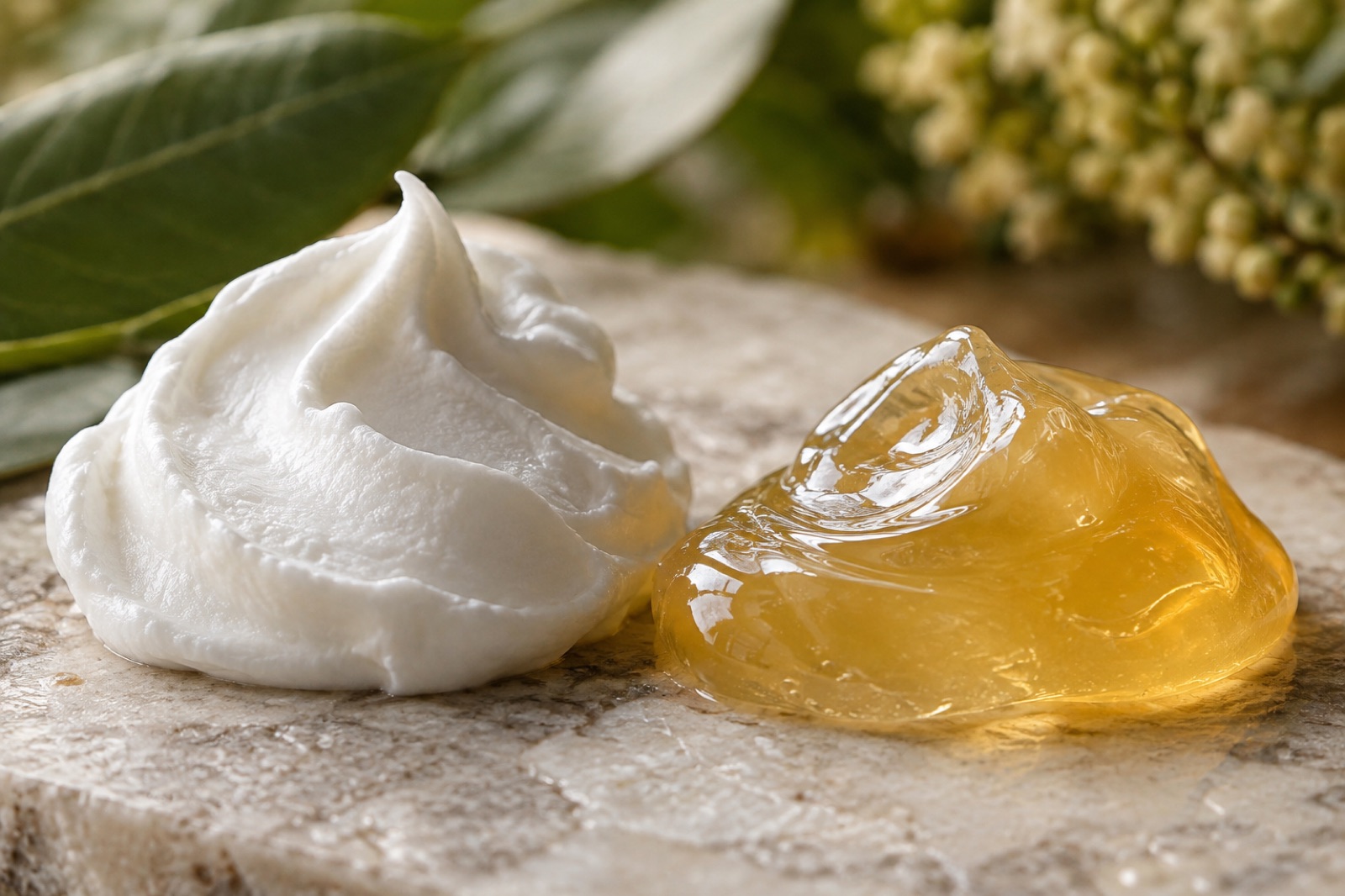
A panthenol cream is not a substitute for an ointment. Think of it as choosing a product with panthenol for your everyday moisturizing step.
What does the evidence say about panthenol creams and serums?
The strongest evidence is that on damaged skin, products containing panthenol showed lower TEWL and higher hydration readings than the comparison. On skin irritated with SLS, a dexpanthenol cream improved barrier readings faster than its vehicle and led to larger gains in hydration and less redness. In 40 Asian adults using prescription topicals, a ceramide and panthenol moisturizer led to greater increases in hydration (p=0.001) and less dryness (p=0.021) than their usual moisturizer. The ceramide evidence is covered separately in our ceramide cream guide.
The limits are clear, too. Most were finished products with several ingredients, and for skin reactions during radiation therapy, a 7% ectoin cream did better than a 5% dexpanthenol cream. No placebo-controlled trial has tested panthenol alone on healthy skin over a long period, and in moisturizer studies on normal skin, TEWL actually went up with some formulas. It’s better not to generalize that “panthenol always makes the barrier stronger.” No study has compared a panthenol serum or ampoule directly with a cream either, so there is no evidence that a serum gives bigger results.
On what kind of skin have panthenol’s effects been seen?
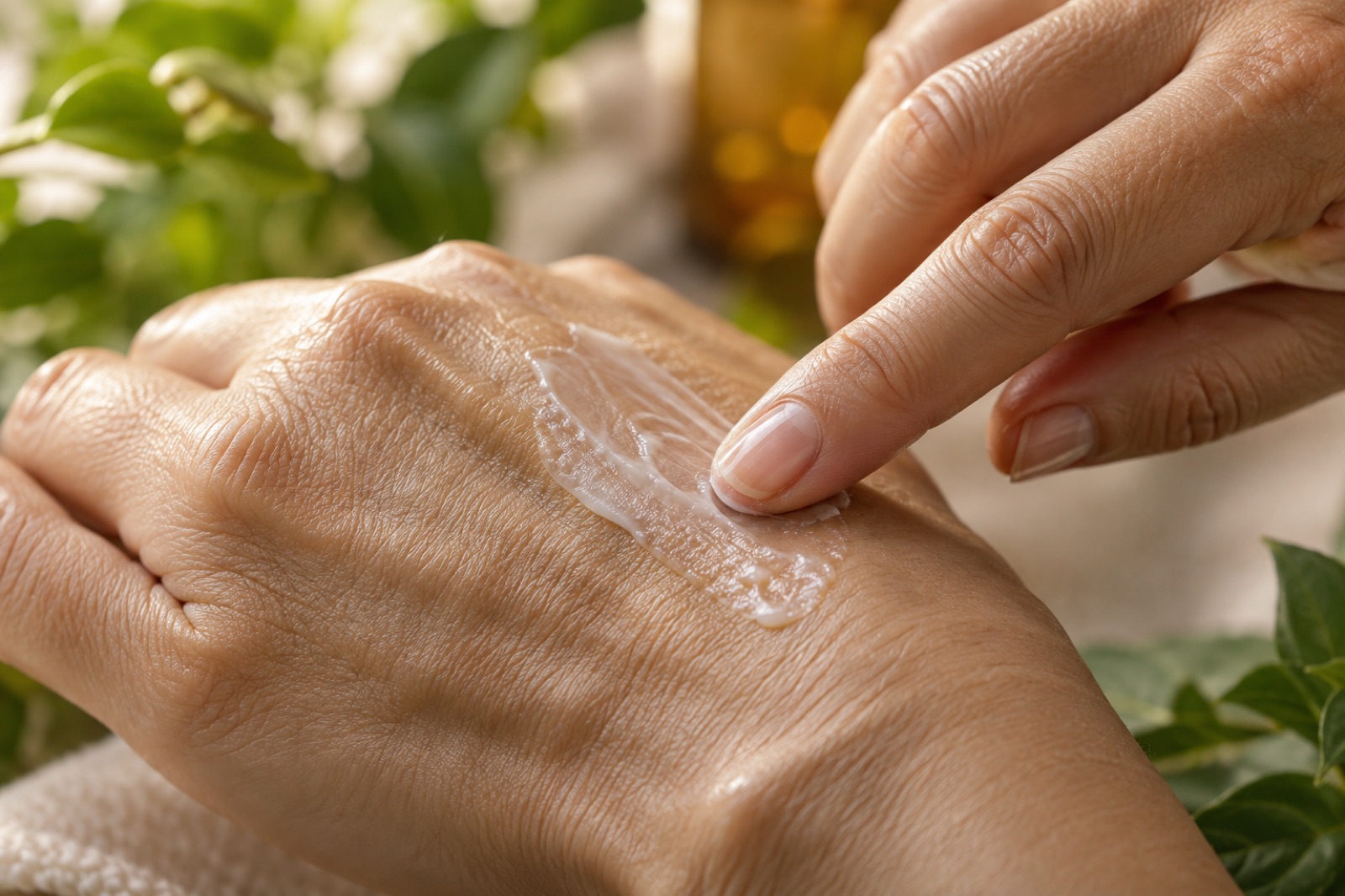
Most of the skin where panthenol’s effects were seen had been irritated on purpose, had a procedure, or was on prescription topicals. Long-term results on healthy skin are missing. In 60 people who had non-ablative fractional laser procedures, the side that used a panthenol mask had a lower redness index on day 14 than the side with saline dressings (11.02 vs 13.27, p=0.001) and lower TEWL on day 7 (12.63 vs 20.50, p<0.001). But this was aftercare following a procedure at a clinic, using a mask with several ingredients, so it shouldn’t be carried over to the effects of an everyday moisturizing cream.
Some questions are still open. The sources behind this article can’t say whether results change with panthenol strength (1%, 2%, 5%), or whether it reduces symptoms people feel, such as stinging or burning on sensitive skin. So it fits the evidence better to see panthenol as “an ingredient worth considering for the moisturizing step when your skin is irritated” rather than “an ingredient that reliably changes your barrier.”
Checklist: choosing a panthenol cream
| What to check | What to look for | Why |
|---|---|---|
| Ingredient list | Whether panthenol or dexpanthenol is listed | A product line name doesn’t guarantee the ingredient |
| Percentage claims | Look at the other ingredients, not “high concentration” | Evidence on differences by strength is missing |
| Other moisturizing ingredients | Ceramides, glycerin, and so on | Most studies used combination products |
| Fragrance and essential oils | Skip them when your skin is reactive | Fewer possible causes of stinging |
| Ointment vs cream | Use medicinal ointments as directed | Different purpose from cosmetics |
When to see a dermatologist
- For areas that ooze, crack, or hurt, see a dermatologist instead of relying on a cream.
- If a red, itchy rash spreads widely or lasts more than 2 weeks, consider seeing a dermatologist.
- If dryness or stinging from prescription topicals is severe, talk to the clinic that prescribed them.
- If hives or intense itching appear after using a panthenol product, stop using it and see a doctor.
Frequently asked questions
What does panthenol do for skin?
The strongest evidence shows that on irritated skin, products containing panthenol showed lower transepidermal water loss (TEWL) and higher hydration readings than the comparison. In one study, the drop in TEWL after 3 weeks of a panthenol-containing emollient was larger than with the control (p=0.023), but most of these studies tested finished products with several ingredients.
Is dexpanthenol different from panthenol?
Dexpanthenol is another name for D-panthenol, so it isn't a separate ingredient with separate benefits. The Cosmetic Ingredient Review (CIR) assessed panthenol, D-panthenol, and DL-panthenol together, and D-panthenol is converted into pantothenic acid, the active form of vitamin B5, after it is absorbed into the skin.
Does a panthenol serum work the same as a cream?
None of the evidence behind this article compared a panthenol serum or ampoule with a cream. Most of the evidence comes from combination products such as creams, emollients, and masks, so judge by the other moisturizing ingredients in the formula and how your skin responds, not by the texture.
What's the difference between panthenol and retinol?
Retinol is a vitamin A ingredient mostly studied for photoaging (sun-related skin aging), and irritation increased at higher strengths. Panthenol becomes vitamin B5 and is mostly studied for hydration readings on irritated skin. They were studied for different purposes, so one doesn't replace the other.
Is B5 cream the same as panthenol cream?
'B5' is a nickname that comes from D-panthenol turning into pantothenic acid (vitamin B5) in the skin. Product line names are chosen by the brand and don't guarantee what's inside or how much. Check the full ingredient list for panthenol or dexpanthenol and what it is combined with.
Is panthenol safe to use every day?
The CIR concluded that panthenol ingredients are safe in cosmetics at current use levels. There are rare cases of contact allergy, so stop using a product if it causes itching or hives.
Is a higher panthenol percentage better?
The sources behind this article can't answer whether results differ at 1%, 2%, or 5%. It fits the evidence better to choose based on the other moisturizing ingredients and how your skin responds rather than the percentage.
Sources
- CIR — Safety Assessment of Panthenol, Pantothenic Acid, and Derivatives as Used in Cosmetics (2017)Institutional
- Dexpanthenol enhances skin barrier repair and reduces inflammation after sodium lauryl sulphate-induced irritation (2002, PMID 19753737)A
- A new topical panthenol-containing emollient: Results from two randomized controlled studies assessing its skin moisturization and barrier restoration potential, and the effect on skin microflora (2017, PMID 27425824)A
- The efficacy of a bioactive moisturizer in mitigating side effects of acne therapies: a randomized, investigator-blind, split-face trial (2026, PMID 41891349)A
- Evaluation of the Efficacy and Safety of a Panthenol-Enriched Mask for Skin Barrier Recovery After Facial Laser Treatment: Results of a Double-Blind Randomized Controlled Study (2025, PMID 40613435)A
- Topical Ectoin Versus Topical Dexpanthenol for Managing Acute Radiodermatitis Associated With Breast Cancer Radiotherapy: A Randomized Double-Blind Study (2023, PMID 37792331)A
- Accelerated wound healing with a dexpanthenol-containing ointment after fractional ablative CO2 laser resurfacing of photo-damaged skin in a randomized prospective clinical trial (2019, PMID 30897983)A
- Allergic contact dermatitis from vitamins: A systematic review (2022, PMID 36210883)A
- Effect of pantothenic acid and ascorbic acid supplementation on human skin wound healing process. A double-blind, prospective and randomized trial (1995, PMID 7781653)A
- Changes in skin barrier function following long-term treatment with moisturizers, a randomized controlled trial (2007, PMID 17300239)A
We never use YouTube videos or community posts as evidence for facts. Editorial policy
Product information related to this article
Product information from the site operator (KW Cosmetic, maker of the SKIN9HARI brand).
Revive Therapy N.F Cream
₩28,000 (KRW)
- Cream with 4 ceramides (NP, NS, EOP, AP), 5 types of hyaluronic acid and D-panthenol, 50 ml
- No added fragrance
- Low-irritation formula
Product details
- Type and size
- Soft, cushiony cream, 50 mL (1.69 fl oz)
- Step in routine
- Step 4 of 4 · Moisturize, the last step
- How to use
- As the last step of your routine, squeeze out a small amount. Warm it slightly between your palms. Press gently over your face, working outward from the center. Use morning and night after your ampoule or serum step.
- Before you use
- Contains dimethicone (silicone) — this is not a silicone-free formula. If redness, swelling or itching occurs, stop using and consult a dermatologist.
Based on the official product page, checked 2026-10-02
Cosmetics do not diagnose, treat, cure or prevent any disease. Test results apply only to the stated conditions.