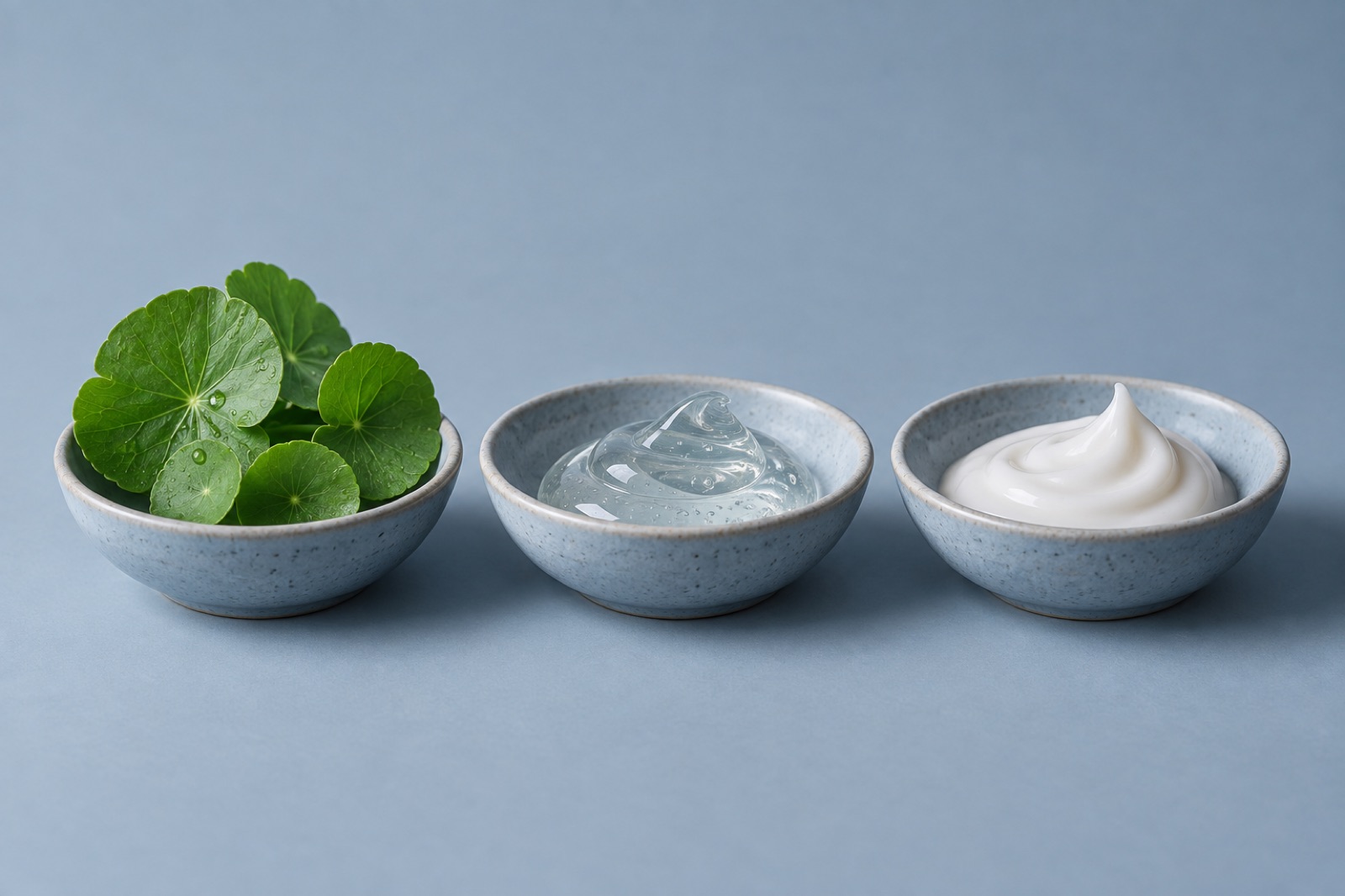
Centella Asiatica Benefits: What Cica Cream Studies Show
Studies of multi-ingredient products containing centella asiatica showed better skin moisture measures, but a soothing effect has not yet been confirmed in any placebo-controlled study.
In this article8 sections
- What is centella asiatica, and what did benefit studies look at?
- Centella, cica, and madecassoside: how are the names different?
- What evidence is there for cica cream benefits?
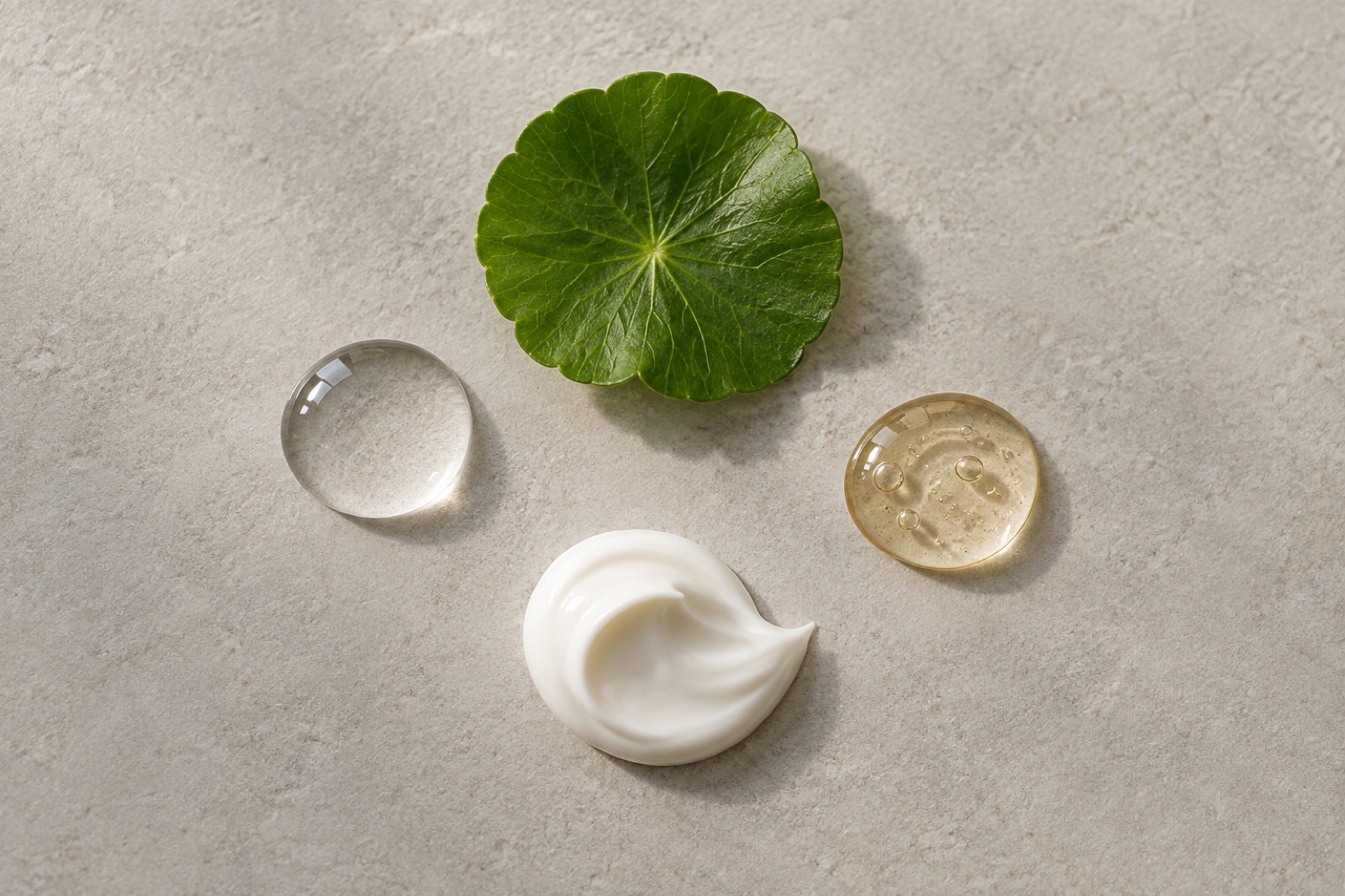
- Does centella soothe breakout-prone skin?
- Can you use cica cream every day?
- How should you choose a cica cream or centella ampoule?
- Checklist: reading a cica product’s ingredient list
- When to see a dermatologist
| Topic | What we know | Source |
|---|---|---|
| What it is | An extract from the centella plant (Centella asiatica), also called “cica” | Centella research summary |
| Key compounds | Madecassoside, asiaticoside, and asiatic acid are single compounds that come from centella, and they are not the same as centella extract | Centella and madecassoside research summaries · A |
| Moisture results | One application of a product with 1% hyaluronic acid, 5% glycerin, and centella left moisture 21% higher than a control area after 24 hours, with lower TEWL (20 healthy women, forearm) | 2017 PMID 28860834 · A |
| Evidence on soothing | Studies on redness had no placebo group or also used prescription antibiotics | Centella research summary · A |
| Safety | In a patch test of a centella-amla emulsion (3% centella), the irritation index was 0. Evidence on contact allergy rates and long-term safety is missing | 2023 PMID 37024608 · A |
What is centella asiatica, and what did benefit studies look at?
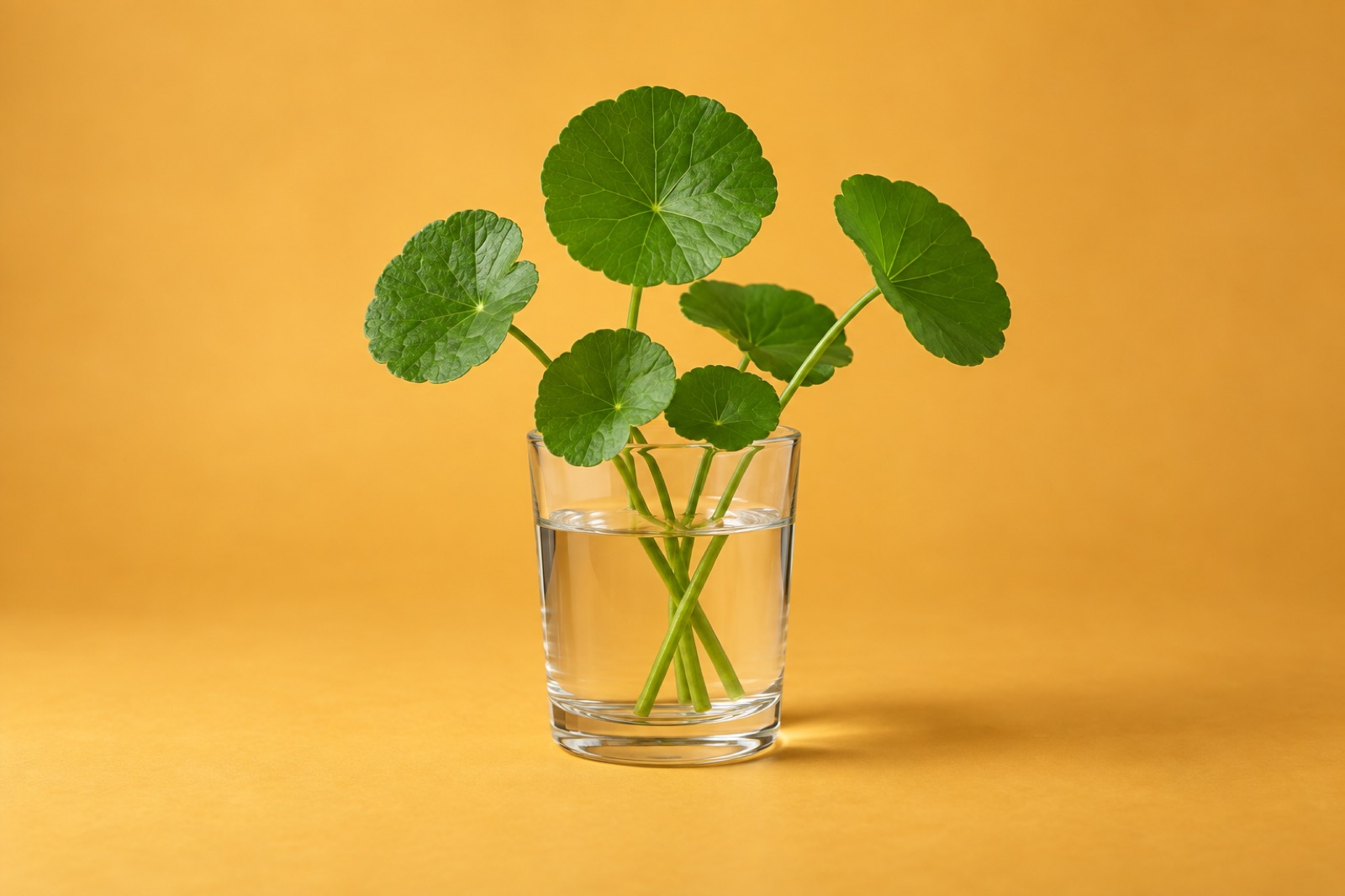
Centella asiatica is a plant used in skincare under the name “cica,” and studies on it range widely, from moisture and the skin barrier to wrinkles and firmness to wounds and burns, but most looked at multi-ingredient products or patients. Of the 49 centella papers we reviewed, many tested products mixed with other ingredients, oral extracts, or burn and surgery patients.
The results closest to skincare include a study of 60 women who used an emulsion with 3% each of centella and amla extracts for 60 days, which improved moisture, firmness, and wrinkle measures more than placebo. A meta-analysis pooling 5 randomized controlled trials in 172 Asian women also suggested improvements in moisture and in wrinkle measures around the eyes and lips. Both results looked at products containing centella, not centella on its own.
Studies on burns and surgical wounds are results from medical settings, so we don’t read them as skincare benefits. Studies of oral centella extract measured what happens when you take it by mouth, so we look at them separately from cica products you apply to the skin.
Centella, cica, and madecassoside: how are the names different?
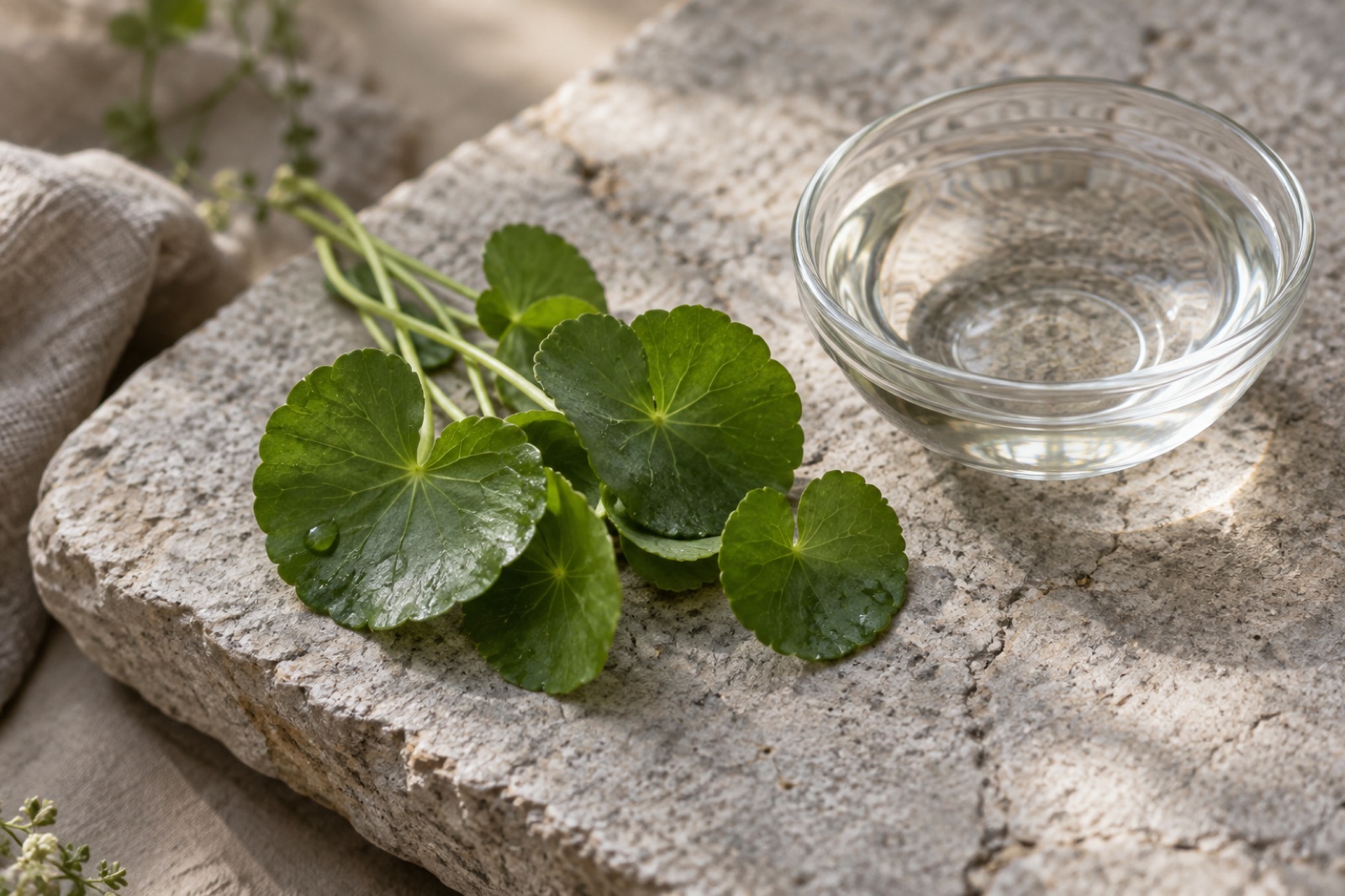
Centella extract is an ingredient taken from the plant, while madecassoside and asiaticoside are single compounds inside it, so they are not the same thing. The words “centella” and “cica” in product names both refer to Centella asiatica, so whether it is a centella ampoule or a cica cream, check the full ingredient list to see what is actually in it. On ingredient lists, these appear separately as centella asiatica extract, madecassoside, asiaticoside, and asiatic acid.
The studies need to be read separately, too. All six madecassoside studies we reviewed used finished products mixed with panthenol, vitamin C, and other ingredients after laser or cryotherapy procedures. So there is not yet evidence from studies of madecassoside alone to explain what madecassoside serums, creams, or ampoules do. Asiaticoside research centers on small studies of fine lines around the eyes, and the largest trial used oral centella extract.
What evidence is there for cica cream benefits?
The available evidence mainly shows that “multi-ingredient products containing centella improved moisture and TEWL measures.” The main study used a product mixed with hyaluronic acid and glycerin, and moisture was 21% higher than a control area after 24 hours. In a study of 30 workers with dry hands, a centella cream raised hand moisture at 4 weeks, but the ceramide cream it was compared with also improved.
On the other hand, some studies showed no significant benefit on their main outcome. These included a centella ointment study in 88 adults with a skin condition, a herbal cream study in 153 people receiving radiation therapy, and a combined oral and topical study in 159 people with diabetic dry skin. Because many centella studies used multi-ingredient products, oral forms, or patients, the evidence we reviewed includes no placebo-controlled trial of healthy people using a centella-only skincare product for more than 12 weeks.
Does centella soothe breakout-prone skin?
“Cica soothes” is a common phrase, but no centella study has yet confirmed less redness or stinging compared with a placebo. A redness study in 75 women with sensitive skin had no placebo group, and in a soothing mask study in people with rosacea (a condition where the face turns red), everyone also took prescription antibiotics. So it fits the evidence better to say that a soothing effect of centella has not yet been confirmed in placebo-controlled studies.
Can you use cica cream every day?
There is no evidence against daily use, but the literature we reviewed has no safety study of applying centella every day for more than a few months either. Several small studies reported no adverse reactions, and a patch test of a centella-amla emulsion (3% centella) had an irritation index of 0. But these are results for specific formulas, not centella alone, and most were short-term studies.
In the end, whether to use it daily comes down to how your skin reacts. If it stings or itches after you apply it, alcohol, fragrance, or exfoliating ingredients in the product may be the cause rather than centella, so look at the full ingredient list too.
How should you choose a cica cream or centella ampoule?
When choosing a cica cream, look past the “cica” name and check first which centella-derived ingredients the full ingredient list names, which moisturizing ingredients come with them, and which ingredients might sting. Most positive centella results came from multi-ingredient products mixed with hyaluronic acid, glycerin, ceramides, and the like, so how moisturizing a cream feels may depend more on its base and the other ingredients than on centella.
Whether results change with the amount of centella has not been confirmed by research. So a “high-concentration” label alone is not enough reason to choose a product, and if you have breakout-prone skin, it is more practical to watch for shine and stinging for a few days after applying it. For how it differs from other soothing ingredients such as panthenol, see our cica vs. panthenol article.
Checklist: reading a cica product’s ingredient list
| Ingredient list name | What it is | What to check |
|---|---|---|
| Centella asiatica extract | An ingredient taken from the centella plant | If the amount isn’t listed, ask the maker |
| Madecassoside | A single compound from centella | Studies used finished products mixed with panthenol and others |
| Asiaticoside | A single compound from centella | Few human studies related to breakouts |
| Panthenol, ceramides, hyaluronic acid | Moisturizing ingredients used alongside | Don’t credit results only to centella |
| Alcohol (ethanol), fragrance | Ingredients unrelated to centella | Check these first if it stings |
When to see a dermatologist
- If breakouts with pus, pain, or swelling keep coming back, consider seeing a dermatologist instead of adding more soothing products.
- If itching or redness after applying a product continues even after you stop using it, see a dermatologist to find the cause.
- Wounds, burns, and scars are medical issues even though there are many centella studies on them, so see a doctor.
Frequently asked questions
What are the benefits of centella asiatica for skin?
The available evidence mainly shows multi-ingredient products containing centella improving moisture and transepidermal water loss (TEWL) measures. A meta-analysis of 172 Asian women suggested improvements in moisture and wrinkle measures, but it also looked at products, not centella on its own. Soothing effects on redness or stinging have not been confirmed in placebo-controlled studies.
What are the benefits of madecassoside?
Madecassoside is a single compound that comes from centella. All six studies we reviewed used finished products mixed with panthenol, vitamin C, and other ingredients after laser or cryotherapy procedures, so their results can't be read as effects of madecassoside alone.
What are the benefits of cica cream?
In one study, a product mixing hyaluronic acid, glycerin, and centella raised skin moisture 21% above a control area 24 hours after a single application. On the other hand, several centella ointment and cream studies showed no significant benefit on their main outcome, so any effect should be judged by the product and the ingredients it is mixed with.
Is centella the same as cica?
They are the same plant. "Centella" and "cica" are both used as names for Centella asiatica. The real difference is not the name but whether a product contains centella extract or single compounds such as madecassoside.
What is centella asiatica leaf water?
Our sources had no study on the difference between centella leaf water and centella extract, or on the effects of leaf water alone. If a product's ingredient list says centella asiatica leaf water, it is more accurate not to read extract study results as if they applied to it.
Cica cream stings or itches on my skin. Is that a side effect?
Our evidence can't tell you how often centella itself causes contact allergy. Products may also contain alcohol, fragrance, or exfoliating ingredients, so check the full ingredient list and stop using it if stinging, itching, or redness appears.
Sources
- The 24-hour skin hydration and barrier function effects of a hyaluronic 1%, glycerin 5%, and Centella asiatica stem cells extract moisturizing fluid: an intra-subject, randomized, assessor-blinded study (2017, PMID 28860834)A
- Optimized multiherbal combination and in vivo anti-skin aging potential: a randomized double blind placebo controlled study (2023, PMID 37024608)A
- A randomized, double-blind, vehicle-controlled, half-side comparison with a herbal ointment containing Mahonia aquifolium, Viola tricolor and Centella asiatica for the treatment of mild-to-moderate atopic dermatitis (2007, PMID 18077922)A
- Prophylaxis of radiation-induced dermatitis in patients with breast cancer using herbal creams: A prospective randomized controlled trial (2020, PMID 32406284)A
- Combining topical and oral botanicals for skin redness, pigmentation, sleep, and mood: A randomized controlled study (2022, PMID 36431167)A
- Evaluation of the efficacy and safety of a panthenol-enriched mask for skin barrier recovery after facial laser treatment: Results of a double-blind randomized controlled study (2025, PMID 40613435)A
- Efficacy and safety of Centella asiatica (L.) Urb. on wrinkles: A systematic review of published data and network meta-analysis (2020, PMID 33413787)A
- A randomized, double-blind, placebo-controlled trial assessing the effects of oral Centella asiatica extract on skin aging-related parameters in middle-aged Korean women (2026, PMID 42196964)A
We never use YouTube videos or community posts as evidence for facts. Editorial policy
Product information related to this article
Product information from the site operator (KW Cosmetic, maker of the SKIN9HARI brand).
Centella Rescue Spot Ampoule
₩22,000 (KRW)
- Ampoule with alcohol-extracted Centella asiatica extract as the main ingredient, 15 ml
- Also contains Aloe Phytoplacenta, Greenol and Campanula callus extract
- Contains alcohol, so it may sting; try it on a small area first
- Low-irritation formula
Product details
- Type and size
- Fast-absorbing gel ampoule, 15 mL (0.5 fl oz)
- Step in routine
- Spot care, layered any time
- How to use
- Use the dropper to apply a small amount directly to the area of concern. Pat gently until absorbed. Layer it at any step of your routine — before or after your regular toner, ampoule, or cream.
- Before you use
- Contains ethanol and natural bergamot oil, which may cause a slight tingling sensation on very sensitive or freshly irritated skin — patch test first if unsure. If redness, swelling or itching occurs, stop using and consult a dermatologist.
Based on the official product page, checked 2026-10-02
Cosmetics do not diagnose, treat, cure or prevent any disease. Test results apply only to the stated conditions.