Low pH Cleanser vs Alkaline: Which Is Better for Acne-Prone Skin?
In studies, alkaline soap was more often the more irritating option, but results vary by product, so judge a cleanser by how your skin feels after washing.
In this article8 sections
- Low pH cleanser or alkaline: which is better for acne-prone skin?
- What does low pH mean, and what is the pH range?
- Before looking for a low pH cleanser, what should you check?
- Pros and cons of low pH cleansers
- Why does a low pH cleanser sting or dry out my skin?
- When to use an alkaline foam cleanser, and can you split morning and night?
- Low pH vs alkaline cleanser comparison
- When to see a dermatologist
| Point | What the evidence shows | Source |
|---|---|---|
| Evidence on acne and washing | A review of 14 prospective studies in people with acne (671 people) concluded the evidence was too weak for firm recommendations | Face washing studies · A |
| Irritation compared | In a 3-month open trial of 120 people prone to acne, irritation symptoms were 40.4% in the alkaline soap group and 1.8% in the acidic syndet bar group | Washing and surfactant studies · A |
| Skin pH | A neutral (pH 7.0) cleanser raised skin surface pH more than an acidic (pH 5.5) one | Surfactant studies · A |
| Results the other way | In a comparison of 2 soap bars and 1 syndet bar, the syndet bar changed the irritation index, water loss, and roughness more | Face washing studies · A |
| Type of surfactant | A 1% SLG (amino acid–based) solution had lower irritation scores and water loss than 1% SLS (15 people, raw-material patch test) | Surfactant studies · A |
| Health organization advice | NICE recommends using a non-alkaline synthetic cleanser twice a day for acne-prone skin | Face washing · Health organization |
Low pH cleanser or alkaline: which is better for acne-prone skin?
Looking at the research alone, more studies found alkaline soap raised skin pH more and caused more irritation than weakly acidic or synthetic cleansers, but that isn’t a conclusion that applies to every product. In a trial of 120 people prone to acne, irritation symptoms were 40.4% in the soap group and 1.8% in the acidic syndet bar group, and inflammatory lesion counts went from 14.6 to 15.3 in the soap group and from 13.4 to 10.4 in the syndet group. But this was an open trial without blinding.
Some results point the other way. A measurement study comparing 2 soap bars and 1 syndet bar found the syndet bar had a higher irritation index and more water loss. Also, what these studies mostly compared was “alkaline soap” vs “weakly acidic synthetic cleanser,” and the literature we reviewed has no large study directly comparing store-bought alkaline foams with low pH foams.
What does low pH mean, and what is the pH range?
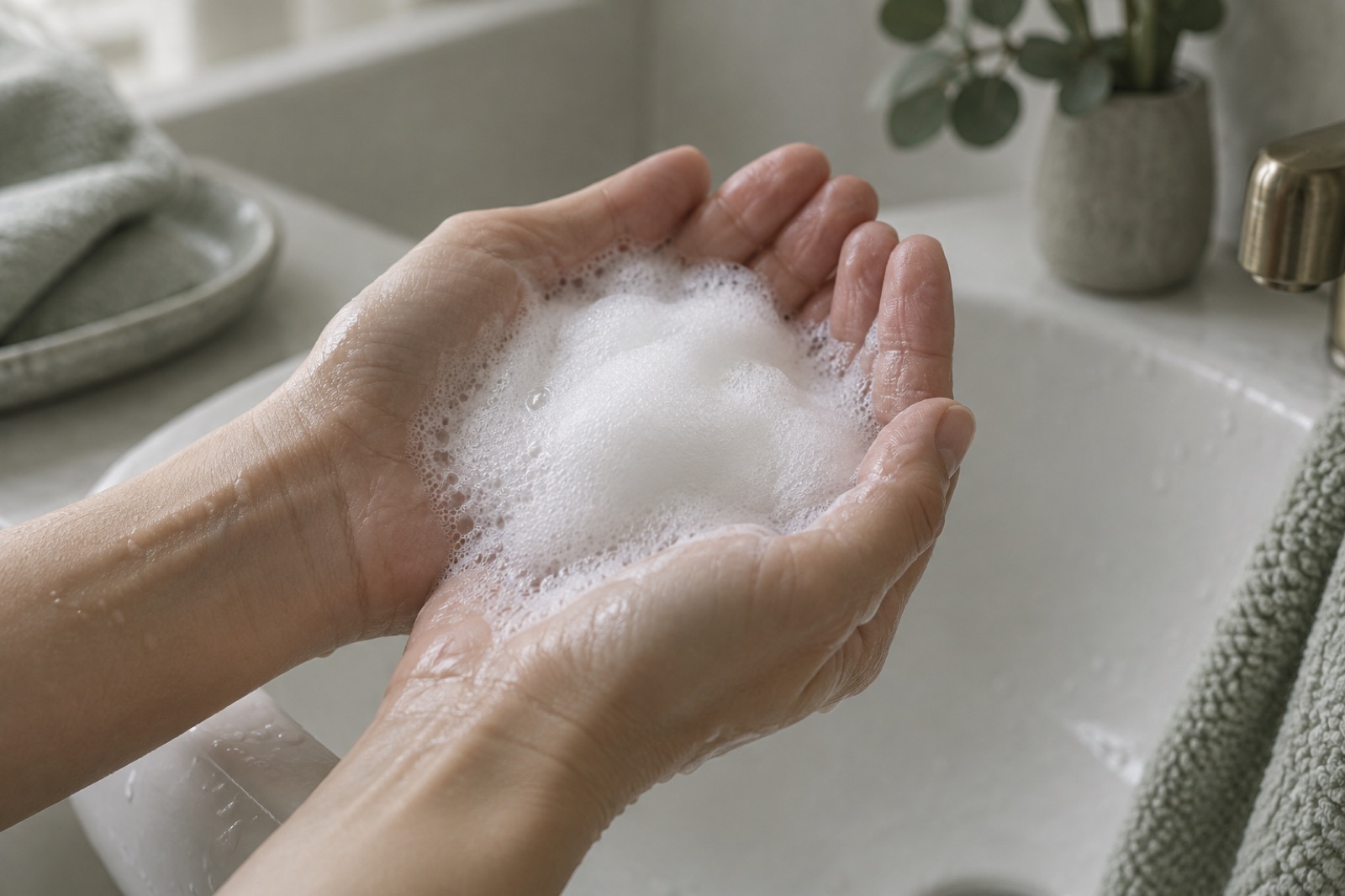
pH is a number that shows how acidic or alkaline something is: 7 is neutral, lower is more acidic, and higher is more alkaline. In studies, weakly acidic cleansers were used at around pH 5.5, and they raised skin surface pH less after washing than a neutral pH 7.0 cleanser.
There is no fixed numeric range behind a “low pH” label, and how the term is used varies from product to product. So checking for an actual pH listed on the product is more accurate than relying on the word “low pH.”
Before looking for a low pH cleanser, what should you check?
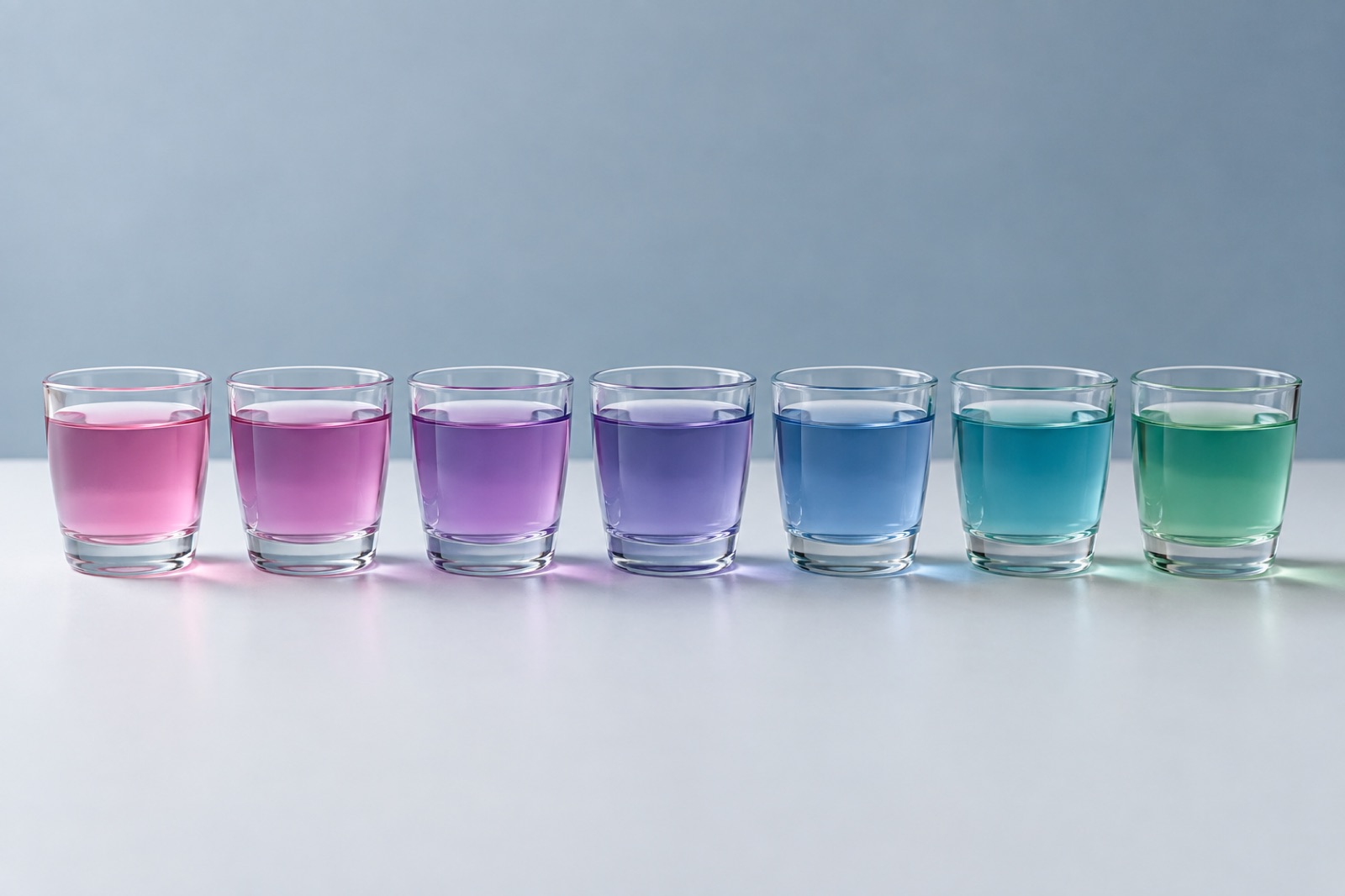
When choosing a low pH cleanser, the evidence supports looking at the actual pH listed, the type of cleansing ingredient, and additives such as fragrance together, rather than the “low pH” label alone. As noted above, the “low pH” label has no fixed number, and irritation varied by surfactant even at the same pH. So it’s hard to judge how gentle a cleanser is from one word on the label.
Cleansing ingredients are one of the few areas where differences by type have been confirmed. In a patch test on 15 healthy adults, a 1% sodium lauroyl glutamate (SLG, amino acid–based) solution had lower irritation scores and water loss than a 1% SLS solution, and a mix of the two was also lower than SLS alone. But this was a test where raw-material solutions were left on the skin for 24 hours, so it can’t be carried over directly to rinse-off finished cleansers.
Also check the ingredient list for things that may be linked to stinging, such as fragrance or acids. Change only one product at a time, and write down tightness and stinging right after washing for about 2 weeks, so it’s easier to tell what caused what. Basics such as how often to wash and water temperature are covered in our face washing for acne guide.
Pros and cons of low pH cleansers
The upside of low pH cleansers is that some studies found they raised skin pH less after washing and caused fewer irritation reports; the downside is that those results don’t hold for every product. They raised skin surface pH less than a neutral cleanser, and in the 120-person trial there were fewer irritation symptoms than in the alkaline soap group. On the other hand, a measurement study found a syndet bar more irritating than soap bars, and the “low pH” label has no fixed range.
Alkaline foam cleansers, on the other hand, are sought out by people who want a squeaky-clean feel, but there is no evidence comparing how much oil is washed off at different pH levels, and NICE recommends a non-alkaline synthetic cleanser for acne-prone skin. In the end, the pros and cons of both are hard to settle from the label, so the realistic approach is to track your reactions for about 2 weeks using the “What to check on your skin” column in the table below.
Why does a low pH cleanser sting or dry out my skin?
Even at a low pH, stinging and dryness can happen depending on the type of surfactant, water temperature, and how often you wash. Surfactants differed in how irritating they were. For water temperature and how often to wash, see our face washing for acne guide.
There are also results showing that a “mild” label doesn’t guarantee low irritation. In a trial comparing 4 commercial industrial cleansers, the one marketed as mild was noticeably more irritating. If stinging continues with a low pH product, changing the ingredient makeup and your washing habits together is a better way to find the cause than focusing on pH.
When to use an alkaline foam cleanser, and can you split morning and night?
People often look for alkaline foam cleansers for a cleaner feel, but there is no evidence directly comparing how much oil is washed off at different pH levels. In a trial where 30 women with mildly dry skin used a cleanser containing soap ingredients for 4 weeks in winter, artificial sebum washed off well and dryness did not get worse. But this was the result for one specific formula, not for oily or acne-prone skin.
No study has compared splitting two products by time of day, so the realistic way to decide is by how your skin reacts after washing. Your needs may differ, for example wanting a thorough clean on evenings with more sunscreen and oil and a lighter wash in the morning. Either way, not washing more than twice a day is common advice across health organizations.
Studies have found that repeated washing increased water loss and lowered water content in the outer skin layer. In a trial where 25 healthy people were washed by an automated device 3 times a day for 4 days (grade B, industrial cleansers), all 5 cleansers produced these changes. Those conditions can’t be carried over directly to everyday face washes. Even if you use two products, it’s better not to wash more often.

Low pH vs alkaline cleanser comparison
| Criterion | Low pH / synthetic cleanser (studies) | Alkaline soap (studies) | What to check on your skin |
|---|---|---|---|
| Skin pH after washing | Rose less (pH 5.5 cleanser) | Rose more | Whether the product lists an actual pH |
| Irritation reports | 1.8% in the 120-person trial | 40.4% in the same trial | Stinging or burning right after washing |
| Results the other way | A measurement study found a syndet bar more irritating | Soap bars were milder in the same study | That results differ product by product |
| Oil and cleansing | No direct comparison of oil removal by pH | No direct comparison for alkaline soap either | How long until shine comes back after washing |
| Cleansing ingredients | Raw-material test: amino acid–based (SLG) less irritating than SLS | Test where a soap-containing cleanser didn’t worsen dryness (30 people with dry skin) | Names of the cleansing agents near the top of the ingredient list |
| Health organization advice | NICE: non-alkaline synthetic cleanser twice a day | No recommendation | Twice a day or less, lukewarm water |
| Signs to reassess | More tightness or flaking: check surfactant and temperature | More stinging or redness: consider switching | Track reactions for 2+ weeks |
When to see a dermatologist
- If swelling, oozing, or severe burning appears after switching cleansers, stop using it and see a dermatologist.
- If painful red breakouts keep increasing even after switching to a gentler cleanser, it’s a good idea to get checked by a doctor.
- If you are using prescribed acne medicine, ask your prescriber about which cleanser to use and when.
Frequently asked questions
What is a low pH cleanser?
On the pH scale, 7 is neutral and lower numbers are more acidic, so a low pH (weakly acidic) cleanser sits a little below neutral. Studies used weakly acidic cleansers at around pH 5.5, but a 'low pH' label has no fixed numeric range, so checking the actual pH listed on the product is more accurate.
What is the difference between a low pH and a high pH cleanser?
In studies, they differed in how much they raised skin pH after washing. A neutral cleanser raised skin pH more than a weakly acidic one, and in a trial of 120 people prone to acne, irritation symptoms were 40.4% in the alkaline soap group vs 1.8% in the acidic syndet bar group. But some results point the other way, and there is no large study directly comparing store-bought alkaline foams with low pH foams.
What are the downsides of a low pH cleanser?
The 'low pH' label alone doesn't guarantee it is gentle. Even at the same pH, irritation differed by type of surfactant, and in one trial a cleanser marketed as mild was more irritating. If it stings or dries you out, check the cleansing ingredients, water temperature, and how often you wash along with pH.
Is an alkaline face wash bad for your skin?
Studies where alkaline soap raised skin pH more and caused more irritation outnumber the others, and the UK's NICE recommends a non-alkaline synthetic cleanser for acne-prone skin. But there is no evidence that it cleans better, or that every alkaline foam is irritating, so judge by how your skin reacts after washing.
Is a low pH cleanser good for acne?
There's no guarantee. A review of 14 studies on acne and face washing concluded that the evidence was too weak to make firm recommendations.
Can I use a low pH cleanser in the morning and an alkaline one at night?
No study has compared splitting them this way. If your needs differ between evenings with more sunscreen and oil and lighter mornings, you can split them, but either way, track tightness and stinging after washing to decide.
Sources
- Clinical evidence for washing and cleansers in acne vulgaris: a systematic review (2018, PMID 29460655)A
- The influence of the regular use of a soap or an acidic syndet bar on pre-acne (1995, PMID 7622270)A
- A comparative study of the effects on the skin of a classical bar soap and a syndet cleansing bar in normal use conditions and in the soap chamber test (2001, PMID 11393212)A
- An improved method for measurement of change in skin roughness caused by cleansing products under mild application conditions (2011, PMID 21332807)A
- Differences in the skin surface pH and bacterial microflora due to the long-term application of synthetic detergent preparations of pH 5.5 and pH 7.0. Results of a crossover trial in healthy volunteers (1990, PMID 1980979)A
- Effect of surfactant mixtures on irritant contact dermatitis potential in man: sodium lauroyl glutamate and sodium lauryl sulphate (1994, PMID 8033544)A
- A cleanser based on sodium laureth carboxylate and alkyl carboxylates washes facial sebum well but does not induce dry skin (2014, PMID 25399616)A
- Development of a standardized testing procedure for assessing the irritation potential of occupational skin cleansers (2014, PMID 24588368)B
- NICE, Acne vulgaris: management (NG198)Institutional
We never use YouTube videos or community posts as evidence for facts. Editorial policy
Product information related to this article
Product information from the site operator (KW Cosmetic, maker of the SKIN9HARI brand).
Revive Therapy N.F Cream
₩28,000 (KRW)
The pH and surfactant studies in this article compared cleansers; this cream is a moisturizer applied at the end of the routine after cleansing, so it is not part of that comparison. Revive Therapy N.F Cream is a 50 ml cream with four ceramides and five types of hyaluronic acid, with no added fragrance per its ingredient list and patch-tested for skin irritation (results vary by person), but it has not been tested with any particular cleanser. While you log a new cleanser for two weeks, keeping the cream unchanged makes tightness easier to trace. Apart from choosing a cleanser, the product we suggest for the last step after the ampoule is Revive Therapy N.F Cream.
- Cream with 4 ceramides (NP, NS, EOP, AP), 5 types of hyaluronic acid and D-panthenol, 50 ml
- No added fragrance
- Low-irritation formula
Product details
- Type and size
- Soft, cushiony cream, 50 mL (1.69 fl oz)
- Step in routine
- Step 4 of 4 · Moisturize, the last step
- How to use
- As the last step of your routine, squeeze out a small amount. Warm it slightly between your palms. Press gently over your face, working outward from the center. Use morning and night after your ampoule or serum step.
- Before you use
- Contains dimethicone (silicone) — this is not a silicone-free formula. If redness, swelling or itching occurs, stop using and consult a dermatologist.
Based on the official product page, checked 2026-10-02
Cosmetics do not diagnose, treat, cure or prevent any disease. Test results apply only to the stated conditions.