Cheek Acne Causes: 5 Reasons Acne Keeps Coming Back on One Side
If acne keeps coming back on only one cheek, start by checking what touches that side more often, such as your pillow, your hands, your phone, or a mask.
In this article6 sections
| Topic | What the evidence says | Source |
|---|---|---|
| Pressure and touching | Pressure from helmets, tight clothes, or bags, and touching or squeezing, don’t cause acne directly but can make it worse | NIAMS acne overview · Institution |
| Repeated friction | Things that rub the skin again and again and trap heat and sweat can cause friction acne, which starts as small bumps you can feel more than see | AAD friction acne · Institution |
| Pillowcases | The AAD advises washing pillowcases, hats, and headbands that touch your hair, since hair product residue can build up on them | AAD hair products · Institution |
| Masks | In a meta-analysis of 37 observational studies (29,557 people), 31% of mask wearers had acne, and the risk rose with longer wear | Environmental factors research summary · A |
| Makeup | Small pimples on the cheeks, chin, and forehead can be caused by makeup and may appear anywhere from days to 6 months later | AAD makeup · Institution |
Why does acne show up on only one cheek?
If acne keeps coming back on only one cheek, the first step is to check whether something touches that cheek more often. Pores clog the same way on both cheeks, but one cheek may get more pressure and friction than the other. NIAMS lists pressure and touching as things that make acne worse, and the AAD explains that objects rubbing the skin again and again can cause friction acne.
Most people have a side they sleep on, a side they hold their phone to, and a hand they rest their chin on. In the sources we reviewed, we found no direct study showing that these habits increase cheek acne, but by the same logic they are worth checking. Writing down for about 2 weeks whether the side you break out on matches the side of these habits can help narrow things down.
Can your pillowcase cause cheek acne?
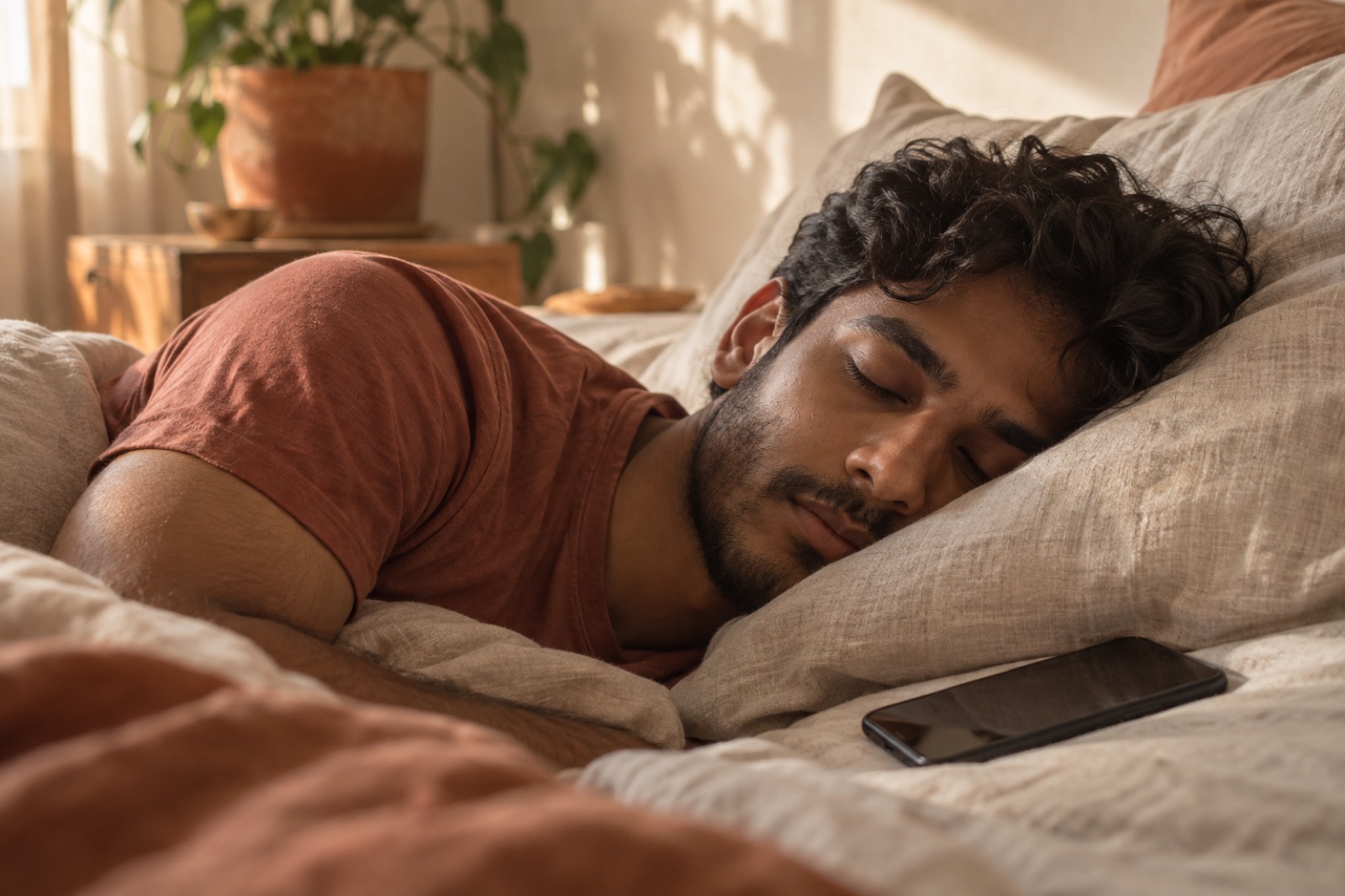
It’s hard to find a study showing the pillowcase itself is the cause, but there is advice to wash it, because products on your hair can reach your cheek through the pillow. The AAD says oils in hair products can clog pores and advises washing pillowcases, hats, and headbands so residue does not build up. It helps to check whether cheek breakouts line up with the days you use hair oil or a hair mask.
Sleeping in makeup is also hard on the cheek that rests on the pillow. The AAD says to always take off makeup before bed, even non-comedogenic makeup.
How can wearing a mask lead to cheek acne?
A mask adds pressure, friction, heat, and moisture to your cheeks, and observational studies found that facial skin problems increased the longer masks were worn. In a meta-analysis, 31% of mask wearers had acne, and the risk rose with longer wear (grade A evidence). In a review of 16 studies on health care workers’ protective gear, irritation reactions were most common where pressure and friction were highest, such as the cheeks and the bridge of the nose.
Still, these are all observational studies and case reports, so we can’t say masks cause acne. A realistic check is to log how long you wear a mask and see whether the lines where the straps or edges touch match where your breakouts appear.
How much do makeup, food, and sleep matter?
Health organizations name makeup directly as a possible cause of cheek pimples, while food may be linked but the evidence is mixed. The AAD advises cleaning makeup brushes every week and not sharing them. Brushes and sponges touch the widest area of your cheeks, so it’s worth noting when you last cleaned them.
On food, NICE says there isn’t enough evidence to support any specific diet. The AAD notes that milk and foods that raise blood sugar quickly may be linked to acne, but also says some studies found no link. In our research, we found no evidence for the so-called face map that says cheek acne signals a stomach problem. The AAD also notes that lack of sleep can make acne worse.
Left vs right cheek log
Write down only the number of new breakouts on each side, plus one line about what touched your face that day. After about 2 weeks, you can see whether breakouts and contact lean toward one side.
| Date | Left cheek | Right cheek | Side you slept on | What touched your face that day |
|---|---|---|---|---|
| e.g., 9/1 | 0 | 2 | Right | 40-minute call, mask for 6 hours |
| e.g., 9/2 | 0 | 1 | Right | Hair oil, pillowcase on day 7 |
Below the log, also note the dates you changed your pillowcase, cleaned your makeup brushes, and switched to any new product.
When to see a dermatologist
Consider seeing a dermatologist if any of these apply.
- Your cheeks redden easily and skin care stings or burns, along with breakouts. The AAD says acne and rosacea can look alike, so a dermatologist’s diagnosis is needed.
- Deep, painful, swollen nodules or cysts keep coming back on your cheeks.
- Nothing has changed 6 to 8 weeks after you changed what touches your cheeks. Even before then, if irritation starts or gets worse, stop using the product and don’t wait.
Frequently asked questions
What does acne on the left cheek mean?
In the sources behind this article, we found no evidence that acne on the left cheek points to a specific organ or cause. Pores clog the same way on both cheeks, so it's more practical to log both sides for about 2 weeks and see whether a pillow, phone, or hand touches your left cheek more often.
Why do I only get acne on my right cheek?
The side itself doesn't tell you the cause. NIAMS lists pressure and touching as things that can make acne worse, and the American Academy of Dermatology (AAD) explains that objects rubbing the skin again and again can cause friction acne, so check whether the side you sleep on, the hand you hold your phone with, or the hand you rest your chin on lines up with your right side.
Can food cause cheek acne?
NICE says there isn't enough evidence to support any specific diet. The AAD notes that milk and foods that raise blood sugar quickly may be linked to acne, but results are mixed, so food alone is hard to use as the explanation for cheek acne.
Why do I keep getting small pimples on my cheeks?
The AAD notes that small pimples on the cheeks, chin, and forehead can be caused by makeup and may show up anywhere from a few days to 6 months later. Also check whether hair product residue could be reaching your cheeks through your pillowcase.
How often should you change your pillowcase for acne?
We found no institution that gives a set number. The AAD advises washing pillowcases because products you put on your hair can build up on them, so if you use hair products or breakouts keep returning on the cheek you sleep on, try changing it more often and log the results.
Can your phone cause acne?
In the sources we reviewed, we found no study that looked at phones directly. But NIAMS says pressure and touching can make acne worse, so it's worth logging whether the side you take calls on matches the side where you break out.
Are red, stinging cheeks acne?
If redness lasts and skin care stings or burns, it may be rosacea rather than acne. The AAD recommends seeing a dermatologist for a diagnosis when you're not sure.
Sources
- NIAMS — Overview of AcneInstitutional
- AAD — Sports equipment can cause acneInstitutional
- AAD — Hair care products that cause acneInstitutional
- AAD — Is it okay to wear makeup?Institutional
- AAD — What causes acne?Institutional
- AAD — Acne and dietInstitutional
- NICE — Acne vulgaris: management (NG198)Institutional
- AAD — Acne or rosacea?Institutional
- AAD — Is that stubborn acne really acne?Institutional
- Facial dermatoses induced by face masks: A systematic review and meta-analysis of observational studies (2022, PMID 35980367)A
- Occupational dermatitis to facial personal protective equipment in health care workers: A systematic review (2021, PMID 33011325)A
We never use YouTube videos or community posts as evidence for facts. Editorial policy
Product information related to this article
Product information from the site operator (KW Cosmetic, maker of the SKIN9HARI brand).
Revive Therapy N.F Toner
₩29,000 (KRW)
- Mildly acidic toner (pH 5.5–6.5), 150 ml
- Contains niacinamide 2.0% and beta-glucan 1.0%
- Low-irritation formula
- Contains ethanol and fragrance ingredients (orange peel oil, lavender oil); check the full ingredient list
Product details
- Type and size
- Clear, water-light toner, pH 5.5–6.5, 150 mL (5.07 fl oz)
- Step in routine
- Step 2 of 4 · Tone, right after cleansing
- How to use
- After cleansing, pour a small amount onto a cotton pad or your palms. Sweep or press gently over your face and neck. Pat lightly until fully absorbed. Follow with Revive Therapy N.F Ampoule, then N.F Cream.
- Before you use
- Contains ethanol (3.0%) and fragrance, including the allergens linalool and limonene — this is not an alcohol-free formula. If redness, swelling or itching occurs, stop using and consult a dermatologist.
Based on the official product page, checked 2026-10-02
Cosmetics do not diagnose, treat, cure or prevent any disease. Test results apply only to the stated conditions.