Foods That Cause Acne? What Research Says About Dairy and Bread
Milk and diets that raise blood sugar quickly have been linked to acne in studies. But there is little evidence that cutting them out reduces acne, so health organizations suggest watching your own pattern instead.
In this article8 sections
| Item | What we know | Evidence |
|---|---|---|
| Milk | A meta-analysis of 13 observational studies (71,819 people) reported a link: OR 1.16 for milk drinkers and OR 1.24 for skim milk. All were observational, so cause and effect is not confirmed | Dairy research summary · A |
| Yogurt and cheese | In one meta-analysis, yogurt and cheese had no significant link | Dairy research summary · A |
| Diets that raise blood sugar quickly | In a systematic review of 34 studies, 77% of observational studies on blood sugar supported a link with acne | Glycemic load research summary · A |
| Low-glycemic-load diet trials | In a 12-week trial of 43 men, lesions dropped more, but this couldn’t be separated from weight loss. In an 84-person trial, adding the diet to a topical medicine made no difference (P=0.931) | Glycemic load research summary · A |
| Health organizations | NICE states there isn’t enough evidence to recommend a specific diet, and the AAD suggests watching your own pattern | NICE, AAD · institutions |
Is there a list of foods you shouldn’t eat with acne?
There is no confirmed list of banned foods. The two areas with the most research are milk and foods that raise blood sugar quickly. The UK’s NICE guideline states there isn’t enough evidence to tell people with acne to follow a specific diet. The American Academy of Dermatology (AAD) says food can play a role but adds that diet changes alone are not enough.
So this article doesn’t tell you what to quit. It lays out what is actually known. Most research on food and acne is observational or consists of short trials with a few dozen people, so it matters to look at how each study was designed when you read the results.
Does dairy cause acne?
Several meta-analyses have repeatedly found more acne in people who drink more milk, but milk has not been shown to cause acne. In an analysis of 13 studies with 71,819 people, the OR for milk drinkers was 1.16, and 1.24 for skim milk. Another meta-analysis reported OR 1.48 for milk and OR 1.82 for skim milk.
An OR (odds ratio) shows how strong a link is. It does not mean “X times the risk.” In some analyses, the link weakened after adjusting for other factors, and most participants were in their teens or twenties. The literature we reviewed does not yet include a randomized trial testing whether cutting back on milk reduces acne.
The AAD cites a study where women who drank two or more glasses of skim milk a day were 44% more likely to have acne, but it explains that the reason is not yet known. It also notes that yogurt and cheese have not been linked to more acne.
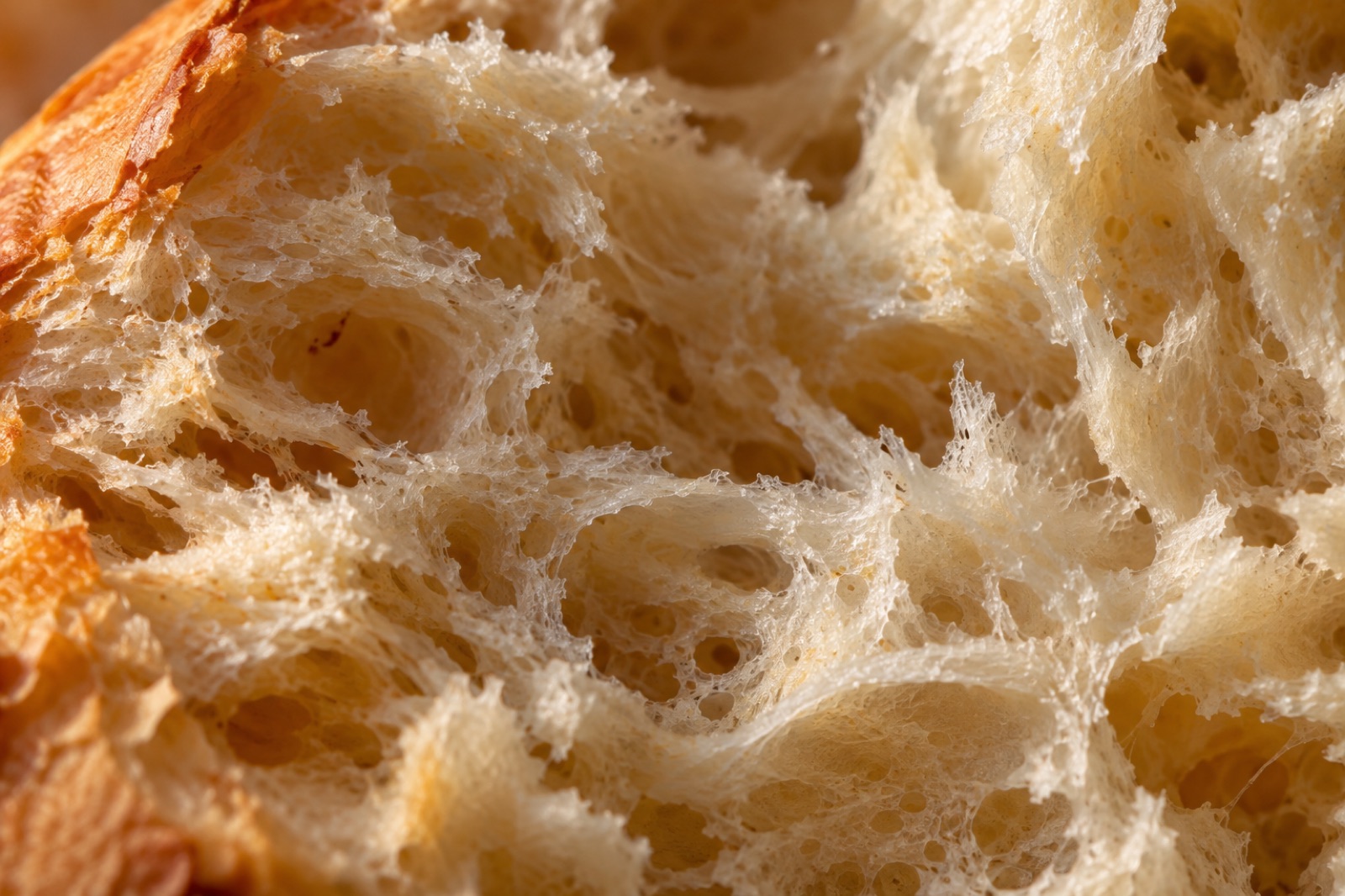
Can bread and other wheat foods make forehead acne worse?
We found no study on wheat flour by itself. Research has looked at it as part of foods that raise blood sugar quickly, like white bread. The AAD says some studies suggest high-glycemic foods such as white bread and french fries can make acne worse. There is no evidence linking a food to a specific area like the forehead, so you can’t identify a food as the cause based on where acne shows up.
Some trials of low-glycemic-load diets reported fewer lesions. In a 12-week trial of 43 men with acne, total lesion counts fell by 23.5 in the diet group versus 12.0 in the control group, and a 10-week trial of 32 Korean participants also saw fewer lesions. But in the early trial, participants also lost weight, so the effect of the diet alone couldn’t be separated, and participants were mostly men aged 15 to 25.
There are opposite results too. In a trial of 84 people who added a low-glycemic-load diet to a topical medicine, the drop in acne count after 12 weeks was no different from the group without the diet (P=0.931). A Cochrane review also rated the quality of evidence in this area as low.
Are there foods that help acne?
No food has yet been confirmed to improve acne, and most research on “good foods” is observational. A review of 53 studies from 2009 to 2020 linked fatty acids, fruit and vegetables with less acne (grade A). A Mediterranean diet meta-analysis of 5 case-control studies (765 people) found an OR of 0.32 for acne that was not statistically significant, and it reported an OR of 0.46 for vegetable intake, though the certainty of evidence was rated low (grade A).
Few trials have had people change what they eat. In a trial where 74 adults in India ate almonds for 20 weeks, total lesions fell by 22.2%, compared with 9.8% in the control group, but this comes from just one single-blind trial (grade A). So rather than recommending specific foods as “good for acne,” keeping a balanced diet and checking your own response with the log below fits the evidence better.
So should you cut everything out?
What health organizations recommend is not a blanket ban but watching for yourself. The AAD suggests noticing whether a specific food seems to bring on breakouts, and checking whether cutting back makes a difference. At the same time, it says diet alone is not enough and advises keeping up skin care and any needed medical care.
If you cut out many foods at once, you can’t tell which one mattered, and your diet may become too restricted. Nutrition problems from cutting out or limiting foods are outside what this article’s sources cover, so if you plan to change your diet a lot, it is safer to talk with a doctor first.
What if nothing changes after you adjust your diet?
Look beyond food at your hormonal cycle, stress, sleep, the products you use and habits like touching your face. The US NIAMS explains acne as caused by excess oil in pores, buildup of dead skin cells and bacterial growth, and it classifies diet, stress, pressure and squeezing as things that can make acne worse rather than direct causes. If changing your diet alone made no difference, it’s time to check other factors.

Food and breakout log
Change only one food at a time and track it for at least 4 weeks to compare. The period is not a standard from the literature; it is our editorial suggestion, based on the fact that diet trials usually ran 10 to 12 weeks.
| Week | The one food you changed | Usual amount → new amount | New breakouts (count, area) | Same week: sleep, period, new products |
|---|---|---|---|---|
| Baseline weeks 1–2 | No change | |||
| Weeks 3–4 | e.g., milk | |||
| Weeks 5–6 | Keep the change |
- During the baseline period, change nothing and record how your skin usually is.
- While you change a food, don’t add any new skin care products.
- Write sleep, menstrual cycle and new products on the same row to spot overlapping factors.
When to see a dermatologist
If any of the following apply, consider seeing a doctor. You don’t need to try diet changes first.
- If new breakouts don’t decrease after 6–8 weeks of the same routine, consider seeing a dermatologist.
- If deep, painful, swollen breakouts keep coming back or start leaving marks, see a dermatologist.
- If you are losing weight or eating has become stressful because you are restricting many foods, talk to a doctor about your diet.
Frequently asked questions
What foods cause acne the most?
There is no confirmed list of banned foods. Milk and foods that raise blood sugar quickly have the most research, and both have been linked to acne, but most studies are observational, so cause and effect is not confirmed. NICE says there isn't enough evidence to recommend a specific diet.
Should I cut out milk or sugary foods because of acne?
No health organization recommends cutting them out across the board. The American Academy of Dermatology (AAD) suggests watching whether cutting back on a specific food makes a difference for you. Change one food at a time and track it for several weeks to see what had an effect.
What foods help acne?
No food has been confirmed to improve acne when you eat it. One review linked fruit, vegetables and fatty acids with less acne, but most studies were observational, and a Mediterranean diet meta-analysis did not find a statistically significant result for acne.
Does greasy food cause acne?
A review of 53 studies from 2009 to 2020 linked high-fat diets with worse acne, but our grade A sources had no trial of individual foods such as fried food or fast food. Logging what you ate and when you broke out is a practical way to find your own pattern.
Do I need to avoid yogurt or cheese like milk?
In one meta-analysis, yogurt and cheese showed no clear link with acne, while another meta-analysis reported a borderline result for cheese. They are hard to put in the same category as milk.
Does chocolate cause acne?
A small study reported that lesions increased when 14 men with a history of acne took cocoa capsules. But the sample was very small, so the result is hard to generalize.
Sources
- AAD — Acne and dietInstitutional
- NICE NG198 — Acne vulgaris: management, RecommendationsInstitutional
- The effect of milk consumption on acne: a meta-analysis of observational studies (2018, PMID 30079512)A
- Dairy intake and acne development: A meta-analysis of observational studies (2019, PMID 29778512)A
- Diet and acne: A systematic review (2022, PMID 35373155)A
- A low-glycemic-load diet improves symptoms in acne vulgaris patients: a randomized controlled trial (2007, PMID 17616769)A
- A randomized controlled trial of topical benzoyl peroxide 2.5% gel with a low glycemic load diet versus topical benzoyl peroxide 2.5% gel with a normal diet in acne (grades 1-3) (2019, PMID 30264745)A
- Clinical and histological effect of a low glycaemic load diet in treatment of acne vulgaris in Korean patients: a randomized, controlled trial (2012, PMID 22678562)A
- Diet and acne: review of the evidence from 2009 to 2020 (2021, PMID 33462816)A
- The mediterranean diet and acne vulgaris: a systematic review and meta-analysis (2025, PMID 41194132)A
- Almond Supplementation Improves Acne Lesions and Skin Microbial Diversity in Adults with Mild to Moderate Acne Vulgaris (2026, PMID 41754142)A
- Double-blind, Placebo-controlled Study Assessing the Effect of Chocolate Consumption in Subjects with a History of Acne Vulgaris (2014, PMID 24847404)A
We never use YouTube videos or community posts as evidence for facts. Editorial policy
Product information related to this article
Product information from the site operator (KW Cosmetic, maker of the SKIN9HARI brand).
Revive Therapy N.F Toner
₩29,000 (KRW)
The dairy and glycemic-load studies and the guidance in this article are about what you eat, and none of them tested this toner. Revive Therapy N.F Toner is a mildly acidic (pH 5.5–6.5) 150 ml toner with niacinamide and beta-glucan; it contains ethanol and fragrance, and it has not been tested alongside a diet change. Its product page places it after cleansing and before moisturizer. Following the log's rule of adding no new products while you change a food, start it before your baseline weeks and keep it steady; for that step between cleansing and moisturizing, the product we suggest is Revive Therapy N.F Toner.
- Mildly acidic toner (pH 5.5–6.5), 150 ml
- Contains niacinamide 2.0% and beta-glucan 1.0%
- Low-irritation formula
- Contains ethanol and fragrance ingredients (orange peel oil, lavender oil); check the full ingredient list
Product details
- Type and size
- Clear, water-light toner, pH 5.5–6.5, 150 mL (5.07 fl oz)
- Step in routine
- Step 2 of 4 · Tone, right after cleansing
- How to use
- After cleansing, pour a small amount onto a cotton pad or your palms. Sweep or press gently over your face and neck. Pat lightly until fully absorbed. Follow with Revive Therapy N.F Ampoule, then N.F Cream.
- Before you use
- Contains ethanol (3.0%) and fragrance, including the allergens linalool and limonene — this is not an alcohol-free formula. If redness, swelling or itching occurs, stop using and consult a dermatologist.
Based on the official product page, checked 2026-10-02
Cosmetics do not diagnose, treat, cure or prevent any disease. Test results apply only to the stated conditions.