Oily Skin vs Dry Skin vs Combination Skin: A 30-Minute Check
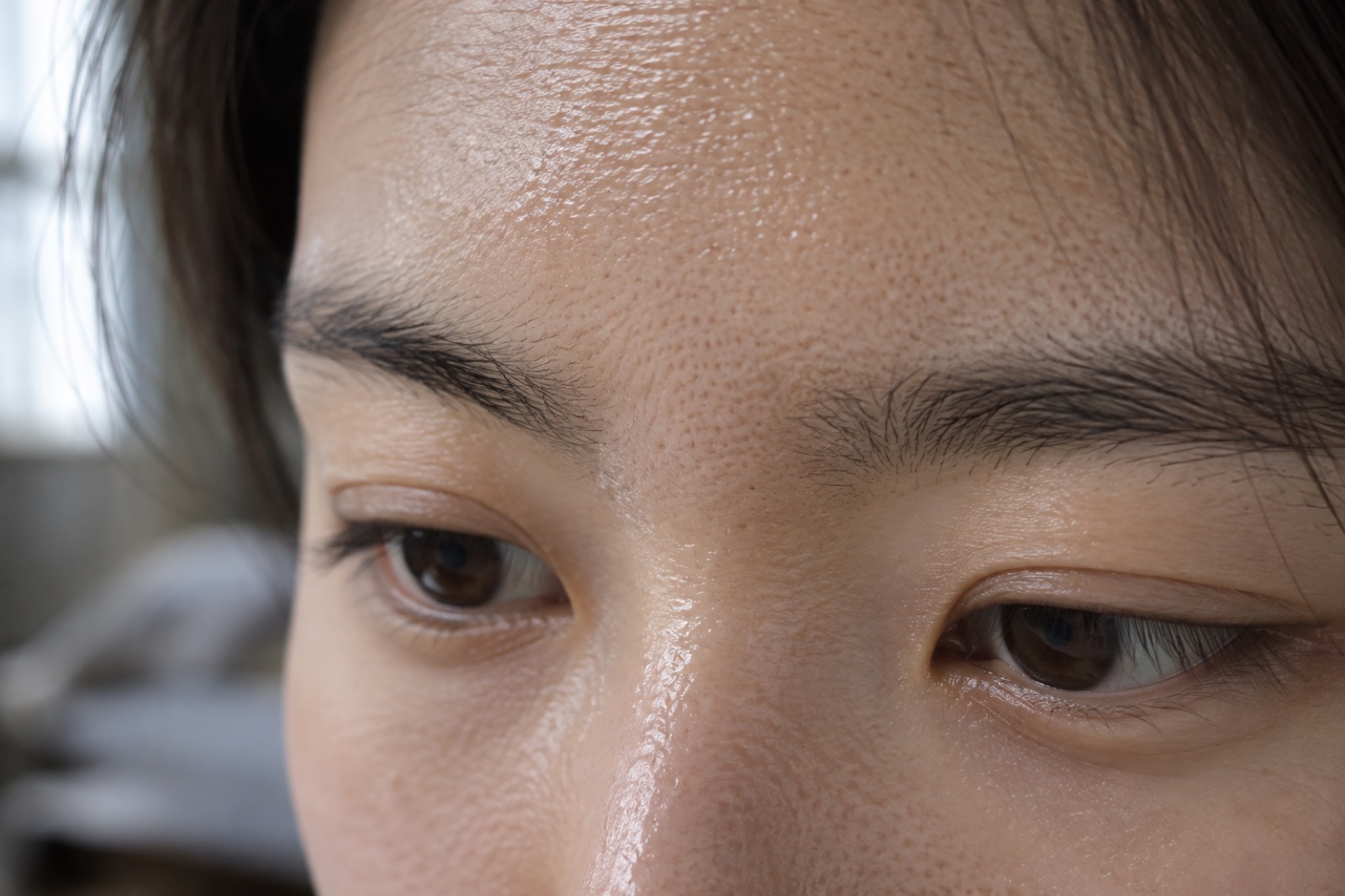
Oily skin makes a lot of sebum, dry skin lacks water in its outer layer, and combination skin has different oil levels in different areas, usually an oily T-zone with drier cheeks.

In this article6 sections
| Type | What it means | Evidence |
|---|---|---|
| Oily | Skin that makes a lot of sebum. A study of 434 Korean adults classified more than 70 μg/cm² of sebum as oily | Sebum · B |
| Dry | Skin that lacks water in its outer layer. The same study classified hydration below 47.17 A.U. as dry | Sebum · B |
| Combination | Skin with different oil levels by area. The most common self-reported type among 709 people with acne | Sebum · B |
| Limits of self-rating | Korean people with acne rated their skin as oilier than device measurements showed (P=0.001) | Sebum · B |
| Shared basics | Wash no more than twice a day; non-comedogenic moisturizer and sunscreen | AAD, NHS |
What is oily skin? Meaning and characteristics
Oily skin is skin that makes a lot of sebum. A study that measured 434 healthy Korean adults set more than 70 μg/cm² of sebum as the cutoff for oily skin. In a survey of 709 people with acne, measured sebum was highest in oily skin, followed by combination, normal, and dry skin.
Oily skin is about more than shine. In a comparison of 60 women aged 39 to 55, oily skin had more sebum and a rougher texture, but its hydration and water loss were no different from normal or dry skin. In a survey of 1,787 Chinese women, 25.6% said their skin was oily, and oily skin tended to go along with a history of acne or sensitive skin.
What is dry skin? Meaning and characteristics
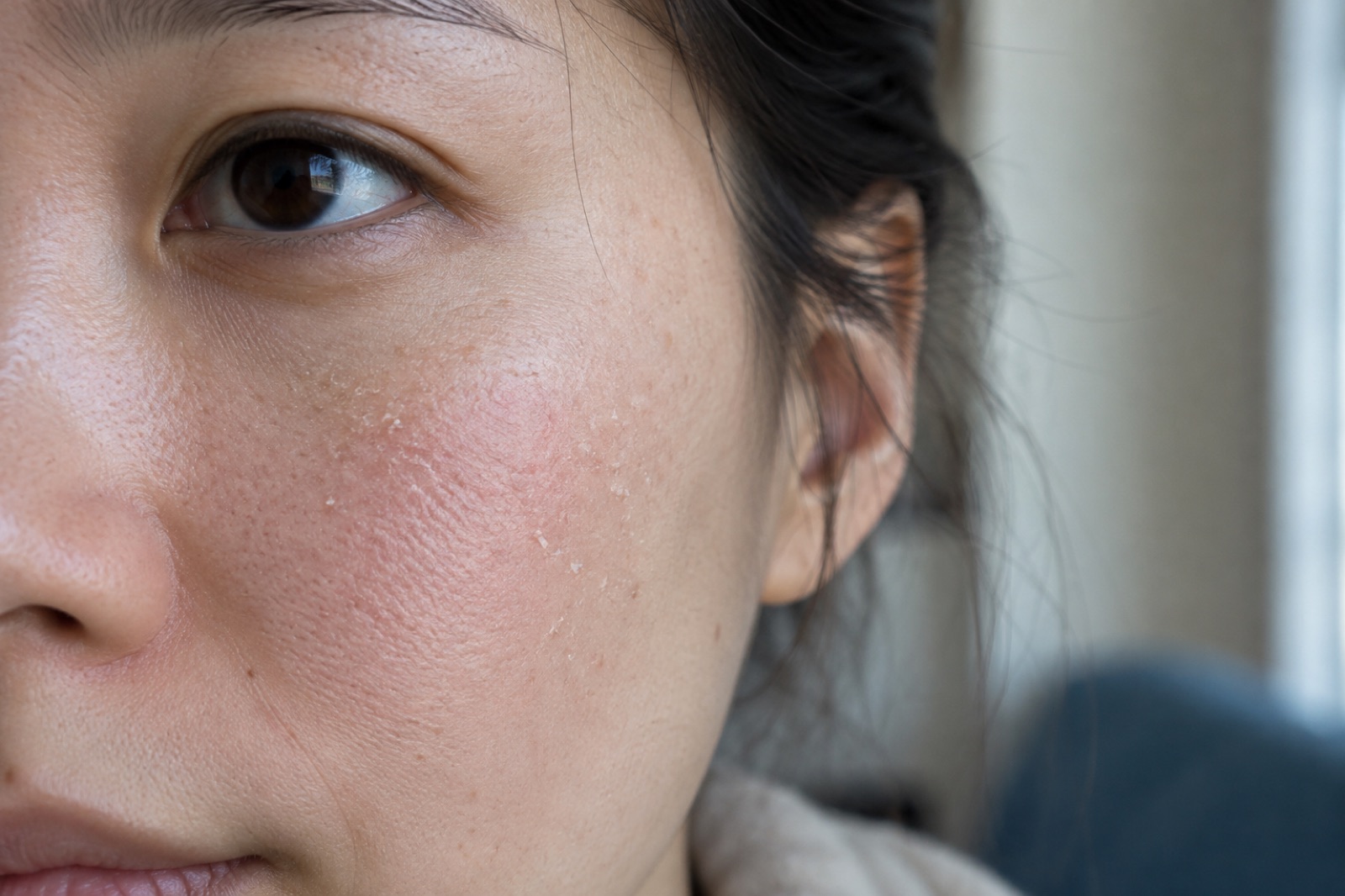
Dry skin is skin that lacks water in its outer layer. The Korean study above set a hydration reading below 47.17 A.U. as the cutoff for dry (dehydrated) skin. In a study of middle-aged women, flaking was more noticeable in normal and dry skin.
With dry skin, tightness after washing lasts longer, and fine flakes often show up on the cheeks or around the mouth. The UK’s NHS advises using a fragrance-free, water-based moisturizer if your skin is dry. Dry skin can still break out, so if you are breakout-prone, choosing products labeled non-comedogenic, as the AAD suggests, is the safer choice.
What is combination skin? Meaning and characteristics
Combination skin has shiny areas, like the forehead and nose, alongside tight areas, like the cheeks. In a survey of 709 people with acne, combination was the most common self-reported type, and dryness, tightness, and shine were the main symptoms people used to describe their type. An imaging study of 19 adults also found that the nose had high sebum, the cheeks had larger pores, and on the chin, sebum, roughness, and pore count were linked to one another.
Skincare for oily, combination, and dry skin
The basics are the same for every type. The American Academy of Dermatology (AAD) recommends washing no more than twice a day and after sweating, using your fingertips instead of scrubbing. The same organization explains that washing many times can irritate your skin, so washing more often is not the answer for oily skin either.
The difference is in how much moisturizer you use and its texture. For oily and combination skin, apply a thin layer of lotion labeled oil-free and non-comedogenic; with combination skin, you can adjust the amount by area, using a little more on tight cheeks. For dry skin, follow the NHS advice and use a fragrance-free, water-based moisturizer. For sunscreen on oily skin, use the AAD standard of SPF 30 or higher and non-comedogenic. If you want to learn about sebum itself, see our article on sebum and oily skin causes.

How to tell your skin type: a 30-minute check after washing
To estimate your type at home, wash gently, apply nothing, and check each area after about 30 minutes. This is an informal observation, not a device measurement or a validated skin-type test. In one study, 36 Korean people with acne rated their skin as oilier than device measurements showed, so repeat the same check for at least three days.
| 30 minutes after washing | Forehead and nose | Cheeks | Closest type |
|---|---|---|---|
| Shiny | Yes | Yes | Oily |
| Shiny and tight | Shiny | Tight | Combination |
| Tight and flaky | Tight | Tight and flaky | Dry |
| Neither | Comfortable | Comfortable | In between (normal) |
When to see a dermatologist
- If dryness, itching, or red, cracked skin continues even with regular moisturizer, it may be more than simple dry skin, so see a dermatologist.
- If your skin suddenly gets much oilier along with breakouts, irregular periods, or more body hair, talk with a dermatologist or your primary care doctor.
- If every product you apply stings or turns your skin red, have a dermatologist check your skin.
Frequently asked questions
What are the characteristics of oily skin?
Oily skin makes a lot of sebum. A study that measured 434 healthy Korean adults set more than 70 μg/cm² of sebum as the cutoff for oily skin. At home, you can estimate it by how soon your face looks shiny after washing instead of using a measuring device.
What does dry skin mean?
Dry skin lacks water in its outer layer. The same Korean study set a hydration reading below 47.17 A.U. as the cutoff for dry (dehydrated) skin. In a study of middle-aged women, flaking was more noticeable in normal and dry skin.
What is combination skin?
It is skin with shiny areas, like the forehead and nose, alongside tight areas, like the cheeks. In a survey of 709 people with acne, combination was the most common self-reported type, and dryness, tightness, and shine were the main symptoms people used to describe their type.
How do I know if I have oily or dry skin?
At home, you can estimate it by washing gently, applying nothing, and checking your forehead, nose, and cheeks after about 30 minutes. However, one study found that Korean people with acne rated their skin as oilier than device measurements showed, so repeat the check for a few days and keep notes.
What are the characteristics of combination skin?
The forehead and nose often turn shiny by afternoon, while the cheeks feel tight after washing. In an imaging study of 19 adults, the nose had high sebum and the cheeks had larger pores, showing that skin traits differ by area.
Sources
- An objective skin-type classification based on non-invasive biophysical parameters (2022, PMID 34747517)B
- Subjective facial skin type, based on the sebum related symptoms, can reflect the objective casual sebum level in acne patients (2013, PMID 23279191)B
- Comparison of sebum secretion, skin type, pH in humans with and without acne (2006, PMID 16786345)B
- Characterization of oily mature skin by biophysical and skin imaging techniques (2018, PMID 29441614)B
- Use of Advanced Imaging Techniques for the Characterization of Oily Skin (2019, PMID 30971936)B
- Oily skin: specific features in Chinese women (2007, PMID 17250531)B
- AAD — 10 skin care habits that can worsen acneInstitutional
- AAD — 6 skin care habits that can clear acne (2022)Institutional
- NHS — Acne (reviewed 2026-09-22)Institutional
- NHS 111 Wales — Health A-Z: Acne (updated 2024-11-07)Institutional
We never use YouTube videos or community posts as evidence for facts. Editorial policy
Product information related to this article
Product information from the site operator (KW Cosmetic, maker of the SKIN9HARI brand).
Revive Therapy N.F Toner
₩29,000 (KRW)
- Mildly acidic toner (pH 5.5–6.5), 150 ml
- Contains niacinamide 2.0% and beta-glucan 1.0%
- Low-irritation formula
- Contains ethanol and fragrance ingredients (orange peel oil, lavender oil); check the full ingredient list
Product details
- Type and size
- Clear, water-light toner, pH 5.5–6.5, 150 mL (5.07 fl oz)
- Step in routine
- Step 2 of 4 · Tone, right after cleansing
- How to use
- After cleansing, pour a small amount onto a cotton pad or your palms. Sweep or press gently over your face and neck. Pat lightly until fully absorbed. Follow with Revive Therapy N.F Ampoule, then N.F Cream.
- Before you use
- Contains ethanol (3.0%) and fragrance, including the allergens linalool and limonene — this is not an alcohol-free formula. If redness, swelling or itching occurs, stop using and consult a dermatologist.
Based on the official product page, checked 2026-10-02
Cosmetics do not diagnose, treat, cure or prevent any disease. Test results apply only to the stated conditions.