Pore Strips and Clay Masks: How Often Should You Use Them?
No study sets how often to use pore strips or clay masks. Follow the package directions, and keep using them at spaced-out intervals only if your skin shows no stinging or redness.
In this article6 sections
- Pore strips, clay masks, sheet masks: what’s the difference?
- Do pore strips work? Will pores stay clear?
- How often, and for how long, should you use pore strips or masks?
- How to use a clay mask or pore strip: what you do after matters most
- Checklist: pore strip and mask do’s and don’ts
- When to see a dermatologist
| Item | What we know | Evidence |
|---|---|---|
| What’s inside a pore | Sebum mixes with skin cells to form a plug that blocks the follicle; if the opening stays open, it becomes a blackhead | NHS acne · institution |
| Why blackheads are dark | The color is not dirt; it comes from material inside the pore reacting with oxygen | AAD blemish types · institution |
| Sebum and pores | In 60 healthy adults, more sebum went along with larger pores (men r=0.47, women r=0.38). This is a correlation | 2006 observational study · B |
| Studies on strips and masks themselves | Our sources include no study of how nose strips or clay masks affect sebum or blackheads, or how often to use them | Literature review |
| How long to leave it on | With sheet masks, sebum rose no matter the type, most clearly after 40 minutes. Dryness stood out when a water-only mask stayed on more than 25 minutes | 2024 RCT · A |
Pore strips, clay masks, sheet masks: what’s the difference?
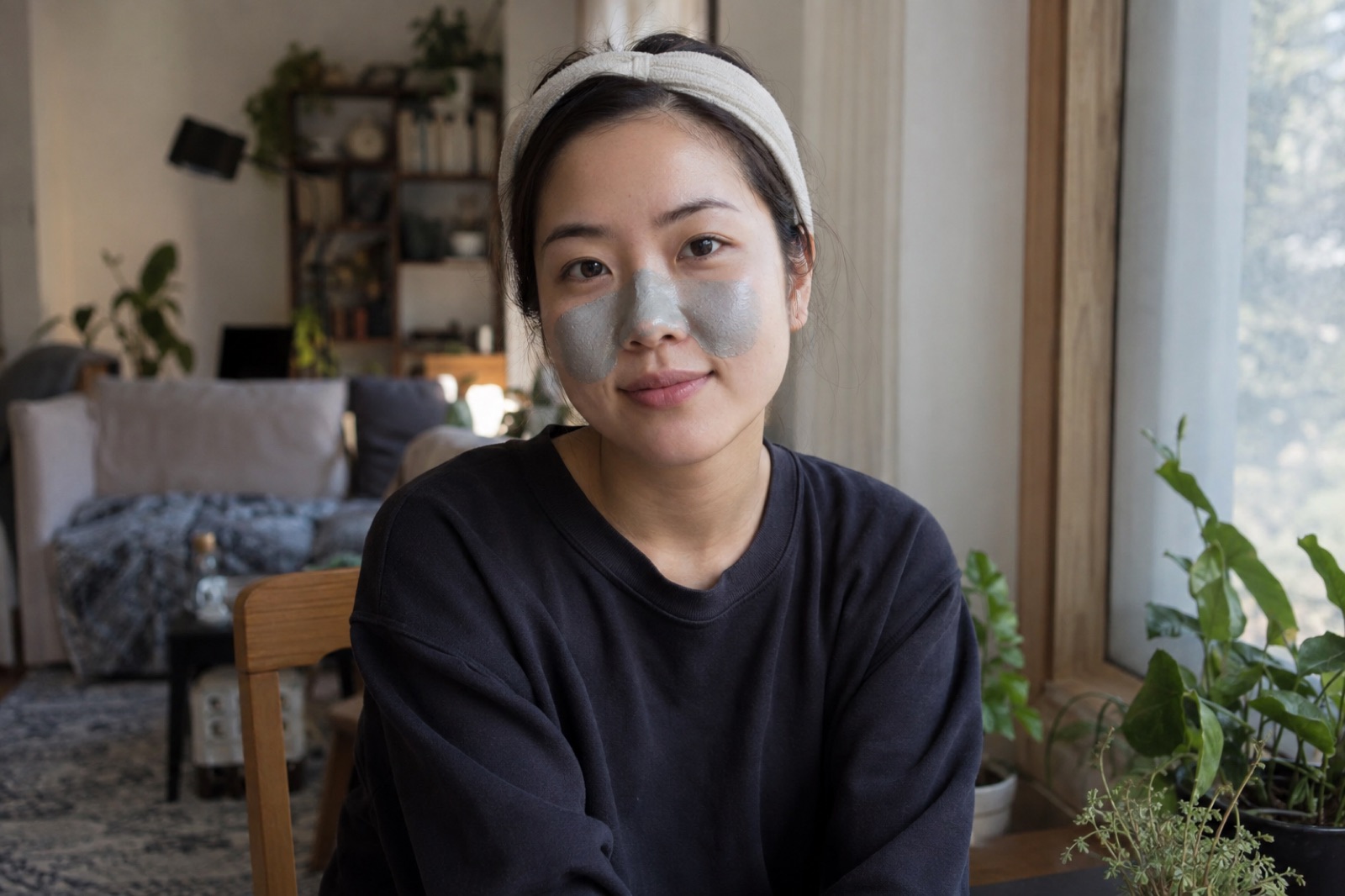
Pore products are easier to understand when you sort them by how they’re used rather than by name: ones you stick on and peel off, ones you apply and rinse off, and sheets you leave on. Nose strips that you stick on and pull off, and peel-off masks that you apply, let harden, and peel, make up the first group. Wash-off masks such as clay or volcanic-ash masks form the second. Sheet masks you lay on the face are the third.
We found no study comparing how much any of these three groups lowers sebum. The same goes for ingredient names like volcanic ash (a popular Korean mask ingredient) or pink salt: we found no human test showing how they affect the sebum inside pores. So when you choose a pore product, going by how it’s used and how your own skin reacts is more practical than going by the ingredient name.
Do pore strips work? Will pores stay clear?
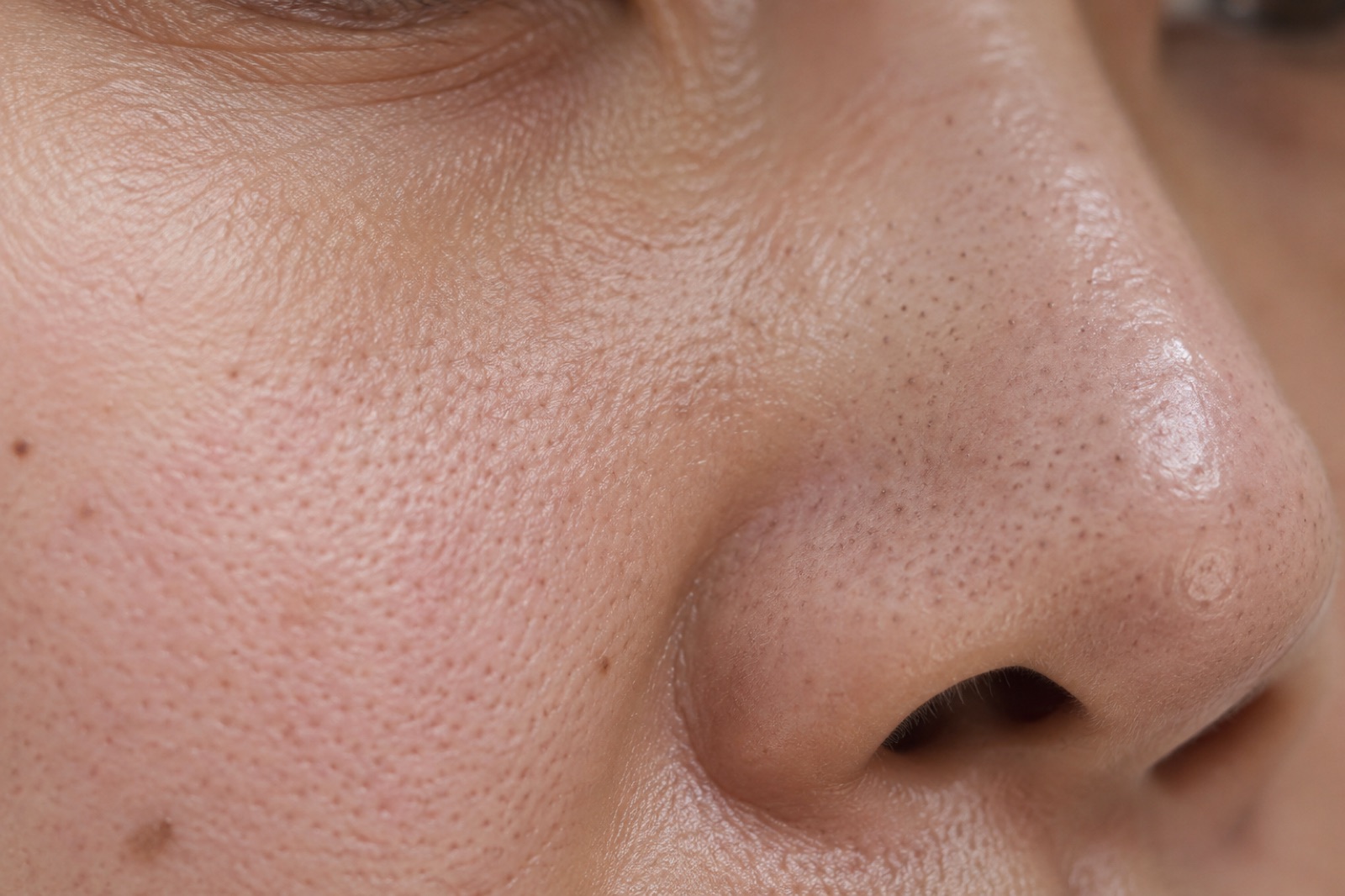
Even if a pore strip pulls out the sebum you can see, it doesn’t stop sebum and dead skin from building up inside the pore. The NHS explains that sebum mixes with skin cells to form a plug that blocks the follicle. Our sources have no study measuring how many days it takes for pores to fill again after a strip.
What research on masks has confirmed is moisture. In a randomized study that followed people for 3 hours, a peel-off mask raised skin hydration more than an emulsion, but that came mostly from the film covering the skin rather than the ingredients (grade A). Pore size and sebum only moved together in an observational study, so there is no evidence that a strip or mask changes pore size. How to handle blackheads themselves is covered in our blackhead care guide.
How often, and for how long, should you use pore strips or masks?
There are no research-based numbers for how often or how long, so the first rule is not to go beyond the number of uses and the time on the package. In a randomized study where sheet masks stayed on for 5, 15, 25, or 40 minutes, sebum rose with every mask and most clearly after 40 minutes (grade A). Of 28 people, 57.14% reported dryness and 10.71% redness, and these stood out when a water-only mask stayed on longer than 25 minutes.
In other words, there is no evidence that longer or more often is better. If a mask contains acids (AHA or BHA), don’t use it on the same day as another exfoliating product. Studies have repeatedly found that stacking irritants increases barrier damage, and skin where 10% glycolic acid was applied tanned more easily under UV light (grade A). In weeks you use an acid mask, and for a week after, keep up with sunscreen.
How to use a clay mask or pore strip: what you do after matters most
What you do right after peeling off a strip or rinsing off a mask affects how irritated your skin gets, so the key is not to rub and not to squeeze. The AAD advises against scrubbing or squeezing blackheads and explains that squeezing pushes material deeper into the skin, increasing inflammation and the risk of scarring and infection. That includes pressing out raised sebum with your nails or a tool after taking off a strip.
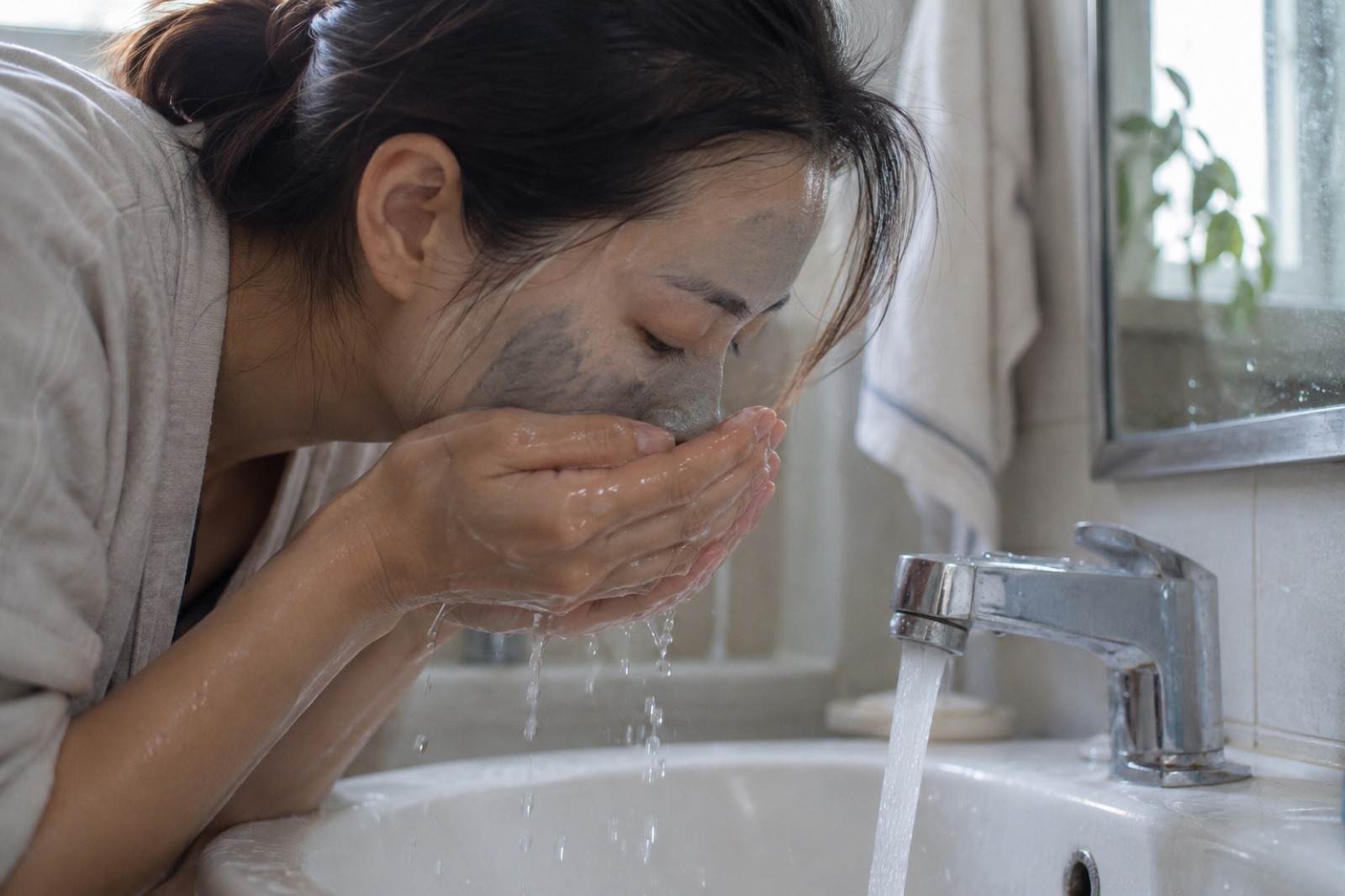
For wash-off masks, soften them with lukewarm water and rinse gently with your fingertips. If your skin feels tight after a mask, apply a thin layer of moisturizer labeled oil-free or non-comedogenic. The AAD notes that leaving skin dry can irritate it and raise the chance of breakouts.
Checklist: pore strip and mask do’s and don’ts
| Do | Don’t | Evidence |
|---|---|---|
| Stick to the number of uses and time on the package | Leave it on longer hoping for more effect | 2024 sheet mask RCT |
| Soften with lukewarm water before peeling or rinsing | Rip off a dried strip or mask, or scrub it off | AAD habits that worsen acne |
| Use an oil-free moisturizer afterward | Squeeze pores with nails or tools after taking it off | AAD on pimple popping |
| Use acid masks on different days from exfoliants | Stack scrubs or peels on the same day | Skin barrier research summary |
| Take a break if it stings or turns red | Keep using strips or masks while skin is still red | 2024 sheet mask RCT |
When to see a dermatologist
- If redness, stinging, or itching after a strip or mask lasts for several days or keeps coming back, consider seeing a dermatologist. A new product may be the cause, so you may need to check for a contact reaction.
- If blackheads or closed comedones stay the same after 6 to 8 weeks of gentle care. The AAD suggests considering in-office extraction or a prescription from a dermatologist at that point.
- If red marks or pitted spots start to form where you squeezed or picked, talk with a dermatologist.
- If your nose and cheeks flush easily and also feel hot or burning. The AAD notes that stubborn breakouts may be another condition such as rosacea, so get it checked.
Frequently asked questions
How often should you use pore strips or a clay mask?
The sources behind this article include no study or health-organization guidance that sets a schedule. Don't go beyond the number of uses on the package, and keep the same interval only if your skin shows no stinging or redness afterward. Don't use one on the same day as an exfoliating product.
Do pore strips actually work?
We found no study showing whether nose strips or clay masks change sebum or blackheads. What has been studied is a moisturizing effect from a peel-off mask observed over 3 hours, and even that came mostly from the film covering the skin rather than from the ingredients.
How do you use a pore strip or clay mask?
After washing, apply it as the package directs. When the time is up, peel off the strip or rinse off the mask without rubbing. Afterward, don't squeeze pores with your fingers or tools, and finish with an oil-free moisturizer.
How long should you leave a mask on?
Stick to the time on the package. In a sheet mask study, longer was not better: sebum rose noticeably after 40 minutes, and dryness stood out when a water-only mask was left on for more than 25 minutes.
How do you rinse off a clay mask without irritating your skin?
Our sources have no study of wash-off clay masks specifically. While the mask dries, try not to scrunch your face or scratch, and when you rinse, soften it with lukewarm water and wash it away without scrubbing.
Are pore strips bad for your skin?
Our sources have no study that measured skin damage from pore strips. The AAD advises against scrubbing or squeezing blackheads, so pulling a dried strip or mask off hard, or squeezing out pores afterward, is best avoided. Take a break if your skin stings or turns red.
Sources
- Sebum output as a factor contributing to the size of facial pores (2006, PMID 17034515)B
- Short-term skin reactions and changes in stratum corneum following different ways of facial sheet mask usage (2024, PMID 38951050)A
- Short-term clinical of peel-off facial mask moisturizers (2014, PMID 24750029)A
- Effects of glycolic acid on light-induced skin pigmentation in Asian and caucasian subjects (2000, PMID 10906645)A
- AAD — What's that blemish?Institutional
- AAD — Pimple popping: Why only a dermatologist should do itInstitutional
- AAD — 10 skin care habits that can worsen acneInstitutional
- NHS — AcneInstitutional
- NHS 111 Wales — Health A-Z: Acne (updated 2024-11-07)Institutional
- The effect of damaged skin barrier induced by subclinical irritation on the sequential irritant contact dermatitis (2011, PMID 21774626)A
We never use YouTube videos or community posts as evidence for facts. Editorial policy
Product information related to this article
Product information from the site operator (KW Cosmetic, maker of the SKIN9HARI brand).
Revive Therapy N.F Ampoule
₩31,000 (KRW)
Separate from the packs and skin concerns covered here, this is one cosmetic for the everyday hydrating step after cleansing, listed as facts only. Revive Therapy N.F Ampoule is a 30 ml ampoule with betaine and panthenol, free of fragrance, ethanol and colorants per its full ingredient list, with a low-irritation formula, but it has not been tested on the skin state discussed in this article or together with any pack. Its product page places it after toner and before cream, and it should not go on broken skin. It is a cosmetic, not a medicine; if redness or stinging lasts for days, see a dermatologist first.
- Ampoule with vegan rice PDRN (listed as Sodium DNA), betaine and panthenol, 30 ml
- No added fragrance, essential oils, ethanol, colorants or silicones (based on the full ingredient list)
- Low-irritation formula
Product details
- Type and size
- Clear, lightweight ampoule, 30 mL (1.01 fl oz)
- Step in routine
- Step 3 of 4 · Ampoule, after toner and before cream
- How to use
- After toner, use the dropper to dispense 2–3 drops into your palm or directly onto your face. Press gently into skin until absorbed. Follow with Revive Therapy N.F Cream to seal in moisture.
- Before you use
- Patch test on your inner arm before first use if you have very reactive skin. If redness, swelling or itching occurs, stop using and consult a dermatologist.
Based on the official product page, checked 2026-10-02
Cosmetics do not diagnose, treat, cure or prevent any disease. Test results apply only to the stated conditions.