Pore Cleaning Devices at Home: Do They Work? 5 Irritation Checks
We found no research showing that at-home pore devices work, so the safer approach is to use them in a way that doesn't add friction, heat, or stress to your skin barrier.

In this article6 sections
| Point | What the evidence shows | Source |
|---|---|---|
| Research on home pore devices | We found no study in our sources on the effects or safety of pore devices, rollers, or brushes | Literature and health organization sources checked |
| What pore size is linked to | In 60 healthy adults, pore size was linked to oil output, age, and being male, and pores got larger in women around ovulation (p=0.008) | 2006, PMID 17034515 · B |
| Rubbing | The AAD says rubbing or scrubbing can irritate skin and make acne worse, and advises washing gently with your fingertips | AAD, 10 habits · Health organization |
| Salon facials | Of 142 women who had massage, steaming, and masks, 36.1% had redness or swelling, and 33.1% had an acne-like rash 3 to 10 weeks later | 2002, PMID 12121555 · B |
| Absorption through stripped skin | On skin whose outer layer was stripped off with tape, salicylic acid absorption rose up to 157 times that of normal skin | 1999, PMID 10233334 · B |
Do pore cleaning devices work?
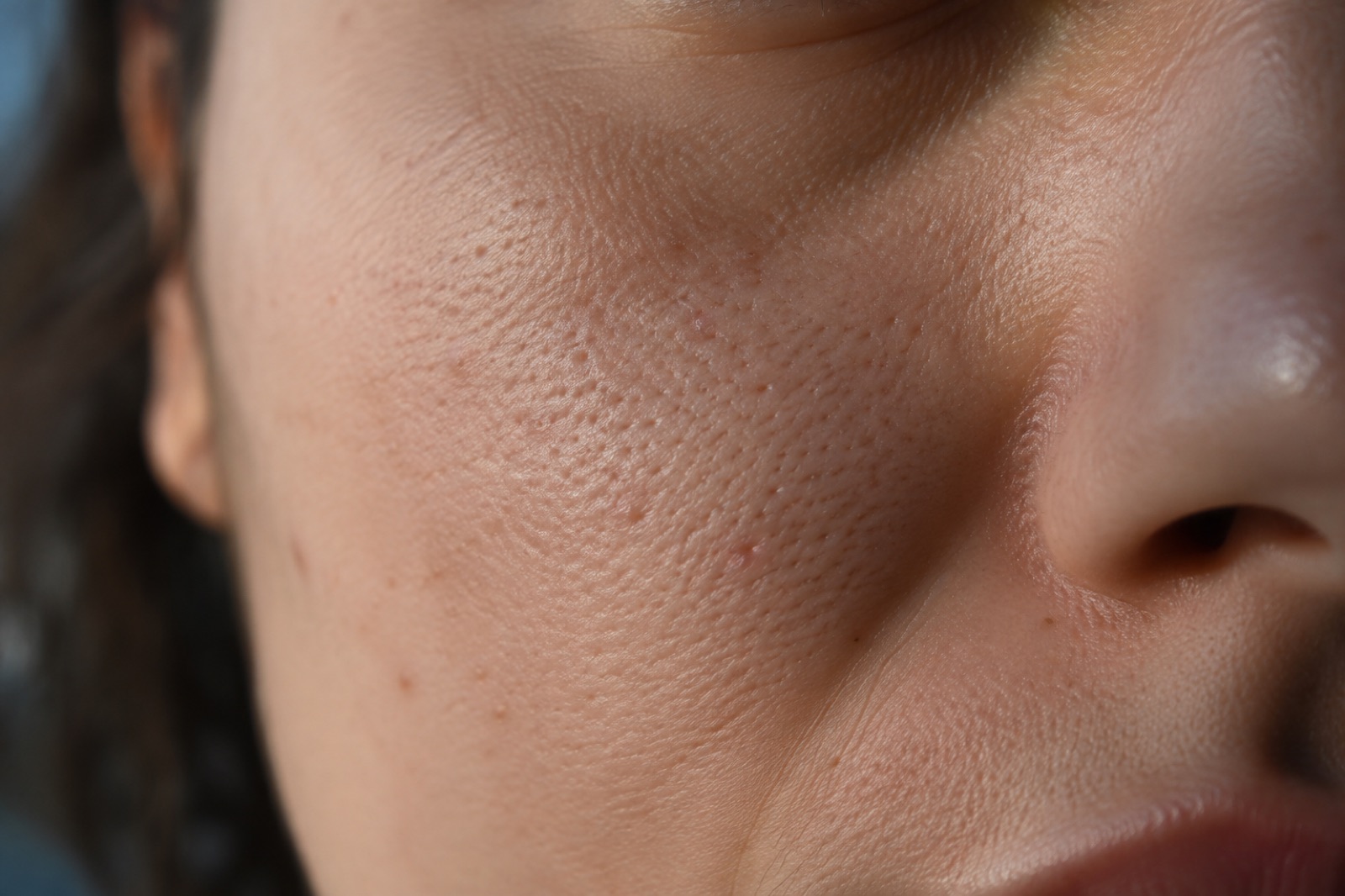
We found no research in our sources showing that at-home pore devices change your pores. In a study of 60 healthy adults, pore size was linked to oil output, age, and sex, and women’s pores got larger around ovulation. The same person’s pores can look different depending on timing and lighting, so a change you see after using a device isn’t enough to judge whether it works.
Clinic research is a separate matter. A review of 23 papers found that photodynamic therapy (light combined with a medicine) reduced oil by 30–40% and radiofrequency by 30–35%, but these were all medical procedures done on people with acne. Those numbers can’t be carried over to how home devices work or what they do. Why pores look large, and what research says about products you apply, is covered in our pore care guide.
Can you scrub with a facial cleansing brush every day?
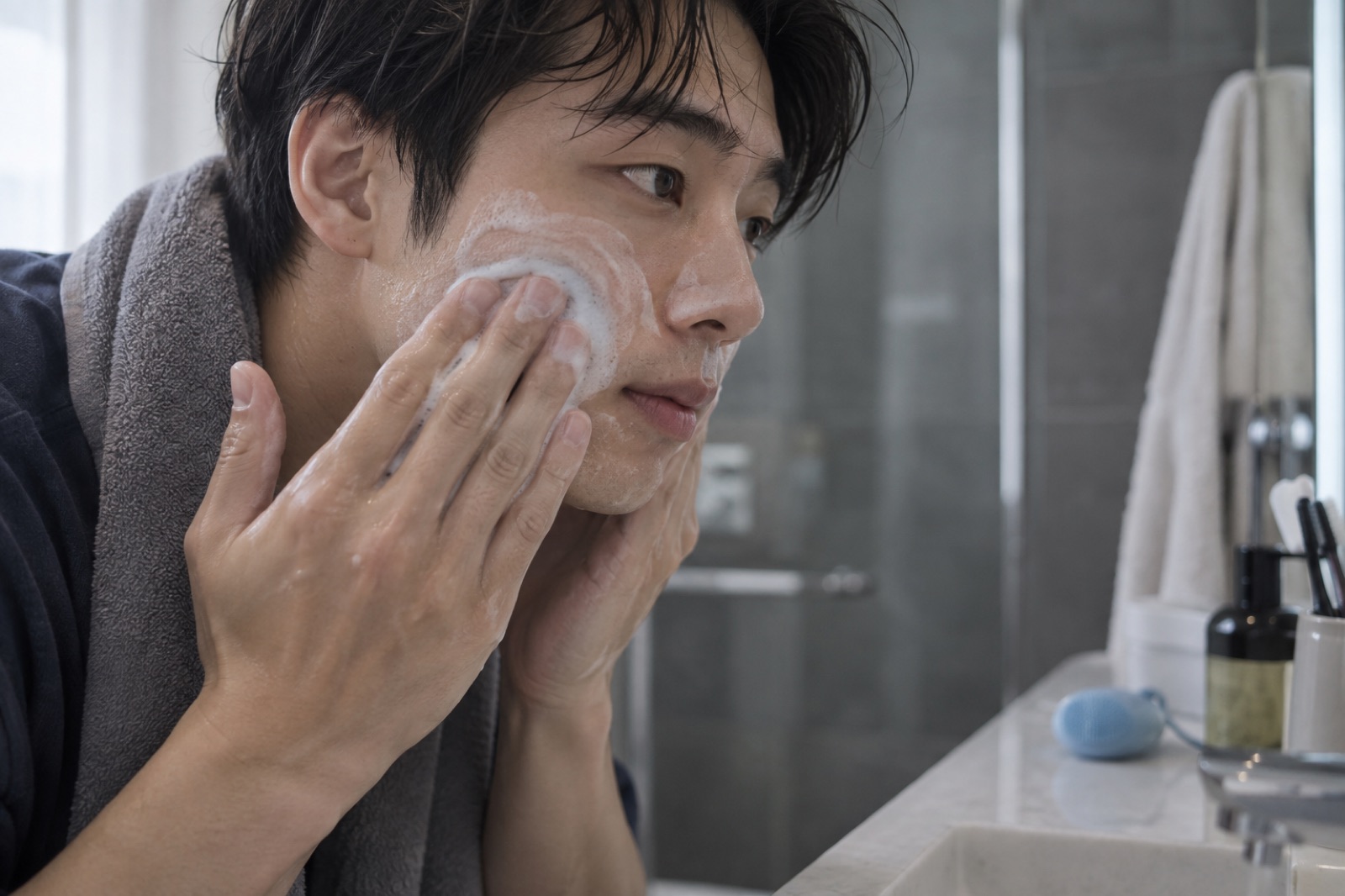
Tools that rub your face mechanically, like pore brushes, add friction, so use them with care. Our sources had no study looking directly at how cleansing brushes affect facial skin, but the AAD says rubbing or scrubbing can irritate skin and make acne worse, and recommends washing with your fingertips in small circles. There is also a classic report describing cases where friction and pressure made acne lesions worse.
One study looked at what happens when rubbing is reduced. When 35 women with a mild skin condition switched to a low-friction way of removing makeup, dryness, flaking, redness, and itching went down after 4 weeks. The study had no control group, but it shows that friction on the face is linked to skin condition. For exfoliation methods in general, see our face exfoliation guide.
Pore rollers: cold rollers and microneedle rollers are different
Products sold as pore rollers split into cold metal or ice rollers and microneedle rollers that make tiny holes in the skin, and we found no study of either type’s pore effects as a home product. We also found no evidence in our sources that cold rollers make lasting changes to pores.
Microneedle rollers work by breaking through the skin barrier, so they need extra care. When the outer skin layer is damaged, salicylic acid absorption goes up sharply: on skin stripped with tape, it reached up to 157 times that of normal skin. That was a tape-stripping experiment, not a roller study, but it means that applying an ampoule right after rolling may let ingredients get in far more than usual. Piercing the skin with microneedles overlaps with procedures done in clinics, so talk to a dermatologist rather than doing it on your own at home.
Are heat, steam, and suction devices OK?
We found no efficacy studies of devices that use heat or suction, and related research points toward irritation instead. In a trial of 20 healthy people, a cleansing solution at 40°C caused more water loss than at 20°C, and the NHS advises avoiding very hot or cold water when you wash. In a study of 142 women who had salon massage, steaming, and masks, 36.1% had redness and swelling right after.
Some people use devices hoping for a massage effect, but in a 13-person trial, adding massage after moisturizer gave no extra benefit. NIAMS explains that washing too much and touching your skin don’t directly cause acne but can make it worse. Keep in mind that the longer and more often you use a device, the more your skin is exposed to irritation.

5 irritation checks before you use a pore device
| Check | What to look at | Sign to stop |
|---|---|---|
| 1. Friction | How hard you press the brush or roller and how long each session lasts | The area burns or starts to flake |
| 2. Heat | Whether you leave warming or steam settings on for long | Redness lasts more than a few hours |
| 3. Needles and holes | Whether it is a microneedle roller (don’t use one at home; talk to a dermatologist), and for other devices, whether you disinfect the parts that touch your skin | Dot-like red marks or scabs appear |
| 4. Stacked ingredients | Whether you apply acids or retinol right after the device | Stinging that is worse than usual |
| 5. Reaction log | Compare photos before use and the next day, in the same light | More breakouts, or tiny bumps spreading |
When to see a dermatologist
- If redness, swelling, or stinging lasts for days after using a device, or blisters or scabs form, stop and consider seeing a dermatologist.
- If you notice more acne-like bumps after starting a device, get checked by a dermatologist.
- If you are considering microneedle rollers or procedures such as laser or radiofrequency, ask a dermatologist about the benefits and side effects.
- If what you see is not pores but sunken marks, they may be scars, so get a dermatologist’s opinion.
Frequently asked questions
Do pore vacuums and other pore devices work?
We found no study in our sources that compared at-home pore devices with a placebo or with doing nothing. Pore size is linked to oil output, age, and sex, so there is no evidence yet that a single device changes it.
Are pore vacuums bad for your skin?
We found no study that tested at-home pore vacuums for safety. A related study that did not test pore vacuums points toward irritation: among 142 women who had salon facial massage, steaming, and masks, 36.1% had redness and swelling right afterward. If redness or stinging lasts until the next day, stop using the device.
Do ice rollers or derma rollers work on pores?
Our sources had no study on the pore effects of home rollers, whether cold metal rollers or microneedle rollers. Microneedle rollers work by making tiny holes in the skin, which overlaps with procedures done in clinics, so talk to a dermatologist rather than trying one on your own at home.
How often should you use a pore roller?
We found no study that tested how often to use one, so there is no evidence for a right number. If redness or stinging lasts until the next day, stop rather than just spacing out your sessions, and don't layer exfoliating ingredients on that area.
How does a pore cleaning device work?
Devices use different methods, such as vibration, warming, cooling, or suction, but our sources had no evidence that any of them act on pores. Medical procedures such as laser and radiofrequency have reduced oil in studies, but those are clinic results and can't be applied to home devices.
Do devices for dehydrated skin actually work?
We found no study in our sources that tested a home device claiming to help with dehydrated skin. For dryness and tightness, studies repeatedly show that moisturizer raises water content in the outer skin layer, and a 13-person trial found that adding massage after moisturizer gave no extra benefit.
Sources
- Sebum output as a factor contributing to the size of facial pores (2006, PMID 17034515)B
- AAD, 10 skin care habits that can worsen acneInstitutional
- NHS 111 Wales, Health A-Z: Acne (updated 2024-11-07)Institutional
- NIAMS, Overview of AcneInstitutional
- Acne mechanica (1975, PMID 123732)C
- Rubbing the skin when removing makeup cosmetics is a major factor that worsens skin conditions in atopic dermatitis patients (2021, PMID 33040474)B
- Rejuvenating facial massage--a bane or boon? (2002, PMID 12121555)B
- Temperature dependency of skin susceptibility to water and detergents (1996, PMID 8869682)A
- Effect of barrier perturbation on cutaneous salicylic acid penetration in human skin: in vivo pharmacokinetics using microdialysis and non-invasive quantification of barrier function (1999, PMID 10233334)B
- The impact of energy-based devices on sebum in acne vulgaris: A systematic review (2024, PMID 39129257)A
- Does massage postapplication improve moisturizer's efficacy? A 2-week regression study (2012, PMID 22938011)
We never use YouTube videos or community posts as evidence for facts. Editorial policy
Product information related to this article
Product information from the site operator (KW Cosmetic, maker of the SKIN9HARI brand).
Revive Therapy N.F Cream
₩28,000 (KRW)
None of the device or clinic-procedure studies in this article involve this cream, and there is no basis for using it in place of a device. Revive Therapy N.F Cream is a 50 ml cream with four ceramides and five types of hyaluronic acid, with no added fragrance per its full ingredient list and a low-irritation formula, but it has not been tested with any device or for pore measurements. Its product page places it after the ampoule as the last step, and it should not go on broken skin. For the final moisturizing step after cleansing, kept the same on days you give the device a rest, the product we suggest is Revive Therapy N.F Cream.
- Cream with 4 ceramides (NP, NS, EOP, AP), 5 types of hyaluronic acid and D-panthenol, 50 ml
- No added fragrance
- Low-irritation formula
Product details
- Type and size
- Soft, cushiony cream, 50 mL (1.69 fl oz)
- Step in routine
- Step 4 of 4 · Moisturize, the last step
- How to use
- As the last step of your routine, squeeze out a small amount. Warm it slightly between your palms. Press gently over your face, working outward from the center. Use morning and night after your ampoule or serum step.
- Before you use
- Contains dimethicone (silicone) — this is not a silicone-free formula. If redness, swelling or itching occurs, stop using and consult a dermatologist.
Based on the official product page, checked 2026-10-02
Cosmetics do not diagnose, treat, cure or prevent any disease. Test results apply only to the stated conditions.