How to Get Better Skin: 7 Habits and What Research Actually Says
The best place to start is the habits major health bodies agree on: gentle face washing, moisturizer, and sunscreen. Sleep, diet, and smoking come next, but the research on them is thinner.
In this article9 sections
- How to get better skin: where to start
- How many times a day should you wash your face?
- Why you shouldn’t skip moisturizer and sunscreen
- Is not touching your face really a habit that matters?
- Does sleep help your skin?
- Do certain foods help your skin?
- Do smoking and exercise affect your skin?
- Checklist: 7 habits for better skin
- When to see a dermatologist
| Habit | What guidelines and studies say | Source |
|---|---|---|
| Washing | Up to twice a day and after sweating, gently, with a mild cleanser and your fingertips | AAD · Institution |
| Moisturizer | Use one if your skin is dry; a small study saw skin hydration rise more with moisturizer than with drinking more water | AAD · Institution / B |
| Sunscreen | Non-comedogenic sunscreen with SPF 30 or higher; avoid tanning | AAD · Institution |
| Hands off | Touching or squeezing makes breakouts last longer and raises the risk of scars and dark marks | AAD · Institution |
| Sleep, diet, smoking | Listed as things that can make acne worse, but studies are few or their results are mixed | AAD, NICE · Institution / A (observational) |
How to get better skin: where to start
The starting point is the set of basic habits that health bodies agree on; lifestyle factors like sleep and diet come after that, which is what the evidence supports. NICE in the UK, the American Academy of Dermatology (AAD), and the UK’s NHS all recommend washing gently no more than twice a day, avoiding oil-based and comedogenic products, taking off makeup before bed, and not squeezing spots.
The 7 habits in this article are four basics (washing, moisturizer, sunscreen, hands off) plus sleep, diet, and smoking. Advice on the first four is consistent across health bodies. The last three are said to play a role, but research has confirmed less about them. If you break out often, change one thing at a time and watch for a few weeks. That makes it easier to see what is actually making a difference.
How many times a day should you wash your face?
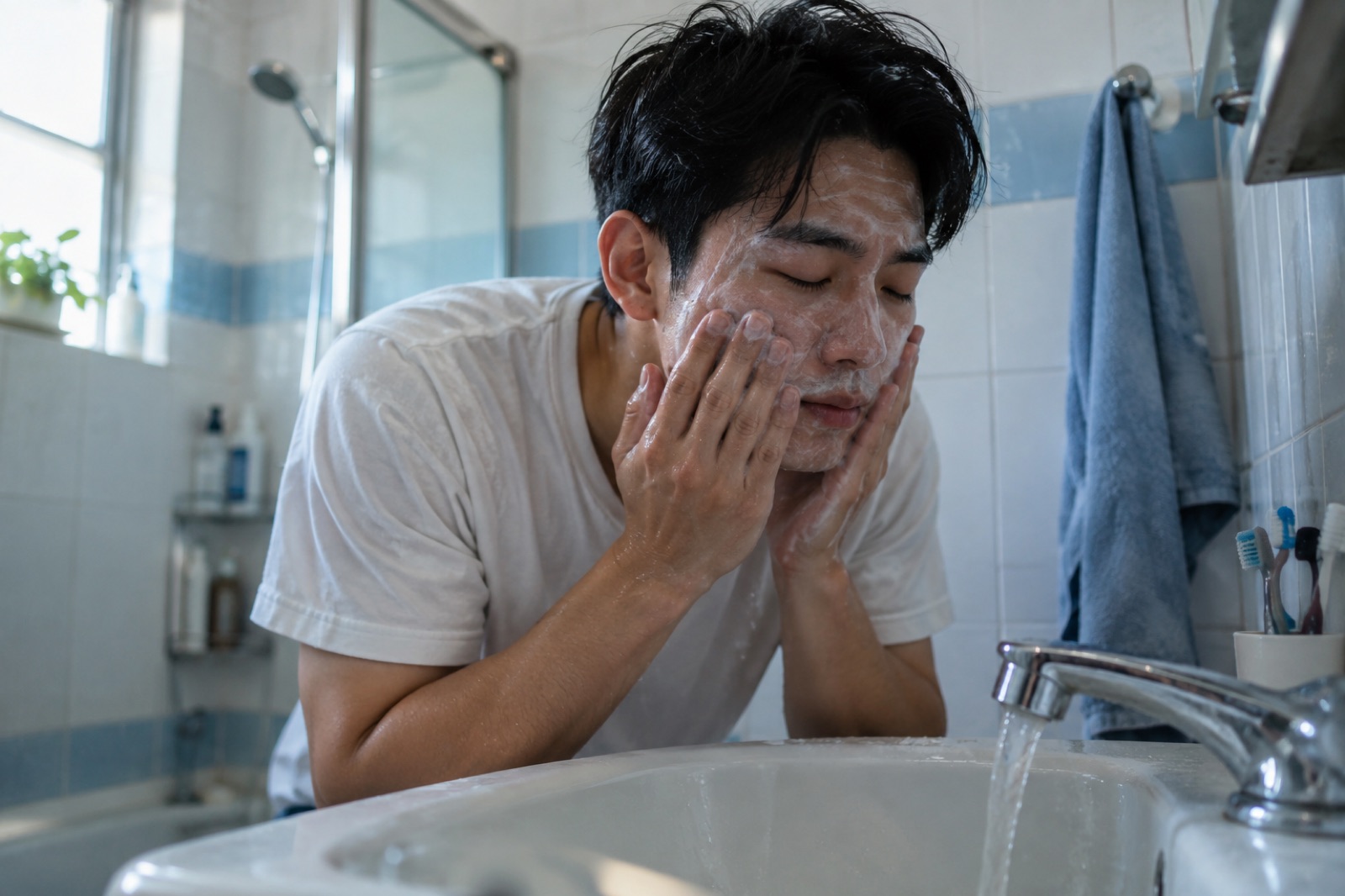
The AAD recommends washing your face up to twice a day, and after sweating, with a mild, gentle cleanser. Wash gently with your fingertips in small circles; the AAD explains that rubbing or scrubbing can irritate the skin and make breakouts worse. Washing many times a day can also irritate the skin and lead to more breakouts.
Water temperature matters too. The NHS suggests lukewarm water with a mild soap or cleanser and avoiding very hot or very cold water. If you still feel greasy after cutting back, see how many times you should wash your face for more detail.
Why you shouldn’t skip moisturizer and sunscreen
When skin dries out it becomes irritated, which can raise the chance of breakouts, so the AAD suggests using a moisturizer made for acne-prone skin when needed. The NHS also advises a fragrance-free, water-based moisturizer if your skin is dry. In a study that followed 43 healthy women for 4 weeks, skin hydration readings rose more with moisturizer than with drinking more water (grade B, small study).
Wearing sunscreen is one of the basic habits the AAD names. The AAD advises against tanning and recommends a non-comedogenic sunscreen with SPF 30 or higher, and explains that some acne medicines can make skin more sensitive to the sun. If you are using acne medicine, be even more careful about sunscreen.
Is not touching your face really a habit that matters?
Keeping your hands off your face and not squeezing spots is a habit the AAD calls out on its own. According to the AAD, touching or popping pimples makes breakouts last longer and raises the risk of scars and dark marks. If you tend to rest your chin in your hand or pick at spots without thinking, this is a good place to start.
The same goes for things that touch your face. The AAD says even non-comedogenic makeup can lead to breakouts if you sleep in it, so always take it off before bed, and don’t share makeup or brushes with other people.

Does sleep help your skin?
The AAD lists lack of sleep as something that can make acne worse, but our sources include almost no studies that directly compared sleep and skin. So the sources we reviewed can’t really explain “why skin looks better after a good night’s sleep.” A realistic step is to keep your own notes on whether you break out more after nights of less sleep. We go deeper in lack of sleep and acne.
Stress is similar. The AAD explains that stress does not create new acne, but it can make existing acne worse, and studies have found acne tends to be more severe when stress is higher.

Do certain foods help your skin?
The evidence that any food makes skin better is weak; what research points to is a link between certain foods and acne. In a meta-analysis of 13 observational studies (71,819 people), the odds ratio for acne was 1.16 for people who drank milk and 1.24 for skim milk (grade A). Because these were observational studies, we can’t say milk causes acne.
A low-glycemic-load diet, which cuts down on foods that raise blood sugar quickly, reduced total lesions by 23.5 compared with 12.0 in the control group in a 12-week trial of 43 men with acne, but the effect of weight loss could not be separated out (grade A). In a trial of 84 people who added this diet to a topical acne medicine, there was no extra benefit. NICE says there is not enough evidence that any specific diet works for acne, and the AAD suggests watching for changes yourself when you cut back on a certain food. We cover dairy and wheat in acne and food.
Do smoking and exercise affect your skin?
Studies on smoking and acne don’t agree. In a systematic review of 35 epidemiology studies, family history and being overweight were clearly linked to acne, but results for diet and smoking varied from study to study (grade A). Even so, the AAD lists smoking as something that can make acne worse, citing studies such as one that found acne tended to be more severe in women who smoked more.
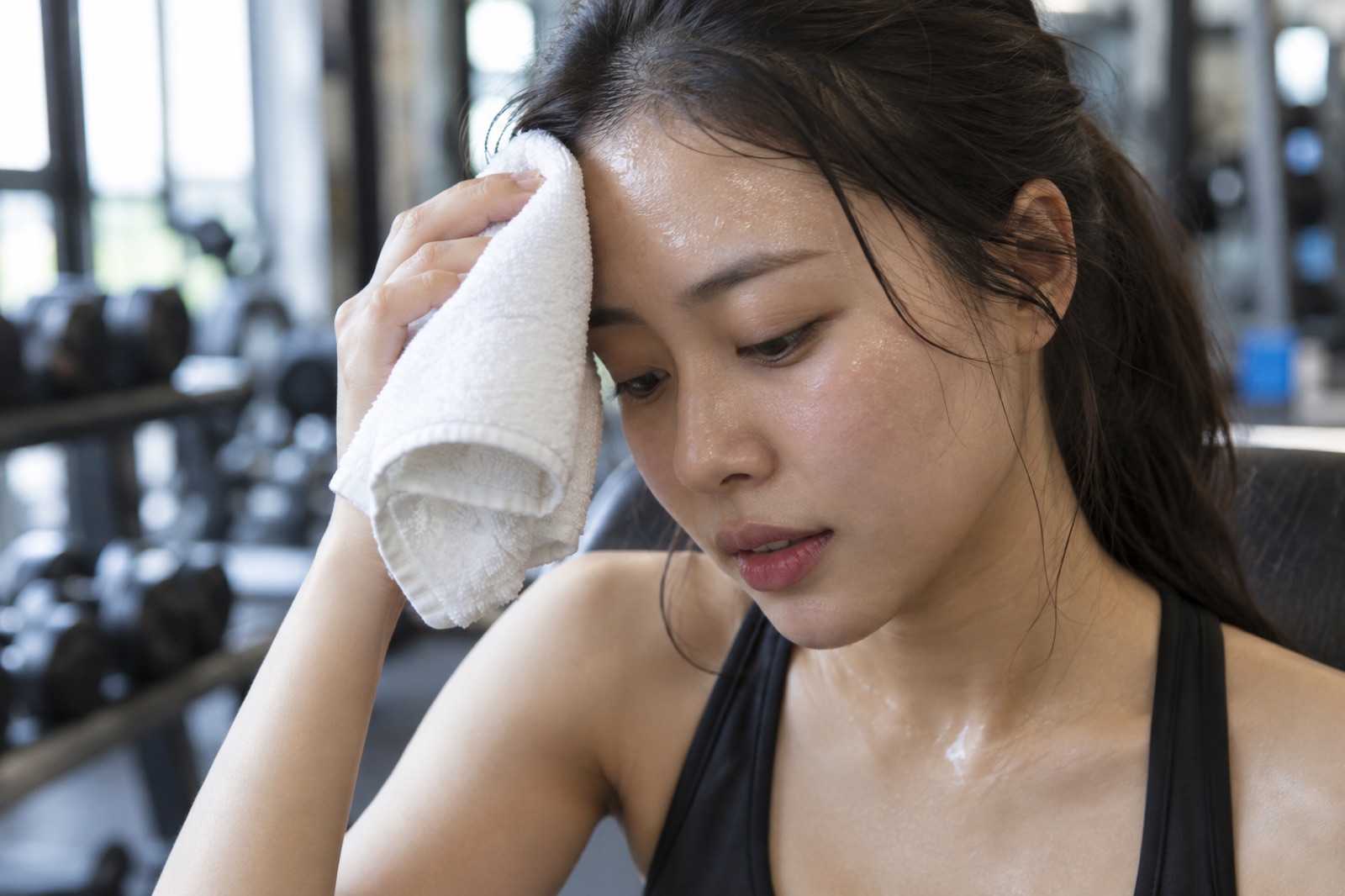
The NHS says exercise does not reduce acne itself, but it can help your mood and self-esteem. Since sweat can irritate the skin, shower as soon as you can after a workout. Following the AAD, gently pat sweat away with a clean towel during exercise and wear freshly washed workout clothes.
Checklist: 7 habits for better skin
| # | Habit | What to check this week | Level of evidence |
|---|---|---|---|
| 1 | Washing | Did you wash gently with your fingertips, up to twice a day plus after sweating? | Institution |
| 2 | Moisturizer | Did you keep using moisturizer when your skin felt dry or tight? | Institution · B (small study) |
| 3 | Sunscreen | Did you put on a non-comedogenic SPF 30+ sunscreen before going out? | Institution |
| 4 | Hands off | Did you cut back on chin-resting, touching, and squeezing? Did you take off makeup before bed? | Institution |
| 5 | Sleep | Did you break out more after nights of less sleep? | Institution (almost no direct studies) |
| 6 | Diet | Did anything change when you cut back on a certain food? | Observational · A / Institution |
| 7 | Smoking | Are you smoking less? | Mixed results · Institution |
When to see a dermatologist
- If breakouts keep coming even after you follow these habits, talk to a dermatologist.
- If deep, painful acne keeps coming back or starts leaving scars, see a dermatologist.
- If acne is bringing your mood down or making school or daily life hard, consider seeing a doctor.
- If you are using acne medicine and your skin turns red or stings easily in the sun, talk to the doctor who prescribed it.
Frequently asked questions
How can I get better skin if I have acne?
The American Academy of Dermatology (AAD) lists basic habits: wash gently twice a day, don't touch or pop pimples, and use a non-comedogenic sunscreen with SPF 30 or higher. Habits alone are often not enough, so if breakouts keep coming even when you stick to them, the AAD suggests talking to a dermatologist.
What habits help clear skin?
The habits health bodies agree on are washing gently no more than twice a day, avoiding oil-based products, taking off makeup before bed, and not squeezing spots (NICE, AAD, NHS). Sleep, diet, and smoking are also mentioned, but the research behind them is weaker.
Does drinking water help your skin?
In a study that followed 43 healthy women for 4 weeks, skin hydration readings rose more with moisturizer than with drinking more water (grade B, small study). We found no evidence in our sources that water intake alone changes your skin.
What foods help clear skin?
A meta-analysis of observational studies linked milk, especially skim milk, with acne, but it could not show cause and effect. NICE in the UK says there is not enough evidence that any specific diet works for acne, and the AAD suggests watching for changes yourself when you cut back on a certain food.
Does exercise help your skin?
The NHS says exercise does not reduce acne itself, but it can help your mood and self-esteem. Sweat can irritate the skin, so the AAD suggests showering as soon as you can after a workout and gently patting sweat away with a towel during exercise instead of wiping.
Sources
- AAD — 6 skin care habits that can clear acneInstitutional
- AAD — 10 skin care habits that can worsen acneInstitutional
- AAD — What causes acne?Institutional
- AAD — Acne and dietInstitutional
- NHS — Acne (reviewed 2026-09-22)Institutional
- NHS 111 Wales — Health A-Z: Acne (updated 2024-11-07)Institutional
- NICE — Acne vulgaris: management (NG198) RecommendationsInstitutional
- Effect of Amount of Daily Water Intake and Use of Moisturizer on Skin Barrier Function in Healthy Female Participants (2024, PMID 38816975)B
- The effect of milk consumption on acne: a meta-analysis of observational studies (2018, PMID 30079512)A
- A low-glycemic-load diet improves symptoms in acne vulgaris patients: a randomized controlled trial (2007, PMID 17616769)A
- A randomized controlled trial of topical benzoyl peroxide 2.5% gel with a low glycemic load diet versus topical benzoyl peroxide 2.5% gel with a normal diet in acne (grades 1-3) (2019, PMID 30264745)A
- Systematic review of the epidemiology of acne vulgaris (2020, PMID 32238884)A
We never use YouTube videos or community posts as evidence for facts. Editorial policy
Product information related to this article
Product information from the site operator (KW Cosmetic, maker of the SKIN9HARI brand).
Revive Therapy N.F Cream
₩28,000 (KRW)
The water-versus-moisturizer study and the agency guidance this article cites for the moisturizing habit did not test this cream, so they are not evidence for it. Revive Therapy N.F Cream is a 50 ml cream with four ceramides and five types of hyaluronic acid, with no added fragrance per its full ingredient list and a low-irritation formula; no test has looked at it alongside lifestyle habits. Its product page places it after the ampoule, as the last step. For the moisturizing habit on this article's checklist, the product we suggest is Revive Therapy N.F Cream.
- Cream with 4 ceramides (NP, NS, EOP, AP), 5 types of hyaluronic acid and D-panthenol, 50 ml
- No added fragrance
- Low-irritation formula
Product details
- Type and size
- Soft, cushiony cream, 50 mL (1.69 fl oz)
- Step in routine
- Step 4 of 4 · Moisturize, the last step
- How to use
- As the last step of your routine, squeeze out a small amount. Warm it slightly between your palms. Press gently over your face, working outward from the center. Use morning and night after your ampoule or serum step.
- Before you use
- Contains dimethicone (silicone) — this is not a silicone-free formula. If redness, swelling or itching occurs, stop using and consult a dermatologist.
Based on the official product page, checked 2026-10-02
Cosmetics do not diagnose, treat, cure or prevent any disease. Test results apply only to the stated conditions.