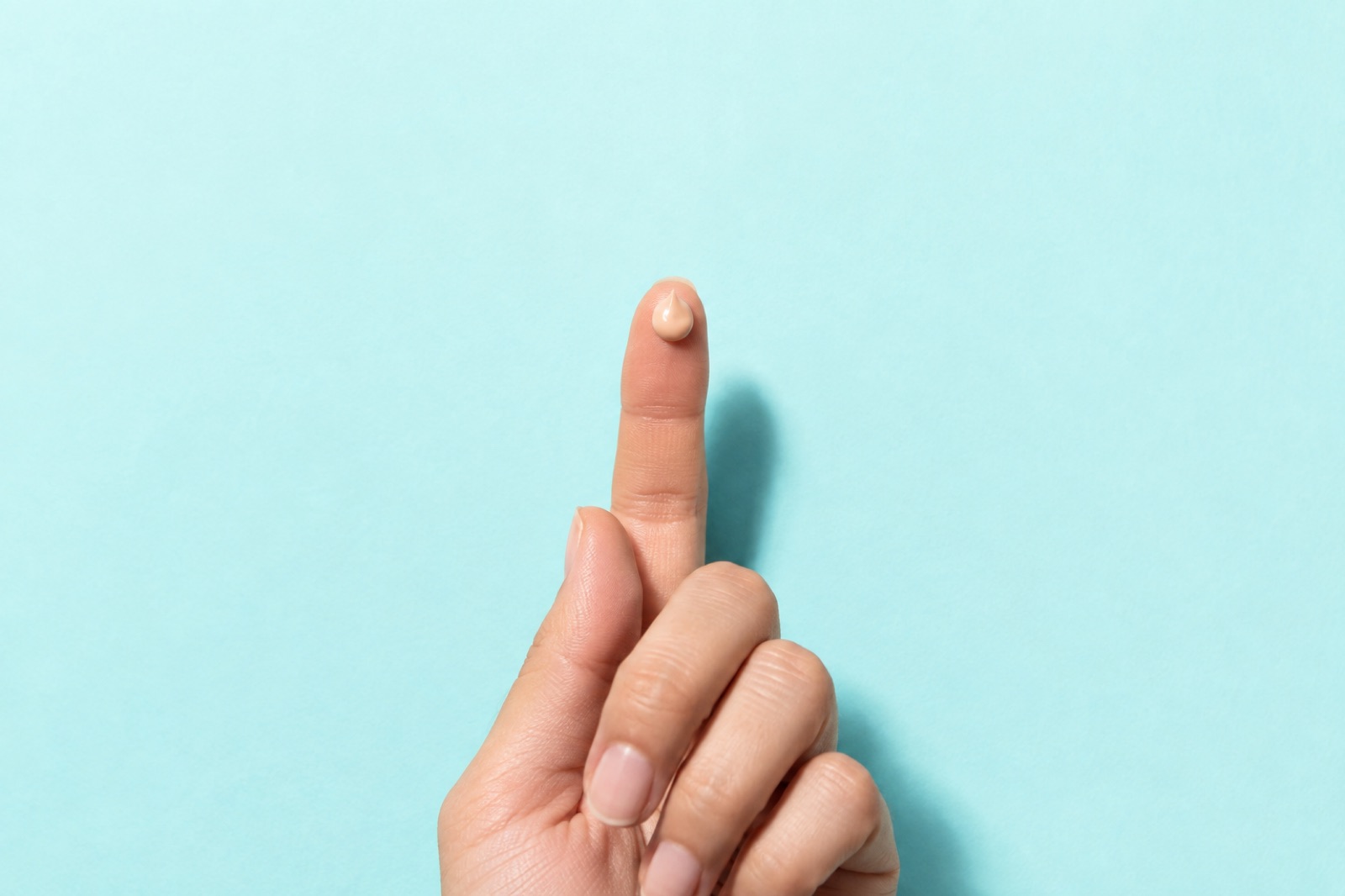
Pimple Patches: How Long to Leave Them On and When to Use Them
A pimple patch is a cover you put on a spot instead of squeezing it. In a small 20-person trial, inflammation scores dropped more with a hydrocolloid dressing than with plain skin tape.
In this article8 sections
- Do pimple patches work? How strong is the evidence?
- Which spots should you patch? What about popped pimples?
- How long should you leave a pimple patch on, and when should you change it?
- Star-shaped, clear, or drugstore patches: what’s the difference?
- Can you wear a pimple patch during the day or put makeup over it?
- Can pimple patches help you stop picking?
- Checklist: before you use a pimple patch
- When to see a dermatologist
| Item | What we know | Evidence |
|---|---|---|
| First human trial | 20 people with mild to moderate acne wore either a hydrocolloid dressing or plain skin tape, changed every two days for one week. On days 3 to 7, severity and inflammation dropped more on the dressing side | 2006 PMID 16688374 · A (pilot trial) |
| Severity score | Dressing group 1.8 → 0.43; tape group 1.08 → 0.8 | 2006 PMID 16688374 · A |
| Patch vs. patch | In an 11-day split-face trial of 49 people with inflamed spots, the median time until spots went away was 4 days with an herbal patch and 6 days with a hydrocolloid patch | 2021 PMID 33651470 · A |
| UV | The dressing let through 7.4% of UVB; plain skin tape let through 38% | 2006 PMID 16688374 · A |
| Picking habit | No study has yet checked whether patches reduce picking and squeezing | Picking and squeezing research summary |
Do pimple patches work? How strong is the evidence?
The evidence for pimple patches rests mainly on two small randomized trials, so it is best read as an early signal that they may help. The 2006 trial split 20 people with mild to moderate acne into two groups and compared a hydrocolloid dressing with plain skin tape. On days 3, 5, and 7, the dressing group also had lower redness, oiliness, pigmentation, and sebum readings, and neither group had notable side effects. Still, with 10 people per group and only one week, it was a pilot study, and the authors said more research is needed.
The 2021 trial put an herbal patch on one side of the face and a hydrocolloid patch on the other in 49 people with inflamed spots. Spots on the herbal-patch side went away sooner, but the exact herbal formula was not specified, so the result can’t be credited to any one ingredient. Also note that the hydrocolloid patch in this trial served as the comparison patch, not the one being evaluated.
Which spots should you patch? What about popped pimples?
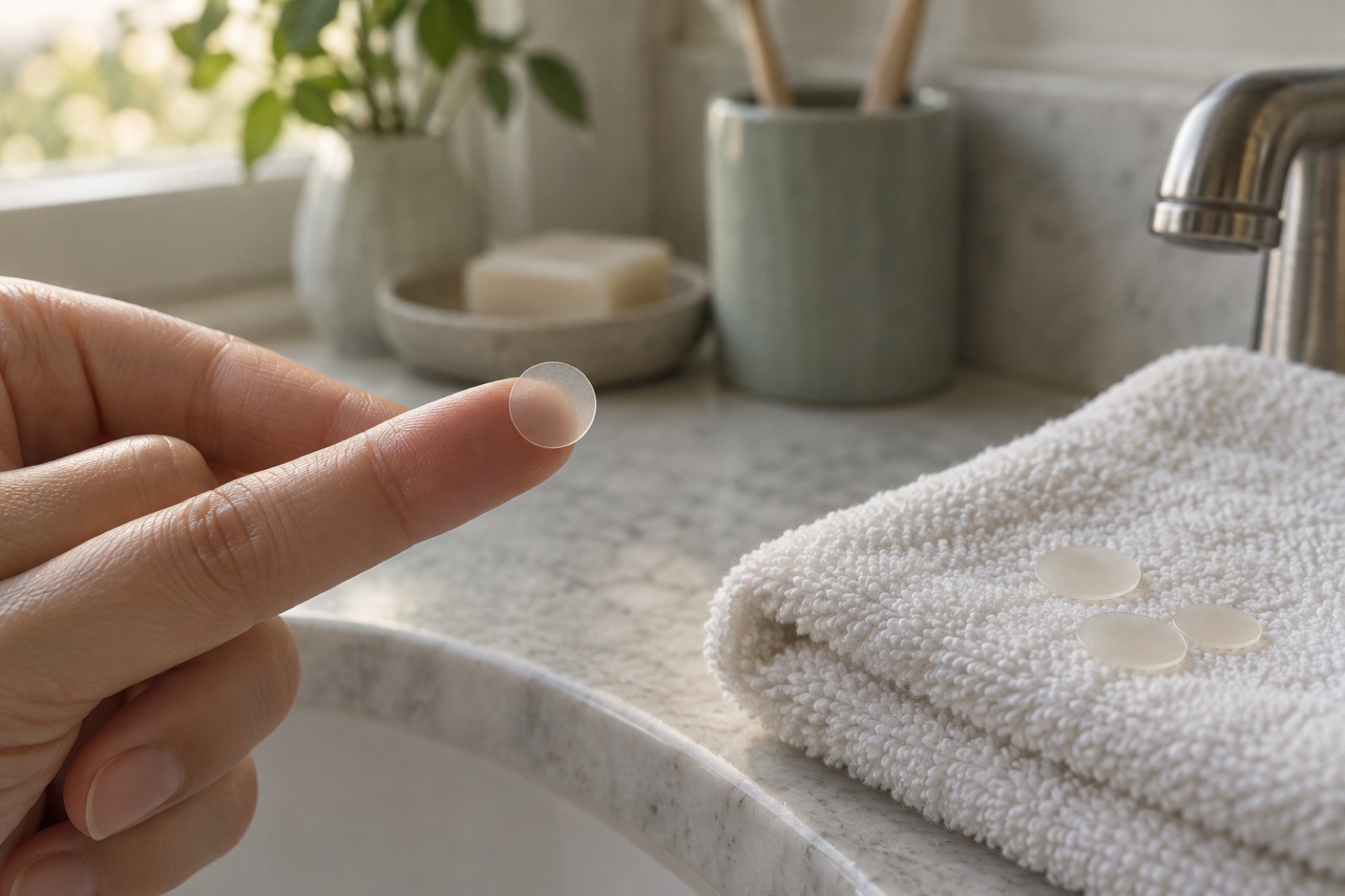
People in the studies had red, raised, mild to moderate inflamed spots. These studies have no results for patches on non-red closed comedones (tiny skin-colored bumps) or on deep, hard nodules you can feel under the skin. For deep, painful spots, our nodular acne article covers when to see a doctor.
We found no study that tested patches on spots that were squeezed or burst. What is clear is that not squeezing comes first. The American Academy of Dermatology (AAD) explains that popping a pimple yourself pushes its contents deeper into the skin, which makes inflammation worse, and that germs from your hands raise the risk of infection. For a spot that is swollen and sore but has no pus, the AAD suggests using ice to ease pain, swelling, and redness instead of squeezing. Wrap the ice in a clean cloth rather than putting it directly on the skin. There is more in Can I pop my pimples?.
How long should you leave a pimple patch on, and when should you change it?
No study has compared wear times, so the only reference point is what the research used. The 2006 trial put on a fresh dressing every two days and followed people for one week. The 2021 trial’s change schedule is not in the summary this article relied on.
So there is no evidence for one “right” number of hours. A practical approach is to follow the wear time on the package and, after you peel it off, check whether redness or stinging stays. In a 31-person study comparing medical adhesives, hydrocolloid adhesive increased water loss after it was peeled off, took more force to peel off (which meant more skin stripping and pain), and caused redness in more than 60% of cases. That study did not look at pimple patches, but it is a reason to check the skin when you stick on and peel off patches on the same spot again and again.
Star-shaped, clear, or drugstore patches: what’s the difference?
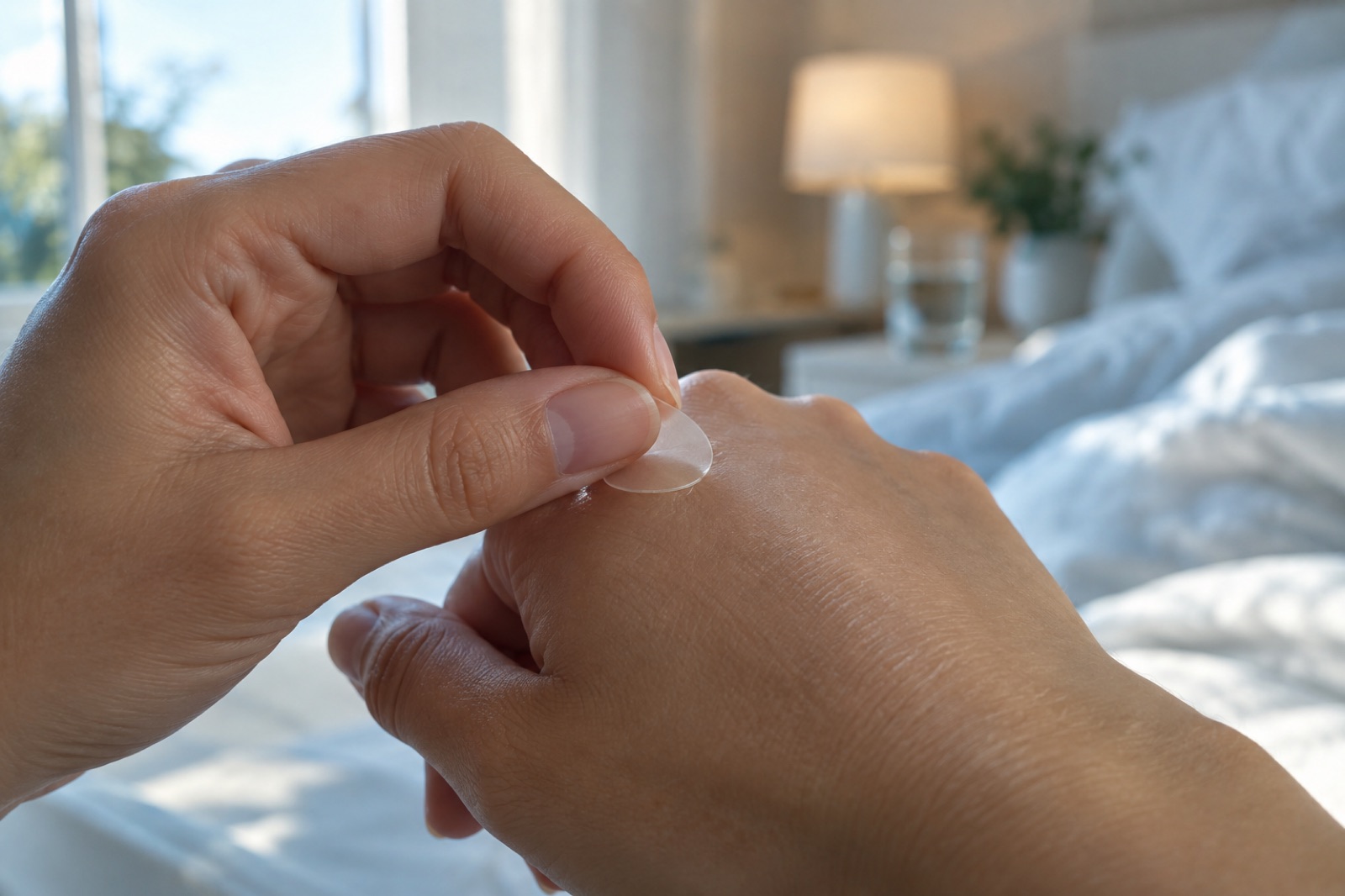
Before shape or where it’s sold, look at what the patch is made of. The two studies behind this article compared a hydrocolloid patch with plain skin tape (2006) and with a patch containing herbal ingredients (2021). No study split results by shape, such as star or round, or by where the patch was bought. Whether it’s called a spot patch, a blemish patch, or a pimple sticker, check the material and any added ingredients on the package first.
If a patch has added ingredients, think about whether any of them has made your skin red or itchy before. Our sources don’t cover how pimple patches are classified as products, so we don’t address that here. Keeping notes on whether the patch was big enough to cover the spot, and whether redness stayed after you peeled it off, gives you something to compare next time.
Can you wear a pimple patch during the day or put makeup over it?
If you wear one during the day, the only relevant number is UV transmission. In the 2006 trial, the dressing let through only 7.4% of UVB, blocking more than plain tape, which let through 38%. That result comes from the specific dressing used in that study, so it can’t be applied to every patch, and it is not a reason to use a patch in place of sunscreen.
No study has tested foundation or concealer on top of a patch. How to choose and layer makeup over breakouts is covered in our makeup for covering breakouts guide, and those rules are the same whether or not you wear a patch.
Can pimple patches help you stop picking?
Research has not yet shown whether patches cut down on touching and picking. NICE, the AAD, and the NHS all advise against squeezing or picking spots, and NICE notes that repeatedly squeezing or scratching them raises the risk of scarring. A self-assessment tool that estimates the risk of atrophic (depressed) acne scars also lists picking as one of four factors, along with severity, duration, and family history (sensitivity 82%, specificity 43%).
If picking keeps happening and you find it hard to stop on your own, the habit itself may need attention. In a study of 32 adults with acne excoriée (acne made worse by picking), the group that added cognitive behavioral therapy (CBT) to standard care improved more on skin-picking scores and on anxiety and depression scores.

Checklist: before you use a pimple patch
| What to check | What to look for | Why |
|---|---|---|
| Type of spot | Is it a red, raised, inflamed spot? | Study participants had mild to moderate inflamed spots |
| Not squeezed | Apply it without squeezing or picking first | Squeezing it yourself raises the risk of inflammation, infection, and scarring (AAD, NICE) |
| Depth and pain | If it’s a hard, painful nodule, consider seeing a doctor instead | No studies on deep spots |
| Changing | Follow the package wear time (the study changed it every two days) | No studies compare wear times |
| Skin after peeling | Does redness or stinging stay in the shape of the patch? | Redness was common after peeling off hydrocolloid adhesive |
| Notes | Day applied, day taken off, days until the spot calmed down | A comparison point for next time |
When to see a dermatologist
- If a hard, painful spot sits deep in the skin or keeps coming back in the same place, consider seeing a dermatologist.
- The AAD advises seeing a dermatologist if 4 to 6 weeks of care doesn’t make a difference.
- If itching, blisters, or oozing appear or spread where a patch was, stop using it and get checked.
- If you can’t stop picking and marks or scars are adding up, bring up the habit too when you see a doctor.
Frequently asked questions
Do pimple patches work?
In a pilot trial of 20 people with mild to moderate acne, the group that wore a hydrocolloid dressing changed every two days saw a bigger drop in severity and inflammation on days 3 to 7 than the group using plain skin tape. With 10 people per group and only one week, it is best read as an early signal that patches may help.
How long should you leave a pimple patch on?
No study has compared wear times. The 2006 trial replaced the dressing every two days, so follow the wear time on the package, and after you peel it off, check whether redness stays in that spot.
Do pimple patches work on inflamed or cystic pimples?
People in both patch studies had red, raised, mild to moderate inflamed spots. There are no results for non-red closed comedones or for deep, hard, painful bumps, so if a spot is deep and painful, consider seeing a dermatologist before reaching for a patch.
Can you put a pimple patch on a popped pimple?
We found no human study that tested patches on squeezed or burst spots. The American Academy of Dermatology (AAD) explains that popping a pimple yourself pushes its contents deeper, making inflammation worse and raising the risk of infection, so the first rule is not to squeeze.
Why is my skin red after taking off a pimple patch?
In a study comparing medical adhesives, hydrocolloid adhesive increased water loss after it was peeled off, and redness showed up in more than 60% of cases. That study did not test pimple patches, but it is a good reason to check the skin where you peeled one off.
How many pimple patches can you use at once?
No study has compared the number of patches. More patches means more spots where adhesive is peeled off, so check each one for redness or stinging. If breakouts are spreading across a wide area, consider talking with a dermatologist instead of relying on patches.
Are herbal patches better than hydrocolloid patches?
In one trial that split 49 people's faces into left and right sides, spots on the herbal-patch side went away sooner (median 4 days vs. 6 days). But the herbal formula was not specified, so there is no way to tell which ingredient made the difference.
Sources
- A pilot study on efficacy treatment of acne vulgaris using a new method: results of a randomized double-blind trial with Acne Dressing (2006, PMID 16688374)A
- Efficacy and safety of a novel water-soluble herbal patch for acne vulgaris treatment: A randomized, assessor-blinds controlled, intra-individual split-face comparative study (2021, PMID 33651470)A
- AAD — Pimple popping: Why only a dermatologist should do itInstitutional
- NICE — Acne vulgaris: management (NG198)Institutional
- NHS — AcneInstitutional
- Development of an atrophic acne scar risk assessment tool (2017, PMID 28499079)A
- Cognitive behavioral therapy as an adjuvant therapy in acne excoriée: a randomized controlled clinical trial (2022, PMID 32502358)A
- Evaluating the Irritant Factors of Silicone and Hydrocolloid Skin Contact Adhesives Using Trans-Epidermal Water Loss, Protein Stripping, Erythema, and Ease of Removal (2024, PMID 38150300)B
We never use YouTube videos or community posts as evidence for facts. Editorial policy
Product information related to this article
Product information from the site operator (KW Cosmetic, maker of the SKIN9HARI brand).
Centella Rescue Spot Ampoule
₩22,000 (KRW)
The hydrocolloid patch trials in this article did not test this ampoule, and Centella Rescue Spot Ampoule is a liquid cosmetic you apply, not a cover you leave on, so there is no data on it standing in for a patch. It is a 15 ml spot ampoule built around alcohol-extracted Centella asiatica extract; because it contains alcohol it may sting, and there is no data on squeezed or burst spots, so keep it off broken skin. Per its product page, apply 1 to 2 drops where needed after cleansing, or mix a few drops into your toner or ampoule. For the spot-care step on unbroken skin, the product we suggest is Centella Rescue Spot Ampoule.
- Ampoule with alcohol-extracted Centella asiatica extract as the main ingredient, 15 ml
- Also contains Aloe Phytoplacenta, Greenol and Campanula callus extract
- Contains alcohol, so it may sting; try it on a small area first
- Low-irritation formula
Product details
- Type and size
- Fast-absorbing gel ampoule, 15 mL (0.5 fl oz)
- Step in routine
- Spot care, layered any time
- How to use
- Use the dropper to apply a small amount directly to the area of concern. Pat gently until absorbed. Layer it at any step of your routine — before or after your regular toner, ampoule, or cream.
- Before you use
- Contains ethanol and natural bergamot oil, which may cause a slight tingling sensation on very sensitive or freshly irritated skin — patch test first if unsure. If redness, swelling or itching occurs, stop using and consult a dermatologist.
Based on the official product page, checked 2026-10-02
Cosmetics do not diagnose, treat, cure or prevent any disease. Test results apply only to the stated conditions.