How to Cover Acne with Makeup: 5 Steps to Avoid a Cakey Look
Prep your skin with a light moisturizer, apply base in a thin layer, then tap a small amount of concealer only on top of each pimple. Thin layers and full removal at night are the basics.
In this article6 sections
| Topic | What the sources say | Source |
|---|---|---|
| When makeup is the cause | The AAD says some cosmetics can cause breakouts (acne cosmetica), even in people who do not usually get acne | Institution · AAD |
| It can show up late | Breakouts caused by cosmetics can appear anywhere from a few days to 6 months later | Institution · AAD |
| Products and removal | NICE advises avoiding oil-based and comedogenic makeup and removing makeup at the end of the day. The AAD recommends products labeled oil-free or non-comedogenic | Institution · NICE, AAD |
| Makeup over prescription gel | Foundation applied over a prescription gel showed no significant difference in coverage or skin tone after 6 hours, and no skin reactions (29 women) | Comedogenicity · A |
| Makeup-related complaints | Across 9 cross-sectional studies (4,569 people), the most common self-reported cosmetic reactions were acne (36%) and redness (27%). This does not prove cause | Comedogenicity · A |
Can makeup cause acne?
Some cosmetics can cause breakouts, but the AAD says you can keep wearing makeup if you manage what you choose and how you remove it. The AAD suggests looking at makeup when small bumps keep coming back on the cheeks, chin, or forehead, and at lipstick or lip balm when they show up around the lips. Location alone cannot confirm the cause, so you need to test by changing one product at a time.
In survey studies, breakouts were also the most common complaint people linked to cosmetics. These were self-reports, though, so they do not prove that cosmetics caused them. The goal of cover makeup is to hide breakouts without adding new ones: go thin, keep it clean, and take it all off.
How to cover acne with makeup in 5 steps
Makeup often stands out over a breakout because there is too much product in too thick a layer. The steps below are an editorial guide focused on using less.
- Prep your skin. Wash gently with your fingertips and apply a thin layer of oil-free, non-comedogenic moisturizer. The AAD says scrubbing or rubbing your face irritates it, so don’t scrape off flakes before makeup.
- Sunscreen, then one layer of base. Apply sunscreen in the amount its label directs, then keep the base to one thin layer. Give each a moment to settle before the next step, so it doesn’t slide around.
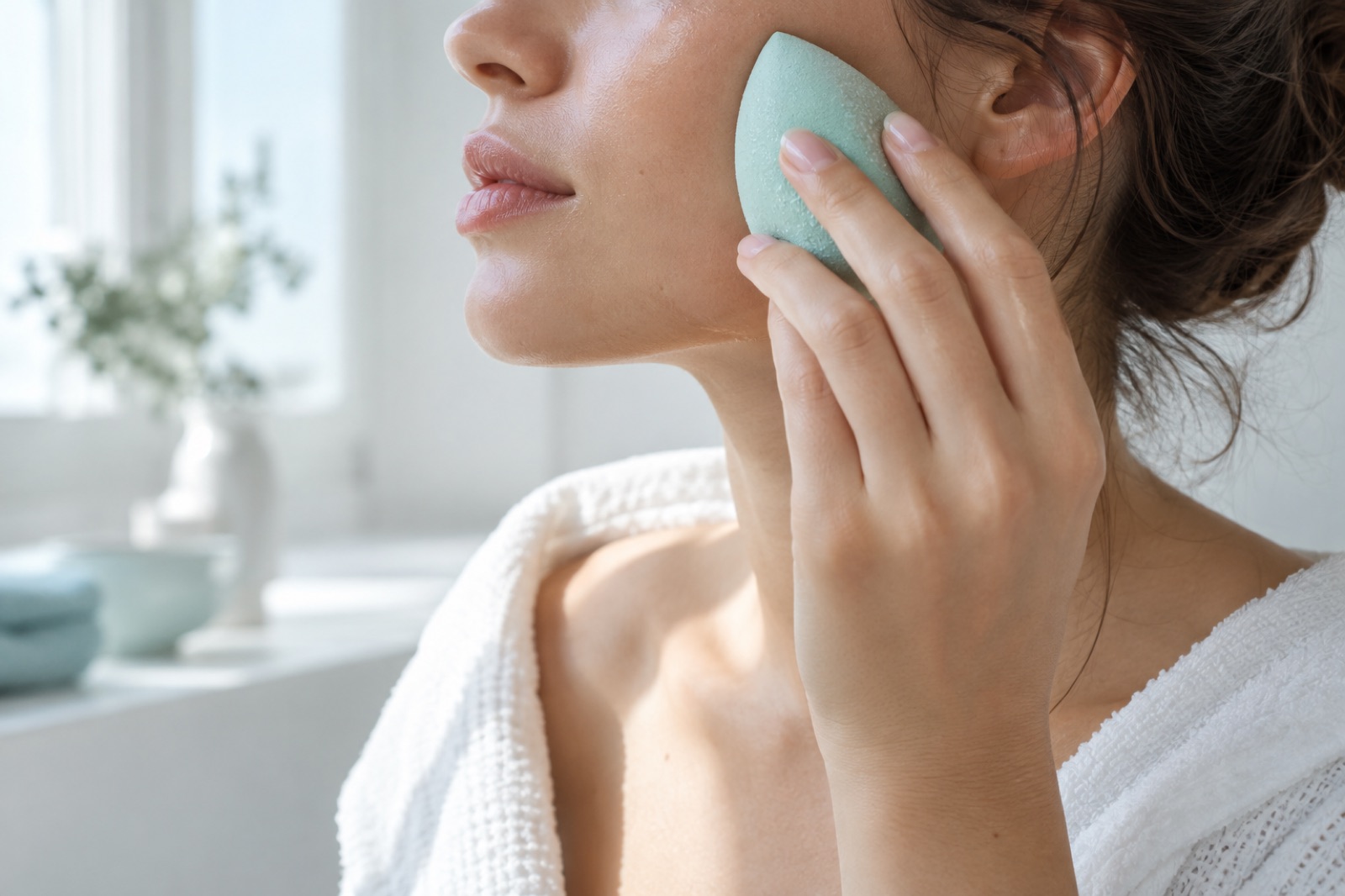
- A thin layer of foundation all over, from a cushion compact or a bottle. Don’t rub over breakouts; tap lightly instead. Use a clean side of your puff or sponge, and don’t share it with anyone.
- Concealer only on the spot, and only a little. Place a dot in the center of the pimple and blend just the edges. Use the same approach on red marks, only where you need it.
- Set lightly, and remove everything at night. Use a small amount of powder, mostly over the concealed spots. The AAD says even non-comedogenic makeup can cause breakouts if you sleep in it, and advises removing it with an oil-free makeup remover before bed.
Why does makeup look cakey over acne and bumps?
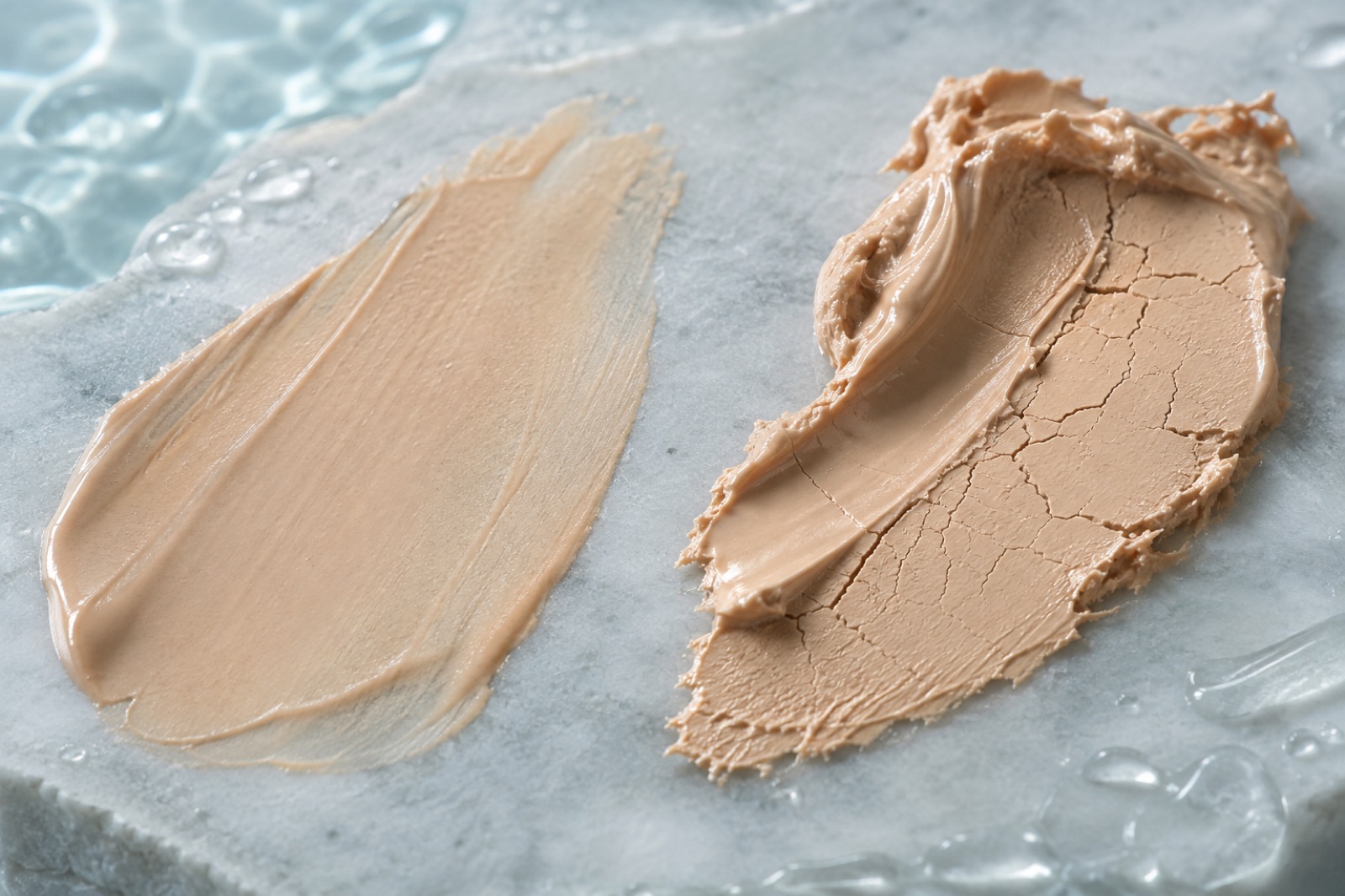
When makeup cakes or flakes, check your skin prep and the amount you applied before adding more product. Thick layers tend to move and crack as the day goes on, so the more you layer, the more bumps can stand out.
If the area is dry and flaky, let moisturizer absorb first and use even less base there. Scrubbing off flakes can be irritating, so skip it. Areas your mask or hands touch often tend to lose makeup from friction, so when you touch up, tap on a small amount.
Can you wear makeup over acne medication?
In small studies, foundation worked about the same when applied over a prescription topical. Foundation applied over a clindamycin/benzoyl peroxide gel showed no significant difference in coverage or skin tone after 6 hours, and there were no problems such as redness, swelling, dryness, or peeling (29 women). For a tretinoin 0.05% lotion, raters also saw no difference in coverage (30 people).
Both studies were small and limited to specific medicines. How long to wait after applying medicine before putting on makeup is best answered by whoever prescribed it.
Acne cover makeup checklist
| Step | What to do | What to avoid |
|---|---|---|
| Products | Check for an oil-free or non-comedogenic label | Oil-based products |
| Prep | A thin layer of moisturizer, let it absorb | Scrubbing before makeup |
| Base | One layer all over | Stacking layers on breakouts |
| Concealer | Dot it only on the spot | Rubbing it over a wide area |
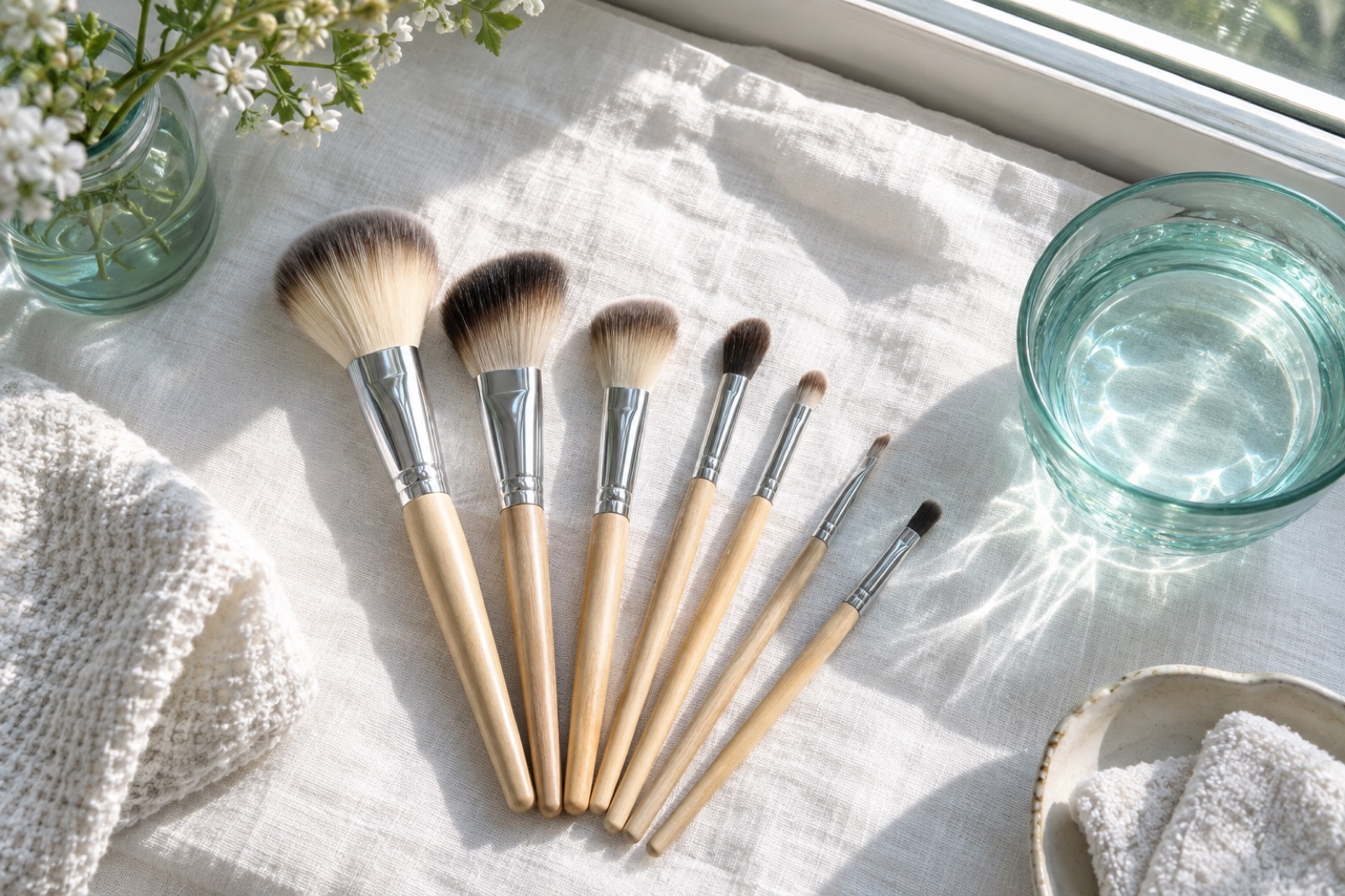
| Tools | Replace puffs, wash brushes weekly | Sharing puffs or brushes with friends |
| Finish | Remove everything before bed | Sleeping in makeup |
| Notes | Add new products one at a time and write down the start date | Changing several products at once |
When to see a dermatologist
- If large, painful pimples or pus-filled bumps keep coming back and are hard to cover, consider seeing a dermatologist.
- If bumps keep appearing in the same area even after you changed products and removal habits, get checked.
- If you are worried about acne marks or pitted scars, ask a dermatologist.
Frequently asked questions
Should concealer go before or after foundation on acne?
No study settles this. If you even out your overall tone with foundation or a cushion compact first, there is less left to hide, so it is easier to use only a little concealer on top of each pimple. This article follows that order.
Can dirty or shared makeup brushes cause acne?
The American Academy of Dermatology (AAD) says sharing makeup and tools can pass bacteria, oil, and dead skin cells from one person to another and lead to breakouts. The AAD advises keeping your tools to yourself and washing brushes every week.
Can you put makeup over acne medication?
In small studies, foundation applied over a prescription gel (clindamycin/benzoyl peroxide) or a tretinoin lotion showed no significant difference in coverage after 6 hours, and the gel study found no problems such as redness or dryness. Follow the timing and order given by whoever prescribed the medicine.
Can makeup cause acne?
It can. The AAD says some cosmetics can cause breakouts called acne cosmetica, even in people who do not usually get acne, and these breakouts can appear days to as long as 6 months after you start a product.
For acne-prone skin, is a cushion compact or liquid foundation better?
The sources behind this article include no study comparing the two for breakouts. What health organizations point to instead is an oil-free or non-comedogenic label, clean tools, and removing everything completely at night.
Sources
- Randomized, Observer-blind, Split-face Compatibility Study with Clindamycin Phosphate 1.2%/Benzoyl Peroxide 3.75% gel and Facial Foundation Makeup (2015, PMID 26430488)A
- A Split-face, Controlled Study to Assess the Compatibility of Tretinoin 0.05% Acne Lotion with Facial Foundation Makeup (2020, PMID 33584959)A
- Assessing the Adverse Effects and Safety Concerns Related to Cosmetic and Skincare Products: A Systematic Review (2025, PMID 40330400)A
- AAD — Is it okay to wear makeup?Institutional
- AAD — 10 skin care habits that can worsen acneInstitutional
- AAD — 6 skin care habits that can clear acneInstitutional
- NICE NG198 — Acne vulgaris: managementInstitutional
We never use YouTube videos or community posts as evidence for facts. Editorial policy
Product information related to this article
Product information from the site operator (KW Cosmetic, maker of the SKIN9HARI brand).
Revive Therapy N.F Ampoule
₩31,000 (KRW)
None of the studies cited here, from the review of reactions to cosmetics to the trials of foundation over prescription gels and lotions, tested this ampoule, and there is no data on it worn under makeup or on its comedogenic potential. Revive Therapy N.F Ampoule is a 30 ml ampoule with betaine and panthenol, with no added fragrance, ethanol or silicones per its ingredient list, and a low-irritation formula. Its product page places it after toner and before cream. For the first of the five steps, prepping your skin with one thin hydrating layer, the product we suggest is Revive Therapy N.F Ampoule.
- Ampoule with vegan rice PDRN (listed as Sodium DNA), betaine and panthenol, 30 ml
- No added fragrance, essential oils, ethanol, colorants or silicones (based on the full ingredient list)
- Low-irritation formula
Product details
- Type and size
- Clear, lightweight ampoule, 30 mL (1.01 fl oz)
- Step in routine
- Step 3 of 4 · Ampoule, after toner and before cream
- How to use
- After toner, use the dropper to dispense 2–3 drops into your palm or directly onto your face. Press gently into skin until absorbed. Follow with Revive Therapy N.F Cream to seal in moisture.
- Before you use
- Patch test on your inner arm before first use if you have very reactive skin. If redness, swelling or itching occurs, stop using and consult a dermatologist.
Based on the official product page, checked 2026-10-02
Cosmetics do not diagnose, treat, cure or prevent any disease. Test results apply only to the stated conditions.