Pimple on Nose That Won't Go Away for Weeks? What to Check
A bump on your nose that has looked the same for months may not be an active pimple but something left behind after acne, so it should be checked by a dermatologist.
In this article6 sections
- How long does a pimple on the nose last? What the research shows
- Nose pimple won’t go away: what does the common “4 to 6 weeks” refer to?
- Bump on nose for months: could it be something other than a pimple?
- What to do at home until you see a dermatologist
- Evidence table: what the data say about a nose bump that won’t go away
- When to see a dermatologist
| Topic | What we know | Source |
|---|---|---|
| Newly formed lesions | When lesions from 49 people with moderate to severe acne were biopsied at set times up to 72 hours after they appeared, 70% of lesions under 6 hours old already had immune cells gathered around the follicle, and this continued up to 72 hours | 1998 PMID 9758417 · B |
| Timelines from an expert group | When using an acne product or prescription, give it at least 4 weeks; if it works, improvement shows in 4 to 6 weeks, and it can take 2 to 3 months or longer for skin to clear | AAD, Why won’t my acne clear? · Institution |
| Bumps left on the nose and chin | Soft, papular scars on the nose and chin were found in 4 of 149 dermatology patients, and the researchers reported 18 people in total | 2016 PMID 28163455 · C |
| Bumps on teenagers’ noses | Researchers recorded 20 people who developed mostly skin-colored, dome-shaped bumps on the nose and chin along with acne; 5 of them had a biopsy | 2021 PMID 32767593 · C |
| Touching habits | Every time you touch, squeeze, or pick, acne can get worse | AAD, Why won’t my acne clear? · Institution |
How long does a pimple on the nose last? What the research shows
There is a study that looked at newly formed acne lesions over time, but its observations stop at 72 hours after a lesion appears, so it doesn’t tell you “it goes down in so many days.” The 1998 study took tissue samples from lesions of 49 people with moderate to severe acne, sorted into four groups: under 6 hours, 6 to 24 hours, 24 to 48 hours, and 48 to 72 hours old.
In 70% of lesions under 6 hours old, immune cells had already gathered around the follicle, and this grew over time and continued up to 72 hours. That means a reaction keeps going on inside during the first three days, but when it settles after that is outside the scope of this study. The abstract we checked also doesn’t say where on the face the lesions were, so it can’t be read as data on the nose specifically.
Nose pimple won’t go away: what does the common “4 to 6 weeks” refer to?
The 4 weeks, 4 to 6 weeks, and 2 to 3 months or longer that the American Academy of Dermatology (AAD) describes are periods for judging whether a method is right for you when you pick one acne product or prescription and use it consistently. The AAD explains that you need to use it for at least 4 weeks, that if it’s the right method you’ll see improvement within 4 to 6 weeks, and that it can take 2 to 3 months or longer for skin to clear.
So reading these numbers as “a single nose pimple goes away in 4 to 6 weeks” changes their original meaning. In the same guidance, the AAD adds that you shouldn’t switch products every few days, shouldn’t scrub your face, and should stop touching, squeezing, and picking. The expert-group sources this article reviewed give no number for how long one pimple takes to go down.
Bump on nose for months: could it be something other than a pimple?
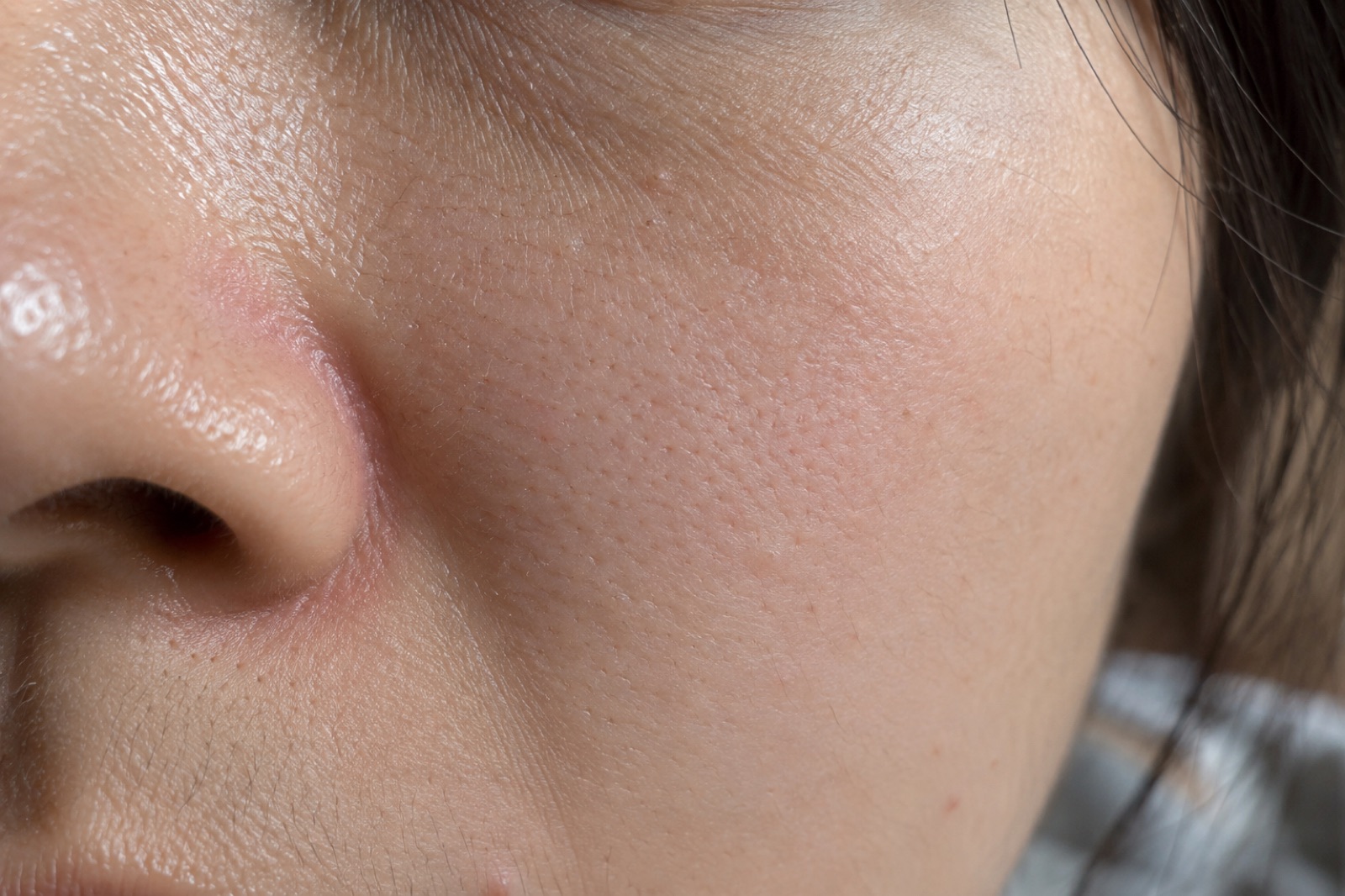
There are case reports suggesting that a bump on the nose whose shape hasn’t changed for months may not be a pimple that’s still active, but something left behind after acne has passed. One research team first found 14 patients with soft, papular scars on the nose and chin at a cosmetic dermatology clinic. They then examined 149 patients seen at a specialist acne clinic and a general dermatology clinic and found the same type of scar in 4 of them. Three of those 4 were men, and their median age was 23.5.
Another single-center study went through a year of medical records and gathered 20 people who developed mostly skin-colored, dome-shaped raised bumps on the nose and chin along with acne. Most were Hispanic adolescent boys, and in the 5 who had a biopsy, the tissue showed fibrosis (scar-like thickening) and widened blood vessels.
Both are grade C case data describing small numbers of patients. They don’t tell you how common this is, whether it looks similar in other groups such as Koreans, or whether it changes over time. Above all, these bumps were confirmed by dermatologists in person, including with biopsies, so an article can’t tell you whether the one on your nose is one of them. The criteria for telling flat colored marks apart from indented scars are covered separately in our acne marks vs scars article.
What to do at home until you see a dermatologist
Until you have an answer, the thing to do is leave the spot alone and keep a record of how it changes. The AAD says that every time you touch, squeeze, or pick, acne can get worse, and it also counts scrubbing your face as irritation. None of the sources this article reviewed suggest pressing a raised spot with your fingernails or poking it with a needle.
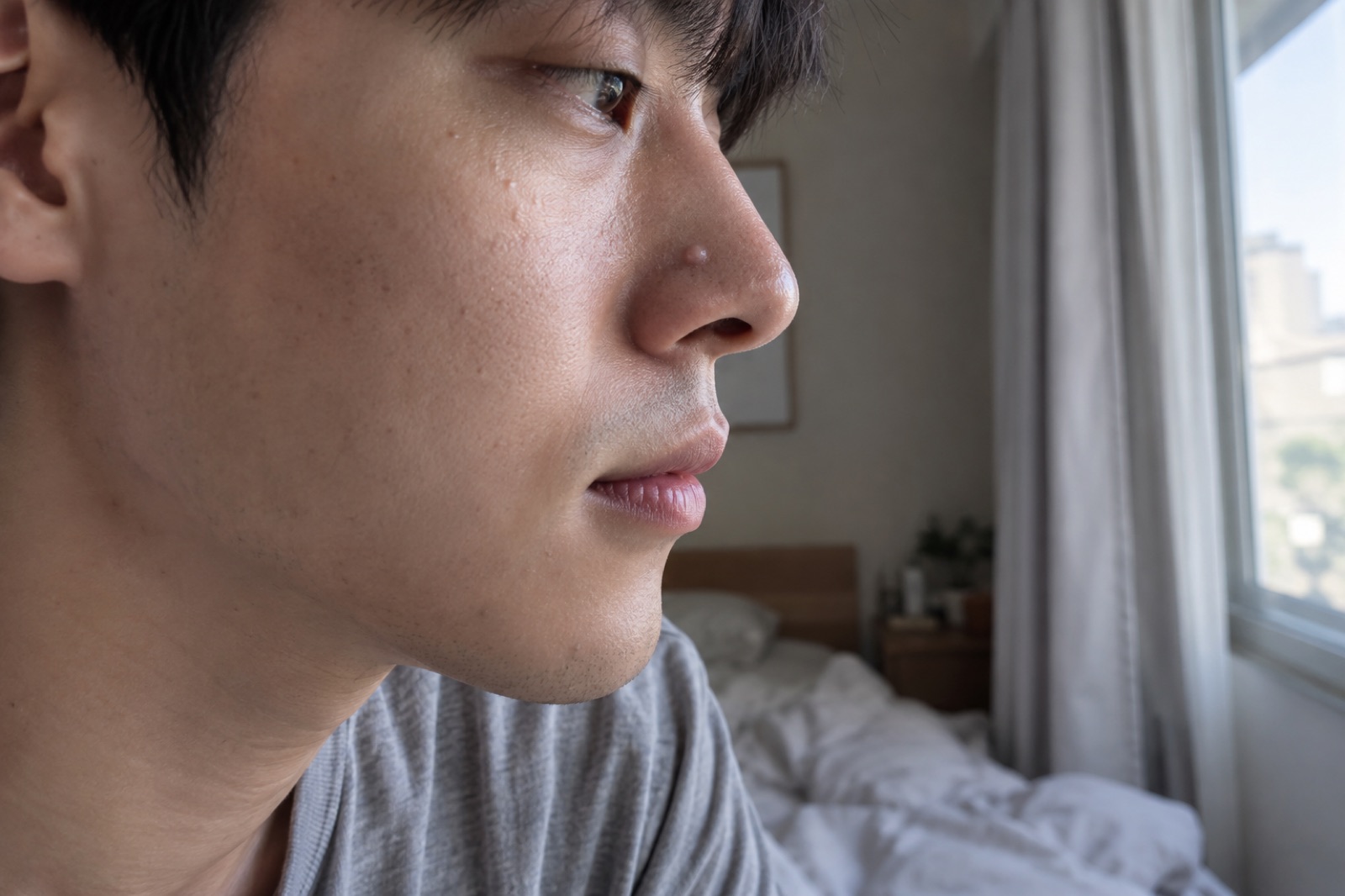
Three things are enough to record: the date you first noticed it, what it looked like at first (whether it was red, skin-colored, or burst and then sank), and side-view photos of your nose taken by the same window at the same time of day. This record is our editorial suggestion for explaining to a dermatologist when it started and what it looked like; it doesn’t mean you can tell what it is from photos. Squeezing and the reasons nose pimples keep coming back are covered in our nose acne: can you pop it? article.

Evidence table: what the data say about a nose bump that won’t go away
If you place the sources used for the worry “my nose acne won’t go away” into six columns, you can see how much they can actually say about the nose.
| Source | Who and design | Period covered | Looked at the nose separately? | What it can tell you | What it can’t tell you |
|---|---|---|---|---|---|
| 1998 acne lesion tissue study (PMID 9758417) | 49 people with moderate to severe acne · lesion biopsies | Up to 72 hours after a lesion appeared | Not confirmed — no location in the abstract | The reaction around the follicle grows and continues during the first three days | When it settles after days or weeks |
| AAD, Why won’t my acne clear? | Patient guidance for people with acne | 4 weeks · 4 to 6 weeks · 2 to 3 months or longer | No | How long it takes to judge whether one method is working | How long one pimple takes to go down |
| 2016 papular scars of the nose and chin (PMID 28163455) | 14 cosmetic dermatology patients + 4 of 149 dermatology patients · case observation | No follow-up period in the abstract | Yes — nose and chin | Soft, bump-like scars can remain on the nose and chin after acne | How common they are; whether they change on their own |
| 2021 adolescent nose bumps (PMID 32767593) | 20 people · single-center retrospective case review, 5 biopsied | Medical records from April 2018 to April 2019 | Yes — mainly the nose, plus the chin | Mostly skin-colored, dome-shaped bumps can form along with acne | Whether the same applies to Koreans or adults; how to tell them apart at home |
| AAD, Acne: Symptoms | Patient guidance | Some discolored spots last a year or longer | No | Permanent scars can remain where acne has gone down | What a raised spot left on your nose is |
Of the five rows, the two studies that looked at the nose separately are both small case reports, and the only source that followed changes in time order is the 72-hour study. So both “just wait a few weeks” and “it’s a scar, so it will stay” go beyond what this table can support.
When to see a dermatologist
- If a raised bump on your nose has stayed the same size and shape for months. The bumps in the case studies were seen and confirmed in person at dermatology clinics, so have a dermatologist check what it is.
- If a white mark or a dent is left where a pimple was squeezed or burst, and it still looks the same months later. The AAD notes that scars after acne can be permanent, so talk with a dermatologist.
- If a lump forms deep in the skin of your nose and hurts when you touch it. The AAD says seeing a dermatologist can help when acne causes cysts and nodules, which are deep blemishes that can leave scars when they clear.
- If your skin doesn’t clear even after sticking with one method, or the spot on your nose keeps bothering you, see a dermatologist.
Frequently asked questions
Why won't the pimple on my nose go away?
Within the research this article reviewed, there's no data that explains it with a single reason. But two case studies from dermatology clinics abroad reported people who were left with soft or dome-shaped raised bumps on the nose and chin after their acne had passed. If the spot has looked the same for months, it may not be a pimple that's still active but something left behind, so have a dermatologist check what it is.
How long does a pimple on the nose last?
This article found no data that sets a time limit for a single pimple to go down. The 4 weeks, 4 to 6 weeks, and 2 to 3 months or longer that the American Academy of Dermatology (AAD) mentions are periods for judging whether an acne product or prescription you use consistently is working, so they can't be applied to one pimple as is. In the meantime, leave it alone and write down the date you first noticed it. If it still looks the same after a few months, see a dermatologist.
What is the white spot on my nose where I popped a pimple years ago?
There's no way to tell what it is from a description or a photo. The AAD explains that acne can leave permanent scars, and there are case studies reporting scars that stay behind as bumps on the nose and chin. If it has looked the same for years, don't squeeze or press it again at home. It's more reliable to ask a dermatologist to look at it.
Do acne scars on the nose go away?
The evidence this article reviewed includes no data that followed whether indented marks fill in on their own. The AAD explains that scars after acne can be permanent, and the risk goes up the longer acne lasts. If a dent that's already there bothers you, talk with a dermatologist about what can be done.
How do I know if a pimple on my nose left a scar?
The data in this article offer no way to confirm a scar at home. Write down the day you first noticed it, and take side-view photos of your nose by the same window at the same time of day, so you can compare whether it got more raised, more indented, or changed color months later. If it still looks the same after a few months, bring those records to a dermatologist.
Sources
- Papular Acne Scars of the Nose and Chin: An Under-recognised Variant of Acne Scarring (2016, PMID 28163455)C
- The "bumpy" adolescent nose: Acne associated angiofibroma-like nasal papules (2021, PMID 32767593)C
- Immunohistochemical investigation of evolving inflammation in lesions of acne vulgaris (1998, PMID 9758417)B
- AAD — Why won't my acne clear? (updated 2023-09-12)Institutional
- AAD — Acne: SymptomsInstitutional
We never use YouTube videos or community posts as evidence for facts. Editorial policy
Product information related to this article
Product information from the site operator (KW Cosmetic, maker of the SKIN9HARI brand).
Revive Therapy N.F Toner
₩29,000 (KRW)
Checked against the evidence table in this article, this product has no test data on the nose, and no data on bumps or marks that stay for a long time. What has been published is its mildly acidic pH of 5.5–6.5, its 150 ml size, and the conditions of a finished-product comedogenicity test: 12 closed patch applications over 4 weeks on the upper back. As a toner used after cleansing and before moisturizer, it touches your nose every day. The case studies covered here did not test this product, so they are not evidence for it.
- Mildly acidic toner (pH 5.5–6.5), 150 ml
- Contains niacinamide 2.0% and beta-glucan 1.0%
- Low-irritation formula
- Contains ethanol and fragrance ingredients (orange peel oil, lavender oil); check the full ingredient list
Product details
- Type and size
- Clear, water-light toner, pH 5.5–6.5, 150 mL (5.07 fl oz)
- Step in routine
- Step 2 of 4 · Tone, right after cleansing
- How to use
- After cleansing, pour a small amount onto a cotton pad or your palms. Sweep or press gently over your face and neck. Pat lightly until fully absorbed. Follow with Revive Therapy N.F Ampoule, then N.F Cream.
- Before you use
- Contains ethanol (3.0%) and fragrance, including the allergens linalool and limonene — this is not an alcohol-free formula. If redness, swelling or itching occurs, stop using and consult a dermatologist.
Based on the official product page, checked 2026-10-02
Cosmetics do not diagnose, treat, cure or prevent any disease. Test results apply only to the stated conditions.