Pimple on Lip: Acne or a Blister? Clues and When to See a Doctor
A bump along the lip line may be acne, but it can also be a blister or a rash around the mouth, so start by looking closely at its shape.
In this article5 sections
| Topic | What we know | Source |
|---|---|---|
| Lip products | Breakouts around the lips can come from lipstick or lip balm, and product-related breakouts can show up as much as 6 months later | AAD, makeup · Institution |
| A rash that looks like acne | Perioral dermatitis causes a rash of small pimple-like bumps around the mouth that may burn or itch | AAD, conditions that look like acne · Institution |
| Main cause of that rash | A systematic review named misuse of topical steroids as the most likely cause | Perioral dermatitis research summary · A |
| Hair removal areas | Bumps with a red ring after shaving, plucking, or waxing may be folliculitis; if that is the cause, take a 30-day break | AAD, folliculitis · Institution |
| Squeezing | Squeezing it yourself drives inflammation deeper and raises the risk of infection and scars | AAD, pimple popping · Institution |
Is a pimple on your lip acne?
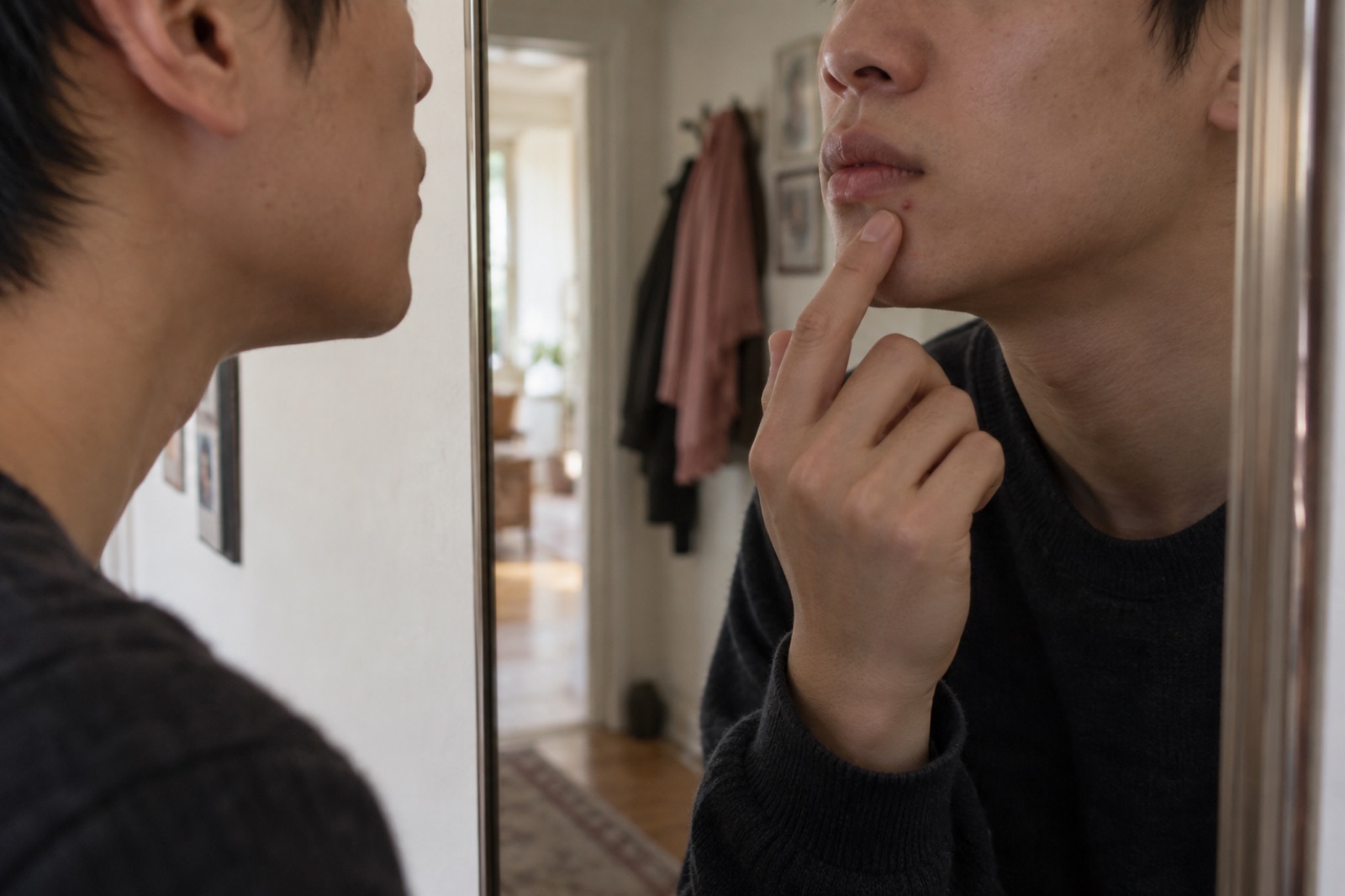
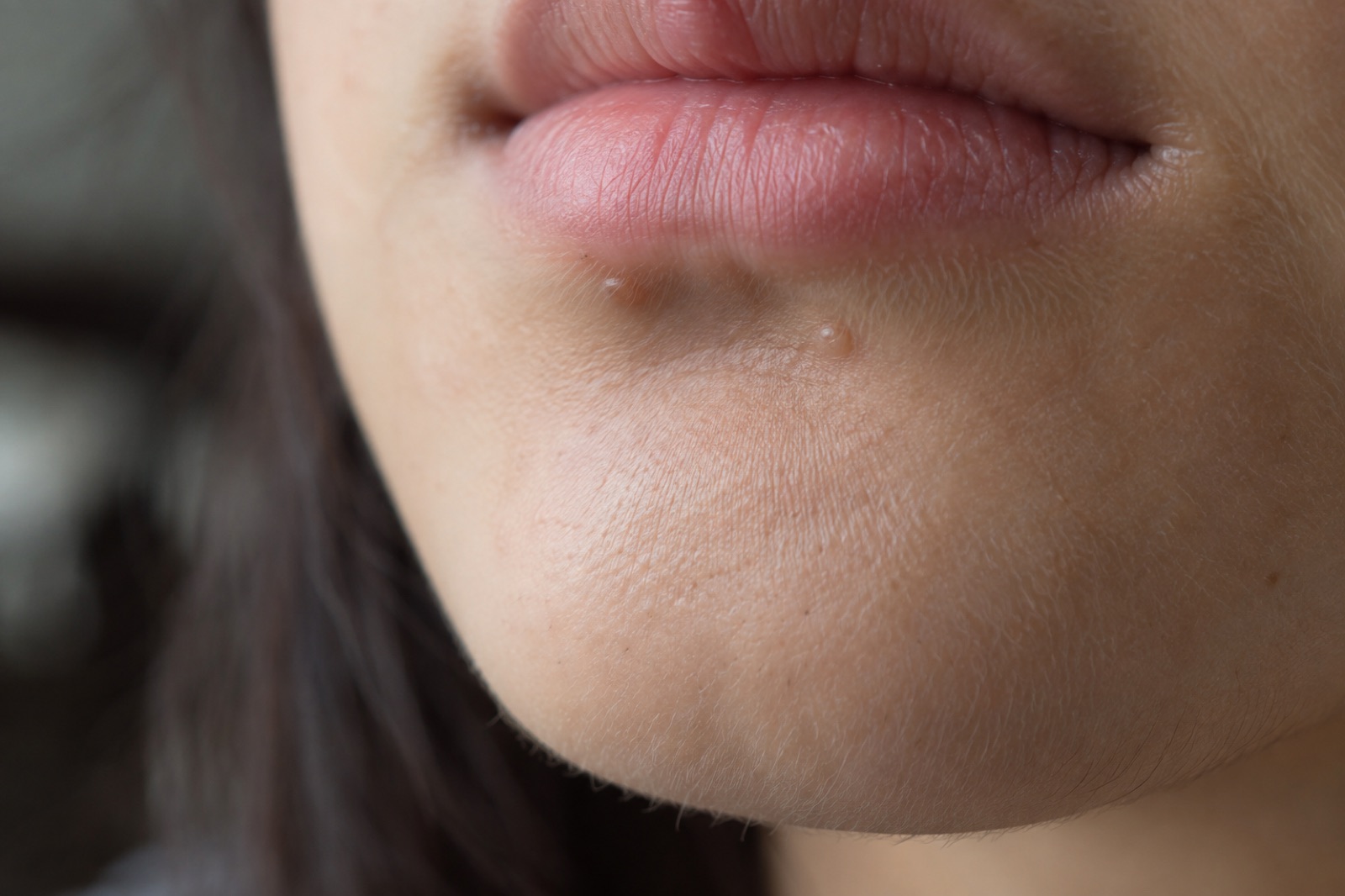
A red bump right next to the lip line may be acne, but the area around the lips is also a common spot for other conditions that look like acne, so look at its shape first (shape gives clues but can’t confirm the cause). The American Academy of Dermatology (AAD) describes acne as whiteheads, blackheads, and red papules and pustules that form when pores clog. If you see these comedones nearby, that points toward acne.
On the other hand, if many small bumps spread out and burn or itch, think of perioral dermatitis, which the AAD lists as a condition that looks like acne. If clear, blister-like bumps are clustered on the red part of the lip, or tingling came first, it is safer not to handle it as acne and to see a doctor to find the cause.
Why do pimples keep coming back under or around your lip?
If they keep coming back in the same spot, start by checking what touches that spot every day. The AAD says breakouts around the lips can come from lipstick or lip balm and recommends choosing products labeled “oil-free” or “non-comedogenic.” Product-related breakouts can show up anywhere from a few days to 6 months later, so don’t rule out a lip balm you have used for a long time.
If you shave or remove hair above the lip or on the chin, folliculitis is also a possibility. The AAD says shaving, plucking, and waxing are common ways hair follicles get damaged, and recommends a 30-day break if that is the cause. If the bumps spread or you develop a fever during that break, don’t wait; see a doctor right away. Factors that affect the whole mouth area, such as hormone changes, are covered in acne around the mouth: causes and what to check.

What to avoid when the skin around your mouth turns red and bumpy
First, don’t put steroid creams around your mouth based on your own judgment. A systematic review of the perioral dermatitis literature named misuse of topical steroids as the most likely cause. The AAD says that without medical care, this rash can last months to years.
The evidence that cosmetics cause it is fairly weak. In a survey study comparing 75 patients with 125 controls, spending on cosmetics did not differ and cleansing habits showed no significant differences other than patients washing their face at night more often, while a history of atopic conditions was clearly more common among patients (49.3% vs 15.2%) (grade B). Avoid squeezing or picking too. The AAD explains that squeezing a pimple yourself pushes the contents deeper, making inflammation worse and raising the risk of scars. For more on whether you can squeeze, see can I pop my pimples?.
Lip bump notes: telling them apart
The table below collects clues to watch for and is not a diagnostic tool. There is no validated way to tell bumps around the lips apart accurately at home.
| What it looks like | What to consider first | What to do |
|---|---|---|
| Red bumps mixed with whiteheads or blackheads nearby | Acne | Don’t squeeze; check lip products one at a time |
| Small bumps spreading around the mouth or beside the nose, with burning or itching | Perioral dermatitis | See a doctor; if you use a steroid cream, ask the doctor before stopping it |
| Bumps with a red ring where you shaved or removed hair | Folliculitis | Take a 30-day break from hair removal; see a doctor if it doesn’t clear |
| Clear blisters clustered on the red part of the lip | Possibly not acne | Don’t touch it; see a doctor |
| Only a flat red or brown mark left | Post-inflammatory hyperpigmentation | Give it time and watch |
When to see a dermatologist
- If clear, blister-like bumps cluster on your lip, or tingling came first.
- If a rash of small bumps spreads around your mouth and burns or itches, or it spread further after you used a steroid cream.
- If bumps with a red ring continue even after a 30-day break from hair removal. The AAD recommends seeing a dermatologist if a rash doesn’t clear up or you are not sure what it is.
- If it hasn’t changed after 4 to 6 weeks of care without squeezing, or deep, painful bumps keep coming back.
Frequently asked questions
Why do I get acne around my lips?
The American Academy of Dermatology (AAD) explains that breakouts around the lips can come from lipstick or lip balm. Breakouts caused by products can show up anywhere from a few days to 6 months later, so lip products you have used for a long time are worth checking too. Also look at other factors that affect the whole mouth area, such as hair removal and hormone changes.
Is it a pimple on my lip or a cold sore?
The sources we reviewed did not cover what causes bumps on the red part of the lip itself. If clear, blister-like bumps are clustered on the lip, or you felt tingling before they appeared, don't assume it is acne; see a doctor to find the cause.
Can you pop a pimple under your lip?
It is safer not to. The AAD explains that squeezing a pimple yourself pushes its contents deeper into the skin, making inflammation worse, and germs from your hands raise the risk of infection and scarring. If it is painful and swollen, try cooling it with ice wrapped in a clean cloth, and if it hasn't changed after 4 to 6 weeks of care, the AAD suggests seeing a dermatologist.
What are small red bumps around the mouth?
They may be acne, but they may also be another condition that looks like acne, such as perioral dermatitis. The AAD explains that perioral dermatitis causes a rash of small pimple-like bumps around the mouth that may burn or itch, and that without medical care it can last months to years.
I picked a pimple on my lip and it left a mark. What should I do?
If it is a flat red or brown mark, it is most likely post-inflammatory hyperpigmentation rather than a scar, and the AAD says it fades on its own over time, though darker marks take longer. If the surface has sunk in, a dermatologist can give you a more accurate answer.
Sources
- AAD, Is it okay to wear makeup if I have acne?Institutional
- AAD, Is that stubborn acne really acne?Institutional
- AAD, Pimple popping: Why only a dermatologist should do itInstitutional
- AAD, Acne: Signs and symptomsInstitutional
- AAD, Folliculitis: Overview and self-careInstitutional
- Searle T, et al. Perioral dermatitis: Diagnosis, proposed etiologies, and management (J Cosmet Dermatol, 2021, PMID 33751778)A
- Topical cosmetics and perioral dermatitis (2004, PMID 16281636)B
We never use YouTube videos or community posts as evidence for facts. Editorial policy
Product information related to this article
Product information from the site operator (KW Cosmetic, maker of the SKIN9HARI brand).
Revive Therapy N.F Cream
₩28,000 (KRW)
Separate from the lip-line bumps this article helps sort out, this lists one cosmetic for the last moisturizing step of an everyday facial routine, as facts only. Revive Therapy N.F Cream is a 50 ml cream with four ceramides and five types of hyaluronic acid, with no added fragrance, and it has been patch-tested as low-irritation (results vary). It has no test on the condition covered here and no data on use on the lips, so keep it off the lips and any broken skin. Its product page places it after the ampoule, as the last step. It is a cosmetic, not a medicine; if changes on the lip continue or hurt, see a doctor first.
- Cream with 4 ceramides (NP, NS, EOP, AP), 5 types of hyaluronic acid and D-panthenol, 50 ml
- No added fragrance
- Low-irritation formula
Product details
- Type and size
- Soft, cushiony cream, 50 mL (1.69 fl oz)
- Step in routine
- Step 4 of 4 · Moisturize, the last step
- How to use
- As the last step of your routine, squeeze out a small amount. Warm it slightly between your palms. Press gently over your face, working outward from the center. Use morning and night after your ampoule or serum step.
- Before you use
- Contains dimethicone (silicone) — this is not a silicone-free formula. If redness, swelling or itching occurs, stop using and consult a dermatologist.
Based on the official product page, checked 2026-10-02
Cosmetics do not diagnose, treat, cure or prevent any disease. Test results apply only to the stated conditions.