Aloe Vera Gel for Face: What Research Shows and Where It Fits
Most aloe research was done in patients with skin conditions, not on everyday skin. Using aloe soothing gel as a light hydrating step after toner is a reasonable way to fit it into a routine.
In this article8 sections
- Aloe vera gel for face: what has research actually shown?
- When to apply aloe vera gel in your skincare routine
- Do you still need moisturizer after an aloe mask?
- Is aloe vera good for acne and closed comedones?
- Why does aloe vera sting my face?
- Is aloe vera good for sunburn?
- Checklist: adding aloe soothing gel to your routine
- When to see a dermatologist
| Topic | What the evidence says | Source |
|---|---|---|
| Situations studied | Most aloe papers study patients, such as skin reactions during radiation therapy, burns and surgical wounds, or psoriasis | Aloe research summary · A |
| Acne studies | Only results with prescription medicine (tretinoin + aloe gel, 60 people) or multi-ingredient products, so the effect of aloe alone can’t be separated | Aloe · A |
| Soothing and moisturizing healthy skin | No grade A evidence on whether aloe alone at cosmetic levels does better than a base product | Aloe · Gap |
| Sun | In a review of 40 papers, topical aloe showed no UV protection or tan-blocking effect | 2009 review · A |
| Dryness | In a trial where 40 people used aloe gel, 55% reported local side effects, mostly dry skin | 2005 RCT · A |
Aloe vera gel for face: what has research actually shown?
There is a lot of aloe research, but most of it studies patients with skin reactions during radiation therapy, burns and surgical wounds, or psoriasis, so it’s hard to carry over to everyday cosmetics. Of the 73 aloe papers we reviewed, only about two trials compared a topical aloe product with a base product in healthy people: a 97.5% gel UV-redness test (40 people) and an aloe and sweet almond oil stretch mark cream trial (160 people). That stretch mark trial compared an aloe cream group and a sweet almond oil cream group separately against a base cream group and a no-treatment group.
The idea that “aloe = burns” also needs a closer look. A meta-analysis of 4 studies on second-degree burns found wounds closed 4.44 days sooner on average with aloe, but a Cochrane review of wound studies found no high-quality evidence. Aloe gel used to head off radiation skin reactions also showed no benefit in early large trials and in systematic reviews. Burns and wounds are for a medical professional to assess.
When to apply aloe vera gel in your skincare routine
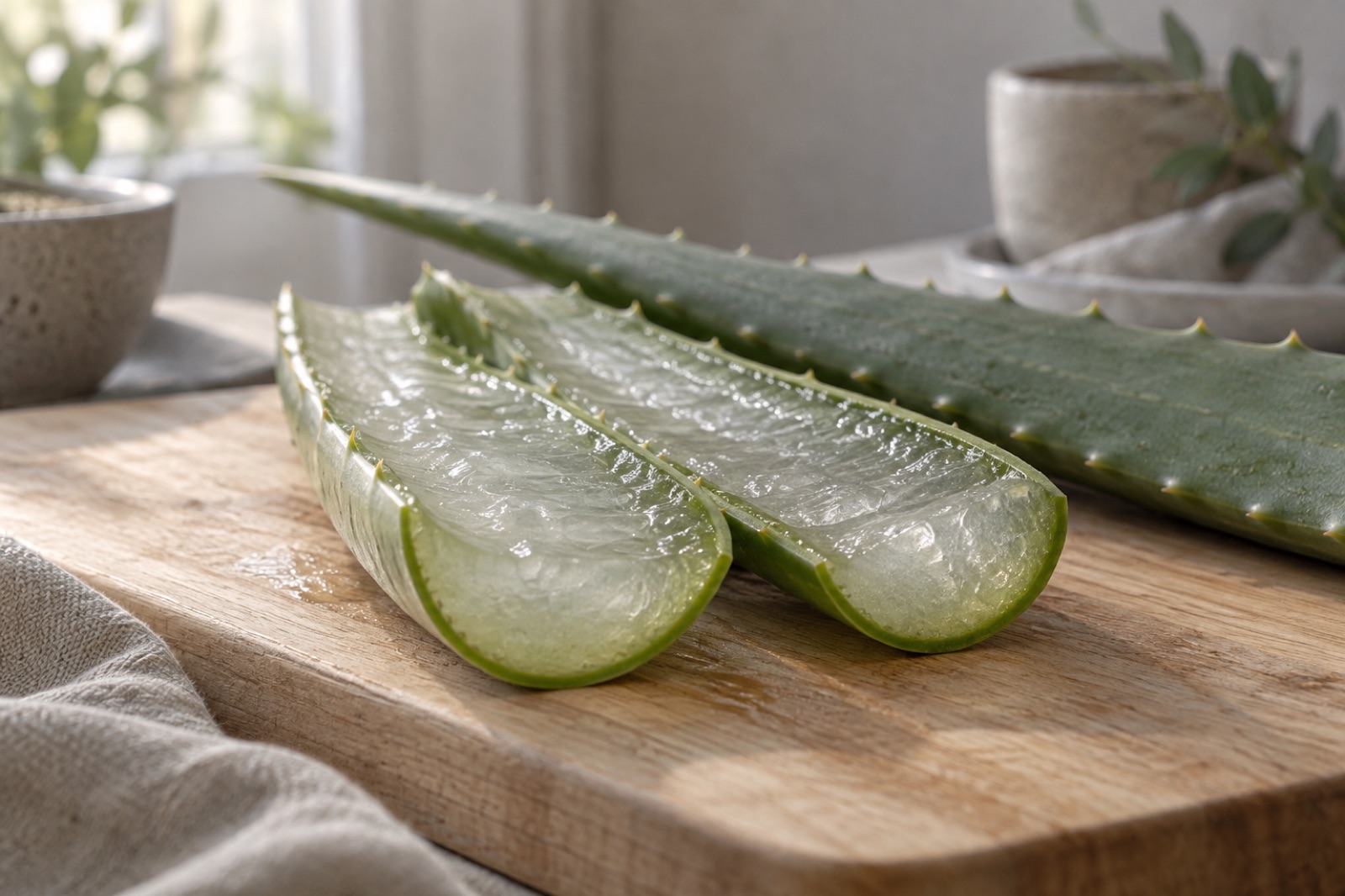
The easiest place for aloe soothing gel is the light hydrating step after cleansing and toner, and before cream. This follows the usual thin-to-thick order, not a study that compared where to put aloe. If you use a prescribed topical medicine, follow the order and timing you were given for it first.
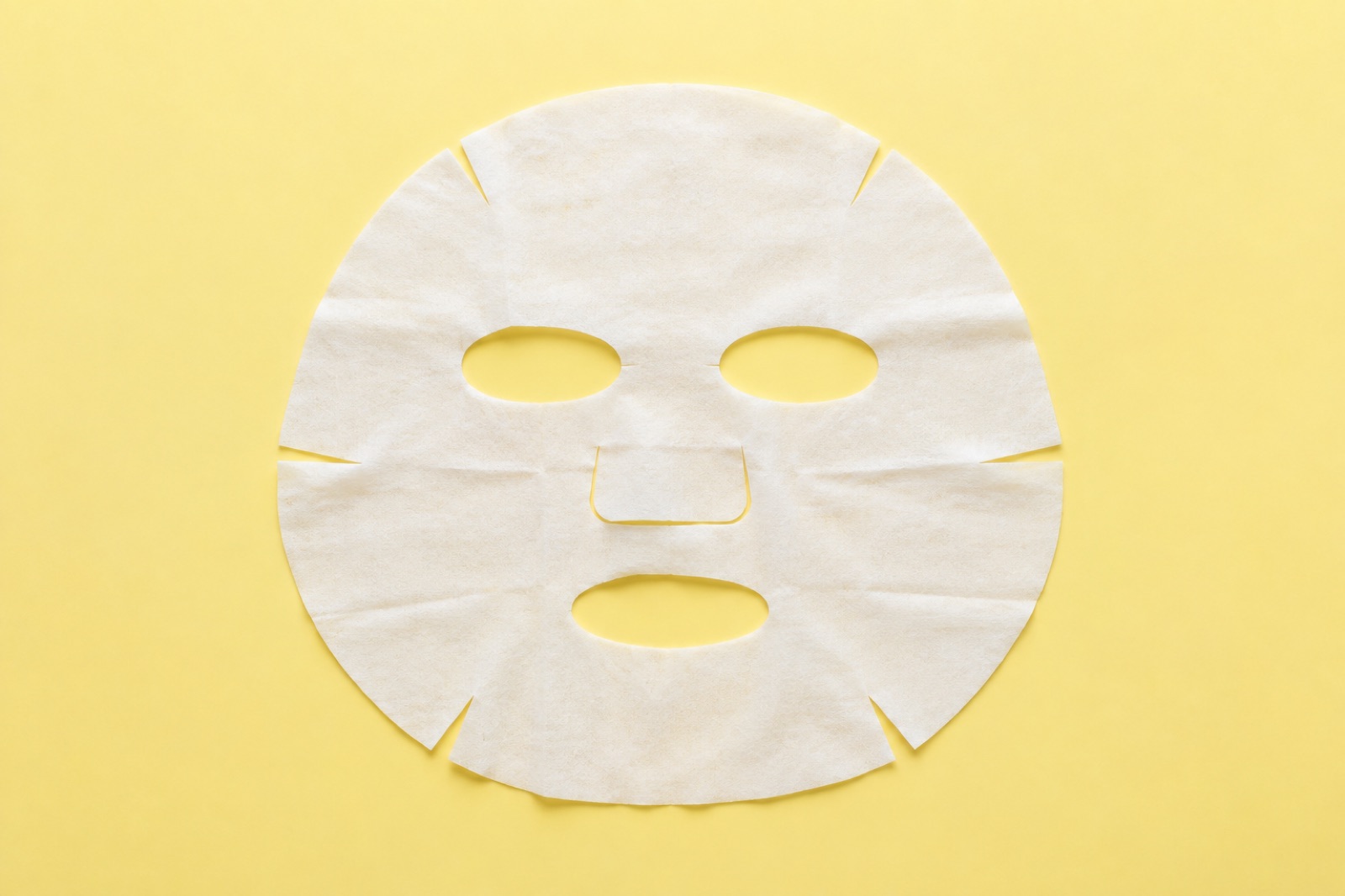
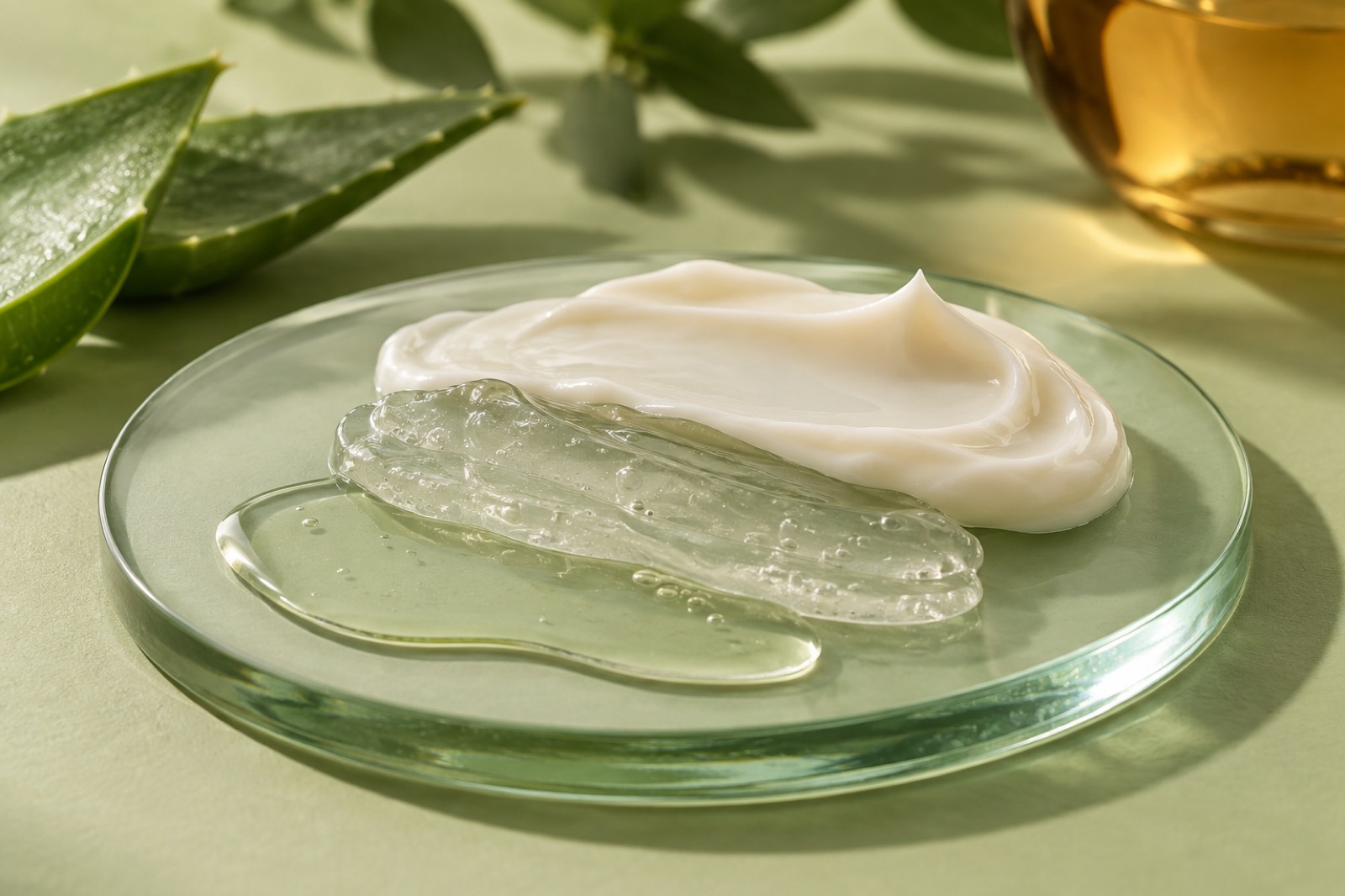
Thicker, mask-style use goes in the same place. But whether it’s a rinse-off mask or a leave-on gel differs by product, so follow the directions on the package. That’s also why you hear mixed advice, with some saying to rinse and others saying to leave it on: the products are designed differently.
Do you still need moisturizer after an aloe mask?
If your skin still feels tight when you finish with aloe gel alone, it’s better to add a moisturizer. In a trial where 40 people used aloe gel, 55% reported local side effects including dry skin, so it’s hard to see the gel as a finishing moisturizer. That trial was in people with psoriasis, so it doesn’t carry straight over to other skin, but it is a reason not to brush off signs of dryness.
If you have oily or dehydrated oily skin, you can choose a moisturizer labeled oil-free and non-comedogenic instead of a heavy cream. The American Academy of Dermatology (AAD) recommends moisturizers with these labels for acne-prone skin and suggests applying them while skin is still slightly damp after washing. Put a thin layer of aloe gel in the step before that.
Is aloe vera good for acne and closed comedones?
The literature we reviewed does not show that aloe alone reduces closed comedones or acne lesions. The acne studies are results with other ingredients mixed in, such as aloe gel used with tretinoin (60 people) or a cream combining propolis, tea tree oil, and aloe (20 people per group). In a meta-analysis of natural ingredients covering 840 patients with skin conditions including acne, most ingredients showed no statistically significant effect.
No study has compared daily use of a mask either. If there’s no stinging or redness, keep it as one step in your routine, but gentle washing and non-comedogenic products are closer to what the evidence supports for closed comedones. Even if oil looks more visible after you take off a mask, don’t squeeze your skin with your fingers.
Why does aloe vera sting my face?
Soothing gels are finished products that mix aloe with other ingredients such as ethanol, fragrance, and preservatives, so it’s hard to pin stinging on aloe alone. How often aloe in cosmetics causes allergy or irritation is still a gap in the grade A evidence we reviewed. So if it stings, stop, and check whether ethanol or fragrance is near the top of the ingredient list.
Before putting a new gel on your whole face, you can try it on a small area first. The AAD advises testing new products before using them on the whole face if you have sensitive skin. However, research hasn’t confirmed how well an at-home test predicts a real reaction.
Is aloe vera good for sunburn?
Topical aloe does not block UV, and there’s almost no evidence that everyday sunburned skin calms down faster with aloe. In a review of 40 papers, topical aloe showed no UV protection or tan-blocking effect. In an experiment where UV was used to create redness on purpose in 40 healthy adults, a 97.5% aloe gel reduced redness more than a placebo, but that study did not look at use after a real sunburn.
So aloe gel does not replace sunscreen, and if you use it after sun, check first that it doesn’t sting, and stop if it does. If a sunburn has blisters or a lot of heat and pain, it’s safer to see a doctor first than to keep adding gel.
Checklist: adding aloe soothing gel to your routine
| What to check | How | If this happens |
|---|---|---|
| Where it goes | Thin layer after toner, before moisturizer | If you have a prescribed topical, follow your prescriber’s instructions on order |
| Ingredient list | Check whether ethanol or fragrance is near the top | During sensitive periods, hold off or use another product |
| First use | Try on a small area for a few days first | If it stings or turns red, stop and write it down |
| Finish | Check whether skin still feels tight afterward | If tight, add an oil-free, non-comedogenic moisturizer |
| Mask use | Check the directions to see if it’s rinse-off | If it burns after a thick layer, wash it off right away |
| Closed comedones | Take photos every 2–3 weeks | If they increase, look back at products you changed recently |
When to see a dermatologist
- If the area where you applied aloe swells, itches, oozes, or blisters, stop using it and see a dermatologist.
- If stinging and redness continue after you stop the product, it’s a good idea to have a dermatologist look for the cause.
- If closed comedones keep spreading for weeks or turn into red, painful breakouts, consider seeing a doctor.
- If you use a prescription medicine, decide how much to use and in what order with the doctor who prescribed it.
Frequently asked questions
Does aloe soothing gel actually do anything?
Most aloe research is in patients with radiation skin reactions, burns, wounds, or psoriasis. The grade A evidence we reviewed does not show whether aloe alone at cosmetic levels soothes or moisturizes better than a base product. It fits the evidence best to think of soothing gel as a light hydrating step.
When should I apply aloe vera gel in my skincare routine?
After cleansing and toner, and before cream, in a thin layer. This follows the usual thin-to-thick order; no study has compared where to put aloe. If your skin still feels tight afterward, add a moisturizer, and if you use a prescribed topical, follow your prescriber's instructions on order and timing.
Can I put aloe vera on my face overnight?
No study has compared how long to leave aloe on. Whether it's a rinse-off mask or a leave-on gel differs by product, so follow the directions on the package. If your skin burns after applying a thick layer, wash it off right away, no matter how long it has been.
Is aloe vera good for acne?
The literature we reviewed does not show that aloe alone reduces closed comedones or acne. The related studies used aloe with prescription medicine or in multi-ingredient products, so the part aloe played can't be separated. Gentle washing and non-comedogenic products are closer to what the evidence supports for closed comedones.
Is aloe vera good for sunburn?
If you use it, just check first that it doesn't sting. Topical aloe does not protect against UV, and there are almost no studies on using it after a real sunburn. If you have blisters, a lot of heat, or strong pain, it is safer to see a doctor first than to keep adding gel.
Can I use aloe vera gel every day?
No study has compared daily use with occasional use. Keep going only if there is no stinging or redness, and take a break as soon as your skin reacts. That's the safe approach.
Sources
- Aloe vera in dermatology: a brief review (2009, PMID 19218914)A
- Effect of Aloe vera topical gel combined with tretinoin in treatment of mild and moderate acne vulgaris: a randomized, double-blind, prospective trial (2014, PMID 23336746)A
- Complementary and alternative medicine treatments for common skin diseases: A systematic review and meta-analysis (2021, PMID 34409356)A
- A double-blind, placebo-controlled study of a commercial Aloe vera gel in the treatment of slight to moderate psoriasis vulgaris (2005, PMID 15857459)A
- AAD — Moisturizer: Why you may need itInstitutional
- AAD — How to care for your rosaceaInstitutional
- Investigation of the anti-inflammatory potential of Aloe vera gel (97.5%) in the ultraviolet erythema test (2008, PMID 18253066)A
- Aloe vera for treating acute and chronic wounds (2012, PMID 22336851)A
- Second-Degree Burns and Aloe Vera: A Meta-analysis and Systematic Review (2022, PMID 36264753)A
- The effect of Aloe vera gel and sweet almond oil on striae gravidarum in nulliparous women (2018, PMID 28521546)A
- Treatment of acne with a combination of propolis, tea tree oil, and Aloe vera compared to erythromycin cream: two double-blind investigations (2018, PMID 30588129)A
We never use YouTube videos or community posts as evidence for facts. Editorial policy
Product information related to this article
Product information from the site operator (KW Cosmetic, maker of the SKIN9HARI brand).
Centella Rescue Spot Ampoule
₩22,000 (KRW)
- Ampoule with alcohol-extracted Centella asiatica extract as the main ingredient, 15 ml
- Also contains Aloe Phytoplacenta, Greenol and Campanula callus extract
- Contains alcohol, so it may sting; try it on a small area first
- Low-irritation formula
Product details
- Type and size
- Fast-absorbing gel ampoule, 15 mL (0.5 fl oz)
- Step in routine
- Spot care, layered any time
- How to use
- Use the dropper to apply a small amount directly to the area of concern. Pat gently until absorbed. Layer it at any step of your routine — before or after your regular toner, ampoule, or cream.
- Before you use
- Contains ethanol and natural bergamot oil, which may cause a slight tingling sensation on very sensitive or freshly irritated skin — patch test first if unsure. If redness, swelling or itching occurs, stop using and consult a dermatologist.
Based on the official product page, checked 2026-10-02
Cosmetics do not diagnose, treat, cure or prevent any disease. Test results apply only to the stated conditions.