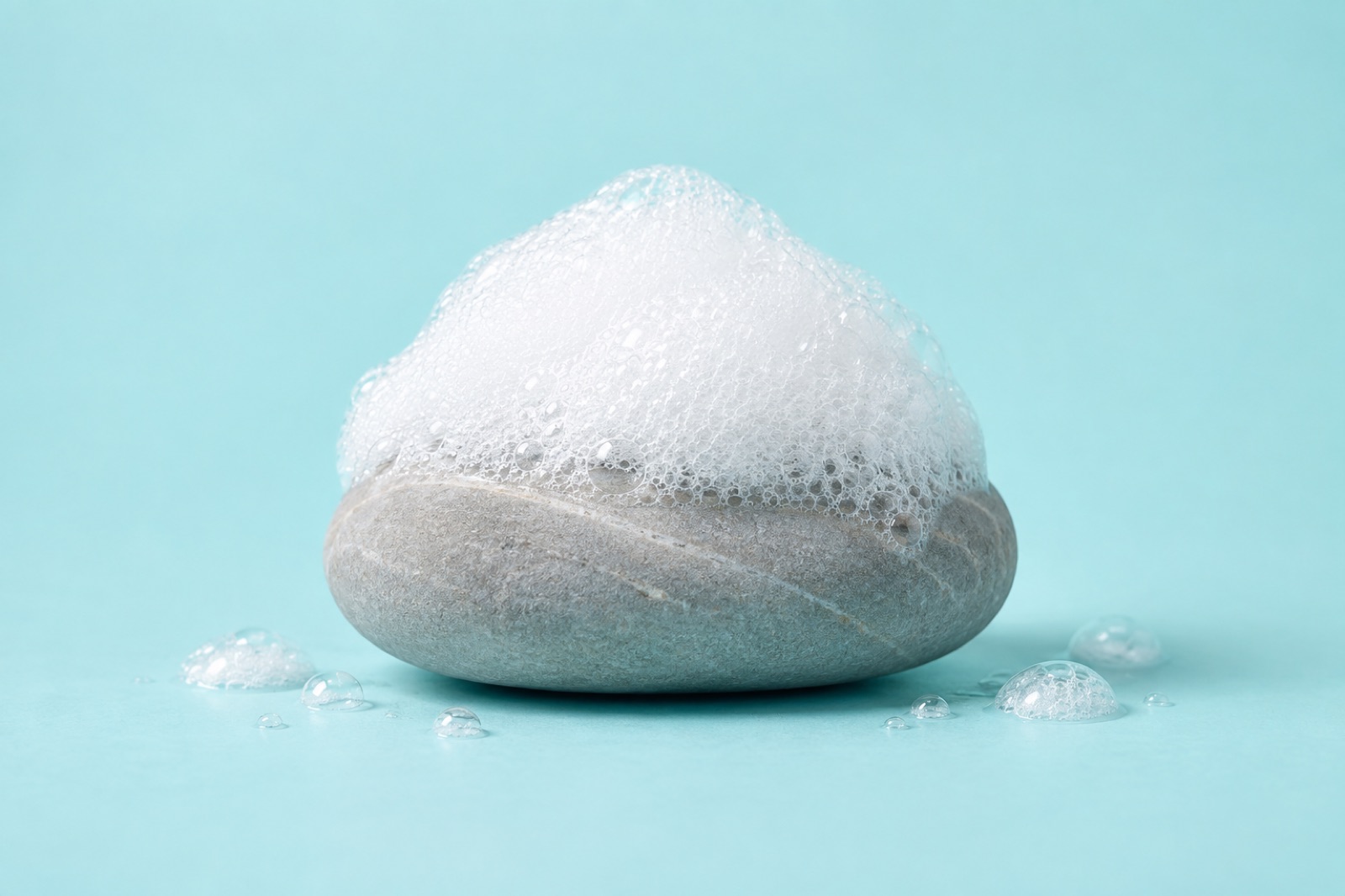
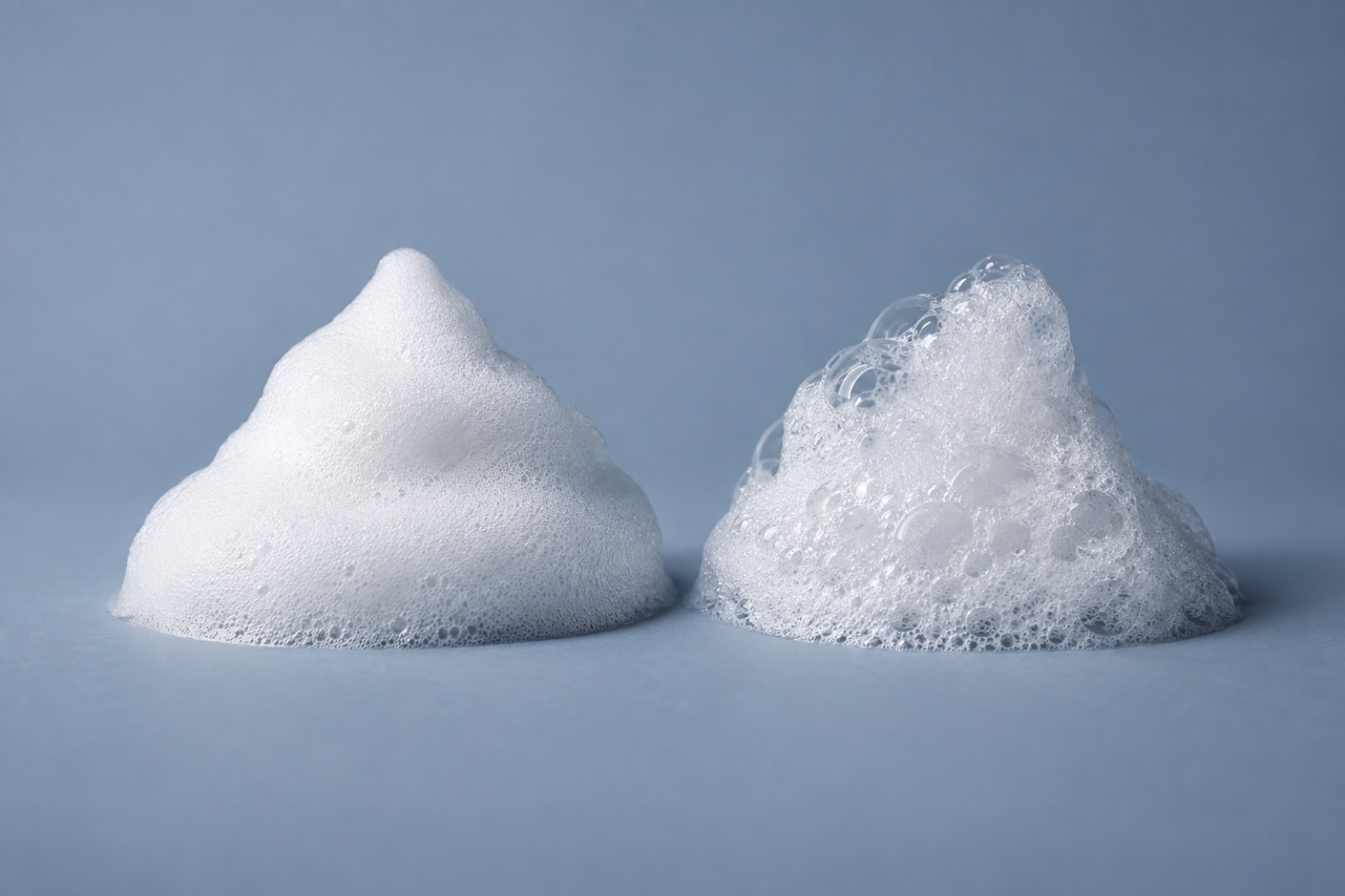
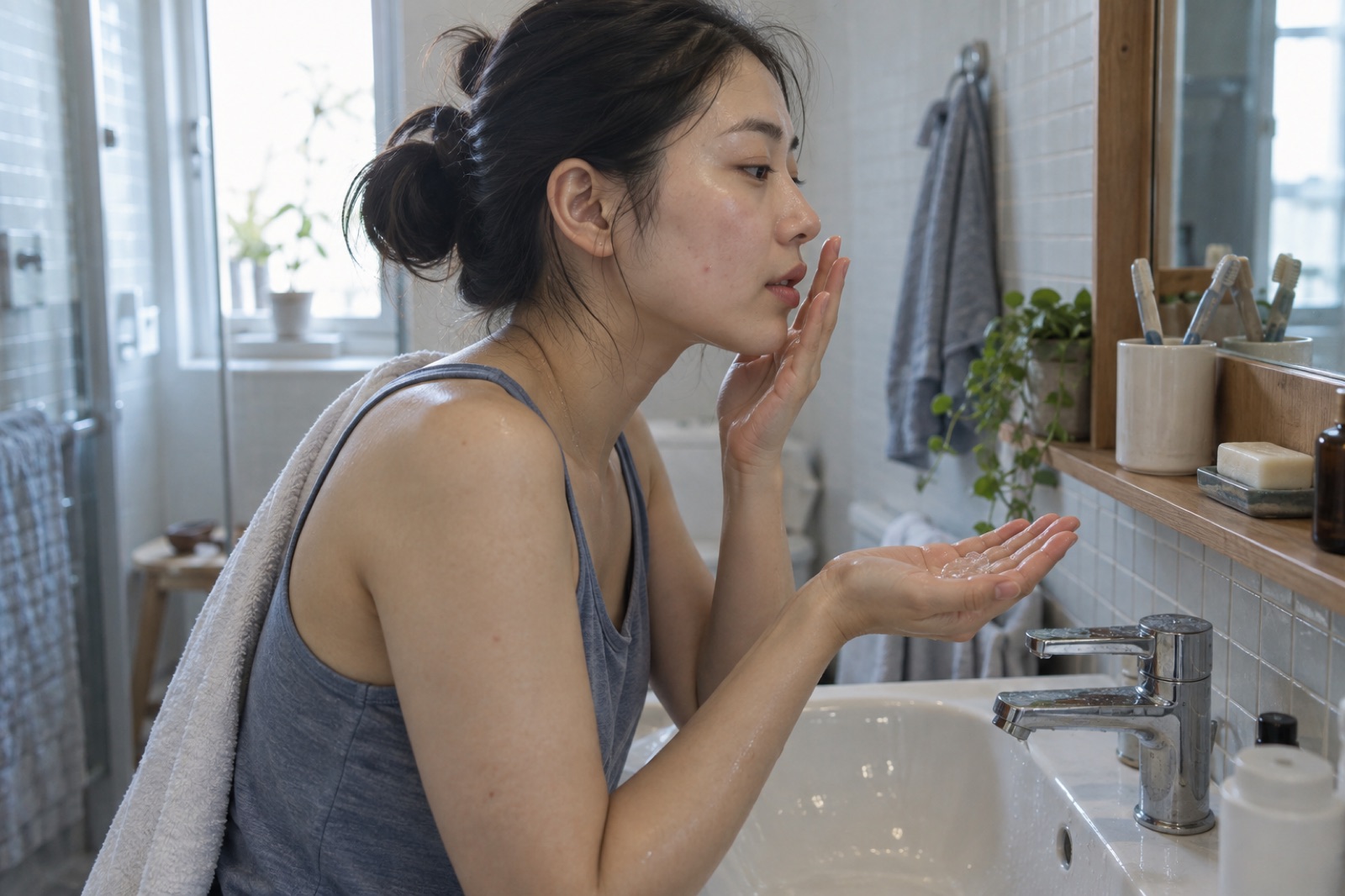
Gel Cleanser, Bar Soap or Bubble Foam: What Skin Studies Measured
A gel cleanser is a face wash that comes out as a gel, but the skin studies reviewed here sorted cleansers by bar versus liquid and by cleansing base, and none measured gels on their own.
In this article7 sections
- What is a gel cleanser, and how did studies sort face washes?
- What did studies that put soap and detergent bars on skin actually read?
- Alkaline soap vs syndet: what did the 2022 study record over 7 days?
- Is a gel cleanser low pH? What studies that measured cleanser pH showed
- Was a “squeaky clean” feel or the amount of lather ever measured?
- Five face wash format studies in one table: how they sorted, what they measured, what they didn’t
- When to see a dermatologist
| Topic | What we know | Source |
|---|---|---|
| 13 soap bars, patch test | When solutions of 13 commercial toilet soaps were applied under patches to the inner arm of 33 healthy volunteers, every product raised water loss significantly over the control site, and the differences between products were small | 1984 PMID 6468282 · B |
| One wash with a solid detergent | After 20 volunteers washed with a solid detergent, the electrical readings on the forehead dropped, while the back of the hand and the palm did not change | 1982 PMID 7159524 · B |
| Cytotoxicity of store-bought soaps | 37% of widely used commercial soaps were toxic to cultured keratinocytes, and the most toxic soap raised redness and water loss the most on volunteers’ skin | 2020 PMID 33372931 · B |
| Four cleansing bases in real use | In a test where groups of 15 used alkaline soap, creamy soap, glycerin soap or a syndet on the forearm for 7 days, water loss in all four groups was higher than before washing from right after the first wash | 2022 PMID 34741581 · B |
| Product pH | Store-bought liquid cleansers were acidic to neutral and most bar soaps were in the alkaline range; this study did not measure skin reactions | 2010 PMID 20487658 · C |
What is a gel cleanser, and how did studies sort face washes?
A gel cleanser is the name for a face wash that comes out of its container as a gel, but none of the skin studies reviewed here set up “gel” as a unit of comparison. The studies sorted face washes in two main ways. One was bar versus liquid; the other was the cleansing base, such as soap versus synthetic detergent (syndet), or alkaline versus not.
A 1984 study compared 13 commercial toilet soaps, and the set included bars made with alkyl sulfate–type synthetic detergents. A 2022 study split soaps into four groups (alkaline, creamy, glycerin-containing and syndet), but its abstract does not say whether those products were bars or liquids. A 2010 study divided products by type, such as liquid cleansers, bar soaps and baby soaps, but it did not break liquid products down further into gels, foams or lotions. So none of the sources behind this article include a study on people that compared face washes of different forms against each other: gel, foam squeezed from a tube, foam pumped out as bubbles, or powder.
What did studies that put soap and detergent bars on skin actually read?
The studies on soap and detergent bars measured changes on the skin surface after washing that an instrument can read. The 1984 study dissolved 13 soaps into a 2 g/v% solution, placed it in small patch test chambers (Finn chambers) on the inner arm, and read water loss through the skin with an evaporimeter. Every soap raised water loss significantly over the control site, and the alkyl sulfate–type synthetic detergents raised it relatively more, but the researchers concluded that the differences between products were small overall and that each person seemed to have their own pattern of reacting to cleansing agents.
Of the five studies, the 1982 study is the only one whose abstract reports readings taken on the face (the forehead). Twenty volunteers had electrical readings taken on their skin before and after washing with a solid detergent, and the values dropped only on the forehead; the back of the hand and the palm did not change. The researchers read this change as the result of the surface water-and-lipid film, especially forehead sebum, being washed away, and the aim of the study was to look at variables that shift those readings.
The 2020 study worked in a different order. It first used a survey to pick widely used commercial soaps and measured their toxicity to cultured keratinocytes; 37% were toxic. It then used only the most toxic and least toxic soaps on the skin of healthy volunteers to compare redness (measured by colorimetry) and water loss, and the most toxic soap came out highest on both. The abstract gives neither the number of volunteers, nor whether the soaps were bars or liquids, nor which body area they were used on.
Alkaline soap vs syndet: what did the 2022 study record over 7 days?
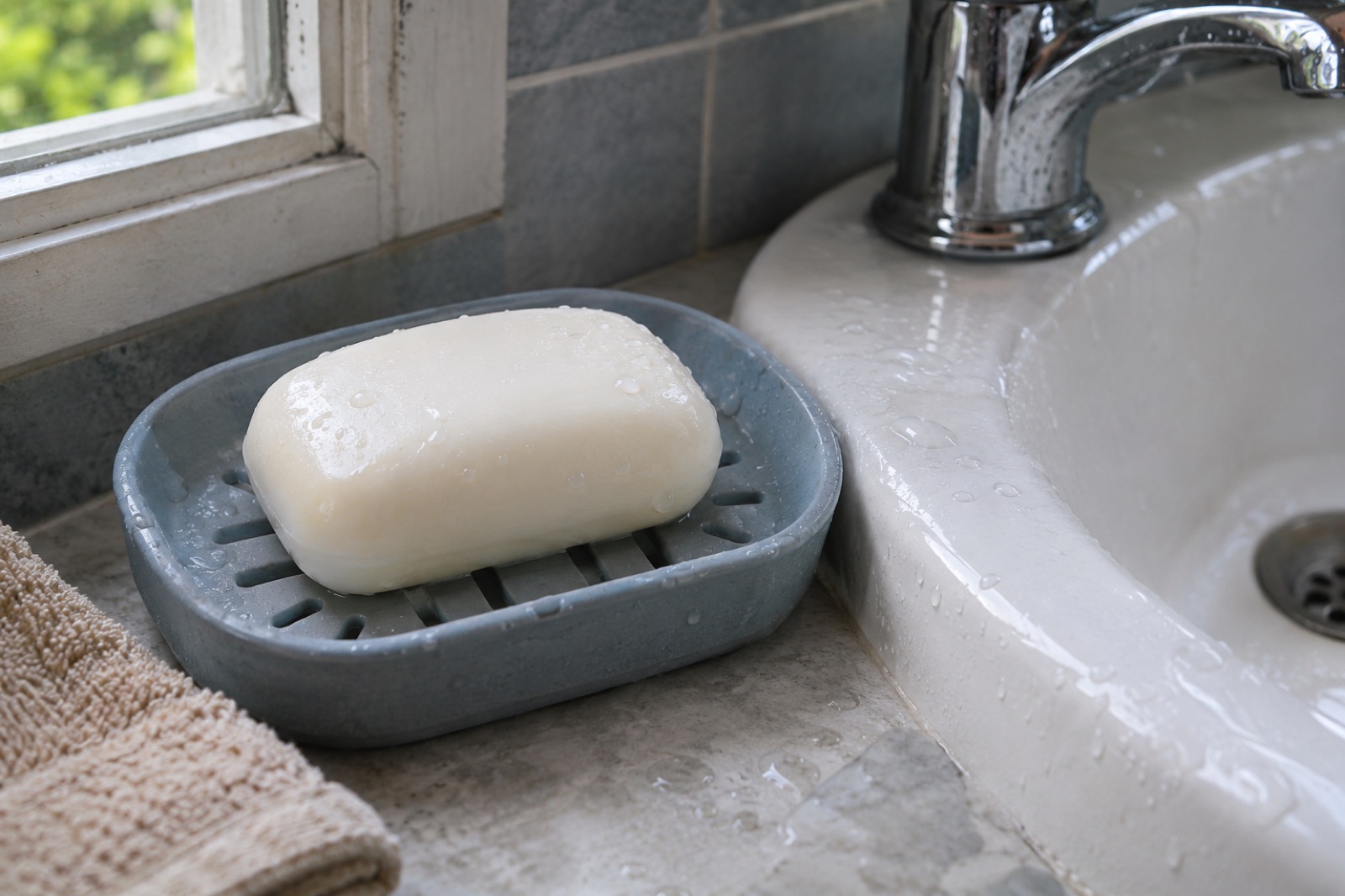
The 2022 study is the real-use test with the longest use period in this article, and it compared cleansing bases, not formats. Healthy adults were split into four groups of 15, each given one of alkaline soap, creamy soap, glycerin soap or a syndet, and asked to wash only their left forearm at home at least four times a day for 7 days. The measures were water loss, redness, friction and pH, and the test was not blinded.
What to notice first in the results is what the groups shared, not how they differed. In all four groups, water loss was higher than before washing from right after the first wash. On top of that, skin pH in the alkaline soap group rose above baseline at every measurement point, and its average redness was higher than in the two groups that used creamy or glycerin soap. The syndet, the only acidic product in the study, lowered pH at the last measurement point. These results come from one week on the forearm, so they can’t be carried over to washing your face for months, or to differences between gel, bubble foam and tube foam.
Is a gel cleanser low pH? What studies that measured cleanser pH showed
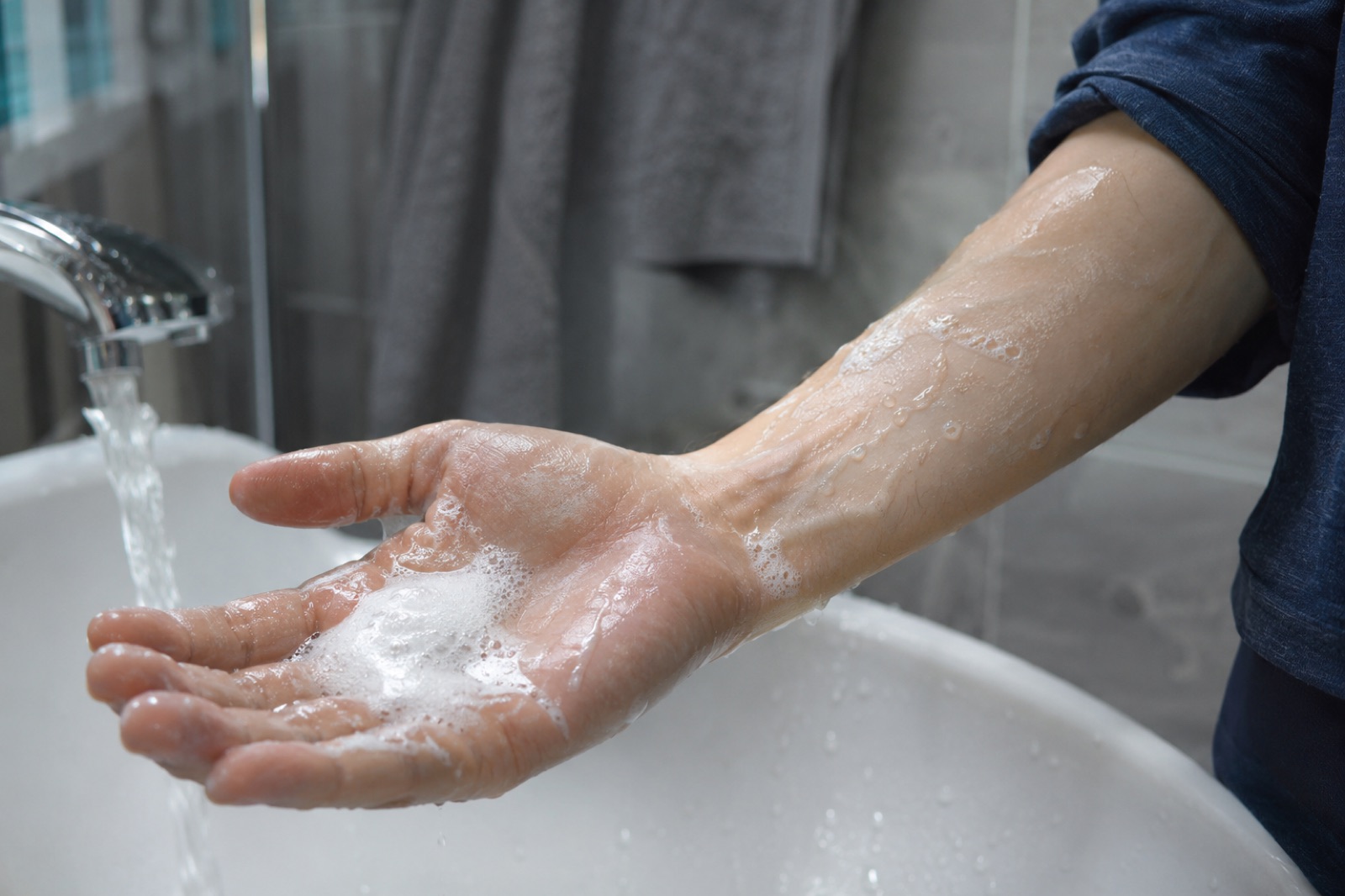
Format and pH did not move together; pH was a value that had to be measured product by product. The 2010 study measured liquid cleansers, bar soaps and baby soaps from several brands, along with alcohol hand gels and other products, using a pH meter and test strips, and it also compared the values after diluting the products in tap water, as in real use. Liquid cleansers were acidic to neutral, close to normal skin pH, while bar soaps and baby soaps were mostly in the alkaline range.
This study did not measure skin reactions, and it started from the goal of choosing hand cleansers. Because “most” bar soaps were alkaline, not “all” of them, this evidence can’t support a rule that “bars are alkaline and liquids are low pH,” either. The abstract also has no results that grouped pump bubble foams or gel cleansers separately for pH, so the only way to know whether a face wash is low pH is the pH stated for that product. How to think about pH differences is covered separately in low pH vs alkaline cleansers.
Was a “squeaky clean” feel or the amount of lather ever measured?
None of the five studies in this article used the amount of lather, or a feeling of being “squeaky clean” or “not quite clean,” as a measure. Every measure was an instrument reading. Water loss was read with an evaporimeter, redness with a color-reading device, and skin condition with electrical readings and pH; before any of that, the 2020 study measured toxicity in cultured cells.
Organization guidance on choosing a face wash doesn’t include a clean feeling or format names, either. In its skin care habits for people with acne, the American Academy of Dermatology (AAD) only says to choose a gentle, non-abrasive cleanser, and it does not offer format names like gel, foam or soap as a standard.
Five face wash format studies in one table: how they sorted, what they measured, what they didn’t
Put the five studies side by side, and the units the studies used to sort face washes were “bar or liquid” and “cleansing base”; “gel, bubble foam and tube foam” never once became a unit of comparison.
| Study (year · participants) | How it sorted formats | What it measured | What it didn’t measure | What can’t carry over to gel cleanser and bubble foam questions |
|---|---|---|---|---|
| 1984 · 33 healthy volunteers (PMID 6468282) | 13 commercial toilet soaps (including alkyl sulfate–type synthetic detergent bars), as 2 g/v% solutions | Water loss after a patch on the inner arm | Actually rubbing and washing, the face, lather, redness | It is the result of applying a dissolved solution, so it can’t show differences between gels and bubble foams that you lather up and wash with |
| 1982 · 20 volunteers (PMID 7159524) | One solid detergent (nothing to compare it with) | Electrical readings on the forehead, back of the hand and palm before and after washing | Comparison with other formats, feel, redness | It can’t tell whether the change came from the product being a bar or from washing itself |
| 2020 · healthy volunteers (number not given in the abstract) (PMID 33372931) | Widely used commercial soaps, sorted by high or low cytotoxicity | Toxicity to cultured keratinocytes; redness and water loss on volunteers’ skin | Bar or liquid, body area, use over several days | It compares the two products at the far ends of toxicity, so it can’t be widened to all soaps or to other formats |
| 2022 · healthy adults, 15 per group (PMID 34741581) | Four groups: alkaline soap, creamy soap, glycerin soap, syndet (cleansing base; bar or liquid not stated in the abstract) | Water loss, redness, friction and pH during 7 days of forearm use | The face, amount of lather, blinding, gels and bubble foams | One week on the forearm can’t be carried over to long-term use on the face or to a specific format |
| 2010 · no human participants (PMID 20487658) | By product type: liquid cleansers, bar soaps, baby soaps, alcohol gels and others | Product pH, undiluted and diluted in tap water (liquid cleansers and one beauty bar acidic to neutral, most bar soaps alkaline) | Any skin reaction | It measured only product pH, so it can’t show irritation, or the pH of bubble or gel formats |
The table tells you three things. Water loss can go up after washing with or applying either a soap bar or a synthetic detergent bar; when groups were split by cleansing base or by an added ingredient like glycerin, redness and pH came out differently from group to group; and pH belongs to a product, not to a format. On the other hand, no cell in the table answers whether a gel cleanser is gentler than a foam, whether a bubble foam cleans less thoroughly, or whether a bar of face soap suits your face.
How to read cleansing ingredient listings and directions when you choose a face wash continues in how to choose a foaming cleanser, and makeup-removing first-step formats with similar names, such as cleansing gel, in gel vs cream cleanser vs cleansing lotion.

When to see a dermatologist
- If redness or burning after washing doesn’t settle for days at a time, and stays the same even after you switch face washes or take a break from them, consider seeing a dermatologist.
- If red, itchy patches spread beyond where you used the face wash to your neck or behind your ears, or the skin swells up, bring the face wash you have been using and see a doctor.
- If flaking after washing doesn’t calm down and itching or stinging is added on top, have a dermatologist check it before you switch face washes again.
Frequently asked questions
Why are almost all low pH cleansers gel cleansers?
None of the sources behind this article looked into why so many low pH products come as gels. A 2010 study reported that store-bought liquid cleansers ranged from acidic to neutral and that most bar soaps were in the alkaline range, but it did not split liquid products further into gels, foams or lotions. No measurement supports "if it's a gel, it's low pH," so check pH separately, by what is stated for that product.
Why does my face feel squeaky clean after alkaline soap, but not quite clean after a neutral soap?
None of the sources behind this article used a "clean feeling" or a "not quite clean" feeling as a measure, so we can't settle the reason for you. A 1982 study read the drop in electrical readings on the forehead after washing with a solid detergent as the surface water-and-lipid film, especially sebum, being washed away, but it did not ask about feel and did not compare other face washes. Nor has the 2022 result, in which pH rose in the group given alkaline soap, been shown to connect with a fresh feeling after washing.
Are there low pH bubble cleansers?
None of the sources behind this article gathered face washes that come out of a pump as foam and measured their pH. The abstract of the 2010 pH study does not say whether the "liquid cleansers" it reported as acidic to neutral included bubble formats, either. Whether a product comes out as foam is a matter of the container and the formula, while pH is set product by product, so the only way to know whether one is low pH is the pH stated for that product.
Why does dead skin keep building up when I wash with a low pH soap? Is it not washing off the grime?
None of the sources behind this article measured the feeling that grime isn't coming off together with how much flaking builds up, so the cause can't be sorted out. Cleansing power is measured separately with a set test method, not by feel, and the soap studies in this article measured water loss, redness and pH, not the amount of flaking. If flaking comes with itching or redness and lasts a long time, consider seeing a dermatologist.
Is double cleansing with bar soap and then a low pH cleanser too irritating?
None of the sources behind this article measured using two face washes back to back on people's skin. Even the 2022 study, which had people wash for the longest period in this article, had each person use only one type of soap on the forearm at least four times a day for 7 days. So this evidence can't tell you that washing twice adds irritation, or that it is fine.
Can I use bar soap on my back?
The studies in this article took their measurements on the inner arm, the forearm, the forehead and the hands, and none of the sources behind it tested soap on the skin of the back. In the 1982 study, readings taken before and after washing with a solid detergent dropped only on the forehead, with no change on the back of the hand or the palm that were also measured, so results differed by body area. There is no basis for carrying results from the arm or forehead over to the back to say yes or no.
Should I switch my face wash every so often?
None of the sources behind this article compared people who used the same face wash for a long time with people who switched regularly. The longest use period among the studies in this article was 7 days of real use, and the 1982 study measured before and after a single wash. There is no basis for setting how often to switch, so this article doesn't give a schedule.
If a cleanser has weak cleansing power, does it take off less makeup?
None of the sources behind this article used how much makeup came off as a measure. A 2004 study that compared four detergent products measured cleansing power and the strain on the outer skin layer separately, by different methods, but makeup removal was not among its measures. A study that measured how much sunscreen is left behind is covered separately in the article on choosing a foaming cleanser.
My face turns red every time I wash it. If it stays red, should I see a doctor?
If redness after washing stays the same even after several days, or comes with burning or itching, consider seeing a dermatologist. In the studies in this article, redness was a reading taken with an instrument, and none of them set the point at which you need medical care. When you go, telling the doctor the names of the face washes you have used and the date you started each one makes checking easier.
Sources
- Skin irritancy of commercially available soap and detergent bars as measured by water vapour loss (1984, PMID 6468282)B
- Effect of solid detergent washing on values of skin electrical impedance (1982, PMID 7159524)B
- Study of the cytotoxic and irritant effects of skin cleansing soaps (2020, PMID 33372931)B
- Skin biophysical assessments of four types of soaps by forearm in-use test (2022, PMID 34741581)B
- The pH of commonly available soaps, liquid cleansers, detergents and alcohol gels (2010, PMID 20487658)C
- Cleansing, dehydrating, barrier-damaging and irritating hyperaemising effect of four detergent brands: comparative studies using standardised washing models (2004, PMID 14731242)B
- AAD — 6 skin care habits that can clear acneInstitutional
We never use YouTube videos or community posts as evidence for facts. Editorial policy
Product information related to this article
Product information from the site operator (KW Cosmetic, maker of the SKIN9HARI brand).
Revive Therapy A.C Cleanser
₩19,000 (KRW)
None of the five studies used this cleanser. Skin9hari's only face wash is this tube foam; there is no gel, bubble foam, bar soap or powder. This 150 ml mildly alkaline foam has salicylic acid, AHA, PHA and fragrance, and completed low-irritation testing in a 24-hour closed patch test on 30 people (results vary). Its product page says to lather by hand or with a foaming net on a face wet with lukewarm water, not to rub the net on your face, and to avoid the eye area and any skin not yet closed over. For choosing a tube foam by its ingredient list and directions rather than format name, the product we suggest is Revive Therapy A.C Cleanser.
- Mildly alkaline foam cleanser, 150 ml
- Contains salicylic acid, AHA and PHA, with an amino acid–based cleansing agent, 4 ceramides and cholesterol; contains fragrance
- Low-irritation formula
Product details
- Type and size
- Creamy foaming cleanser, 150 mL (5.07 fl oz)
- Step in routine
- Step 1 of 4 · Cleanse, first thing in the routine
- How to use
- Wet your face with lukewarm water. Squeeze a cherry-sized amount into your palms and work it into a foam, or use a foaming net for a richer lather. Massage over your face for 30–60 seconds, focusing on the T-zone and other oily areas. Rinse thoroughly with lukewarm water and follow with Revive Therapy N.F Toner.
- Before you use
- Avoid the eye area. Contains fragrance, including the allergens linalool and limonene — check the full ingredient list if you have known fragrance sensitivities. If redness, swelling or itching occurs, stop using and consult a dermatologist.
Based on the official product page, checked 2026-10-02
Cosmetics do not diagnose, treat, cure or prevent any disease. Test results apply only to the stated conditions.