Sebum on Your Face: 5 Checks Before Extractors or Pore Vacuums
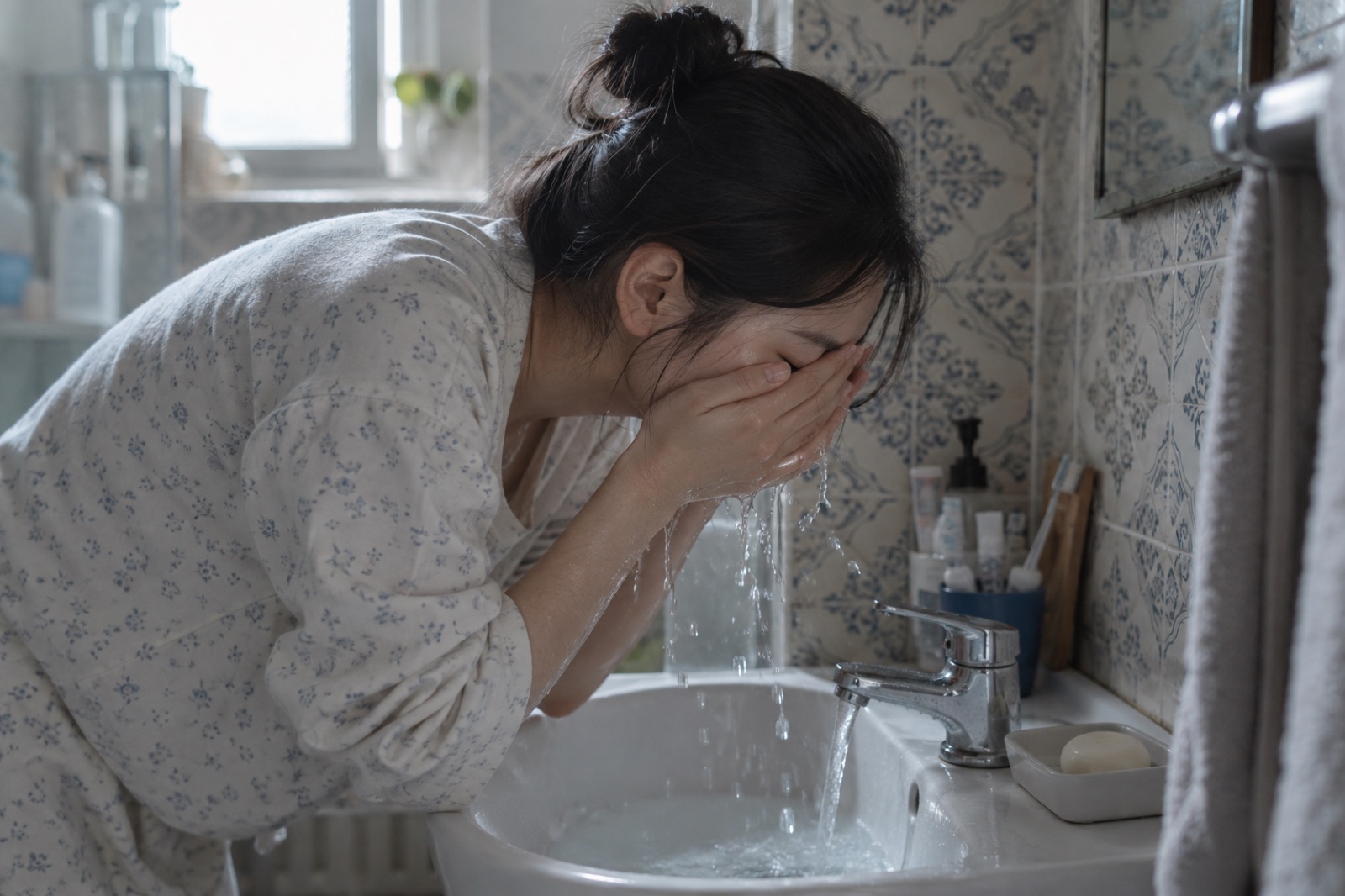
Health organizations recommend washing gently twice a day without rubbing, rather than pulling sebum out with tools. Sebum is made continuously inside the skin, so pores refill even after you empty them.
In this article7 sections
- Why does sebum come right back after you remove it?
- Can you squeeze sebum out with an extractor or tweezers?
- Do pore vacuums and heated suction devices work?
- Do sebum-softening serums or sebum-melting creams dissolve sebum?
- What should you watch for after removing sebum?
- Checklist: before and after removing sebum
- When to see a dermatologist
| Item | What we know | Evidence |
|---|---|---|
| Sebum keeps coming | 80–85% of the main fatty acids in sebum were made inside the skin, and about 20% came from the blood | 2019 PMID 31092695 · A |
| Squeezing at home | Risks permanent scars, more noticeable acne, pain and infection, and can push contents deeper into the skin | AAD on pimple popping · institution |
| Home extractors and pore vacuums | We found no study on their benefits or safety | Literature and institutional sources checked |
| Salon facials | Of 142 women who had massage, steaming and extraction, 33.1% had an acne-like rash 3–10 weeks later (no control group) | 2002 PMID 12121555 · B |
| Absorption through stripped skin | On skin whose outer layer was stripped with tape, salicylic acid absorption rose up to 157 times that of normal skin | 1999 PMID 10233334 · B |
Why does sebum come right back after you remove it?
Sebum is made continuously by oil glands inside the skin, so emptying a pore once doesn’t stop it from filling again. In one study, 80–85% of the main fatty acids in sebum were made inside the skin. The US National Institute of Arthritis and Musculoskeletal and Skin Diseases (NIAMS) explains acne as sebum and skin cells clumping together to block the pore opening, and pulling sebum out from the surface does not change that process.
Many people also search for ways to remove the sebaceous glands on their nose, but a sebaceous gland is the organ inside the skin that produces sebum. Smaller glands were seen only in biopsies from studies of medical devices such as LED and laser, and from diet studies. There is no evidence that a product you apply or a home tool makes sebaceous glands smaller. We explain why some faces make more oil in oily skin and excess sebum.
Can you squeeze sebum out with an extractor or tweezers?
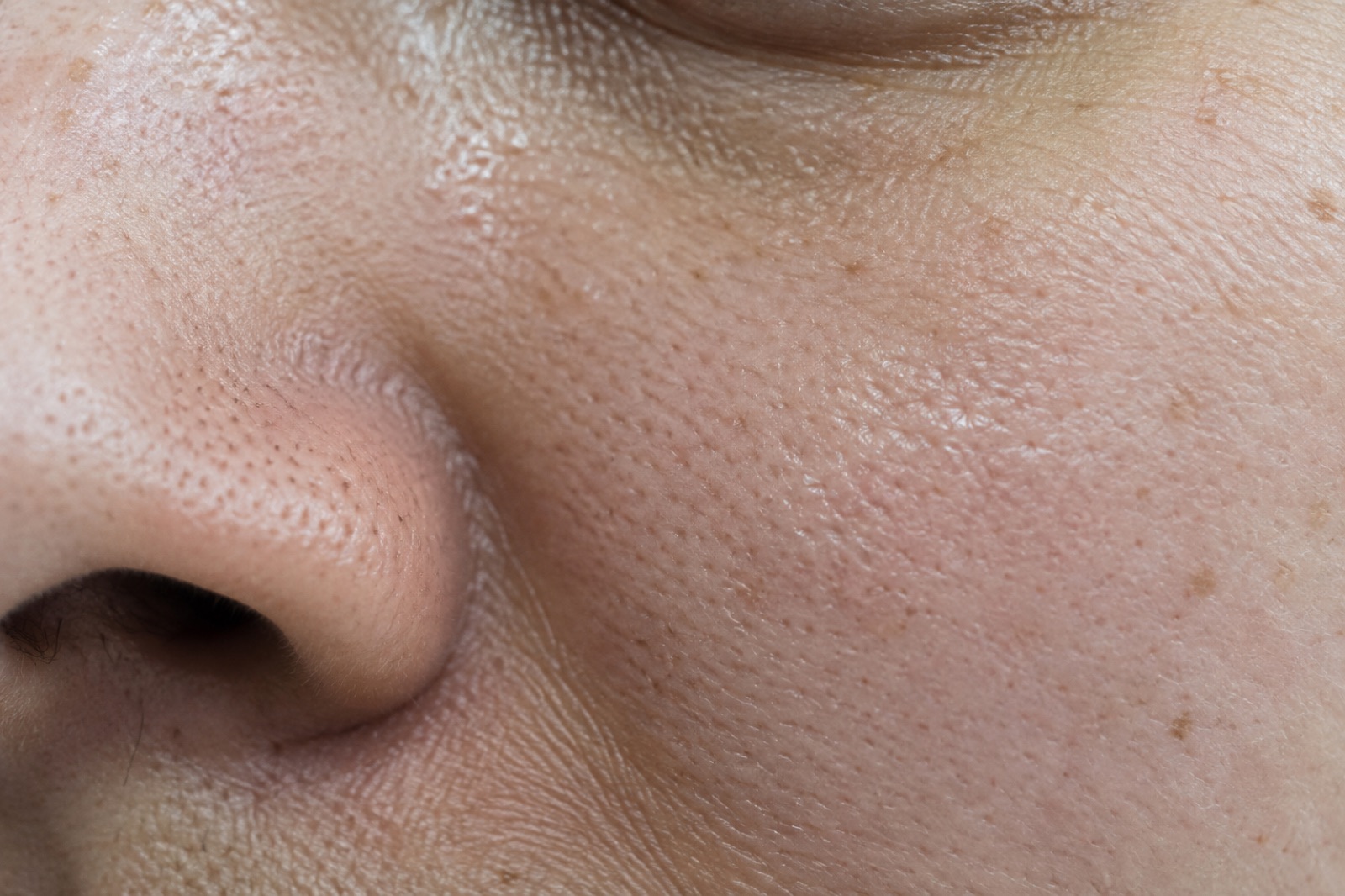
The AAD, the NHS and NICE all advise against squeezing pimples or clogged pores yourself, with or without tools like extractors and tweezers. The AAD explains that squeezing can push contents deeper into the skin and make inflammation worse, and bacteria from your hands can raise the risk of infection. Picking and squeezing is one of the four factors in a tool used to assess the risk of atrophic (pitted) acne scars.
No study in our sources compared tool extraction with finger squeezing for safety. In a study of 142 women who had salon facials that included massage, steaming and extraction, 36.1% had redness and swelling right after, and 33.1% had an acne-like rash 3 to 10 weeks later. For more on squeezing, see can I pop my pimples?.
Do pore vacuums and heated suction devices work?
We found no study testing the benefits or safety of home pore vacuums or heated suction devices. The only suction study we found added suction to a 4% AHA peel in 23 people, and whiteheads and blackheads dropped more by week 1. That was a professional procedure paired with a peel, so the conditions differ from a home device.
In a trial of 20 healthy people, a cleansing solution at 40°C caused more water loss than at 20°C. The NHS also advises avoiding very hot or cold water when washing. Stop using a vacuum if it causes bruising or pain, or if redness lasts where you used it.
Do sebum-softening serums or sebum-melting creams dissolve sebum?
No study in our sources tested products sold as sebum-softening serums or sebum-melting creams. The closest research on loosening pore plugs with a formula is a small trial where, after 2 weeks, improvement was seen on the side where an LHA (lipohydroxy acid) formula was applied in 10 of 12 people, versus on the bare side in 3 of 10. We found no placebo-controlled trial on comedones of a low-strength product containing only salicylic acid.
When a cosmetic with four acids was applied together with an acne medicine, the burning score on day 7 was 1.23, versus 0.50 with the medicine alone. The EU Scientific Committee on Consumer Safety (SCCS) considers salicylic acid safe up to 2.0% in general cosmetics (with exceptions for some product types), so check the ingredient lists to see whether your cleanser, toner and serum all contain it.
What should you watch for after removing sebum?
After removing sebum, leave the area alone and take a short break from exfoliating ingredients and harsh cleansing. Salicylic acid absorption rises sharply through damaged skin: on skin whose outer layer was stripped with tape, absorption reached up to 157 times that of normal skin. For blackheads specifically, see how to deal with blackheads.

Checklist: before and after removing sebum
| When | What to check | Source |
|---|---|---|
| Before | Why you want to squeeze or use a tool, and whether you have tried 6–8 weeks of gentle care | AAD on blemish types |
| Washing | Twice a day and after sweating, lukewarm water, fingertips | NHS, AAD |
| Tools | Don’t remove sebum yourself with extractors, tweezers or vacuums | AAD on pimple popping |
| Heat | Don’t heat skin for long with hot water or steam | 1996 temperature trial, NHS |
| Exfoliating acids | Check that your cleanser, toner and serum don’t stack acids | SCCS, 2019 combination trial |
| After | Don’t touch; pause exfoliating products until redness settles | 1999 absorption study |
When to see a dermatologist
- If clogged pores on your nose and cheeks are unchanged after 6–8 weeks of gentle care, ask a dermatologist about professional extraction or prescription options.
- If red marks, bruises or dents last a long time where you squeezed or used suction, consider seeing a dermatologist.
- If clogged pores turn into red, swollen, painful bumps, have them checked by a dermatologist.
Frequently asked questions
How do you remove sebum from your face?
The method health organizations agree on is washing twice a day and after sweating, using lukewarm water, a gentle cleanser and your fingertips. The AAD and the NHS advise against scrubbing or squeezing.
How do you use a blackhead extractor?
We found no study on the use or safety of extraction tools at home. The AAD says squeezing on your own risks scarring and infection, and it considers extraction by a dermatologist, done with sterile instruments, a separate medical procedure.
Are pore vacuums bad for your skin?
Our sources have no study on the benefits or safety of home pore vacuums. The only suction study was a 23-person professional procedure combined with an AHA peel, so it doesn't apply to home devices. Stop using it if it causes bruising or pain, or if redness lingers.
How should I use a sebum-softening serum, and are there side effects?
No study in our sources tested the sebum-softening serum category. If it contains exfoliating acids, check it doesn't overlap with your cleanser or toner, and stop if you notice stinging or redness. The EU SCCS considers salicylic acid safe up to 2.0% in general cosmetics, with exceptions for some product types.
How should you care for your skin after removing sebum?
First, don't touch the area again or layer on exfoliating products. In one study, salicylic acid absorption rose sharply through skin with a stripped outer layer, so it is safer to pause irritating ingredients until redness settles.
Sources
- AAD — Pimple popping: Why only a dermatologist should do itInstitutional
- AAD — What's that blemish?Institutional
- AAD — 10 skin care habits that can worsen acneInstitutional
- NHS — Acne (reviewed 2026-09-22)Institutional
- NHS 111 Wales — Health A-Z: Acne (updated 2024-11-07)Institutional
- NIAMS — Overview of AcneInstitutional
- Human sebum requires de novo lipogenesis, which is increased in acne vulgaris and suppressed by acetyl-CoA carboxylase inhibition (2019, PMID 31092695)A
- Development of an atrophic acne scar risk assessment tool (2017, PMID 28499079)A
- Rejuvenating facial massage--a bane or boon? (2002, PMID 12121555)B
- The effect of physically applied alpha hydroxyl acids on the skin pore and comedone (2015, PMID 26032934)B
- Temperature dependency of skin susceptibility to water and detergents (1996, PMID 8869682)A
- Comedolysis by a lipohydroxyacid formulation in acne-prone subjects (2003, PMID 12609785)
- Effect of barrier perturbation on cutaneous salicylic acid penetration in human skin: in vivo pharmacokinetics using microdialysis and non-invasive quantification of barrier function (1999, PMID 10233334)B
- The efficacy of glycolic acid, salicylic acid, gluconolactone, and licochalcone A combined with 0.1% adapalene vs adapalene monotherapy in mild-to-moderate acne vulgaris: a double-blinded within-person comparative study (2019, PMID 30858720)A
- SCCS — Opinion on salicylic acid (SCCS/1601/18)Institutional
- NICE NG198 — Acne vulgaris: managementInstitutional
We never use YouTube videos or community posts as evidence for facts. Editorial policy
Product information related to this article
Product information from the site operator (KW Cosmetic, maker of the SKIN9HARI brand).
Revive Therapy N.F Ampoule
₩31,000 (KRW)
Apart from the extractors, pore vacuums and salon facials this article looks at, here are the facts about one cosmetic that sits in the light hydrating step after your twice-daily wash. Revive Therapy N.F Ampoule is a 30 ml ampoule with betaine and panthenol, with no added fragrance, essential oils or ethanol per its ingredient list, and a low-irritation formula, but it has not been tested on the sebum or pore concerns discussed here. Its product page places it after toner and before cream; keep it off skin broken by squeezing or suction. It is a cosmetic, not a medicine, so if redness or bruising lingers, see a dermatologist first.
- Ampoule with vegan rice PDRN (listed as Sodium DNA), betaine and panthenol, 30 ml
- No added fragrance, essential oils, ethanol, colorants or silicones (based on the full ingredient list)
- Low-irritation formula
Product details
- Type and size
- Clear, lightweight ampoule, 30 mL (1.01 fl oz)
- Step in routine
- Step 3 of 4 · Ampoule, after toner and before cream
- How to use
- After toner, use the dropper to dispense 2–3 drops into your palm or directly onto your face. Press gently into skin until absorbed. Follow with Revive Therapy N.F Cream to seal in moisture.
- Before you use
- Patch test on your inner arm before first use if you have very reactive skin. If redness, swelling or itching occurs, stop using and consult a dermatologist.
Based on the official product page, checked 2026-10-02
Cosmetics do not diagnose, treat, cure or prevent any disease. Test results apply only to the stated conditions.