Cream for Hyperpigmentation After Acne: What to Check First
Flat brown marks left after acne often fade on their own over time. If you use a cream, check its ingredients and how much it irritates your skin first, and protect the area from the sun.
In this article5 sections
| Item | What we know | Source |
|---|---|---|
| Flat colored marks | A flat color change where acne used to be is likely post-inflammatory hyperpigmentation, not a scar | AAD on acne scars · institution |
| Over time | It fades on its own over time, but the darker it is, the longer it takes | AAD on symptoms · institution |
| Topical ingredients studied | A review of 47 studies (1,853 people) found the most evidence for retinoids, hydroxy acids, corticosteroids, niacinamide and others | Hyperpigmentation · A |
| Irritation | In a melasma meta-analysis, hydroquinone combination therapy had the highest irritation rate, 50.9% | Hyperpigmentation · A |
| Sunscreen | Almost all post-inflammatory hyperpigmentation studies recommended SPF 30 or higher sunscreen | Hyperpigmentation · A |
Should you start with a cream for acne marks?
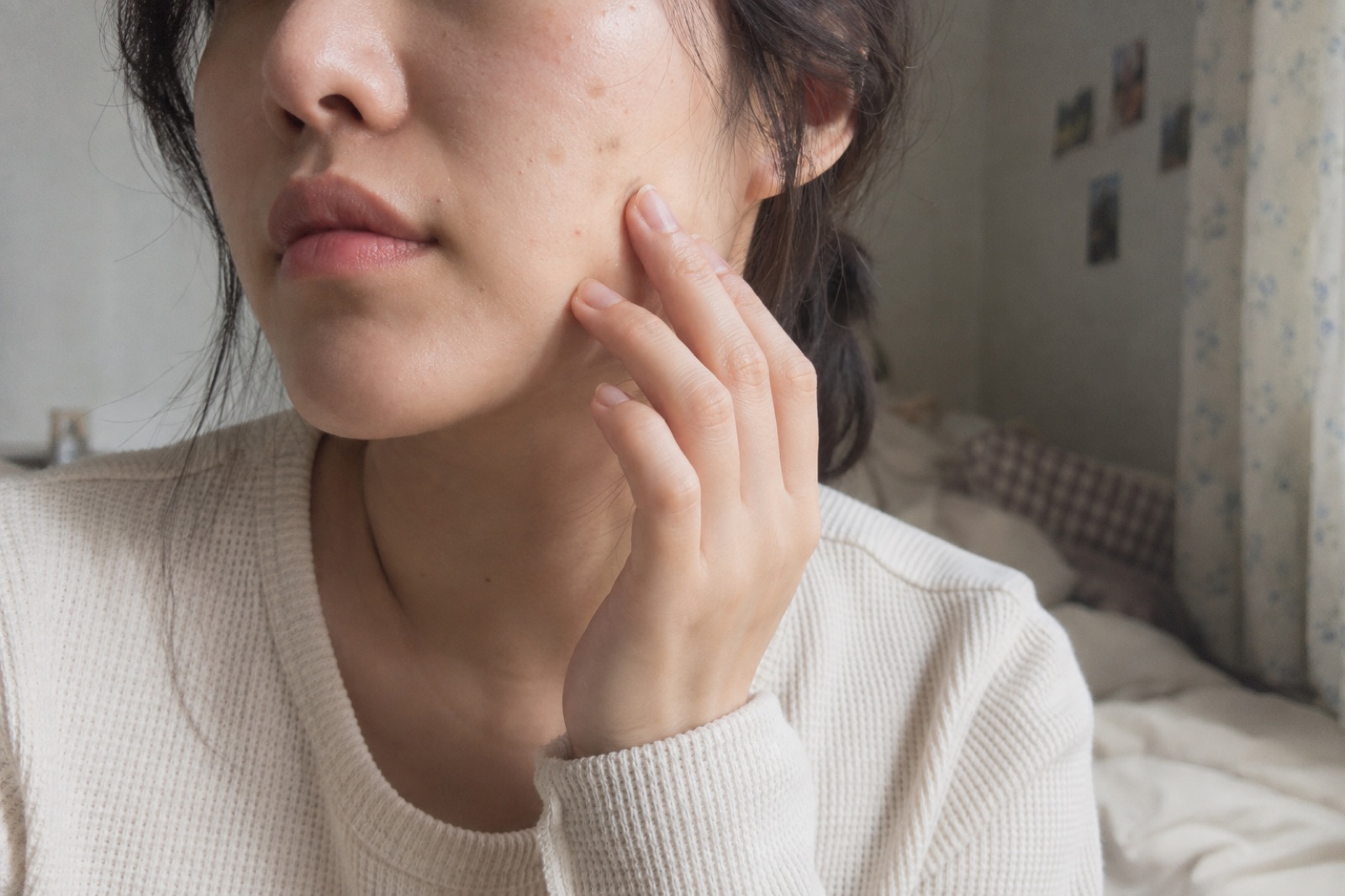
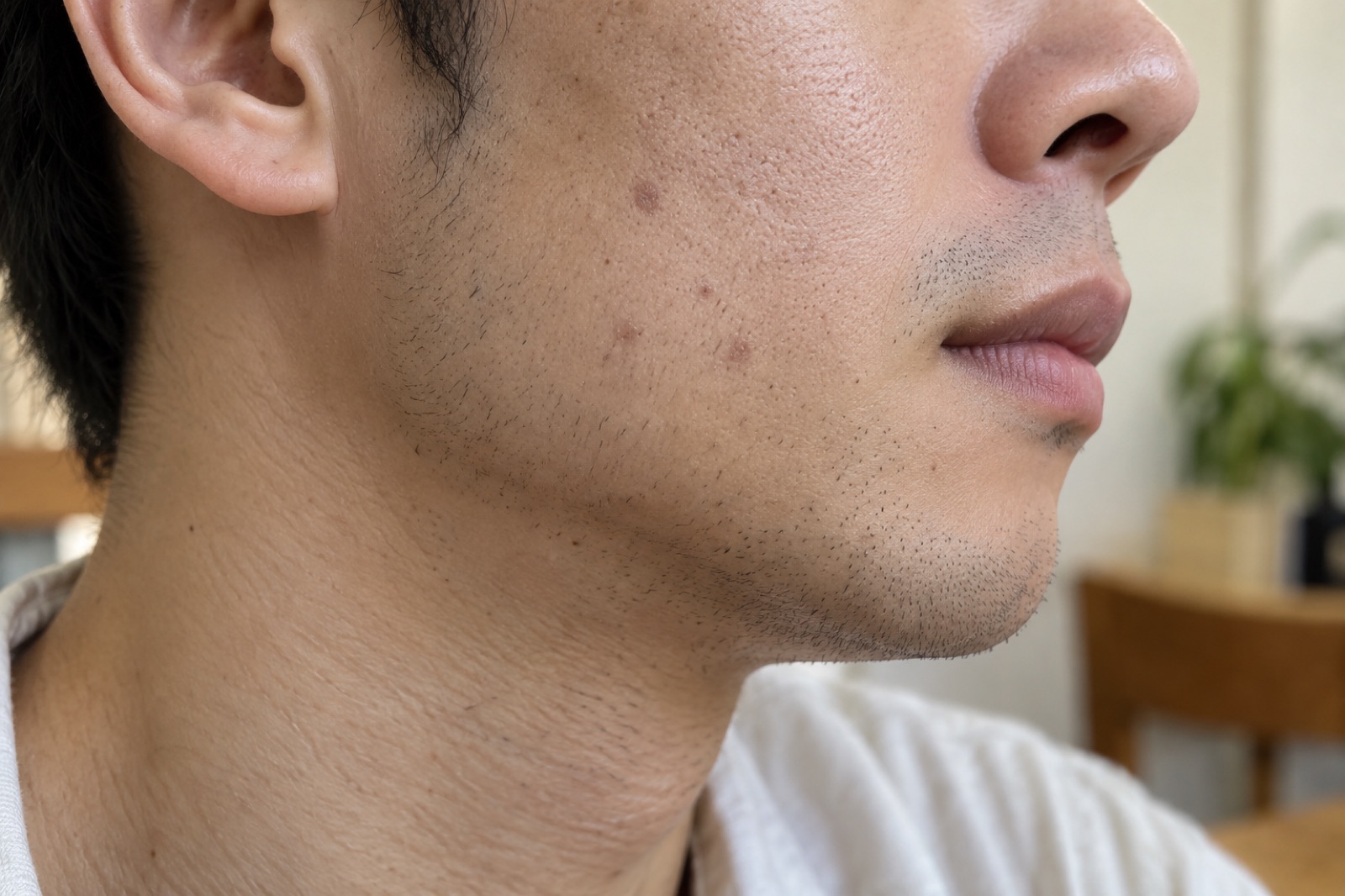
First, check whether it’s a flat mark you can wait out. The American Academy of Dermatology (AAD) describes flat pink, red or brown spots left where acne used to be as post-inflammatory hyperpigmentation and says they fade on their own over time. But the darker the mark, the longer it takes, and it can last for months.
A dented or pitted area is a scar rather than a color change, so a cream may not be the right tool for it. We explain how to tell them apart in acne marks vs acne scars, and how long to wait in how long acne marks take to fade.
Which ingredients in hyperpigmentation creams have been studied?
Many topical ingredients have been studied, but it’s hard to rank them. A review of 47 studies on post-inflammatory hyperpigmentation found the most evidence for retinoids, hydroxy acids, corticosteroids, thiamidol, niacinamide and plant-derived ingredients. The same review added that there is no standard way to measure pigment, which makes it hard to compare ingredients.
Among these, prescription retinoids (such as tretinoin) and corticosteroids are drug ingredients, and hydroquinone, which people often look for alongside them, is a drug ingredient too. In South Korea, hydroquinone is restricted in cosmetics, and it is also the ingredient most often linked to irritation in pigmentation research. Decide which ingredient to use, and for how many weeks, with a pharmacist or at a doctor’s visit.
What should you avoid at home while using a cream?
The basics are to stop touching the marks and to cut down on sun exposure. The AAD explains that squeezing, picking or scratching raises the risk of inflammation and hyperpigmentation. Almost all post-inflammatory hyperpigmentation studies also recommended SPF 30 or higher sunscreen.
When you add acids, protect your skin from the sun too. Skin where 10% glycolic acid was applied tanned more easily under UV light, even without irritation (grade A). Don’t add several products at once, and check each new one with a pharmacist.

Checklist before using a cream
| What to check | What to look at |
|---|---|
| Shape | Is the surface flat, or are there pitted areas? |
| Color | Is it red or brown? |
| Time | How many months since the acne went away? |
| New acne | Are new breakouts still appearing? |
| Products you use | Are you already using acid or retinol products? |
| Sun | Do you wear sunscreen every day? |

When to see a dermatologist
- If you see pitted areas, or the marks are unchanged after several months.
- If deep, painful acne keeps coming back and leaving new marks. The AAD advises seeing a dermatologist for deep, painful acne.
- If color spreads widely, even to places where you never had acne.
- If the area you applied it to turns red or keeps stinging. Stop using it and talk to a pharmacist or your prescriber.
Frequently asked questions
Can I use an acne mark serum and a hyperpigmentation cream together?
No study in our sources looked at using the two together. In pigmentation research, hydroquinone was the ingredient most often linked to irritation, and in a meta-analysis of melasma studies, the irritation rate with hydroquinone combination therapy was 50.9%. Check with a pharmacist or your prescriber before combining them.
Which ingredients have been studied for acne hyperpigmentation?
A review of 47 studies on post-inflammatory hyperpigmentation found the most evidence for retinoids, hydroxy acids, corticosteroids, thiamidol, niacinamide and plant-derived ingredients. But it noted there is no standard way to measure pigment, so it's hard to rank the ingredients against each other.
Can I buy a cream for acne hyperpigmentation at the pharmacy?
Each cream has different ingredients and precautions, so first tell a pharmacist it's a flat mark where acne used to be and check the ingredients. In South Korea, hydroquinone is a drug ingredient restricted in cosmetics, and rules differ by country. If new acne keeps appearing, it's better to have that acne looked at by a doctor first.
Should I see a dermatologist for hyperpigmentation?
If some of the marks are pitted, or they haven't changed after several months, seeing a dermatologist is the more reliable route. A dermatologist chooses among prescription creams, peels, lasers and more depending on your skin. The AAD advises that darker skin tones can get pigment changes after peels or lasers, so go to an experienced dermatologist.
Sources
- AAD — Acne scars: TreatmentInstitutional
- AAD — Acne: SymptomsInstitutional
- AAD — How to clear acne in skin of colorInstitutional
- Topical treatment for postinflammatory hyperpigmentation: a systematic review (Tan MG et al., J Dermatolog Treat, 2022, PMID 34525885)A
- Efficacy and safety of topical agents in the treatment of melasma: What's evidence? A systematic review and meta-analysis (Chang YF et al., J Cosmet Dermatol, 2023, PMID 36566490)A
- Topical and Systemic Therapies in Melasma: A Systematic Review (Sarkar R et al., Indian Dermatol Online J, 2023, PMID 38099013)A
- Effects of glycolic acid on light-induced skin pigmentation in Asian and caucasian subjects (Tsai TF et al., J Am Acad Dermatol, 2000, PMID 10906645)A
We never use YouTube videos or community posts as evidence for facts. Editorial policy
Product information related to this article
Product information from the site operator (KW Cosmetic, maker of the SKIN9HARI brand).
Revive Therapy N.F Cream
₩28,000 (KRW)
Apart from the creams and ingredient studies this article reviews, here is a factual note on one cosmetic for the last moisturizing step. Revive Therapy N.F Cream is a 50 ml cream with four ceramides and five types of hyaluronic acid, made without added fragrance according to its ingredient list and patch-tested for low irritation; no test has examined it on the skin state this article covers. The product page puts it at the end of the routine, after the ampoule, and it should be kept off broken or stinging skin. It is a cosmetic, not a medicine, so if you see sunken spots or the color stays for months, see a dermatologist first.
- Cream with 4 ceramides (NP, NS, EOP, AP), 5 types of hyaluronic acid and D-panthenol, 50 ml
- No added fragrance
- Low-irritation formula
Product details
- Type and size
- Soft, cushiony cream, 50 mL (1.69 fl oz)
- Step in routine
- Step 4 of 4 · Moisturize, the last step
- How to use
- As the last step of your routine, squeeze out a small amount. Warm it slightly between your palms. Press gently over your face, working outward from the center. Use morning and night after your ampoule or serum step.
- Before you use
- Contains dimethicone (silicone) — this is not a silicone-free formula. If redness, swelling or itching occurs, stop using and consult a dermatologist.
Based on the official product page, checked 2026-10-02
Cosmetics do not diagnose, treat, cure or prevent any disease. Test results apply only to the stated conditions.