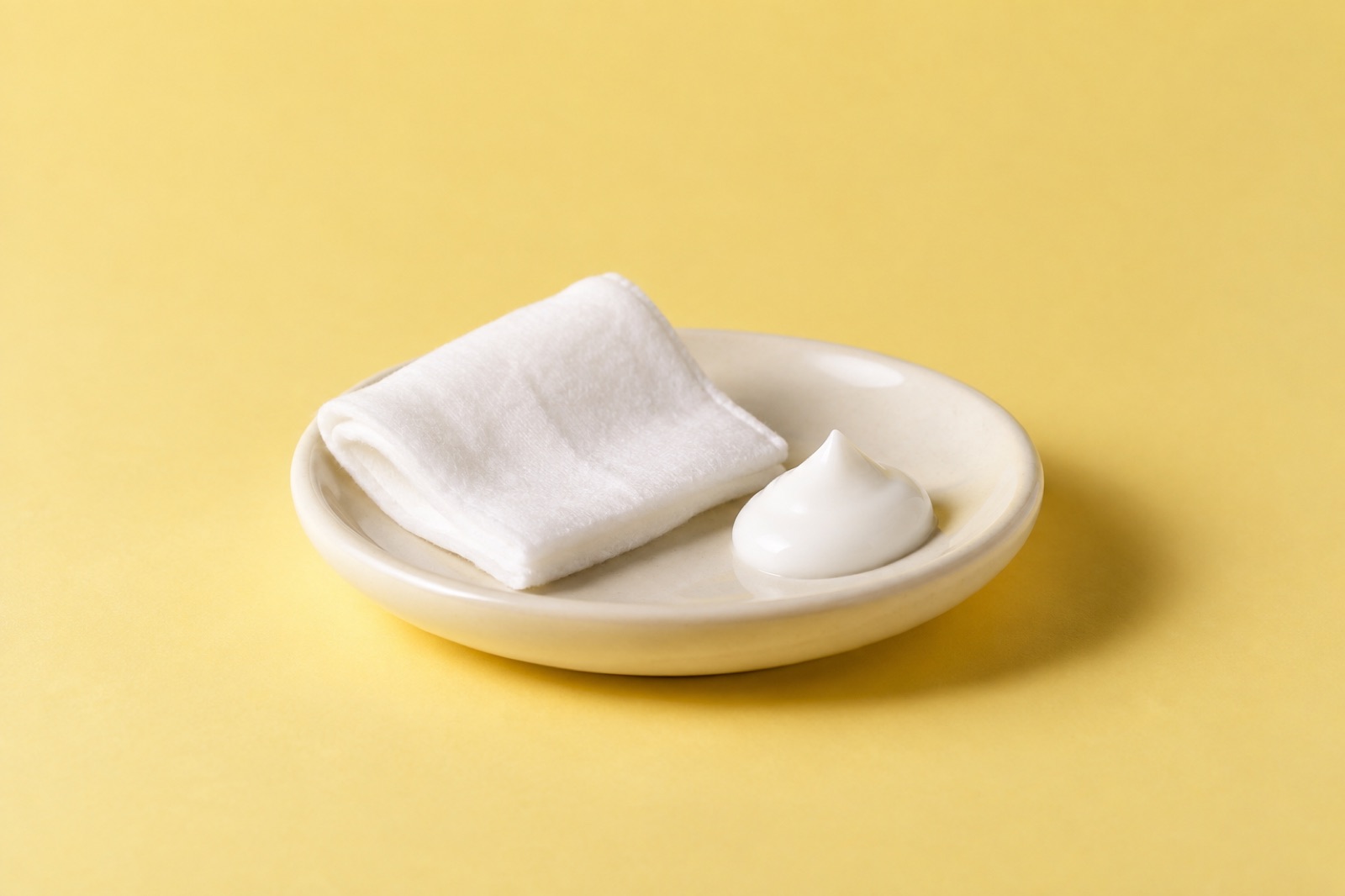
How to Use Toner on Your Face: Cotton Pad vs Hands and Order
Apply toner after washing your face and before moisturizer. Whether you use a cotton pad or your hands, the basic rule is to press it on gently instead of rubbing.

In this article6 sections
| Point | What the evidence shows | Source |
|---|---|---|
| Is it a required step? | No. Health organizations and expert consensus treat cleansing, moisturizing, and sunscreen as the basics | Health organizations · A |
| Order | Wash → (toner) → moisturizer → sunscreen in the morning. Moisturizer goes on while skin is still damp | AAD · Health organization |
| What to apply it with | No study compares cotton pads and hands. The AAD advises against rubbing or scrubbing | AAD · Health organization |
| Toners to avoid | If you break out, choose alcohol-free and avoid harsh products such as astringents and exfoliants | AAD · Health organization |
| While using acne medicine | On the side where an acid cosmetic was added, the burning score on day 7 was 1.23, vs 0.50 on the side with medicine only (25 people) | Acne and moisturizing studies · A |
How to use toner: what order does it go in?
Toner goes on after you wash your face and before moisturizer. But it is not a required step: expert consensus and AAD guidance treat cleansing, moisturizing, and sunscreen as basic care. If toner stings or you don’t feel tight without it, also see whether you can skip toner and use only lotion.
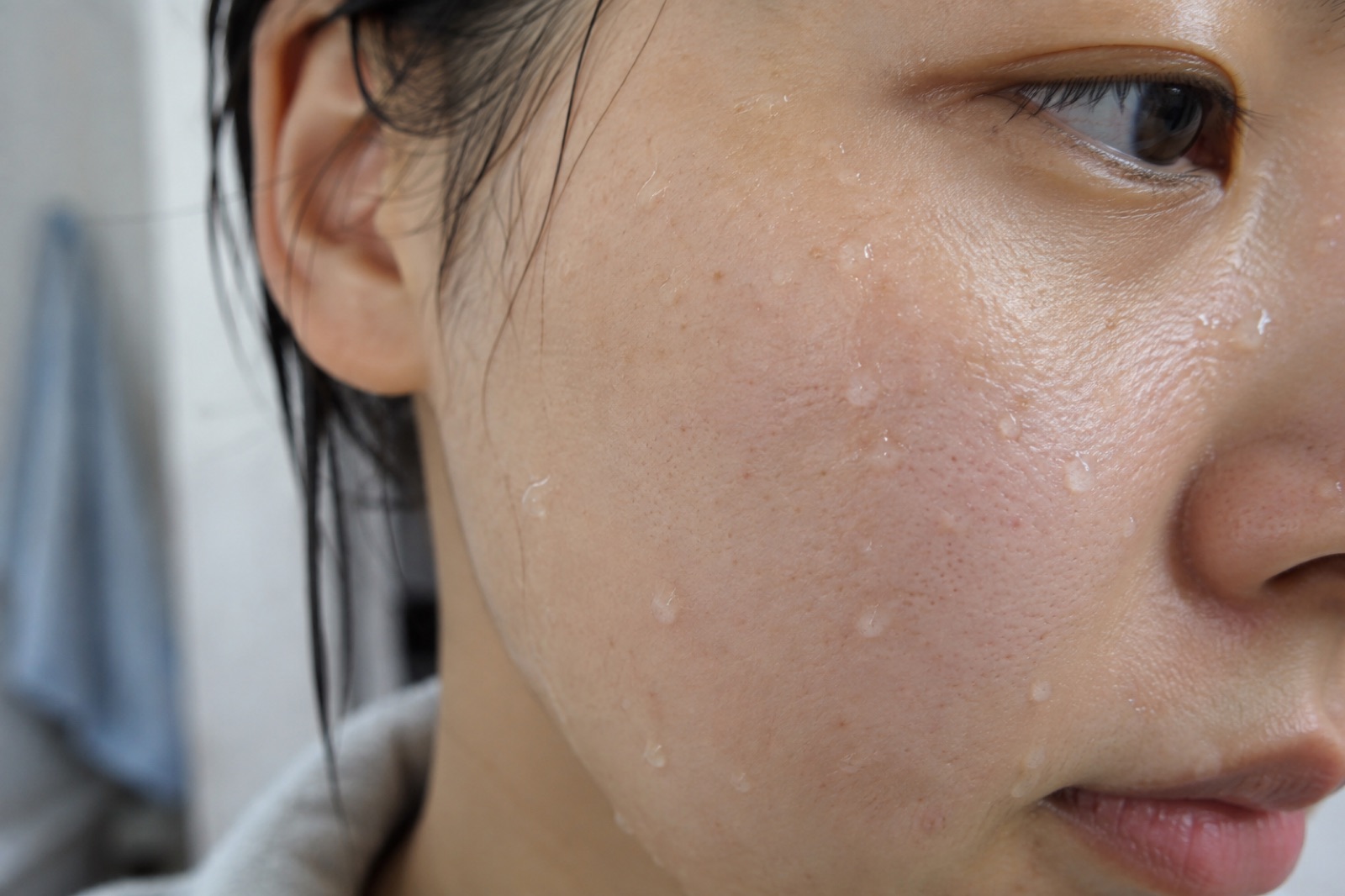
The step that sets the order is moisturizer. The AAD says applying moisturizer while your skin is still slightly damp after washing helps lock in more moisture. If you use toner, putting it on lightly right after washing and moving on to lotion or cream before it dries fits this advice.
Cotton pad or hands: which should you use?
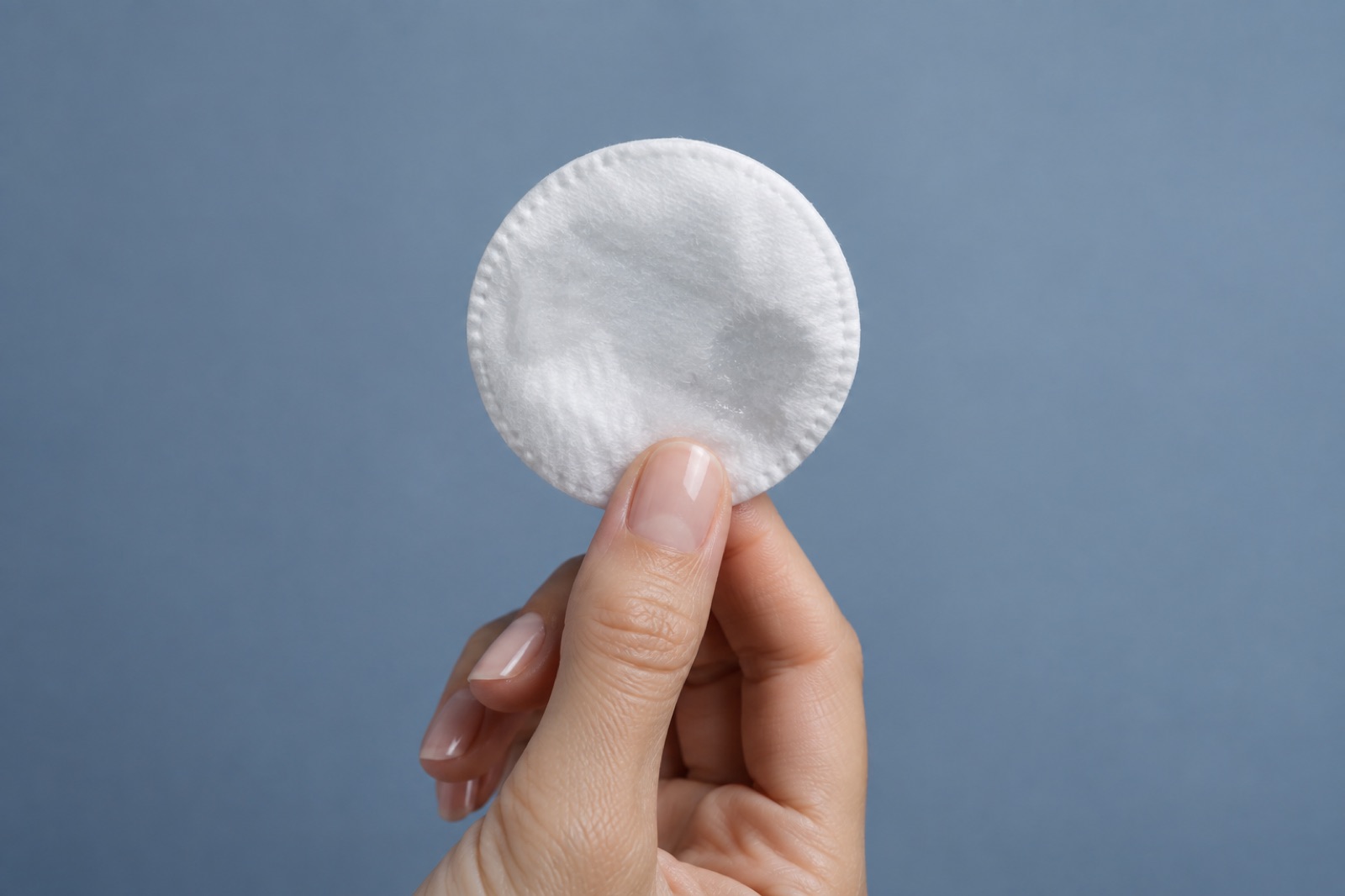
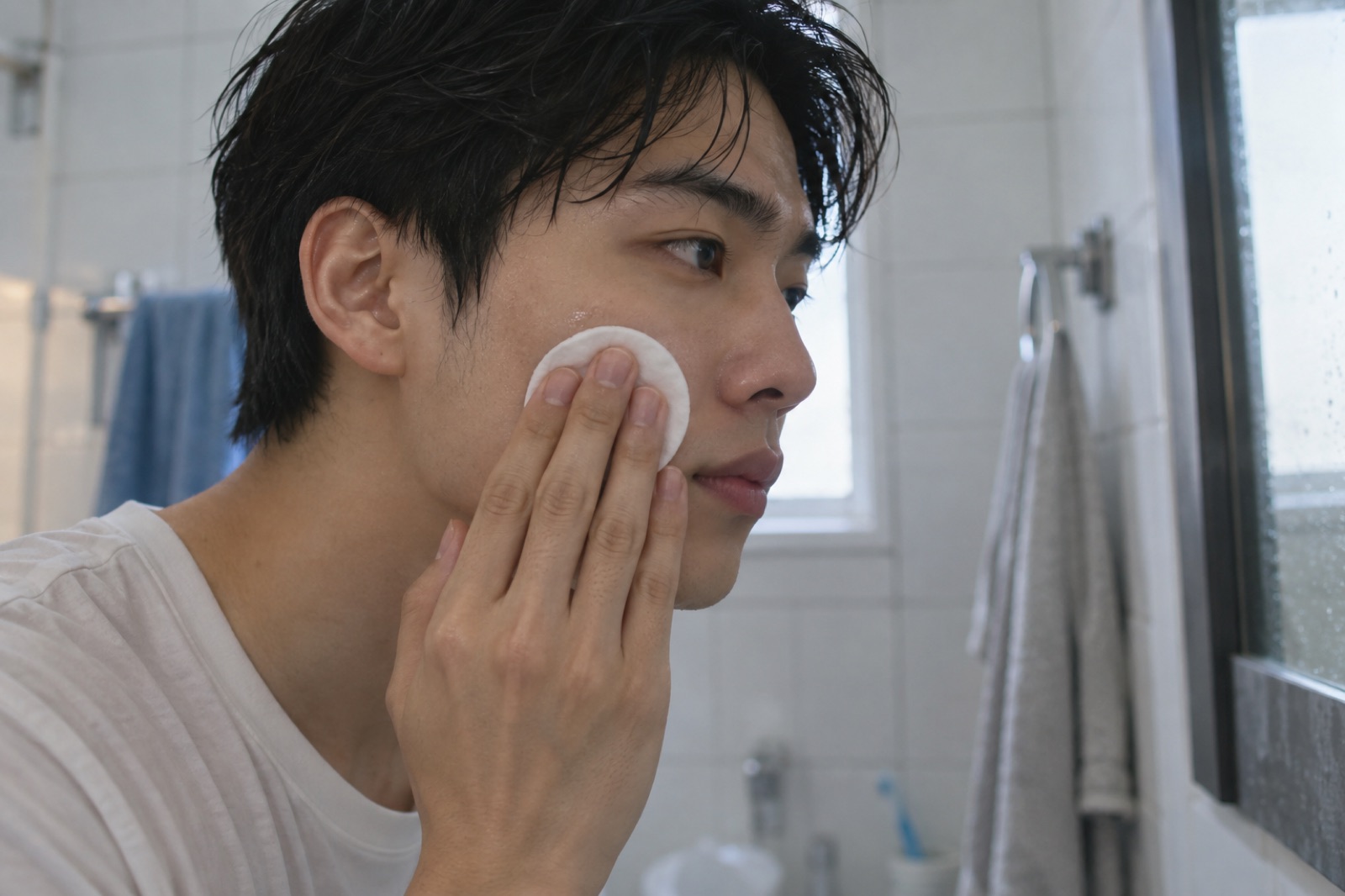
We found no study in the sources behind this article that compares cotton pads and hands directly, and either way, the key is not to rub. The AAD warns that rubbing or scrubbing can irritate skin and make breakouts worse, and advises washing gently with your fingertips too. Swiping a cotton pad across your face creates friction, so if you use one, pat or press the soaked pad on lightly.
With your hands, pour toner into your palms and press it into your face. Wash your hands first. Pad-type products that wipe away dead skin are used differently, so we cover them separately in our toner pad guide.
How much should you use, and what if you use too much?
We found no study comparing amounts of toner or the number of layers. So the basic approach is to apply once or twice, until your whole face feels moist, and then move on to moisturizer. There is also no evidence that layering many coats is better for breakout-prone skin.
There is no direct research on leaving a soaked cotton pad on your skin for a long time either. The closest reference is a sheet mask study: dryness became noticeable when a purified-water mask was left on for more than 25 minutes, and 57.14% of the 28 participants reported dryness. Leaving it on longer does not seem to be better.
How to choose a toner if you break out
If you get breakouts, the rule is to choose a gentle toner that doesn’t sting or irritate your skin. The AAD advises people with acne to use alcohol-free products and avoid harsh products such as astringents, toners, and exfoliants. Introduce one new product at a time and watch for a few weeks to see whether breakouts increase.
Health organizations recommend “non-comedogenic” labels, but a literature review points out that this label is not an official standard managed by regulators. We also found no comparison study in the sources behind this article showing that mildly acidic (low-pH) toners are better for breakout-prone skin. Men can use the same criteria. If you are using acne medicine, an acid toner can add to the irritation, so check with your pharmacist or prescriber first.
Toner checklist
| What to check | Standard | Check |
|---|---|---|
| Do you apply it right after washing, before moisturizer? | Moisturize while damp (AAD) | □ |
| If you use a cotton pad, do you press it on instead of rubbing? | Avoid rubbing and scrubbing (AAD) | □ |
| Does it go on without stinging or burning? | Alcohol-free; avoid harsh products (AAD) | □ |
| Do you apply once or twice and move on to moisturizer? | No evidence for layering | □ |
| Did you introduce new toners one at a time? | Reactions can show up weeks later (AAD) | □ |
| Do you avoid using an acid toner with acne medicine? | Check with your pharmacist or prescriber | □ |
When to see a dermatologist
- If a new toner stings or turns your skin red, stop using it right away, and consider seeing a dermatologist if it doesn’t calm down within a few days.
- If breakouts continue for 6 to 8 weeks or more even after dropping toner and just moisturizing, get a dermatologist’s opinion.
- If burning gets worse while you are using acne medicine, talk to the clinic that prescribed it first.
Frequently asked questions
What is the right way to use toner?
After washing and before moisturizer, press on a toner that doesn't sting, without rubbing. The American Academy of Dermatology (AAD) advises people with acne to use alcohol-free products and avoid harsh products such as astringents and exfoliants.
What happens if you put too much toner on your face?
We found no study in the sources behind this article comparing different amounts of toner. Rather than layering many coats or leaving a soaked cotton pad on for a long time, apply once or twice and move on to moisturizer. In a sheet mask study, dryness became noticeable when a purified-water mask was left on for more than 25 minutes.
Is it bad for acne to put on toner right after washing?
We found no evidence that applying toner right after washing is bad for breakouts. In fact, the AAD says applying moisturizer while your skin is still slightly damp after washing helps lock in more moisture.
Can I skip toner and use serum?
Yes. Expert consensus and health organizations treat cleansing, moisturizing, and sunscreen as the basics, and toner is not a required step. If your skin still feels tight with serum alone, add a lotion or cream.
Should you apply toner with a cotton pad or your hands?
We found no study comparing the two. Either way, the key is not to rub. The AAD warns that rubbing or scrubbing can irritate skin, so if you use a cotton pad, pat or press it on instead of wiping; if you use your hands, wash them first and press the toner in.
Sources
- AAD, 6 skin care habits that can clear acne (2022)Institutional
- AAD, Moisturizer: Why you may need itInstitutional
- AAD, 10 skin care habits that can worsen acneInstitutional
- Challenges and real-world solutions for adoption of holistic skincare routine (cleansing, treatment, moisturization, and photoprotection) in acne, rosacea, atopic dermatitis, and sensitive skin: An expert consensus (2024, PMID 38853652)A
- The efficacy of glycolic acid, salicylic acid, gluconolactone, and licochalcone A combined with 0.1% adapalene vs adapalene monotherapy in mild-to-moderate acne vulgaris: a double-blinded within-person comparative study (2019, PMID 30858720)A
- Short-term skin reactions and changes in stratum corneum following different ways of facial sheet mask usage (2024, PMID 38951050)A
- Clinical utility of marketing terms used for over-the-counter dermatologic products (2018, PMID 29671667)A
We never use YouTube videos or community posts as evidence for facts. Editorial policy
Product information related to this article
Product information from the site operator (KW Cosmetic, maker of the SKIN9HARI brand).
Revive Therapy N.F Ampoule
₩31,000 (KRW)
Neither the AAD guidance nor the acid-product and sheet-mask studies cited here tested this ampoule, and an ampoule does not replace the toner step. Revive Therapy N.F Ampoule is a 30 ml ampoule with betaine and panthenol, with no added fragrance or ethanol per its full ingredient list, and it has been patch-tested for low irritation, but there is no data comparing how much to apply or how many layers. Its product page places it after toner and before cream. For the one step after you press in toner and before moisturizer, the product we suggest is Revive Therapy N.F Ampoule.
- Ampoule with vegan rice PDRN (listed as Sodium DNA), betaine and panthenol, 30 ml
- No added fragrance, essential oils, ethanol, colorants or silicones (based on the full ingredient list)
- Low-irritation formula
Product details
- Type and size
- Clear, lightweight ampoule, 30 mL (1.01 fl oz)
- Step in routine
- Step 3 of 4 · Ampoule, after toner and before cream
- How to use
- After toner, use the dropper to dispense 2–3 drops into your palm or directly onto your face. Press gently into skin until absorbed. Follow with Revive Therapy N.F Cream to seal in moisture.
- Before you use
- Patch test on your inner arm before first use if you have very reactive skin. If redness, swelling or itching occurs, stop using and consult a dermatologist.
Based on the official product page, checked 2026-10-02
Cosmetics do not diagnose, treat, cure or prevent any disease. Test results apply only to the stated conditions.